[ad_1]
It’s also one of the most significant areas in the UK for invertebrates – a category that includes insects, arachnids and molluscs, among others – with more than 1,500 species, 30 of which are on the UK’s endangered “red list”. They include the evocatively named shrill carder bee, the five-banded weevil wasp and the scarce emerald damselfly.
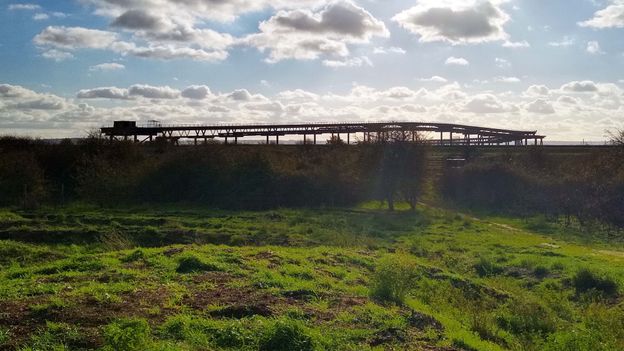
As I followed a trail into the 18.5ha Canvey Wick Nature Reserve, the drone of traffic was slowly replaced by rustling leaves and the sound of birdsong. Apart from the occasional dog walker, there was no one else around, and while many of the wildflowers had largely disappeared for the year along with the insects that depend on them, autumn gave the area a stark, eerie beauty. Although I was just 30 miles from central London, it felt like a wilderness.
“Canvey Wick is a hugely important place,” said Jamie Robbins, Buglife’s programmes manager. “It’s more than just invertebrates. We’ve got loads of rare flowering plants like orchids. There are birds like nightingales and whitethroats, and it’s a real hotspot for reptiles such as common lizards, slow worms and adders.”
The origins of Canvey Wick’s abundance of wildlife lie, unexpectedly, in the geopolitical turmoil of the Middle East of the 1970s. Originally a grazing marsh, the site sits on the south-west edge of Canvey Island, which was sparsely populated by sheep farmers, salt harvesters, fishers and shellfish cultivators for some 2,000 years. At the turn of the 20th Century, the island was home to just a few hundred people, but over the following decades the population surged as it became a fashionable seaside resort – until low-cost package holidays in Europe brought the good times to an end – as well as a centre for the petrochemical industry.
[ad_2]
Source link