Categories
Investing

All New Vehicles Sold In The U.S. Will Soon Be Equipped With An AI Kill Switch That Will Determine Whether You Are Allowed To Drive Or Not

by Michael

Imagine that you just received a very alarming phone call and you are in a panic to get home. Unfortunately, since your eyes are wide and full of alarm because of the phone call that you just received, the AI kill switch in your vehicle will not allow you to drive anywhere. This is not a scenario which may or may not happen someday. This is already federal law. Section 24220 of the 2021 Infrastructure Investment and Jobs Act that was signed by Joe Biden directed the NHTSA to establish permanent standards for impaired driving safety equipment on all new vehicles within three years. Fortunately, Congress gave the NHTSA some more time in 2024, but now another deadline is looming. If Congress does not act, very soon all new vehicles in the U.S. will come equipped with systems that determine who gets to drive and who does not get to drive.

Automakers are arguing that the technology still isn’t ready because it makes way too many mistakes.

Some drivers just naturally have eye or head movements that make them appear to be impaired in some way.

Of course others are extremely upset about this dystopian law because of how extremely intrusive it is.

Do we really want AI to track our eye and head movements every time we enter our vehicles?

Unfortunately, even though it has been on the books since 2021, most Americans have never even heard about this very alarming law…

The measure, often referred to as the Halt Drunk Driving Act, anticipated that as early as this year, auto companies would be required to roll out technology to “passively” detect when drivers are drunk or impaired and prevent their cars from operating. Regulators can choose from a range of options, including air monitors that sample the car’s interior for traces of alcohol, fingertip readers that measure a driver’s blood-alcohol level, or scanners that detect signs of impairment in eye or head movements.

Once the NHTSA sets the final rules, there is no going back.

At that point, it would take an act of Congress to overturn the law.

Recently, there was an effort to remove funding for the implementation of this measure, but that effort was soundly defeated…

A Republican-led effort to remove the Halt Act’s funding was defeated in the U.S. House last month by a 268-164 vote. Another bill to repeal it entirely awaits a committee vote.

Most of the opposition has stemmed from suggestions that the law would require manufacturers to equip cars with a “kill switch”. That would essentially allow them to “be controlled by the government,” Florida Gov. Ron DeSantis posted on the social platform X, drawing comparisons to George Orwell’s dystopian novel “1984.”

I honestly don’t think that Congress is going to do anything.

So we are going to be stuck with this change.

The goal of the law is to reduce the number of accidents caused by impaired drivers, but they are attempting to do this in the most dystopian way possible…

Tucked into a broader federal safety initiative is a requirement for impaired-driving detection technology in all new vehicles. The goal sounds simple enough: reduce crashes caused by drunk or fatigued drivers. It’s a problem that has been around for decades, and lawmakers are trying to address it with new technology.

To do that, automakers will need to install systems that monitor drivers in real time. These systems rely on cameras and sensors that track things like eye movement, head position, and overall attentiveness. It’s not just observing — it’s constantly analyzing what the driver is doing.

Some of us are easily distracted.

And some of us are often tired because we work all the time.

Does that mean that we are too “impaired” to drive our vehicles?

Under the new rules, AI will get to decide that.

In other words, you may be the one making payments on the vehicle, but a computer will decide whether you get to drive it or not…

If the system detects what it believes is impairment, it doesn’t just issue a warning and move on. In some cases, it could prevent the vehicle from starting or limit how it operates once you’re already driving. That means the car itself becomes the decision-maker, not the person in the driver’s seat.

For many drivers, that raises immediate concerns. It introduces a scenario where a machine decides whether you’re allowed to use something you own, based on its interpretation of your behavior.

I don’t want a computer to be interpreting my behavior every time I get behind the wheel of a vehicle.

What kind of “Big Brother” nonsense is that?

Yes, we should certainly be taking steps to prevent people from driving around drunk.

But how much of our freedom and how much of our privacy are we willing to give up for just a little bit more security?

There will be lots of traffic accidents no matter how much we allow AI to track, monitor and control us.

The way that this law is written, each one of us has to pass a test each time we want to operate a vehicle.

That is insanity.

The good news is that even supporters of this new law expect the NHTSA to put off any final decisions until next year, and once the rules are permanently established automakers are expected to get at least a couple of years to fully implement them…

The National Highway Traffic Safety Administration, which is establishing the rules to implement the Halt Act, told the AP in an email that it’s still “assessing developing technologies for potential deployment” and expects to report back to Congress soon. Even supporters predict the agency will push the decision at least into 2027, and auto companies still would have another two to three years to install it.

Needless to say, when automakers start rolling out new vehicles that come equipped with AI kill switches, many Americans won’t even consider purchasing them.

When sales of new vehicles completely tank all over the nation, perhaps many members of Congress will reconsider what they have done.

We don’t want our vehicles to be surveillance machines.

Enough is enough.

If we don’t take a stand now, they will just keep pushing the envelope.

Liberty is such a precious thing.

Once it is gone, it can be so difficult to get it back.


Categories
Investing

The 2026 Recession Is Here

Dave:
I created a new better way of tracking recessions in the United States. I told you exactly what would trigger that recession and now as of last week, that recession is here. Back in November, I was growing frustrated with the traditional definitions or really lack of definitions about what a recession actually is. Because to me, the normal way of using GDP, gross domestic product, it doesn’t really reflect the economic experiences of ordinary Americans, which at least to me is what actually matters. I did some research and actually came up with a new definition of recession. As of last week, by my definition, the US economy flipped from growing to recession. Yes, it is true unemployment is still low. GDP is still growing and many of the headlines say that we’re fine, but I stand by my indicator and I think that we’ve just crossed an important threshold that could change expectations and outcomes in the economy and in the housing market for months or years to come.
So today on the show, we’re going to discuss what exactly is this Main Street recession that I’ve defined. How does it differ from official definitions, where we stand in these indicators today and what all this means for you and your finances. This is On the Market. Let’s get to it.
Hey everyone, welcome to On the Market. I’m Dave Meyer. I’m the chief investment officer at BiggerPockets. I’m also an economic and housing analyst and a real estate investor myself. Today we’ve got a great and I think really important show for all of you. So we’re going to get right to it. If you listen to this show, you probably know this, but I do not like the definition of recession in the United States. This is a big gripe of mine. I do not make this any secret. I think the word has basically become meaningless in our society for two major reasons. First and foremost, and probably most importantly, there actually is not a definition of recession in the United States that is really cohesive. I know a lot of people think that it is two consecutive quarters of negative GDP growth that is a commonly used benchmark and I’m going to talk about that in a second, but that is not actually any sort of official thing.
That’s just what most people use. The official way that we get recessions in the United States is an entity called the National Bureau of Economic Research and they are responsible with telling us when recessions start and when recessions end and they actually do it retroactively after all that stuff happened so it’s not really the most useful. Now the Ember, National Bureau of Economic Research, they do not use that two quarters of GDP growth. I know a lot of people think this, but look this up. I’ll actually read it to you. On EMBER’s website, they say the EMVR definition of a recession emphasizes that a recession involves a significant decline in economic activity that has spread across the economy and lasts more than a few months. In our interpretation of this definition, we treat the three criteria, depth, diffusion and duration as somewhat interchangeable. That is while each criterion needs to be met individually to some degree, extreme conditions revealed by one criterion may partially offset weaker indications from another.
Well, if you’re confused by that definition, welcome to the club. It’s basically just saying we got a bunch of criteria and we decide when it ends. So they are admitting that this is entirely subjective. What is a recession in the United States is entirely subjective. So that is the first reason I think the whole word recession has become corrupted. The second thing is because this definition, the real definition is so subjective, people use a rule of thumb, which makes sense. People are like, “We need something to measure rather than just relying on these academics to decide when we have a recession.” So they use this rule of thumb, which is two quarters of negative real GDP growth. GDP is gross domestic product, measures at the highest possible level all of the macroeconomic activity of an economy and real GDP just means inflation adjusted GDP. And basically a lot of people say that if that is negative two quarters in a row, that’s a recession.
It’s a pretty good indicator. If that happens, that’s not good for the economy. And so it is somewhat useful, but I actually don’t think personally that GDP is a great reflection of how ordinary people think of a recession. If you went up to the average American and asked if we were in a recession right now, they might say no, but then if you ask them if their financial lives are getting better or worse, they’d probably say worse. I mean, literally there are consumer sentiment surveys that show this. It is the lowest it’s been in 70 years. So clearly people are not happy about the economy. Meanwhile, GDP is actually growing. It grew 2% in real terms last quarter. And so in my opinion, there’s just this disconnect. The definition of recession is subjective, but even if you use the traditional measure of GDP, it is totally disconnected from the actual experience of Americans.
Ordinary Americans care about how much stuff costs. Can they afford a home? Are they worried about their job? Can they find a job? Are there wages growing up? Meanwhile, we’re measuring GDP, which if you want to know the definition is consumer spending plus investment, plus government spending, plus the balance of trade, which is equal to total exports minus total imports. Cool. I mean, the formula does have value for businesses, right? For the government, that does kind of matter. But if a recession is supposed to describe a decline in economic activity that spreads across an economy, but we’re only measuring super macro things and we’re not actually measuring what’s happening with ordinary people on a micro personal level, we’re missing a big part of the story. So if you asked me if you were starting from scratch and I was asked, Dave, how would you evaluate a recession or not?
Would you pick GDP? Because I wouldn’t. And I decided I’m not going to because I just am tired of arguing. Everyone argues about, are we in a recession or not? And becomes really political because it’s just such a bad measurement. And so back in November, I spent a huge amount of time thinking about this and trying to determine what exactly is the right way to measure a recession. I wanted it to be simple and easy for everyone to understand. No subjectivity, just a yes or no answer to whether the economic lives of Americans are getting better or worse on average. And what I came up with is simple. It’s a two part rule. If one of these rules is triggered, we’re in what I would call like a yellow alert kind of recession, a mild recession. If both are, it is a full on serious recession.
And here are the two rules. Number one, the question is, are real wages going up or down? Super simple, right? Real wages, if you’ve never heard that term, that’s basically just a measurement. Whether or not incomes for the average American are growing faster or slower than inflation. If real wages are growing up, that is great. Spending power is going up. If real wages are going down, that’s not good because for the average person, they’re able to buy less and less even if their wages are going up a litle bit because inflation’s eating away at their spending power. And to me, this single metric is what matters more than anything. I looked through dozens of possible things to think about as indicators and I can’t think of something that is more important to regular people than this single question. If you are going out and working every day, is your economic life getting better or worse?
If it’s getting worse, kind of think we’re in a recession, right? That is a significant economic decline, at least in my opinion. So that’s rule number one. I’ll be honest, I wanted to keep it at one rule, but I did decide that I also needed a measurement of volume. I know this is nerdy, but we need to know how many people are actually working because if real wages are going up but only 90% of people employed, if there’s 10% unemployment, that’s not good. You can’t just have wages rising on average, but no one is really working. So I put in a measurement of unemployment very similar to the SOM rule. If you’re familiar with that, it’s a very popular recession indicator. I’m a big fan of it. Basically it says unemployment is rising sharply. Specifically in my definition, the three month moving average is 25% higher than the three year moving average.
You don’t need to worry about that. It’s pretty nerdy. Basically it just means is unemployment rising quickly? That’s rule number two. And when you put those two things together, that’s my definition of a recession. These are the things I think ordinary people actually care about what actually matters to them. If one of the rules is triggered, yellow alert, mild recession. Both of them are triggered, red alert, significant recession. And guess what? As of last week, one of them has been triggered. We do have to take a quick break, but after the break, I’m going to explain which trigger has fired, what direction the economy is heading and what this means for you. We’ll be right back.
Welcome back to On the Market. I’m Dave Meyer talking about the main street recession indicator that I came up with and that recently just turned from growth to recession. Before the break, I explained that I actually have two rules and if one of them triggers, we’re in a mild recession, both of them trigger, we’re in a more significant one. Luckily, only one of them has triggered and it is the real wage growth trigger. It’s the one I think is the most important right now. And as of last week, real wages are now negative. Average hourly earnings grew 3.6% year over year in April 2026, which on its face sounds good, right? That’s pretty good. If you just look at that in isolation, 3.5% year over year wage growth, it’s great, but inflation hit 3.8% annually in April 2026. It’s the highest level it’s been since May of 2023, big jump in the last couple of months and inflation’s just getting worse, right?
Actually, if you annualize the last three months, you extrapolate February, March, April together. It’s on pace to be over 7%. Hopefully that won’t happen, but it’s just not encouraging. And so basically when you do the math, if you look at 3.8% inflation but 3.6% wage growth, that means that real inflation adjusted average hourly earnings decreased from April 2025 to April 2026, right? Wages are now officially losing to inflation. Or in other words, on average, Americans are losing spending power. This is the bad economic outcome that I created this indicator around because this to me is pretty bad. And it’s true though. The good thing is it’s just one month, right? Hopefully inflation will come back down. I personally don’t think that’s going to happen, but I hope I’m wrong about that. There’s no real sign that inflation is slowing down. In fact, it’s accelerated the last three months.
So I see trigger one here, real wage growth turning negative. I think we’re on yellow alert. Normally, if it was just one month, I’d say, let’s see what’s happening. But the trends are kind of clear. I’d be pretty surprised if we saw a reverse next month or the month after that. So I think we are at least in sort of this mild main street recession for at least the next couple of months. Luckily though, when you look at trigger two, unemployment, which I define as the sum rule, but we’ll just talk high level about unemployment because the SOM rule is really nerdy. Basically, this is okay right now. We’re not there yet on unemployment, which is good news. It’s been remarkably stable, honestly. Actually, unemployment as of April 2026 was 4.3%. It’s unchanged from the prior month and so things are pretty stable. This trigger has not fired.
I have been continuously impressed that the unemployment rate hasn’t gone up more. With all this doom and gloom about the labor market, some of which I admit I do buy into and I think that there is risks in the future, but the unemployment rate hasn’t gone up that much. The labor market has been remarkably resilient. I will say though, if you listen to the show, you know that I personally believe that labor market data is a bit tricky. I don’t think there’s any one good indicator that tells the whole story, including the unemployment rate. It is tracked in a very specific and unique way and it tells a story. It does not tell the whole story. If you look at other labor data though, it does show some cracks starting to form. So again, not there yet, but like for example, if you look at the U6 measure, this is just the measure of labor underutilization, which sort of like accounts for people who want to work full-time, but they’re working part-time instead, that has gone up to 8.2%, so that is high.
If you look at the number of people, just total part-time work that is rising, it rose a lot, almost 10% in April and those are people who prefer full-time work but can’t find it. So overall, labor market doing okay, but it’s something that we have to keep an eye on. But big picture here by my indicators, and again, I made this up, but I do believe these are super important indicators for ordinary Americans and for real estate investors, because if ordinary Americans finances are struggling, this is going to trickle into the rest of the economy. His is going to impact other parts of the economy, whether it’s housing or anything else. So a lot of you would probably think, “Dave, you made this up. GDP is going up so we can’t actually be in a recession.” Well, first and foremost, again, GDP is not the official definition of recession.
There is no definition. So if everyone gets to be subjective about it, I get to be subjective, right? So that’s why I made up my own indicator. But there is some truth to this, right? GDP is up. That is good news. I don’t want to totally discount GDP growth because all things being equal, we want GDP to be going up. That is good for the country. That means the pie is getting bigger. Actually, in Q1 of 2026, last quarter we have data for, it grew in real inflation adjusted terms at 2%, which isn’t great, but it’s not bad. It’s pretty solid. But I actually think GDP used to be more useful as an economic measurement. When people were more working in manufacturing, for example, the GDP formula takes that into account pretty heavily. What it doesn’t do is really talk about one, how the pie is being divided, or two, what pieces of the pie are actually growing.
And right now, I feel like that part is really important because almost all of the growth that we’re seeing in GDP, literally all of it is coming from on single sector and that is infrastructure spending on AI. In Q1 2026 alone, last quarter when it grew 2%, which is solid, AI related capital expenditure was responsible for approximately 75% of US growth. All the growth, 75% of it came from that one thing. If you actually stripped out what basically six companies are spending on building data centers, growth was effectively flat. And if you look at who’s actually doing this spending, again, it is super, super concentrated just through a couple of companies. It’s Amazon, it’s Alphabet, it’s Meta, it’s Microsoft, it’s Oracle. They’re spending $805 billion in capital expenditures and that’s actually supposed to go up next year, by the way, to 1.1 trillion. And I think this is a really important example because these companies, huge, valuable companies to our economy, right?
They’re investing a lot of money back into the economy, which does have some value. They’re also laying people off right now. And so this is why GDP is not a great measurement of what’s going on for normal people, right? These companies spending a lot of money on data centers, which don’t really employ a lot of people, laying off people at the same time. And so this is why we have such a disconnect with what we hear with recessions and GDP and what is actually happening with normal people. I am not saying GDP is useless. I just think if we’re defining a recession and we’re talking about recession, normal people talking about recession, GDP is maybe a part of that story, but to me is a less important story than what’s actually going on in American households and in Americans’ pocketbooks. So all in all, just summary of this by my indicator, yes, we are in a recession, a mild one right now.
Again, it’s only been one month, only one of the two triggers have fired, but I do think this matters. I do think this is going to affect real estate investors. I think it is going to impact the rest of the economy. And I’m going to talk about how and what real estate investors should be thinking about and doing right after this quick break. We’ll be right back Welcome back to On The Market. I’m Dave Meyer today talking about my new recession indicator, Main Street Recession, and why I believe we are at the beginning of at least a mild Main Street recession. Just as a recap, my thesis is that when real wages are going down and spending power is going down for the average American, we’re in a recession, that is a negative economic environment and whether or not you think GDP is more important or not, I personally believe that this is going to impact our economy perhaps more than what is going on with GDP right now.
I just want to go over a couple of things I’ve been thinking about and some advice at least on what you should be thinking about and doing in the months to come. First and foremost, remember, if you hear people talking about a recession, are we in a recession or not? Remember that that is entirely subjective and it means almost nothing at this point, right? It really doesn’t. It’s not even defined by GDP. It’s just whether a bunch of academics decide we’re in a recession or not. So instead, I really encourage you to track the metrics that actually matter to you and to your business. And this is going to be different for everyone, but the stuff that I look for in my own investing and in my own decision making, I already told you the big one, which is real wage growth. I think this is going to be a major indicator of the economic future for months to come.
If we continue to see negative real wage growth, I believe that we are going to see that spread perhaps to GDP, to consumer spending, perhaps to lower corporate profits. I’m not saying this is going to be a disaster, that this is going to be some severe recession. We don’t know that yet. It’s one month, right? But this is something super important to pay attention to, obviously with the rest of your investments for your job and everything like that. But as a real estate investor, if you start seeing real wage compression, if this comes down, that affordability challenge that we’ve been talking about for four years on this show, that gets worse, right? Both for renters and for home buyers, right? That could negatively impact rent growth, it could negatively impact occupancy rates, it can negatively impact home prices. This is a super important thing. I think honestly, not to knock on anyone, but I think it’s an overlooked element of the housing market that I don’t hear a lot of other analysts talk about.
They talk about interest rates and home prices, super important, right? But we always on the show when we talk about affordability and why I think it’s so important, it’s a three-legged stool. There are three pieces to affordability. It’s mortgage rates, it’s home prices, and it’s wage growth. This is not a coincidence. This is something we’ve been talking about for a really long time and it’s why a lot of times when I see some of these doomers or people making bad predictions who just look at rates or just look at prices, you got to look at all three of these things together. And I believe that now, unfortunately, this is the third leg of the stool to turn negative for the housing market, right? Prices, super high. Mortgage rates. By historical standards, they’re not super high, but compared to recent times, they are high and now real wage growth is going negative.
These are three big challenges for affordability. I know people like to say, “Oh, inflation prices are going to go up.” No, they’re not. I already did a whole episode on this and the difference between types of inflation, but even if we have inflation like we do now, that does not mean home prices are necessarily going to go up. The times that you see home prices go up with inflation is when you have demand pull inflation. That’s when you have a lot of people want to buy a limited amount of goods. That’s like what happened during COVID. But the type of inflation that we have right now is called supply push. It’s because input costs are going up like oil, like plastic, like fertilizer, prices like beef, like coffee, right? Those prices are going up and then the prices get passed along to consumers, not because there’s so much demand, but because the production costs for suppliers are going up and this is not associated with real estate prices going up.
And so this is why real wage growth is so important to me right now into the housing market is because it was the on part that was helping the housing market. Even with higher mortgage rates, even with high prices, this was helping us slowly eat away at the affordability challenge. Now it’s hurting and it could be for the foreseeable future. So this is why I think home sales are going to stay slow this year. This is one of many reasons I’ve been saying for a while, expect home prices to stay close to flat this year. My projection’s actually been for modest declines on a national level and I’m sticking with that. It’s also why I expect rent growth to stay low. I know every other forecaster is out there saying rent growth is going to pick up this year. We’re going to get through the supply glut of multifamily.
And I think there might be a litle bit of rent growth this year, but people are acting like it’s going to rescue the industry. I’m sorry, but it’s probably not. I think rent growth is probably going to be pretty slow. People cannot afford higher rents, especially if real wage growth is going down. I’m sorry to be negative, but I just think I look at this stuff all the time and when you look at it, just where does the money come from, right? It’s not coming from rate cuts. Actually, I’m recording this on May 19th right now. The 30 year bond yield just hit the highest level it’s been since 2007. That’s inflation fear, right? That is real inflation fear. That is going to keep mortgage rates up. I don’t care that Kevin Warsch is coming in. I don’t care that people think he’s not going to be independent.
There are 12 voting members on the FOMC and I just don’t think rates are coming down. Even if they cut rates, bond yields might go up because of that would maybe increase inflation fears, right? Mortgage rates could go up. We’ve already seen that. So I’m sorry to be pessimistic, but my job here is to be honest with you. And I think that this main street recession that we are entering is going to hurt rent growth. It is going to hurt the housing market. Not dramatically. I just don’t think we’re going to get the recovery. I don’t think it’s going to get a lot better this year. Hopefully later this year, maybe next year, right? I don’t think there’s going to be a crash. Rents aren’t going to crash unless we see like a massive spike in unemployment. That’s the one caveat, but we haven’t seen that.
And so I just want you to be aware of this so you know what to do. And if you’re asking me or asking me what I’m going to do, it’s number one, optimize for cashflow. Cashflow gives you option. You want options in time like this. I’m still absolutely going to look at buying. I think good deals are coming. If we start to see a pullback in home buyer demand, we might see increasing inventory. Days on market are already going up. This means there’s going to be better buying opportunities, but I expect appreciation to be slow and so I want to optimize for cash flow and long-term growth. That’s number one. Number two, focus on occupancy rates instead of rent growth. Everyone during COVID was so obsessed with rent growth and it’s great. I mean, it helps your business a lot when things are going up.
I personally am going to focus much more on keeping good tenants and not raising rents rather than rent growth. To me, that is much more important for my business, for the long-term stability of the assets I own. And it’s a recommendation I make for almost everyone. And if you are way under market rent, you’re stabilizing something, that’s different. But trying to push up rents by 25, 50, 100 bucks, probably not worth it in this environment, at least for me. Third thing that I’m personally doing a good amount of is stacking cash, because I think the opportunities are coming. I am saying I don’t think the housing market’s going to do well. I don’t think rent growth is going to be there. That is negative or it’s neutral or negative for existing properties, but buying opportunities are going to come. These are the kind of times when buying opportunities come.
And so I’m trying to create some dry powder, repositioning certain assets, selling certain assets, because I think good buying opportunities are going to come. I think they’re going to come first in the multifamily space, but more will come in the residential space. It’s not going to be 2008, not at all. I don’t think we’re getting prices like that maybe in our lifetimes again, but I do think better buying opportunities are coming and stacking cash makes sense. So that’s just a couple of my pieces of advice. And then lastly, before we get out of here, I’ll just tell you a couple of things that you might want to keep an eye on. Right now where we’re at with negative real wage growth, I think this is a problem. I’ve hopefully clearly explained that, but we don’t go into like a red flag serious recession where I’m worried about significant declines in home prices or rent prices unless we get much higher unemployment, especially if we have inflation high and unemployment starts rising.
This is the stagflation scenario I’ve been talking about for a while. It is getting, in my opinion, more likely we are absolutely not there yet. Inflation is up or at 3.8. I would place a bet that it’s going to start with a four next month, but unemployment has remained remarkably stable. And so as long as the labor market holds up, I think this remains a sort of mild negative economic outcome. But if we start to see unemployment go up, that’s bad. That is a really bad economic situation because it ties the Fed’s hands. It ties policymakers’ hands. You can’t raise rates because that will hurt the market, but you can’t lower rates because that will make inflation even worse. So it can be a really challenging situation. And so if you’re worried, this is sort of the confluence of things that I think could take us from what will be a frustrating, difficult economic time, but one where home prices, rent stay pretty much stable, they’re just not going to get better.
Whereas where the real risk comes in is that stagflation scenario. And so we’re not there yet, but that’s the thing that I’m personally going to keep an eye on and it’s something I will keep updating you all on as often as makes sense on this show. If I had to guess, I think we’re in for several more months of real wage losses and we’ll stay in this yellow alert recession for a while and I think it can spread. I think this might spread a little bit to consumer spending. Again, don’t think it’s going to be some massive crash, but I do think that this could start to create a more general malaise in the environment. We’re already seeing low consumer sentiment. We’re seeing credit card defaults go up. So we’re already seeing some cracks with consumers and this was one real bright spot. Real wage growth going up for years was a real bright spot of the economy.
So having this turn I think is going to spread a little bit, but I don’t see some red alert situation on the immediate horizon, at least not next two or three months, but it’s something we’re going to need to reassess regularly, which we will always do on the market. That’s our show for today. I would love to hear your thoughts on my indicator. I’m looking for feedback on it, always looking for ways to improve it. So let me know in the comments. Thank you so much for listening to this episode of On The Market. I’m Dave Meyer. I’ll see you next time.

Help us reach new listeners on iTunes by leaving us a rating and review! It takes just 30 seconds and instructions can be found here. Thanks! We really appreciate it!

Interested in learning more about today’s sponsors or becoming a BiggerPockets partner yourself? Email [email protected].

Categories
Investing

Economists’ Greatest Fear Is Almost Here

By Brandon Smith

For those who haven’t followed the shifting relationship between Washington and Europe closely, something important is happening beneath the surface of ordinary diplomacy.

The U.S. and Western Europe are no longer moving in lockstep. On trade, energy, immigration, defense spending and relations with China, old assumptions are starting to break down. That does not mean open conflict is inevitable. But it does mean the post-Cold War alliance many Americans grew up taking for granted is under real strain.

And when major alliances strain, the consequences rarely stay confined to diplomats and defense ministers. They show up in energy prices, trade policy, currency pressure and the cost of everyday life.

As I’ve noted in recent articles, the European distaste for U.S. policy has solidified. From anti-woke reforms and immigration policy to foreign interactions, when Americans voted en masse to remove the Biden regime, Europe became more adversarial.

In my view, the deeper issue is not simply a disagreement between presidents, prime ministers or parties. It is a disagreement over sovereignty.

A growing number of European leaders appear far more comfortable with centralized authority – over borders, speech, energy policy and economic regulation – than many American citizens are willing to accept. That divide helps explain why U.S.-Europe tensions have become sharper than a normal diplomatic disagreement. European governments aren’t accustomed to a citizenry that stand up and resist infringements on their liberties.

Americans like me, who favor national sovereignty, border enforcement, domestic energy production and smaller government find ourselves sharply at odds with Europe’s governing consensus. That is a real philosophical as well as a political divide. But it is also an economic one – because the policies at stake affect energy supply, trade flows, fiscal pressure and long-term financial stability.

First, it’s important to outline how we got to this point so that we can better understand why the conflict is escalating so rapidly.

A transatlantic alliance under pressure

One of Europe’s most divisive debates since 2014 has been immigration. Progressive supporters argue that migration can help offset aging populations and labor shortages. Note the “can” in that statement – it’s not a certainty.

Conservative critics argue that the scale and speed of migration have strained public services – everything from housing to social programs, wages and schools. Although the left considers it “bad taste” to discuss the issue of national culture and identity, conservatives worry that mass immigration threatens their nation’s cultural identity. More practically, they ask whether immigration is a net economic benefit or not?

The economic question is legitimate and should be answerable: Has Europe’s immigration model strengthened its labor markets, or added pressure to already fragile welfare systems?

That is where the discussion belongs – not in slogans, but in measurable outcomes: Employment, productivity and economic gains vs. welfare costs, housing demand and the like.

Two arguments have been used repeatedly to justify Europe’s migration policies:

First, that wealthy Western nations have a moral obligation to absorb large numbers of migrants (because of historical colonialism).

Second, that immigration is economically necessary because Europe’s native-born populations are aging and its labor force is shrinking.

Both arguments deserve scrutiny. Moral obligation is a political claim. Economic necessity is an empirical claim – and empirical claims should be tested against real-world results.

To address the first lie, the vast majority of migrants entering Europe from the third world are not traveling from war torn countries. This narrative was a fabrication by liberals in Europe in order to grease the wheels for public support of open borders. Furthermore, the argument that western nations are somehow required to compensate the rest of the world for their geopolitical success is a fallacy.

Nations have the right to decide who enters, who stays and under what conditions. That is not a radical principle. It is the foundation of sovereignty. The question for Europe is whether its leaders made those decisions with the consent of their citizens – and whether the economic results have matched the promises.

The second lie is much more complicated. Europe’s leaders have often defended mass immigration as an economic necessity – a way to offset aging populations and shrinking workforces. But that argument deserves scrutiny. Immigration can expand a labor force, but only if migrants are successfully integrated into productive employment. If employment rates lag, welfare costs rise and housing pressures worsen, then the promised economic benefits become much harder to prove. And therefore subject to obfuscation…

I don’t believe Europe needs immigrants to boost the economy. I believe their economies are, by and large, stagnant and moribund due to the toxic combination of government intrusiveness and extreme taxation. If a government punishes success with oceans of red tape and confiscatory tax rates, can we really believe that government cares about “boosting the economy”? I think not –European nations seem much more interested in control than in prosperity.

This leads me to wonder, what if immigrants are useful for something else instead? An agenda which is not yet clear?

Europe’s economic strain is bigger than immigration

It has long been my position that the globalists in Europe intend on integrating into a wider opposition bloc, a coalition against nationalists, free markets, meritocracy, free democracy, etc. Evidence suggests that this coalition will include China as well as more developed elements of Asia with their eyes on resource rich regions of Africa.

Russia is a wild card. Europe’s leaders are ravenous, they want a greater war and they see Ukraine as the best opportunity. That said, this does not mean Russia is our friend.

I believe European leaders want the establishment of a “new world order” in which national borders are erased and green authoritarian socialism is enforced under a globally centralized bureaucracy. There are many ways to go about achieving this agenda.

For example, the globalists have tried implementing international climate change laws and carbon controls as a means to limit industry and dominate energy resources. I would argue that this plan has failed as it becomes more and more clear to the public that global warming science is mostly propaganda, and the majority of the opposition has come from the U.S.

They tried medical tyranny, using pandemic hysteria through perpetual lockdowns and vaccine passports. This also failed, with twenty-two red states blocking the mandates with various pieces of legislation. If they couldn’t get the U.S. to comply, then the rest of the world would see that a nation could operate perfectly fine without Covid controls.

They also tried to lure the U.S. into a war against Russia to function as a meat shield in Ukraine. This would trap America in a perpetual quagmire in the best case scenario, weakening the U.S. while Europe is strengthened through years of resource infusions. This plan also seems to have failed. The American public has zero interest in entering the Ukrainian theater or going to war with Russia without a substantial reason.

A fourth tactic is mass immigration, which has been much more successful. The U.S. suffered under the Biden administration and now we are faced with a long uphill battle to deport millions of illegals. On the upside, border crossings have dropped by 95%.

Europe has been overwhelmed by a third-world incursion. Between 50 million and 60 million migrants now reside in the region, making up around 20% of Western Europe’s total population. But is this just globalist sabotage of the west? Or, does this army of migrants serve another purpose?

As an economic resource they are a net negative. If the idea is for migrants to increase the labor pool and fill traditional jobs, then there is no positive return. Reuters tells us Germany’s unemployment rate has climbed to 6.4% and 54% of the unemployed are migrants. These people are NOT filling quotas and or increasing the labor pool in a meaningful way. In fact, they take far more in welfare subsidies than they contribute in economic activity.

The same goes for Spain, where the unemployment rate is 10%, yet the far-left Spanish government continues to flood the country with foreigners. According to the BBC, the UK’s unemployment rate has climbed to 5% and 22% of the unemployed are foreign nationals on welfare.

The decline is present all across the EU; economic growth is stagnating. So, why would I suggest that the elites view the migrants as a resource rather than mere tools for deconstructing the west? What if sheer numbers and a broad population increase is useful for events that have not yet occurred?

What if world war is still on the table, or an economic collapse followed by globalist consolidation? What if European leaders see millions of extra bodies as a valuable resource to feed that war, or control the citizenry at home? Is mass immigration just about cultural replacement? Or, are third worlders being lured into the west with promises of easy plunder, only to be caught up as cannon fodder in a future conflict?

Have the globalists placed their bets on the foreign hordes and the power of cheap labor (or cheap soldiers) as the key to victory?

Energy is becoming the new fault line

This brings us to the most important economic fault line in the U.S.-Europe divide: Energy.

Energy is not just another sector. It is the base layer of modern life. It determines what it costs to manufacture goods, ship groceries, heat homes, run farms, fuel trucks and keep factories open. A nation with secure energy supplies has options. A nation dependent on fragile supply chains and imported fuel has vulnerabilities.

The move on Iran is clearly the catalyst for the U.S. shift into energy dominance. Consider for a moment the insane geopolitical changes and energy market mutations that have happened in just the past few months.

Venezuela is now under new leadership and shipping oil to the U.S., handily countering China’s covert influence over the nation. Trump has been engaging with Panama to dramatically reduce Chinese influence over canal operations, again, letting the CCP know they aren’t welcome in the western hemisphere.

Canada may become another pressure point. If Ottawa pursues closer energy or trade arrangements with Europe and China while U.S. policymakers are trying to consolidate North American supply chains, tensions could rise. That does not mean conflict is likely. It means energy policy is becoming inseparable from national security policy.

Reuters tells us the war with Iran has led to the UAE leaving OPEC after 60 years of membership. This matters because the UAE is the world’s #4 oil producing nation. This truly surprising move has Russia nervously asking whether this could be the end of OPEC itself. The UAE aspires to increase oil production by 50% in the short-term, which would have a massive effect on global prices. If that crude can get to refineries.

Recent turmoil around Iran and the Strait of Hormuz has reminded the world how fragile energy markets can be. Even rumors of disruption in a critical shipping lane can ripple through prices, production decisions and diplomatic strategy.

That is why energy security matters. The U.S. does not need to control every barrel of oil in the world. But it does need enough domestic and allied supply to avoid being held hostage by hostile regimes, cartel politics or shipping chokepoints.

Reasonable people can disagree about the wisdom of U.S. involvement in the Middle East. But the energy question remains either way: instability around Iran, the Persian Gulf and the Strait of Hormuz has direct consequences for global fuel costs, shipping costs and inflation pressure.

Iran is where the division between the globalists in Europe and conservative leaders in the U.S. becomes undeniable. Why didn’t European elites immediately jump on board with the Iran war and the effort to control the Strait of Hormuz. They supported every other war in the Middle East from 2001 onward. With Iran, they’ve tried to undermine the U.S. every step of the way.

We know for a fact that Europe’s leadership is not operating from the same playbook as U.S. politicians. They’re incredibly dependent on imported energy. A brief glance at history shows us they’re much more exposed to regional conflict. Their top-heavy bureaucracies are more interested in maintaining their regulatory models than in improving the lives of their citizens. If you just look at their rhetoric and behavior throughout the Iran conflict, it looks like they want the U.S. to fail. Not because they disagree with the war necessarily… I believe they don’t want the U.S. to gain an edge in energy dominance.

Remember: The Strait of Hormuz is still a chokepoint for global energy flows regardless of who controls it. Europe is very aware of their energy dependence yet lacks the political will to secure global shipping lanes. (Or to help the U.S. do so.)

U.S. operations against the regimes in Venezuela and Iran are choking energy supplies to China, the U.S.’s only real geopolitical rival. Europe

NATO may survive. Trade negotiations may stabilize. Europe may correct course internally. None of this is predetermined.

But it would be a mistake to ignore the direction of travel. The U.S. and Europe are arguing over the very things that determine economic resilience: energy, borders, trade, defense spending, regulation and China. Those disputes can raise costs, disrupt supply chains and add another layer of uncertainty to an already fragile global economy.

For American families, the lesson is not to panic. It is to recognize that the world is becoming less predictable. When governments strain alliances, inflate debts and politicize energy supplies, savers are left carrying risks they did not create.

That is why diversification matters. Despite what the financial news channels say, physical precious metals are not a bet on war or collapse. They’re a way to set part of your savings outside the influence of economic uncertainty, currency pressures and geopolitical shocks that seem to be multiplying around us.

Why geopolitical instability matters for American families

Most Americans do not spend their day thinking about NATO, OPEC, the Strait of Hormuz, European elections or Chinese influence over trade routes. They are thinking about grocery bills, insurance premiums, fuel costs, their paychecks and whether their savings will still hold up a few years from now.

Here’s what I want you to understand: These two worlds are connected. Energy instability raises costs. Trade conflict disrupts supply chains. Government debt limits flexibility. Political fragmentation makes long-term planning harder.

That is the part too many analysts miss. Geopolitics is not an abstraction. It eventually joins you at the dinner table – whether you follow the games nations play or not.

No one can know exactly how the U.S.-Europe divide will play out. But we can see enough to say the old assumptions are weakening. Alliances are less automatic. Energy is more strategic. Financial pressure is more global.

In that environment, physical precious metals deserve consideration not because they promise certainty, but because they’re outside the political and financial systems creating so much uncertainty in the first place. If you haven’t seriously considered diversifying your savings with physical gold and silver, I respectfully suggest you do so sooner rather than later. Like the grasshopper in the fable, you have all the time in the world – until it’s too late.

Categories
Investing

Choosing the Right Deal in Chicago With Taka Buranda

The investor: Taka Buranda, 39, Chicago

The agent: Dan Nelson, Compass, Chicago 

“I was looking for a multi-family building for less than $600,000 as my first investment in Chicago.”

Taka Buranda got serious about real estate the same way a lot of people do: his Chicago rent kept climbing, and one day he hit his limit. (We’ve all had that day.) But there was something else underneath it, too. A bigger, weirder question he couldn’t shake: What’s the point of life if you spend all of it working?

Heavy. Real, though.

“I’ve always had real estate in the back of my mind,” Taka says. “As I’ve stabilized my life over the past year or two, I finally put myself in a position where I could start pursuing it.”

Stability, for him, looked like income coming from a few different directions. Full-time job. Two small businesses. And a financial literacy initiative he founded for young people called Bag Talk Academy (which is a great name, by the way). With all of that working in the background, he wanted to put it to work in the foreground, specifically on a multi-family property that could offset his living expenses and start building real wealth. His budget: $500K to $600K.

Now here’s the part where almost everybody trips. Taka, like most first-timers, wanted the perfect property. Renovated. Turnkey. No work, no surprises, ready to go. He calls this, looking back, the “pipe dream.” And then, at some point, he did the thing very few people actually do: he gave up the pipe dream. He started hunting for buildings that needed a little work but offered serious upside.

His agent, Dan Nelson, clocked it immediately.

“Buying investment property in Chicago isn’t easy,” Dan says. “But the biggest thing that holds people back is their mindset. Taka made some really big shifts in how he approached the search.”

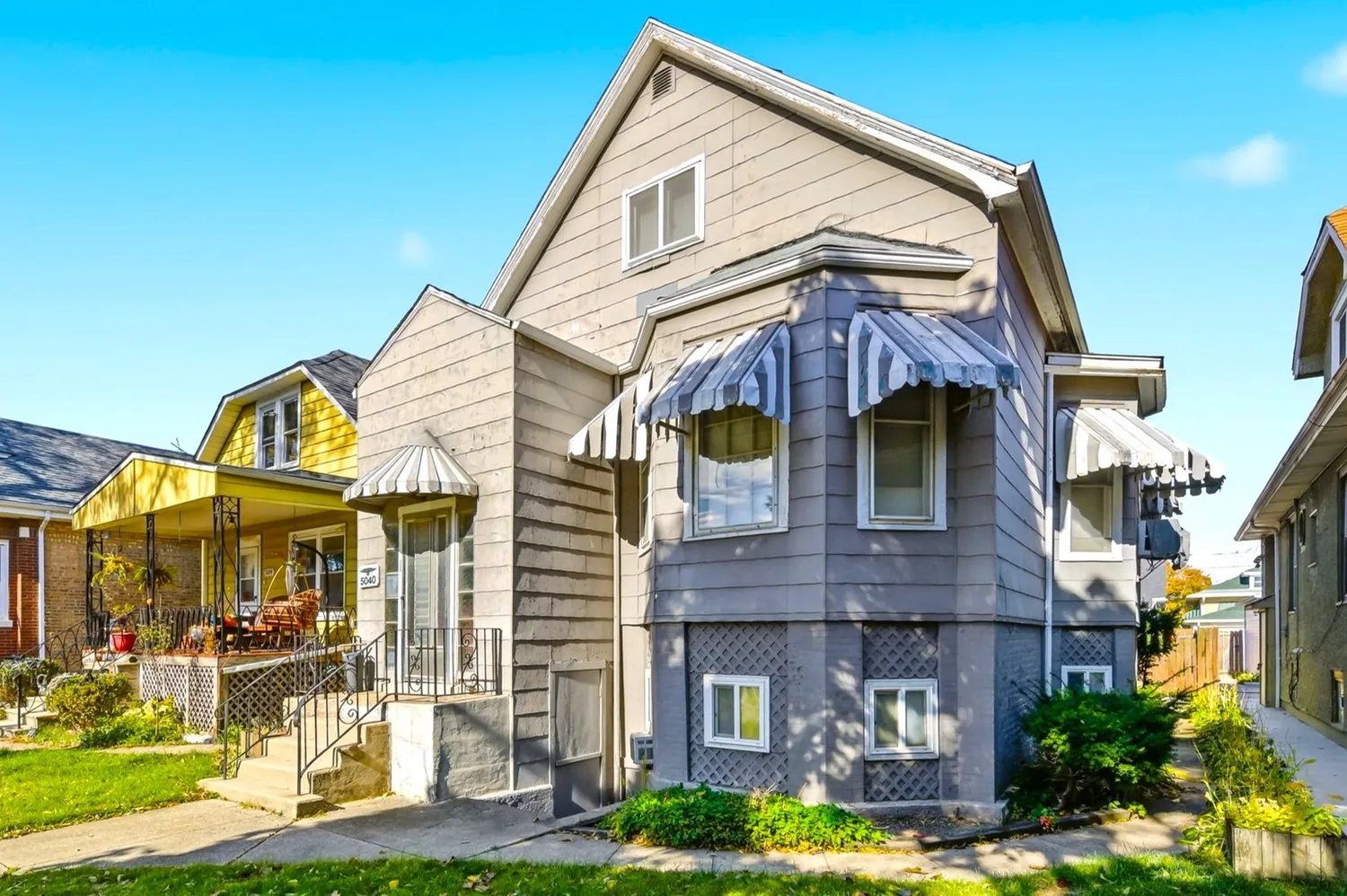
Option 1

image 1

Multi-Family with Potential in Portage Park/Dunning

This legal two-unit offered approximately 3,000 square feet with spacious rooms, flexible floor plans, and significant value-add potential. A three-car garage provided generous storage, and the property’s proximity to CTA bus routes and the Kennedy Expressway made commuting easy. The surrounding neighborhood also offered plenty of local amenities, including restaurants, coffee shops, and grocery stores.

Price: $499,900

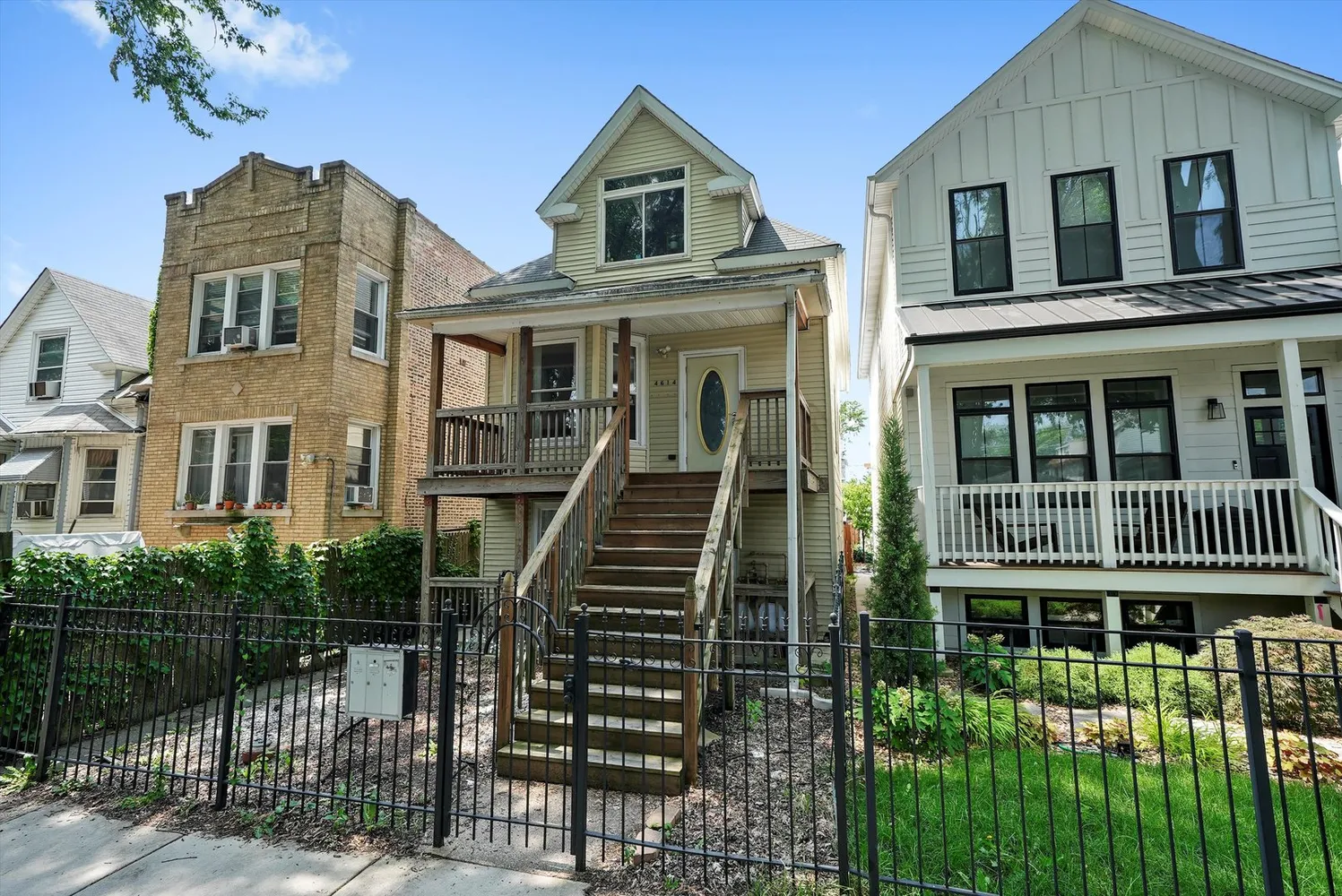
Option 2

image 2

Turnkey Multi-Family in Albany Park

Located on a quiet tree-lined street in Albany Park, this move-in-ready property offered the kind of condition Taka had once assumed was out of reach. The legal two-unit also included a convertible in-law unit, creating the potential for three income-generating spaces.

One unit already had a tenant in place, providing immediate rental income and helping offset expenses from day one.

Price: $599,000

Option 3

image 3

Fixer-Upper in Avondale

This property was the most affordable of the three but came with notable challenges, including structural issues and water damage. The 3,125-square-foot building would require significant renovation.

Still, the multi-family layout, large yard, unfinished basement, and location in the increasingly popular Avondale neighborhood meant the property offered plenty of long-term potential for the right investor.

Price: $399,900

Which would you choose? 

1. The Multi-Family with Potential in Portage Park/Dunning

2. The Turnkey Multi-Family in Albany Park

3. The Fixer-Upper in Avondale

Taka’s Pick

2. The Turnkey Multi-Family in Albany Park

For Taka, finding this property felt almost like fate.

“Honestly, it felt like divine intervention,” he says.

Unlike many of the buildings he had toured, this one required minimal work. He could move into one unit while renting out the others, creating immediate income while lowering his own living expenses.

Dan was especially enthusiastic about the building’s three-unit potential.

“I always encourage people to buy three units instead of two if they can,” Dan says. “It’s really hard to cover a mortgage with just one rental unit. That extra unit makes a huge difference.”

The existing tenant also helped ease the financial transition as Taka settled into ownership.

Taka and Dan initially offered $35,000 under asking price, and after negotiations and inspection, the deal ultimately closed $10,000 below asking with an additional $9,700 credit.

Even now, the experience still feels surreal to him.

“I still can’t believe this is happening. This is probably the greatest accomplishment of my life so far,” Taka says. “Teaching financial literacy has made me even more intentional about my own financial decisions. When you’re encouraging students to think about ownership and building wealth, you realize you have to practice what you preach.”

Did you know that a BiggerPockets Pro membership comes with over $5,000 in potential annual savings through Pro Perks, including discounts on property management, banking, renovation supplies, and investor loans and insurance. Become a Pro today!

Categories
Investing

A wildfire burning in the Everglades near Broward/Miami-Dade County line has grown to 5k acres and remains 0% contained as it approaches US-27

Map of the 7,100-acre Max Road Fire in the Everglades showing proximity to US-27 and I-75.

Real-time containment data and air quality alerts are provided by the Florida Forest Service Everglades District.

While containment has reached 45% as of Monday afternoon, local law enforcement including the Pembroke Pines Police is warning of ‘blackout’ smoke conditions along US-27. Authorities have reported that curious onlookers stopping on the shoulder to photograph the flames are creating significant traffic hazards and potentially blocking emergency vehicle access. No mandatory evacuations are currently in place for the Holly Lake community, but residents are advised to keep windows closed as shifting winds push heavy smoke toward Miramar and Weston.

Categories
Investing

Inflation Is Back, and It’s a Warning Sign for Mortgage Rates

Dave:
We’re in a stretch of the spring housing market where the stories on paper that you’re reading and the stories on the ground don’t exactly match. Listings are picking up the government is meddling in the housing market and single rate moves or single headlines can change the mood of the entire market overnight. So if you’re trying to make sense of what is actually happening, you’re not alone. I’m Dave Meyer alongside Kathy Fettke, Henry Washington, and James Dainard. And today we’re breaking down the latest housing market headlines from scary inflation to an important provision about build to rent, avoiding scams and the latest rent trends. Today we’re breaking down what you need to know. This is on the market. Let’s jump in. I’m going to go first because I am scared. I’m not really all that scared. I’m just frustrated because have you guys seen these inflation numbers the last couple of days?
Yeah. It’s

Kathy:
Not pretty.

Dave:
They suck. They just suck. That’s the only way to talk

Kathy:
About it. We were getting control of the story and now it’s gone.

Dave:
I know. And just so everyone knows the headline inflation that most we talk about a lot and that you probably hear about in the media is the CPI, the consumer price index. And that wasn’t good. That has shot up to the high threes year over year, 3.8. As you probably know from listening to a show, they want it around two. We were down to about 2.5 the last couple months it’s turned around. But the thing that really worried me, Kathy, I know you saw this, you made something about Instagram about it, but the PPI, which is the producer price index, basically what it costs for manufacturers and companies to build the stuff that they sell you absolutely just skyrocketed to scary numbers. It is up 6% year over year. That is the biggest increase since December 2022, which if you remember, no one was happy in December of 2022 about what was going on with inflation.
I

Kathy:
Don’t like the sound of that.

Dave:
Right. And so I don’t know. I mean, I guess the long and short of it today, mortgage rates bounce back up. They’re at 6.6 now, bond market’s going up. So I got curious about this because I’m a dork and I was like, it just logically made sense to me. If the producer price index goes up, does the consumer price index follow the next month because there’s kind of this subsequent correlation? The answer is yes.

Kathy:
No, because the businesses love to just swallow the cost. Yeah, they don’t want to pass it on.

Dave:
I feel like they used to, right? It used to be a little bit, but now people just pay it. I guess that’s what I’m curious about. Do that ever end? Because what I found is for seven months after the PPI goes up, the CPI usually goes up and the PPI is still going up. And I honestly think oil prices might go up even more than they have. So I look at this, I think mortgage rates are going to be very high and I think we’re going to see prices start to come down in the market. I just think nationally, I’ve said this for a while, but I think we’re going to have a weak housing market this year. I don’t know if you guys, if I’m overreacting, but Henry, James, what do you guys think?

James:
No, I’m loving that I’m about ready to list 15 homes in the next four weeks. Oh

Kathy:
Man.

James:
But the housing market’s definitely weak right now. The demand across the board and I’m talking to builders, investors, retail people, everyone’s like in this state of shock not knowing what’s going on and they’ve just gotten through deals and they haven’t really clicked out of return, but I’m seeing some extremely good buys on dirt.

Dave:
Oh really?

James:
I was trying to pedal a lot this week and this lot is a great location in Seattle, Columbia City, 6,600 square feet. The lot two down, same lot, sold three years ago for 850,000. The highest number a builder will pay for this lot right now is 500,000. Geez. Whoa. I was like, I’ll just keep it. What are you guys talking about? I mean, I’ll just land bank this thing because 500 grand for a site that you can potentially put four to six houses on.

Dave:
Is that slow market, higher costs, both?

James:
I think it’s just higher cost, controlling costs. The debt cost is really beaten up builders and then the time and duration to dispo these things with the slow housing market, the debt’s just eroding these deals. If you look at it on paper, like what they bought it for, they built it for and sell. Yes, the bill cost went up maybe 10%, but that’s not the detrimental part. It’s the forecast of the hold and the debt that’s really beating these deals up. But I mean, 500 grand for this lot was unreal. I was like, “Okay, well, maybe it’s not a good development site now, but is it a good rental site?” So there’s low demand, but then it also pops up new investment opportunities that you weren’t able to buy the last couple years.

Kathy:
Are you going to build on that or?

James:
No, what I think I’m going to do on that one is just bur the property and it will be a little bit of a negative loss and then start permitting out two or three in the back of the property. I’m doing that on another site right now too that I got in cheap and the math will work, but those are really good properties to 1031 later when the dirt catches back up because dirt goes up and down. And what I do know is if someone was paying 800, 850 for that lot two, three years ago, well, it will go back up to that number or get real close because this is like a core in city and fill lot. And those are the ones that I’m really trying to focus on. Okay, how do you put that in your portfolio? You kind of eat the loss for a little bit, but the goal is really to just sell it in two years and then trade it out for higher cash flow.
And that’s where I’m seeing a lot of the opportunity.

Dave:
All right. Well, I hope you’re right.

Kathy:
I have a few properties we’re supposed to be selling and maybe we won’t be. Maybe we’ll be holding a bit longer.

Henry:
I got three offers this week on properties that we had listed. One has been listed for ages. The other two, one was listed for two weeks and the other one was listed for two days. That’s

Kathy:
Because you’re on the other side of the universe. The part of the country that’s actually functioning very well. It’s

Dave:
So weird. I’m selling a property in Michigan right now. I got six offers all around the same price and three of them that have canceled. They’re just all canceling the contract. It’s just super weird. People are just getting cold feet,

Kathy:
I think.

Dave:
Yeah,

Kathy:
Getting spooked.

Dave:
Got it under contract the fourth time at the same price that I wanted. Hopefully this one will go through. It’s just super weird.

James:
It is weird because I would think the high interest rates would affect a little bit more of the first time home buyers and the kind of more affordable price point. But those are the listings that we are selling. We’re actually selling a bunch of homes for a hedge fund where they’re newer construction priced in the three to fours, couple hours out of Seattle. Those are all selling. The in- city metro properties are the ones that are sitting a lot more, which that’s actually where the money is. So I feel like everything’s out of whack right now.

Henry:
Yes.

Kathy:
Yeah. I mean, coming back to the story on how inflation is going to affect us and the fact that we see it moving in a trajectory that’s the wrong one. It’s going up, which means rates are going up, which means the Fed is probably not cutting rates, which was their plan. The plan has been to like two rate cuts this year. It could be two rate hikes this year. So a lot of people in commercial real estate are in for some more pain.

Henry:
Do you think the new Fed share is going to hike rates?

Kathy:
Yeah.

Dave:
It’s not up to him. He’s one of 12 voters.

Kathy:
And I think he’s going to be independent.

Dave:
Let’s hope. I hope that’s true.

Kathy:
I know that’s Henry does not agree. We shall see.

Dave:
But it’s not up to him. He does not unilaterally decide monetary policy. That’s

Henry:
Mattered on anything else that’s happened so far. It

Dave:
Does. There’s voters. 12 people vote on monetary policy. And last time, last vote, 11 of them voted to keep rates the same. Only one person voted to cut rates last time. So even if Warsh votes to cut rates, that’s two out of 12. Maybe he can convince everyone, but the data is suggesting the other. I’m not expecting rate cuts anytime soon.

Kathy:
Are you expecting rate hikes? Because I kind of think that’s where we’re headed.

Dave:
I think that might be politically too far. I think there’s probably, if I had to guess, they’re just going to keep it where it is. But I think you’re right, Kathy. The big losers here are probably going to be existing multifamily operators. People who have been trying to kick the can down the road. To rates drop. Because just so everyone knows, commercial loans are much more correlated with what the Fed’s doing than residential. Residential is really much more about the bond market. That’s going up. That’s not looking pretty, but it’s not going crazy. And there’s not the sense of urgency in the residential market for people to refinance. In the multifamily, large multifamily space, there absolutely is. And I was already starting to hear a lot of grumblings about distress in multifamily and I think we’re going to just have more and more of that.
There’s

Kathy:
Going to be more.

Henry:
The time’s coming because it’s not just the operators that were banking on the rates to drop. They’ve been getting extensions from banks because the banks are hoping that the rates drop and these things stay in the grain and then they’re not giving them anymore.

Kathy:
They’re done with the extend and pretend. They’re foreclosing. I’m literally signing a purchase sale agreement right now on an apartment and it looked great, but now with rates going up, I’m not sure.

Dave:
All right. Well, we got to take a quick break, but we’ll be back with three more headlines right after this. Welcome back to On the Market. I’m Dave Meyer here with James, Kathy, and Henry going over the headlines. Before the break, we all complained about inflation for a little while, but we have other real headlines to go over. So Kathy, what’s your story this week?

Kathy:
Well, these are headlines that just come up way too often more than they should. And I just feel like I am doing everything I can to help people not fall for fraud. This AP article came out ex- Brooklyn judge accused of swindling real estate investors out of millions of dollars. So basically a former New York City judge who resigned last year while under investigation for professional misconduct was charged Wednesday. In November of 2024, prosecutors say that he offered two investors an opportunity, an opportunity. That’s a word that scares me whenever I see it in an email, to buy commercial real estate in New Jersey through a bankruptcy auction. And he said, “Look, I’m an attorney. I have a trust account just deposit six and a half million in here so that we can buy this in the auction. We got to have the cash ready.” They did it and days later millions were gone and spent in his own account.

Dave:
Imagine that.

Kathy:
It’s like tricky because here’s this judge and people are like, “Well, he must be …

Henry:
” Trustworthy?

Kathy:
Trustworthy. He might be it. But the bottom line is it does not matter if it’s your mother. Don’t do things no matter who it is, if you’re not protected. And was it really a trust account? No, it was not clearly. Especially, this is the thing that always blows me away when people do this with millions of dollars. I see it all the time. Okay, maybe you gamble with 10,000, still a lot of money and still a bummer to lose, but millions?

Dave:
Why is there so much scams in real estate? Because

Kathy:
It’s so easy because people get excited and especially if there’s any kind of credibility like that, like, “Oh, they have a podcast. Somehow that makes you credible.” Right?

Dave:
Well, not in any of our cases.

Kathy:
Yeah. But it’s true. I mean, I don’t care if people feel like they know you because you’re a celebrity, it should be no different than, like I said, with your own family. Yo know them pretty well and you still shouldn’t do certain things. It just all needs to be done properly. And that’s why we have escrow accounts. That’s why we have title companies. It’s why there’s real estate attorneys. There are places you can go, especially when we’re talking millions of dollars to make sure your funds are secure.

Dave:
So just what could people do if you’re interested, because there are real opportunities, not all syndications are scams. There are good real deals out there. How should people do this diligence?

Kathy:
Well, in a syndication, you have a private placement memorandum, you have an operating agreement, you read those things to make sure you understand what the deal is, where the money’s going, how the money’s going to be spent, the underwriting for that. That should all be spelled out in there. And then when you wire the money, you are part of the operating agreement, you’re part of the LLC. At least that’s the way we structure it. Also, I mean, that’s just with syndications, but with other deals, I’ve got a colleague who has now been accused of fraud. I probably know 20 people who have been accused of fraud and many of them are in jail. One of the ways that I’ve seen this happen is people taking promissory notes. So it’s just not secured to anything. It’s just you’re just giving people money and you get a note in return.
And right now, one of the most popular things right now is note investing. Everybody talks about it like it’s the safest way. And if you’re not experienced, you might think, “Well, I have a note I invested with this person and we signed an agreement, but it’s not secured against the real estate, gone through a title company. You just literally wired this person money and they gave you a promise to pay, which if they don’t pay, you’re out of luck. There’s no collateral to take the property. So I think, Dave, there’s a lot of ways that people find themselves in a fraudulent situation. So have at least an attorney review what you’re doing.

Henry:
And in this situation, it sounds like they really just threw money into an account with no deal or property named that they were going to purchase. And that’s got to be the first red flag if you’re investing in some sort of syndication to just throw money somewhere to buy a potential property at a foreclosure. That’s weird.

Dave:
It’s just if it sounds too good to be sure. That’s just weird. Just question it. That’s just weird. Yeah, it’s so bad.

James:
Yeah. There’s gap funding where a lender will say, Hey, can you just fund this? We’ll pay you off. Buy it at the auction on Friday. We’ll pay off by Monday. And that does happen.

Henry:
Yeah, but it’s still tied to a particular property at that point, right?

James:
It is. Yeah. Or if you’re getting a promissory note, I mean, promissory notes float around everywhere and those are as good as an IOU. If the person doesn’t have assets and the promissory note, if you’re not getting a promissory note and you haven’tvetted the person, their finances, what they’re worth, what kind of liquidity, it is worth nothing. You always want to have it secured against the property.

Kathy:
It’s worth nothing. It’s a promise.

Dave:
It’s literally called the promissory note. It’s like, I promise to pay you back. I mean, there are other kinds of investments where it makes sense, but real estate absolutely does not make sense.

James:
I mean, at the end of the day, no matter what, if you’re investing in anything, have attorneys read the paperwork. Amen.

Henry:
Yes.

James:
And there’s a difference between bad operations and fraud. That’s fair. And the fraud word’s getting thrown around right now and it has nothing to do with fraud. It’s just they had a bad proforma and they structured the deal wrong and they can’t cover. But at the end of the day, before you decide to give anybody money, read the paperwork and understand the risk. No matter what, this is not Sunshine and Bunnies.

Henry:
You should be able to read through the documents, understand what they’re buying, how they’re buying it, why they’re buying it, when you’re supposed to get payouts, when you’re not. What’s the history of this operator? Have they done this successfully before? If you can’t check all of those boxes, then you either need to run this by somebody who has more experience than you or don’t do it. It’s not worth it.

Kathy:
Yeah.

James:
Totally agree.

Kathy:
Put your money in the stock market, an index fund, and just forget about it if you’re not going to do the work to learn what you’re investing in.

Dave:
100%. I do want to echo what James said though is there is a difference between a scam, a bad deal that could not just be a bad deal, that could be a poorly structured deal, an overly-

Kathy:
Overly optimistic?

Dave:
Yeah, overly optimistic or just a high fee deal, which is not a scam. It’s like they shouldn’t do that, but that’s in you to avoid. That’s the easiest due diligence you could do. Look at the fees. Figure out are they charging too much?That is the easiest thing you can do. You don’t even need to know anything about the asset.

Kathy:
And the expenses.

Dave:
Absolutely.

Kathy:
That’s been a gray area in some of the deals I’ve done. And if it’s not fully outlined, if there’s a little line that says there’ll be office expenses or whatever, what does that mean? Does that mean we’re paying for your whole office, your assistant? You’ve got to spell it out and how much?

James:
Pool boy. If you’re paying the pool boy, we’re

Kathy:
In the other way. Can’t pay the pool boy.

Henry:
They do like to skim off the top.

Dave:
That’s a perfect out. Let’s move on. All right. And with that, Henry, give us a story. You’re the only one making sense right now. So you just give us a story.

Henry:
All right. I brought an article from the real deal. It says House Knox bill to rent provision from amended Senate bill. So this is about the Road Housing Act, which had bipartisan support, which in this day and age is pretty hard to come by. But the House just released its amended version of the Road Housing Act and it dropped two major provisions from the bill. The first provision it dropped was the provision around institutional buyers. So the original bill said, no institutional buyers. If you have more than 350 homes, you cannot buy single family homes. That is not the case anymore. They have dropped that from the bill.

Dave:
Shocking.

Henry:
Yeah. Right? So that is out. And the other thing that they changed in the bill was they removed the seven year selloff rule for bill to rent. So in other words, if you’re building a bill to rent community, the previous bill said that you have to sell the properties within seven years. So you can build them and you can rent them, but then you have to sell them. Obviously many bill to rent operators didn’t like this, that they were going to lose a lot of their profitability. It wasn’t going to be worth it. And so there was going to be this big problem with all of this inventory that they were building. That has now been dropped. The seven year provision has been dropped. So now they don’t have to sell within seven years. They can essentially continue with build to rent communities.

James:
Why would that be in there in the first place though? You don’t put handcuffs on people that are providing housing.

Kathy:
Yeah. Here we are bringing on more housing for renters. It’s almost like there’s so much focus on buyers. What about the renters who would love to have a beautiful home to rent that’s new? I know. We have our build to rent community and we would have sold it within those seven years anyway. That’s part of our business plan, but who’s going to buy it? They’ll only get to hold it for seven years where they might want to hold it longer. But the bottom line is this is bringing on new supply. It happens to be for renters, but don’t renters get a voice. Don’t they get to have a nice place to live? So I’m really glad this was dropped. There were so many build to rent communities that just stopped. They just have been sold. The owners didn’t go forward with construction. So that was really not good for the market.

Henry:
This says that provision originally ended up freezing about 3.4 billion in build rent investments across 14 firms. So that’s roughly 10,000 units that operators just stopped building. So it was essentially going to stop this inventory that’s going to come online and that seems to have been what was a big driver in them dropping this part so that that inventory now will come online. It’ll come online for renters, but they were hoping it seems like that they wanted to bring that inventory on for the traditional family or home buyer.

Dave:
Yeah. I get both sides, but I do think it doesn’t really make sense. We need more housing units. It’s just like, what’s the difference between building a multifamily and a build for rent community? It’s just like the type of asset. Why would you disadvantage people who are creating single family homes for rent versus apartments for rent? This just seems kind of like a trivial distinction to me. Yeah,

Kathy:
It’s just a horizontal apartment really.

Henry:
I said when the bill first came out that institutional or when we were talking about the ban on institutional investors, I’m just like, there’s a lot of wealthy institutional investors with a lot of pull in Washington. So I’m not surprised that it changed. It hasn’t completely ruled them out. There’s just less restrictions in what they’re really calling an institutional investor and what they can buy, but it’s

Dave:
A

Henry:
Litle funky. All

Dave:
Right. Well, if it does actually pass, we will do another episode or segment on the show to remind everyone what’s in there, because there are some really interesting things in there in addition just to the build to rent stuff. So we’ll get to that. Today though, we do have one more story from Mr. James Dainard, but we got to take one more quick break. We’ll be right back. Welcome back to On The Market. James, you’re up. Regale us with your stories.

James:
All right. Well, I just got done paying a big nasty tax bill and I’m starting to rethink my life.

Kathy:
Man, I’m so curious how much you paid.

James:
Not a good number.

Kathy:
Yeah.

James:
You know what? For people to say investors don’t do anything for people, I pay a lot for roads and all the things. So I feel like I contribute.

Dave:
Not enough, dude. The roads in Seattle suck. It is

James:
Rude here.
Absolutely terrible. They’re not taken care of. And also now we have this millionaire tax coming in through another 10% in income tax. For me, I do a lot of passive blending. I like it. It’s very, very passive, headache free. But once the return really starts, the after tax return is starting to shrink and shrink and shrink. And so I’m going, okay, well, how do I repurpose this, reposition this? And part of that is I’m going out of state for some other types of loans. But right now with the market, the way it’s going and with the inflation reports, and I do think we’re going to see some dips across the board. I’m starting to see across our portfolio, like I was talking to actually Dave about this, like something in West Seattle. It’s hard to find rental units right now in these metro areas and rents are going.

Henry:
Yep.

James:
So this article says where rents increased or decreased the most in 2026. Because right now depending on where you invest, for me in Seattle, not the most landlord-friendly state, more and more restrictions are coming through. It’s harder to get property to get the cash flow. And then as the market levels off, is the equity growth slowing down? And so I’ve been trying to figure out, okay, where can you pick up? Because I love cashflow, but most importantly, I like buying upside growth markets. Things that have a little bit of path of progress and they can run. And so I was a little surprised by where the rent increases were, but the top 10 cities was San Francisco that grew 13.94% in rent. Wow.

Kathy:
Oh my gosh.

James:
It went from 3,362 up to 3,830 in one year.

Kathy:
Yikes.

James:
And then Reno, Nevada 6.5, Chicago 6.5, Virginia Beach, New York 5.3. And it goes on and then it goes into the biggest declines, which Austin, Texas, I think we’re not surprised by that. It’s just the constant skid down, but that is down 2.8%. Then St. Petersburg, Florida is down 2.19% and Washington DC is down 1.99%. Now 1.99% down 1%, I don’t think that’s a big deal.
Rents are going to go up and down depending on the season. But as I’m trying to plan this out, something that I’m kind of passionate about is, okay, well, how do you buy in the low, but then get the upside out of it? And so I took all these markets and I was looking at, okay, what’s the year over year medium home price gain on these? What markets are going up and going down? And I’m looking for the markets that are declining right now but still getting the rent growth. And that’s kind of what we’re feeling in Seattle a little bit. In Seattle we’re seeing that rent growth was up 1.8%, but the median home price is down 1.6%. And that’s how we can kind of create some more cashflow in these markets. And out of all the cities in a lower 10, it was kind of bizarre.
I was looking at Tampa, for example, median home prices up 4.2%, but rents are down 1.4%. And so randomly out of all the growth, San Francisco hit a 13.94% growth, median home growth was up 19% year over year. Does that sound right?

Dave:
It’s just AI boom, I think. I think people have a lot of money there and a lot of people are moving there for AI. I feel like San Francisco is like on its own island out there. It’s not an island. I don’t mean that geographically. It’s just different than everywhere else.

James:
I mean, those are huge numbers. I mean, the one thing I like is Seattle kind of gets dragged up with it typically, but we’re not seeing that right now. But the areas that were the most attractive to me is like, what can you buy on the cheap? So areas like Oakland, for example, they are down 3.3% median home price, but the rents are up 5%.

Dave:
Better cash flow.

James:
There’s cashflow, right? So that’s how you find the cash flow. I’m like, where can I find the cash flow that has the upside that has growth, it has not only economic growth, but what can you buy on a dip? And that’s really what I’ve been looking at most. And even in Seattle, what we were talking about was like, you can find properties now on a major dip because the demand’s down and the rent growth is going. I think Seattle is going to actually jump a lot further than 1.8%. I think we’re going to get into two, 3% in the next 12 months because rents are flying right now. In a market and when we have inflation and things are flat, how do we find the pop? And that’s kind of what I’m starting to look at is, okay, what is down, but what also has massive rent growth up?
And I mean, just some of these numbers were just kind of shocking to me. The rent growth, San Francisco, New York, everyone was predicting everyone’s leaving, rent’s going to fall down, but we’re still seeing these steady growths and most of the time the median home price is going up, but then there’s this very small, there’s only two markets on this list where it’s going down but the rents are going up at the same time. And so I do think this is a good opportunity to build out a portfolio to get some equity gains.

Dave:
I do think just like the big picture thing, even in markets like in the Midwest markets I’ve invested in that are up on paper, there are better deals in those markets too. The stuff that needs work is going down, even though the headline big

Henry:
Picture

Dave:
Median home sale price is going up. So if you’re willing to buy, do a burr, do value add, the rent to price ratio on acquisitions is getting better. I just think I’m seeing that sort of like across the board and I know it’s still not great. It’s not 2015, but that is the silver lining of the situation we’re in right now.

Kathy:
Yeah. And we’ll probably continue to be so now that we’re seeing inflation and rates going up, there’ll probably be more opportunity if you can be a buyer.

James:
Well, I mean, we’re definitely seeing renter demand is substantially higher than it was 18 months ago. And I think that’s part of it. Everyone starts rushing towards one market, start looking at the ones where not. And that’s why I keep looking at Austin because I’m like,

Henry:
All right, this

James:
Thing has just been skidding out. It’s

Henry:
Going to come back for

James:
Too long. No one likes it. And it’s like, well, I might need to take a trip out to Austin.

Henry:
Austin, Phoenix, I think those are places with great opportunity to get in now where you know it’s going to come back.

Dave:
The challenge in those markets though is that it’s hard to get them to cashflow to sit on it. I’d take break even in a market like that. So if you could just basically bank it and wait for it. It’s speculation. It’s risky for everyone out there. Not saying this is the most conservative approach, but in a market, if you know it well, you could absolutely do that. But I think the problem is a lot of them you’re going to have to come out of pocket to carry, which adds a lot of risk to it. But if you could find something break even in Austin right now, I’d probably buy it.

James:
Let’s buy a value ad. That’s where you got to buy fixers, create the equity and let it in, let it grow.

Dave:
All right. Well, good luck to you, James, with your 15 properties you’re listing, Kathy and your negotiate. Henry, all the deals you’re working on. Hope you all are navigating the confusing market that we’re seeing right now. But as you’ve heard in this episode with confusion often comes opportunity. It’s about having the discipline, staying informed and making sure that you make good disciplined moves in this kind of market. Hopefully this episode has helped you do just that and we’ll be back with more episodes like this in just a couple days. James, Kathy, Henry, thanks for being here. We’ll see you all next time.

Help us reach new listeners on iTunes by leaving us a rating and review! It takes just 30 seconds and instructions can be found here. Thanks! We really appreciate it!

Interested in learning more about today’s sponsors or becoming a BiggerPockets partner yourself? Email [email protected].

Categories
Investing

The U.S. is abruptly canceling the deployment of thousands of troops to Poland.

The Pentagon decided not to send a 4,200-soldier armored brigade that was scheduled to rotate into Poland. This move will effectively cut American combat power in the country by nearly half. The decision has surprised both Polish officials and some U.S. lawmakers.

Categories
Investing

7 Passive Investments Paying 8%+ Every Year

Passive income is the engine of financial independence, whether you’re 30 or 65. With enough passive income from investments, working becomes optional.

But some investments outshine others in paying high yields. And the higher the yield, the less money you need to invest to generate the same income.

I’ve personally invested in every one of the investments outlined below, with small amounts through my co-investing club. The numbers aren’t hypothetical—I’m earning them right now as I write this.

1. Private Notes

A few years ago, I invested with a house flipper who does 60-90 flips a year. I signed a private note with him at 10% interest, and he’s paid me on time every month since.

Last year in my co-investing club, we lent money to a land flipper at 15% interest. If that sounds risky, consider that he put up his home as collateral—with a first-position lien at 65% LTV.

I’ve also lent at 16% to a rental investor who sells to his renters on installment contracts. All continue paying like clockwork.

2. Real Estate Funds

Another land flipping company that my co-investing club has invested with offers a fund that pays a 10% distribution each quarter, plus another 6% if they hit their profit target.

Since the fund launched five years ago or so, it’s hit its profit target every single quarter. So every quarter, a 16% annualized distribution gets deposited in my bank account.

3. Private Partnerships (JV)

The co-investing club I invest with also loves to negotiate custom partnerships with active investors. They do the work, we put up the bulk of the money, and we get our share of the profits.

Even an example that didn’t work out as planned still underscored how great the model is. We partnered with a house flipper and funded a series of flips and negotiated a minimal annualized return of 8%. One of the flips flopped, and it dragged down the average annualized return below 8%. But when the partnership closed out after the prescribed timeline, the operator made up the difference and paid our agreed-upon 8% floor return.

We actually just finished investing money with a builder who specializes in barndominium homes in Central Tennessee. We’re partnering on four builds, each of which will likely take around nine months from start to finish. Assuming these produce similar returns to the last dozen barndos he’s built, we should earn a 16%-20% return for each one.

4. Industrial Syndications

Last year, we invested in an industrial seller-leaseback deal with a single triple-net lease tenant. In the first few months, it paid a distribution yield of 7.5%, and a year later, it’s paying 9.5%.

In fact, the club just finished vetting and investing in a similar deal, projected to pay out virtually identical distributions.

It’s not the first time we’ve invested with that operator, either. This is the third deal we’ve invested in with them, and a previous industrial deal just closed out a few months ago after a two-and-a-half-year hold. It paid out annualized returns of 27.6%.

Some industrial syndications also make recession-resilient investments. That first one I mentioned had a backlog of orders over three years long when we invested, and their clients are largely name-brand companies and the U.S. Navy. They’re not going anywhere.

5. Multifamily Syndications

Not every multifamily syndication pays distributions at all, and some pay low yields in the 2%-4% range. Others pay mid-range yields in the 4%-7% range, and still others pay high yields in the 7%-10%+ range.

We’ve invested three times now with an operator who specializes in workforce housing in Ohio. They’ve paid the projected 8% distribution on time every quarter for each one.

Another operator we invested with last year also specializes in Midwestern multifamily properties. They bought a huge portfolio of relatively small multifamily properties, scattered across several states, which has already yielded enormous cash flow. It currently pays over a 9% distribution yield. 

6. Mobile Home Parks

You can also invest passively in other types of syndications, such as mobile home parks.

Our co-investing club invested in a Nebraska park a few years ago that pays a 10% distribution each quarter. Beyond being a cash cow, it’s also quite recession-resilient, as they’ve systematically unloaded the park-owned homes to tenants. Residents with tenant-owned homes almost never default on their lot rents, because it costs many thousands more to move a mobile home than to pay the few hundred dollars in lot rent.

If you don’t like the structure of a syndication, you could negotiate a joint venture partnership with a mobile home park investor and simply come in as a silent partner.

7. Hotel Syndications

We also invested in a boutique hotel operator with a small cabin resort in Southern California. They pay distributions currently at 11%, after starting distributions early and refinancing to return some of our capital earlier than expected.

How the Freedom Math Changes with 8%-16% Yields

If you follow the 4% Rule and want $40,000 in investment income, you need to invest $1 million. Even with an enormous savings rate as I had, it takes at least six to 10 years to become a millionaire if you earn a middle-class income.

With investments paying an 8% yield, it takes $500,000 to generate $40,000 in income. At 10%, it takes $400,000 invested. At 12%, it takes $333,333. And at 14%, it takes $285,714.

And at a 16% yield, it takes $250,000.

Yes, I get it: No one’s putting their entire portfolio in assets paying a 16% yield. These high-yield investments make up just one portion of your portfolio, alongside low-yield investments like index funds mirroring the S&P 500.

The point remains, however: Passive real estate investments paying 8%-16% yields can help you escape your day job sooner. They can prop up your income, letting you quit and pursue your ideal work instead of grinding away at a high-octane job.

Imagine putting even $100,000 in a passive real estate investment paying 16%. That’s an extra $16,000 a year in income.

I don’t know about you, but that’s no trivial raise. This is precisely why I keep investing month in and month out in new passive investments, many of which pay high yields like the examples above.

Categories
Investing

30 Rentals in 5 Years with Small, Affordable Multifamily Properties

In 2021, Jesse Walters bought his first rental unit. Now, in 2026, he’s got a portfolio of around 30 rentals composed of small, affordable (mostly) multifamily properties that he’s getting killer returns on. Jesse did it even when mortgage rates were at 8%, even when home prices were flying up and subsequently correcting back down, and even when he didn’t know where he’d find the money to do it.

So, how does someone with zero real estate investing experience scale from no rentals to close to 30 in just five years, during a very volatile housing market? Jesse is sharing exactly how he grew, even when financing was expensive or hard to come by, the small multifamily rentals he looks for that have the most demand in his community, and how he flips (and sometimes accidentally flops) to make five-figure, repeatable profits.

And Jesse’s latest deal is something every investor dreams of. Converting a small hotel into 11 rental units, and, get this, for a $325,000 purchase price, putting just $0 down. It’s true, and after he’s done, this property alone will bring in a portfolio-producing amount of rent. How much? Jesse is sharing the exact numbers in today’s show!

Henry:
In 2021, Jesse Walters bought his first rental property, a 20% down turnkey single family home. But shortly after that, when interest rates went up, Jesse did what nobody expected. He bought even more. In 2022, he bought another rental. This time, it was a value add property. And then in 23, when rates were 8%, Jesse bought a fourplex that still brought in $3,000 a month in rent. If it worked at 8% rates, why stop there? In 24, he went bigger, flipping four houses and buying two rentals. And now, his biggest deal to date, 11 rental units that he bought in 2025, forget this, $0 down. All small multifamily, all affordable housing for his community, and he’s going to make a great profit. Jesse has slowly scaled his portfolio now to around 30 rental units. When just five years ago, he had zero. Everyone is telling you real estate is impossible to buy in 2026.
Prices are too high. Rates are too unpredictable. Today, Jesse’s laying out exactly how he scaled, even with high rates and even when the market was going sideways. What’s going on everybody? I am Henry Washington, host of the BiggerPockets Podcast, and I’ve got my co-host, Dave Meyer here today. What’s going on, Dave?

Dave:
Not much, man. Excited for this episode though. We got a repeat guest who’s doing some cool things in real estate and eager to catch up with him because he’s really showing a lot of people what is possible to still do in real estate here in 2026, even though everything’s confusing and annoying and sometimes frustrating.

Henry:
Yes, we do. It’s always fun to have repeat guests back. It’s cool to hear people’s stories, but it’s oftentimes even cooler to see how they continue to grow and evolve because that is also a part of real estate investments. And so let’s get to it. Let’s bring Jesse Walters onto the show. Jesse, how are you?

Jesse:
Hey, thanks for having me. I’m doing great. Yeah, it’s been a pretty crazy last year and a half, and yeah, excited to talk about it.

Henry:
Yeah, so it’s been about a year since you are on the show. And for those who may have missed your episode back then, why don’t you give us just a little bit about your background and how you first got into real estate?

Jesse:
Yeah, so it really started in 2017. My wife got licensed as an agent and she started growing that career. And I was in the background watching that vicariously. We had a coffee business going at that time too. In 2021, we bought our first rental. It was a single family home in Columbia. We bought for 165, I believe. I put 20% down, 30-year fixed loan, nothing fancy. Didn’t know what we were doing. I hung up a mirror in the bathroom and that’s all I did in that thing and we rented it out. And I did that one myself. I didn’t even hire it out.

Henry:
Oh, look at you.

Jesse:
Yeah. We got that thing rented out for 1,500 a month. In 22, that’s when I really dove into BiggerPockets and started learning a lot more. I’m like, “All right, I need to do something else here.” So we bought another single family. It was on the MLS. Need a little bit of work, wasn’t too bad. We put about 15,000 into it. It was a construction loan, and we bought that for, I think, 130. And we bought 145 in it, rented that out for 1,500 a month. And in 23, that’s when things really started taking off. We bought a fourplex that was on the market. It was actually my hometown, about 30 minutes away, and we bought it for 190,000. One of the units was a vacant when we bought it. I put it up for rent. It was like a two bed, one bath, small town.
We put it up for 700 bucks a month, and I got close to a hundred phone calls or emails, whatever, on this thing. Geez. I was like, “Ooh, I definitely undershot this. What are we doing here?”

Dave:
That’s good market feedback, learning something. For sure. You underpriced it.

Jesse:
So I guess two things learned that. One, I was under market, and then two, there’s a very big need in this town for rentals. I just did realize that there was that much demand and so little supply there. So I rented out at the price I had it marketed because I didn’t want to go back on my word at that point. The other tenants there, we raised up the rents a little bit. One decided to move out. I kicked that one up to 800 a month. I just kept going up 100 bucks every time until we figured it out. About 18 months into that one, we had all four units turned at that point, and we were bringing in about three grand a month on it, and we bought it for 190. That’s awesome. Yeah. After we got that one done, I really started focusing in that town and buying rentals there and really pushed it.

Henry:
It sounds like you learned a lot about demand in your area at the time, because it seems like you were able to buy things, add value, and then your rents seemed to be, sometimes it sounded like even more than you were expecting, which shows you that there was demand in the area. But I think one of the things that you do well, because I’ve known you for a little bit of time, is you have a lot of relationships in the area. One, I think because your wife is an agent, but two, because you’re from there. Did you leverage relationships to find these off-market opportunities, or how are you bringing in these opportunities?

Jesse:
I guess starting, what really helped us was we knew a lender, and he was very blunt with us, just telling him yes, no, or this is a good one or not. And he was really vital with that first rental we bought. How we find most of our deals now, one is mailers. So last year we bought five properties on postcards, and then the rest is agent referrals or online like Investor Lyft or Facebook, things like that. But I have one agent specifically, he sent me four or five deals the last couple years. Another one sent me two or three. Typically, what’s happening is these agents, they get a listing, these houses need a bunch of work. They don’t want to put them on the market because they’re going to be a hassle. They’re going to sit there a while, things like that. And they know I do what I do and they’re very transparent with me.
This is what it is. This is the amount of money they need to get out of this thing. And I usually know the price going in and we just try to meet in the middle and create a win-win for everybody. And they don’t have to go to the market. The agent wins. I pay the agent’s commission when we buy it as well, so they still get paid on it. And I think that’s what really helps snowball it too is like, well, the agents know they’re still going to get paid if they call me.

Dave:
Yeah. Yeah.

Henry:
I was literally going to ask, well, how do you get these agents to call you over everybody else? But it sounds like you’re making sure that they get the thing that’s most important to them. If they know they’re going to get paid and they get the deal done faster, call Jesse. Okay. Yeah,

Jesse:
Exactly. Yep. I don’t negotiate their commission or anything. I’m like, “I’m going to work in the 3% commission for you right off the top and we’ll get it done that way.”

Dave:
I think this is just a philosophy people should be embracing everywhere in their investing career. It’s just like figure out a way to create mutual benefit. This is exactly what we talk about on the show, but agents deserve to make money. They are working hard. They’re bringing you a deal. They should make money for bringing you that deal. So going to them and acting like you’re going to get their best deals, but you’re going to pay them the least just does not make sense. It’s just not going to work and maybe it’ll work once, but they’re not going to call you again next time. I think this is … We talk about real estate being a relationship business all the time, and this is the opportunity for you to stand out. Figure out a way to build good relationships by creating mutual benefit for your tenants, your vendors, your lenders, everyone.
Jesse’s figured out a great way to do it. It’s why he’s getting great deals. And it’s a model that pretty much everyone can replicate as well.

Henry:
I call it speaking to the people in the what’s in it for them. When you talk to people, if you can speak to them in the words or the phrases or highlight the things that you can do that help them get to the thing that they want to get to, they’re going to want to talk to you more. They’re going to remember what you have to say. They’re going to remember that they want to work with you because you’re speaking to them in the language that makes the most sense to them. Agents want to be able to get paid for the hard work that they put in. They want to be able to close quickly and they want their sellers to end up essentially being happy so they can create repeat business. And I think oftentimes when we ask people like, “How do you find deals?” And they say, “Networking.” And that doesn’t really sound like a strategy, but Jesse’s telling you exactly how he networks for deals.
This is what networking looks like for Jesse. You have to figure out what networking for deals looks like for you. So if we round that out, you’re networking, you’re using direct mail, so you’re sourcing leads. You’ve got a lender, so you know you’ve got the funds. So really it’s just a matter of analyzing the leads and making the offers so that you can close on the deals.

Jesse:
Yeah, correct. And we don’t get most of them. We make-

Henry:
Say that again.

Jesse:
Most offers I put out there, they say no. It is not like a, I’m just, “Oh, this house showed up. I buy that when this house showed up. I buy that one.” No, I’m going to look at houses, any kind of property multiple times a week sometimes and it’s just no, no, no, no. I’m like, okay, where’s the yeses?

Henry:
About how many offers would you say that you make before somebody says yes, typically? I

Jesse:
Would say it’s like one in 10 probably. Yeah.

Henry:
That’s pretty

Jesse:
Good.

Henry:
That’s pretty darn good. It’s very interesting and cool to hear how you’ve grown your business. It sounds like you really picked up steam in 2023 and 2024. 2025 was a pretty challenging year for almost every real estate investor I’ve ever talked to. So talk to us about how your business evolved from 2024 into 2025.

Jesse:
So in 2025, just to go down quickly here, single family, it was a 32 slab built in 2015. We bought it on a postcard. I bought it for 200 grand. It was a 10-year-old property. It didn’t need much. It was all cosmetic, but 15 in it, just paint light fixtures, things like that. And then it appraised at 287 and we have it currently rented out for 2,300 a month.

Dave:
Wow.

Jesse:
No,

Dave:
That’s great.

Jesse:
And that’s a very low maintenance property after that. It’s being a 3-2 slab as well. There’s no basement. I don’t have to worry about basements leaking, nothing like that. So I’ll take that one for sure. Another one we did, this was one of my favorite ones I bought. It was a duplex built in the 90s. So pretty straightforward as far as construction-wise, things like that. So we bought that for 210. I didn’t even negotiate that one. He came in, he’s like, “I want 210 for it. ” I’m like, “Yep, here you go. ” And we put 30 grand into it on both sides. It was just cosmetic and it appraised for 330. Wow.

Henry:
So I

Jesse:
Walked in almost 90 grand of equity on that one and it’s currently run out for 2,800 a month on both sides, gross rents. And I’ve got 240 in it and I DSCRed that one. So I pulled all my money back out and then some, and it’s on a 5.8 interest rate with a 30-year-old.

Dave:
Wow,

Jesse:
That’s awesome. So that one was perfect.That was the best of way it could have gone. I got no money in that one.

Henry:
You did a full Burr in 2025?

Jesse:
Yeah.

Dave:
Wow. I could not believe show it off now. You should show it off.

Jesse:
I know. I got very lucky with that one. That’s the only one I found for sure or some. Yeah, the rest of them kept telling me no.

Dave:
So Jesse, when you’re doing these deals, you’re finding them in cool ways. Is your preference to do buy and hold or flipping or how are you thinking through applying a strategy to the leads that you’re getting?

Jesse:
I actually learned this formula from Henry. So gross rents minus 30%, and then that pays the taxes, mortgage insurance. If that’s like breakeven or a little bit above, I typically hold it because at that point it’s fully renovated and then I don’t have much to do for the next few years anyway. And then after a few years, I’ll reevaluate if I want to keep it or not, if it’s making me money or something like that.

Henry:
Because

Jesse:
I have equity in all these in some capacity, so I can always sell them later. And if they don’t work out, I just sell them. If they don’t cash flow, they don’t do that, which is most of them, really, I’m flipping them.

Henry:
Okay.

Jesse:
Generally speaking, I’m flipping singles and keeping the multis, but it doesn’t always number out that way.

Henry:
Just to be clear, I know I taught you the number, but I want to make sure everybody understands. So it sounds like you’re looking at your property and you’re taking rents and you’re subtracting debt service, taxes and insurance, and then you’re subtracting 30% for expenses. And if you’re positively cash flowing after that, then it’s a solid deal because that’s fairly conservative underwriting. Then you do the thing that Dave and I have been talking about for multiple episodes, which is evaluate your deal after you have got it to where it is actually performing to see if it is actually performing like you underwrite to. And then you can make a decision whether you sell that or keep that down the road. Is that what I’m hearing?

Jesse:
That’s exactly it. Yeah, because at the end of the day, there’s equity in it, all VS have equity. So it’s easy to sell later and pocket some money at the end of the day, worst case scenario.

Henry:
Yeah. I mean, I think that’s just real estate strategy 101. A, you’re walking into equity day one, which is what’s most important for me in my portfolio as well. Yes, I want it to cashflow. I do, but there are some properties I am willing to break even on depending on location and there’s all these other factors that you consider, but I never buy at retail value. I always walk into equity because the goal is if you have more than one exit, you have a way out. And that’s what people who are in trouble in tougher financial times find themselves in a difficult position because they don’t have a second way out. Their first monetization strategy maybe isn’t planning out like they thought. So maybe that long-term rental isn’t long-term renting like they want it to, and they bought it at the top of the market.
Now you find yourself in a place where if you want to sell it, you’ve got to throw money on the table to sell your property. That’s where you get in trouble. So walking into equity and being able to have cashflow as an option is a way to stay air quotes safe. Is it foolproof? No, but it is much safer if you can walk into some equity.

Dave:
Better to have some options.

Henry:
All right. This is cool. I think there’s a lot of great information in here for people who are either beginning investing or starting to grow and scale their portfolio, getting an inside look at how Jesse was growing and scaling his portfolio. But I do want to dive into this flip turned flop, and we’ll do that right after the break.

Dave:
As a host, the last thing I want to do or have time for is play accountant and banker, but that’s what I was doing every weekend, flipping between a bunch of apps, bank statements, and receipts, trying to sort it all out by property and figure out if I was actually making money. Then I found Baselane and it takes all of that off my plate. It’s BiggerPockets official banking platform that automatically sorts my transactions, matches receipts, and shows me my cashflow for every property. My tax prep is done and my weekends are mine again. Plus, I’m saving a ton of money on banking fees and apps I don’t need anymore. Get a $100 bonus when you sign up today at baselane.com/bp. BiggerPockets Pro members also get a free upgrade to Baseline Smart. It’s packed with advanced automations and features to save you even more time.

Henry:
All right, we’re back with investor Jesse Walters. Now, Jesse was growing and scaling his real estate business in 2025, which is pretty cool because a lot of people were not growing and scaling in 2025, but it does sound like you ran into a bit of a hiccup. Welcome to the club of people who did a deal in 2025 that didn’t work out like they thought. So I’m interested to hear how was your flip and did it turn out to be a flop or did you get out by the hairy or chiny chin chin? The

Jesse:
Hair of the chini-chin-chin is pretty accurate statement, I think. So yeah, this was a ranch walkout. It was a three bed, two bath with a full unfinished basement on it. We bought it for 265.

Henry:
That seems like a higher price point than you normally buy at.

Jesse:
It was, yeah.

Dave:
Uh-oh. Henry’s red flags are going off. Yeah,

Jesse:
For sure. We bought this thing for 265 and I budgeted about 40 grand going into it. Really it was mostly to finish out that basement and add some square footage. Upstairs was just paint, countertops, flooring, light fixtures, nothing major. I undershot that. It ended up being like 65 grand renovation. And also we went over intentionally in some ways because the market was turning and there was another house on the street that wasn’t selling. It was literally right next door, same exact house, and it was just sitting there. And I was watching this thing. I’m like, “Well, my house needs to be nicer than that one to sell it. ”

Henry:
So I’m

Jesse:
Like, “I’m going to put some nicer finishes in this one.” So we went 25 over in that. It sat on the market for four months,

Henry:
So

Jesse:
All through winter. We sold it in late January, early February, I think, of this year. So I budgeted to sell it for 375. We got it under contract for 373. So I was like, “Okay, we’re okay. We’re going to get out of this. I’m still going to make a little bit of money. We’re okay.” We get two inspections and I did not catch it. The deck, it was a double decker deck. There’s a platform in the basement and platform on the main level and that thing was leaning and that was a $10,000 fix to get that thing. The other thing too, I was going to do it, but because we already went over budget, I just didn’t and it needed a roof. I knew that going into it, but I was like, “I’m going to try and negotiate this into the deal after we’ll get it done that way.” And it came back and by the time we negotiated the roof and then that deck, I was like, I came out, I think I made 600 bucks.

Dave:
Woo. There you go, dude. That’s two tanks of gas these days. That’s not that bad. Honestly, I feel like you learn a lesson and you come out even, which is basically what you did. That’s a win in my book, but let’s break it down. So where’d this thing go wrong for you, Jesse? You’ve probably had some time to think about this. What was the issue here?

Jesse:
They gave me a number that they needed, and this was on the brink of foreclosure.

Dave:
When you were buying, right? Yeah.

Jesse:
I’m sorry. When we were purchasing it. Yeah. So the sellers were, they’re like, “We are going to lose this in two weeks if we don’t sell it. ” And I was like, “One, I need to close in two weeks. And then two, they have to have this number or is the bank just taking it? ” So I gave them their number and I fibbed on my own underwriting just to get to their number so I get

Dave:
Them out. How bad? What did you want to pay for it?

Jesse:
It was maybe 10 grand above what I wanted to. It wasn’t horrible, but it was like-

Henry:
That’s a deck.

Jesse:
Yep. And so it was close enough where I took the deal. It was like 10 grand. I’m like, “10 grand. I can flex it. I can be okay here and still do it. ” And it got the amount of foreclosure too, because they were in a tight pinch and I was like, “I can actually help them here and not foreclose.” Yeah.

Dave:
That’s hard to not do.

Jesse:
Yeah. So let’s do it. And then the underwriting on the renovation, I wasn’t paying attention to the market. It was right when it was turning and I didn’t pay attention to like, okay, I can’t just make this a standard thing. It’s a little higher price point. I need to be putting a really nice bathroom in this thing and this isn’t just a basic reno. It’s like I got to have glass, shower doors, tile, floor to ceiling, things like that to make this thing pop.

Henry:
Every investor who flips a house is going to find themselves in this position at some point where you have to either bite the bullet and put more money into it. And sometimes putting more money into it doesn’t mean that you get to take it out. It might just mean that you get yourself back to break even. And so it’s actually, it is a math problem. And that’s where either you having your real estate license or you having a good investor-friendly agent is so important. People think it’s only important when it comes to just negotiating your sale or when it comes to somebody buying. But these situations are where your agent really makes their money- Totally. … because they’re the ones that are selling the properties and seeing what people are buying or what people aren’t buying, especially when the market starts to turn. There are still transactions happening when a market’s turning, but the transactions are happening on certain properties offered at certain price points with certain amenities.
And you really have to know what those are so you can try to put your property in that best position to sell when the market is not working in your favor. And sometimes it does mean you have to bite the bullet. It may mean that you have to bite the bullet to spend 20 grand to make the ARV you were expecting to make, not even to make a new higher ARV. And that is a hard pill to swallow as an investor, to throw good money at what seems like a bad problem. I’ve got a house like that right now. I’ve got to spend $15,000 on a fence and fixing a driveway that I didn’t think I was going to have to do in order to sell this house for the exact same price point that I planned on selling it beforehand. That sucks, but it’s better than holding onto something that’s bleeding you dry.

Dave:
Right. Because you’re basically making the analysis here, Henry, that you’re going to spend 15 grand, but if you don’t, it could sit on the market for another three months or four months. I don’t know if that would cost you 15 grand, but it will sit and you still might need to put 15 grand into it four months from now once you learn the lesson the hard way, right? Yes. This is true with Burr investing too. Yes. It’s true with every kind of value add investing where eventually you need to be able to make a call if your plan is working or not. And it’s not a fun place to be.

Henry:
And you got to take your pride out of it.

Dave:
Exactly. And that’s why I was asking about the calculation because I really think it’s hard, but you got to just do it by the numbers. You have to say, “Here’s what the ARV is going to be. ” Or if you’re a rental property investor, most of the time when I’m doing this for rental property, I’m trying to get my rents to X. And sometimes the market changes and you see the property next door not renting and you thought you were going to be able to get that for rent, right? And you need to start making these decisions for yourself. How much more am I going to have to put in and how much is that going to change my outcome? And is that better or worse than my initial plan? It’s super easy to go on gut where if you’re flipping a house and you go walk a comp that has an open house and you’re like, “Oh man, they have nicer landscaping.
I got to go landscape.” Yeah, maybe. But how much is that going to cost? How much is that going to change the ARV? It has to come down to the numbers and it can’t just be a panic or a gut reaction.

Henry:
Well, thank you so much, Jesse, for A, just being extremely transparent with everybody. It’s hard to share about deals that didn’t go well, but those lessons are some of the most valuable lessons for people to learn. Look, if you’re listening to this, nobody’s batting a thousand out here. Everybody’s done a bad deal or is doing a bad deal currently or will do a bad deal at some point in the future. What’s important is what do you learn from those deals that don’t go well? How do you not repeat the mistakes from those deals that don’t go well? And make sure that bad deals don’t take you out of the game. That’s really the only way to truly fail is letting a bad deal completely wipe you out. So it sounds like you were able to get out by the hair of your Chiny Chin 10, so we appreciate you sharing that lesson.
All right. We’ve got a lot more to learn from investor Jesse Walters, and we’ll get to that right after the break. We are back on the BiggerPockets podcast with investor Jesse Walters out of Columbia, Missouri. Let’s jump back into it. We get it. 2025 had some deals that weren’t fun for a lot of investors, but is there any deals in 2025 or early 2026 that maybe you’re super proud of?

Jesse:
Yeah, I’ve got one in the works right now, a big learning experience, but I think it’s going to be really cool when it’s done. We bought an old motel in my hometown, and this is the town I was talking about where we underestimated the rents and there’s a big demand for rentals there. And so it is a 18-room motel and it has a two-bedroom apartment attached to it for the owner’s suite or manager suite on it too. I think the whole thing’s like 6,000 square feet and it’s kind of like a half circle building. So it has a big parking lot in front and things like that. So we gutted the whole thing now and I underwrote it as a 10-unit apartment building and I think we can squeeze an 11th unit out of it.

Dave:
Wow.

Jesse:
That thing, we bought it for 325,000.

Dave:
The whole motel?

Jesse:
Wow. Yeah. Yeah. What? So it was built in the 50s. It’s like four sided brick. It’s a tank. I’m estimating a $300,000 renovation on this, so it’s a big one. So we’re building a lot of bathrooms, kitchens in them, but they’re going to be small like kitchenettes. I’m projecting this thing to bring in a little over nine grand a month in rent, and we should be in it maybe in the 600,000, maybe 700,000 when it’s all done.

Henry:
That’s a pretty good deal first and foremost. Second of all, you just whipped up and bought a motel. Was it on the MLS? Did the agent send it to you? How do you get a motel lead?

Jesse:
So actually that flip, that was a flop, it was actually right down the road from that house. And I was driving home from that project one day and there was a sign in the yard said for sale. And I got the number and it was actually listed by an agent in the MLS of all things. But the way he categorized it in the MLS, it was weird and it didn’t show up on the hot sheet. It didn’t show up on Zillow. It was weird how he did it that way. And so anyway, I called the agent, I knew him and I was like, “Hey, I’m interested in this thing.” And it turns out there were two motels for sale when I talked to him.

Dave:
He was like, “You’re the first person to call.” Yeah,

Jesse:
Exactly.

Dave:
No one else has seen this listing.

Jesse:
Yeah. So he said, “Well, there’s actually two of them. One’s down the road from the other one.” I’m like, “Well, send me both of them. Let me look at them and just see what we’re working with here.” And the one we ended up buying wasn’t even the one I saw in the first place, when I drove by. I put a 60-day close on it because I didn’t know what I was doing. I was

Henry:
Like,

Jesse:
“I need to figure this out. ” I was like, “And I need those two months to get contractors in there and talk to … ” I didn’t even have to finance and figure it out at that point either when we put it on the

Henry:
Contract. Yeah, that was going to be my very next question is, how the heck did you find the money for this thing? Because it’s not a traditional deal. So what we’re talking about folks is taking a motel, which is a commercial building essentially, and turning it into residential living space, which is technically still commercial because it’s more than four units, but that’s a different business model than the way it’s currently operating. So did you run into any hurdles like that trying to get it financed?

Jesse:
Absolutely. It was a big eyeopener with banks and me, especially local banks. But the bank I used a lot for the last couple years, they told me, they were like, “We want 25% down all cash and you can’t use collateral.” I’m like, “Well, that was 150 grand cash down.” I’m like, “I can’t do that. I’m going to have to cut it.

Henry:

Jesse:
I ended up going to a couple other banks that were local to that area. I talked to them and one of them was able, he still wanted 20% down. However, I was able to use cross collateralization and I had a property, it’s fully paid off. It’s a little condo we bought in 2024. It’s fully paid off and we use that as the collateral. So I’m in this with no money down right now.

Henry:
Wait, so you went from having to put 20 some odd percent down all cash- To zero. … to zero by making a couple of phone calls?

Jesse:
I had to get spiffy and go to banks and sit in their office and tell them I knew what I was doing, but yeah.

Henry:
Yeah, that was going to be my next question is, did you have to show them that you had a track record? How did you give them the confidence that you could pull this off?

Jesse:
Yeah, so that was a big one. They were like, “I’d see you’ve done some flips and you have some construction background and stuff, but you’ve never done anything this big.” And I was like, “Yeah, you’re right. However, everything we’re doing in this building I’ve done before is just more units. It’s

Henry:
The

Jesse:
Same thing. I’m just multiplying it. ” So it’s not like it’s a new territory, it’s just more of it. And once I got that message across to them, that helped them tremendously. And then also the big one too, it isn’t just me GC and this thing. I brought in an actual home builder and a reputable one that most people know and he is backing me behind all this and that was, I think, what sealed the deal with the bank. They’re like, “Okay, this isn’t just some random guy trying to live his dream and flip this thing. He actually brought in the right people to do it and resources and things like that. ”

Henry:
What are you renting these out for per unit? What’s the goal here?

Jesse:
Yeah, so we want to keep it affordable. The way we have righ now is eight one bedroom apartments and then three two bedroom apartments. And the one bedrooms, I’m guessing I can get 850 to 900 for including utilities because it’s all on one meter this

Henry:
Whole hotel

Jesse:
Is. And then the two bedrooms, I think I can get like 1050, 1100.

Henry:
And what’s a typical two bedroom in that market go for?

Jesse:
The other ones we have there now were in between 850 and 900 without utilities.

Henry:
Well, I think this is a really cool deal. A, sounds like it’s going to be a profitable deal, but B, it’s the true real estate win-win. You’re taking inventory that was sounds like maybe not the best inventory for the community. If the city was so super happy and on board, that typically means, hey, this is a problem property and now someone’s coming in, they’re improving it, but they’re not pricing the community out of the property. You’re being able to take something and offer it back to the community at a price point that they can affor Ford. And that’s a pretty special thing to be able to do because there’s gentrification and then there’s revitalization. You’re not offering a product back to a community where that community won’t be able to take advantage of it. You’re going to have to bring in some new higher priced community, but you’re offering it back to the same community in better condition and in affordable housing units, which is not temporary housing because I bet you a lot of those air quotes tenants who were in there before were probably staying there long term and just renting by the week for a lesser quality of unit.

Jesse:
Yeah, that’s exactly what was happening. And a lot of them weren’t even paying rent.

Henry:
Thank you so much, Jesse. Before we get out of here, I just wanted to ask you real quick, I know from talking to you before, you’ve got this pretty unique new construction strategy and a lot of listeners are interested in new construction. I’m doing my first new construction, but you have a unique spin on how you’re able to do new development. So can you just talk to us a little bit? How many new development projects have you done and how the heck are you pulling this off?

Jesse:
It’s been pretty cool to try this. So the same builder that we’re using for this motel project, we partner with him on new construction deals now. So the way we structured this, so last year we did two. We were able to purchase the lots. They’re all on the MLS. We’re not finding these off market things or anything. We represent ourselves as agents. We’re buying them with no commission on it. So we’re getting the price down a lot a little bit. And then the builder, he is building the house at cost. So there’s no builder fee. And then after that, we will list the property on the MLS and we get it sold. We don’t take commissions on the sale either. And then whatever profit is left, we split with the builder fifty fifty at the end.

Henry:
Okay. So you’re essentially a business partner with the builder. You find the deal, fund the build, sell it, and then you split the profit. So do you have a numbers example you can share?

Jesse:
Yeah. So one, we purchased … These were just like three, two slabs. One lot was $52,000. We built the house at cost for 220 and we sold it for 330. So after holding cost, paying the commission to the buyer agents, all those things, the construction loan, all those things like that. So we came out with about a $30,000 profit that we split fifty fifty. So made 15 grand each. That’s

Dave:
Awesome.

Henry:
And there’s a lot of elements that come into play here because A, the builder gets to build because a lot of builders, they’re not great business people. They just want to do it. They want to build houses. Two, you keep your guys busy. That’s the hard part about having new construction crews is if you don’t have work for them, your crews go off and find work somewhere else and then it’s hard for you to start to ramp up. So you allow them to keep their guys busy. They don’t have to take on the loan risk. They get to build the house. And then what’s cool for you is you basically sign docks to buy a lot. You sign docks to close on a loan, and then you sign docs to get paid. It doesn’t sound like you’re doing anything else other than signing pieces of paper.

Jesse:
It is much easier than a flip. Yeah, I don’t. Yeah. I

Dave:
Love … This is my kind of investment. You just sign a piece of paper. I love it. It’s

Jesse:
Great. Yeah. Yeah. We did an open house. I stood in the house for a little bit and it was kind of funny. It’s like the house was done and I walked in and I was like, I guess I technically owned this thing. I didn’t even realize what it was. Yeah. I never stepped foot on the job site. Nothing. He did it all.

Henry:
And your cash outlay, is it just the cost of the lot or are you financing that too?

Jesse:
It’s rolled into the loan. Yeah, it’s all under one.

Henry:
That’s

Dave:
Pretty cool.

Henry:
A lot of people want to build new construction, but haven’t thought about partnering with builders. So thank you for sharing how that model is working for you. Before we get out of here, just kind of give us a quick rundown on where your portfolio is today and what you’re planning on for the future, other than having a super awesome motel conversion.

Jesse:
Today we are sitting at right under 30 doors. This includes when the motel will be done. The current value of everything is right under four million. We did one in 21, one in 22, then 23, 24, 25. We built the 30 doors.

Henry:
And are you focused more on continuing to buy and hold, continuing to flip, or some other option, doing more signing of documents and not doing any work to get paid?

Jesse:
Yeah. We should close next week, I believe. We’re buying three more lots to build on. So I’m going

Henry:
More

Jesse:
Into that.

Henry:
I will also be doing that. Yeah.

Jesse:
So I’m definitely leaning more into that, but it’s kind of weird. We didn’t touch this too much, but I’ve actually flipped a couple duplexes here recently. It’s because they don’t cash flow if I hold them, but I can still buy them at a discount.

Henry:
People pay an arm and a leg for duplexes, don’t they? Yeah. It’s

Dave:
Insane. They do. It’s all BiggerPockets fault.

Jesse:
Yeah. That’s exactly what I’m doing. I’m buying these older decrepit ones that need a little work. I get them fixed up. I rent out one side. I leave one side vacant and I sell it.

Dave:
Exactly. That’s what the agents are. Now you have to sell one side vacant. That’s how you always got to do it now.

Jesse:
And so I did a couple of those so far and it’s a little easier than a single family because I know I can sell them quickly. And I don’t know. That’s great. That’s kind of eye-opening to me now. I’m kind of focusing on that and now these new construction things. So I don’t know. My game is changing in 2026 a little bit.

Henry:
Thank you so much, Jesse. I mean, I think this is just a great real life investor story. You get started, you do some deals, you learn some lessons, you make some pivots, you take some bumps, and then you make more informed decisions as you continue to grow and scale. You leverage your superpowers, which is being a broker, your wife being a broker, and being able to invest in your backyard, leverage your relationships to the max and build a business that suits your life. This is real estate investing. This is what you do. This what you want to do. So I love diving deeper into some of these stories and seeing what’s really behind the curtain of a real middle America real estate investor. So thank you so much for sharing those stories. Thank you so much for being vulnerable with us and talking about some of the things that didn’t work as you planned them.
And we just appreciate you being here.

Jesse:
No, thank you. Yeah, I always have fun talking with you guys. And same with BiggerPockets. I’ve learned so much, especially getting started and it’s been huge for … I appreciate all you guys do too.

Dave:
Well, thank you. We appreciate that.

Henry:
Thank you to Jesse for joining us on the show today. If you think the BiggerPockets audience could learn from your own investing journey, you can apply to be on the show as well. Just head over to www.biggerpockets.com/guest and fill out the form. I am Henry Washington. We’re here with Dave Meyer and we’ll be back with another episode of the BiggerPockets Podcast in just a few days.


Help us reach new listeners on iTunes by leaving us a rating and review! It takes just 30 seconds and instructions can be found here. Thanks! We really appreciate it!

Interested in learning more about today’s sponsors or becoming a BiggerPockets partner yourself? Email [email protected].

Categories
Investing

How to Use Home Equity to Buy Your Next Rental Property (3 Ways) (Rookie Reply)

Don’t think you have the money to buy a rental property? Maybe you’re just looking in the wrong place! Today, we’re talking about different ways to invest in real estate using your existing home equity. Whether you’re buying your second, third, or fourth property, this simple strategy could help you build your real estate portfolio much faster!

Welcome to another Rookie Reply! We’re back with three questions from the BiggerPockets Forums, the first of which is all about home equity lines of credit (HELOCs). What are they, and how do they work? Meanwhile, another investor is considering not just a HELOC but multiple options for tapping into their equity. Should they do a cash-out refinance? What about selling the property altogether? We cover the pros and cons of each strategy so YOU can make the right choice!

Finally, do you really need a property manager? What about when investing out of state? Stick around until the end, as we share our favorite software, systems, and resources for hands-on landlords—no matter the distance!

Ashley Kehr:
What if the money you need for your first rental property has been sitting in your home the entire time and you just didn’t know how to access it?

Tony Robinson:
Today we’re answering three real questions from the BiggerPockets Forums that every Ricky eventually runs into. How to use your home equity to fund your first deal, how to use your first investment property’s equity to buy a second one, and the question that keeps lots of out- of-state investors up at night, do you self-manage from a distance or do you hand it out?

Ashley Kehr:
This is The Real Estate Rookie Podcast. I’m Ashley Kerr.

Tony Robinson:
And I’m Tony J. Robinson. And with that, let’s get into today’s first question. Our first question today comes from Michael in the BiggerPockets Forms. And Michael says, “A partner and I, both working full-time jobs, are looking to get into real estate investing. We’re focusing on long-term rentals for our first property. I’ve listened to plenty of podcasts and read a bunch of books, but only if you mentioned purchasing your first rental with a HELOC. We have cash available, but with a large amount of equity in our primary residences, we wanted to avoid tapping into that cash and instead take advantage of our equity. Would anyone be able to offer general advice on this approach? Any insights from those who have done it or from those who say don’t? Anything would be appreciated. First, Ash, I guess let’s just define what a HELOC is. So HELOC stands for home equity line of credit.
So if you have equity in your home, let’s say that you have a home that’s worth $100,000. Your loan balance on that home is maybe $60,000. And let’s say that the bank will give you up to 80% loan to value on the HELOC. That means it’ll go up to 80% of $100,000 or $80,000. Minus your 60K that you owe, you have $20,000 in topical equity. So they’ll say, Hey, we’ll give you basically an open line of credit. Think of it. It operates almost like a credit card. We’ll give you an open line of credit for $20,000. And that is basically being backed by the equity that’s in your home. So if for whatever reason you don’t pay, they can put a lien on your house, they can take it, whatever it may be. But that’s what a HELOC is. It allows you to tap into your equity, but you only pay when you actually use it in the same way that a credit card would work.
I have some thoughts on whether or not we should use HELOCs for just kind of traditional turnkey short-term or long-term rentals or short-term for that matter even. But Ash, I guess I’m curious for your thoughts first. What do you

Ashley Kehr:
Think? I’ve only used lines of credits for short-term purposes. So knowing that I’ll be paying it back within a year, as in I’m usually using it to purchase a property and then I’m going to refinance and pay back the line of credit, or I’m going to use it for the rehab costs, and then I’m going to go and refinance and pay back the HELOC. So I definitely have heard people use it to pay for their down payment. And what they do is they take the cash flow from the property, take money from their W2, and they just bulk pay down the line of credit. What you also could do is run the numbers so that you have your mortgage payment, make sure the rent can cover your mortgage payment, and then say, “Okay, I’m going to pay down $500 of my line of credit every single month and make sure that the cashflow will cover both of those monthly payments.” So even though on a HELOC, most of the time it’s interest only payments that the bank charges you for so long, you could put your own plan in place knowing that over the next five years, I’m going to pay X amount every month and I’m going to know that I still will cash flow on this property and that the line of credit will be paid off within X amount of time from the property and the numbers support that.
I’m not a huge fan of getting the line of credit to fund a down payment without any kind of plan of really being able to pay it back if you’re waiting a long time to pay it back. I think it’s more of a short-term debt play. And I think some line of credits. Tony, I think last time we talked, you were looking at a line of credit for your house and it was like after so many years it would actually convert into amortization where they’re including principal now into the payment instead of just interest only. But if you look at the debt, that’s a lot of interest you’d be paying over 10, 15 years because usually you’re not getting as good of an interest rate on a line of credit and you’re paying interest on whatever the principal isn’t paying down. So make sure you have a plan to at least start paying down principle.

Tony Robinson:
Yeah, Ash, I agree completely. I think that using a HELOC in a short-term scenario at least would allow me to sleep a little bit better at night. And I think the benefit though of the HELOC is that you get to keep some of that liquid cash for a rainy day, but there are also some things to consider with the HELOC as well. One of the points being that the interest rate on a HELOC is not fixed. It’s usually tied to the prime rate and there’s some kind of premium on top of that. So let’s say that prime is whatever, 4.89, then they’re going to charge you maybe a point higher than that. So you’re at almost 6% of your interest rate, right? But if prime goes way up, then the cost on that line will also go up as well. And what you’re paying to maintain that line will go up.
So knowing that it’s not a fixed interest rate over the life of that line is something to account for. So maybe model it like, “Hey, what if rates go up by 2%? Can I still afford to pay both whatever deal I’m taking down and the cost associated with this line?” Sorry, I just been fighting a cold.
So I think that’s one thing to consider is the variability of the line. And if rates swing, can you still afford it? The other piece too is that the lines of credit still do impact your ability to get approved for another loan as well. So if you’ve got this big line and you’ve pulled a lot of debt, well, now does that impact your ability to actually go out there and get approved for the mortgage on the property and what does that look like? Again, I think that’s where using it in a short-term basis maybe makes a little bit more sense. I think that the ideal scenario for me is exactly what Ash laid out. I’m maybe combining my HELOC with some sort of private money or maybe hard money into a property where I can go in, increase the value through some sort of renovation, and then I’m quickly paying that loan back either through a refinance or a sale of that property.
But I think just dropping it in as a down payment on a property that’s going to take you 15 years to pay back, I’m not as crazy about that because it just puts a little bit too much risk for my appetite.

Ashley Kehr:
Oh, one thing I’ll add too is to watch for, talk to small local banks or credit unions a lot of, and I don’t, maybe nationwide banks do this too, but a lot of them will have interest rate bonus. I can’t think of what they call it, but for the first read of six months, they’ll only charge you 3% interest on whatever you’re using off the line of credit. This can be really great if you’re just using it to fund a rehab and you open the line and you fund the rehab over three months and then you’re paying it back and you’re only paying 3% interest on that money that you use. That can be a really great tool. Coming up, so you’ve used your home equity to get into your first rental. Now that property is building its own equity. So how do you pull it out to fund the next deal?
And what’s the difference between a cash out refi, a HELOC on the investment property, or just selling it? We’ll break it down right after this quick word from our sponsors. Okay, welcome back. So you’ve done it. You’ve got your first investment property. Now it’s sitting there building equity and you’re starting to think about deal number two, but how do you pull that equity out? Has major consequences for your cashflow, your taxes, and your flexibility going forward. So let’s look at the next question. This question comes from Xavier in the bigger pockets forums. “How can I access equity in one property to buy a second one? Should I sell, refinance, or use something else? I currently own a property that has around $110,000 in equity. My plan is to have a renter in by the end of the year. With this much equity, I’ve been thinking a lot about investing in a second property.
What’s the best move? “Okay, so Tony, is this property a rental property or is this the one he’s living in right now?

Tony Robinson:
He actually doesn’t specify. He does say my plan is to have a renter in by the end of the year. So maybe let’s just assume that this is someone’s primary residence that they’re looking to convert into a rental because I think they give us a little bit more options.

Ashley Kehr:
Yeah. And I like that because I’m seriously struggling with the same issue right now. So this is even more great to talk about because I could share the conflict that’s going on in my head right now. But yes, there are these three paths and honestly there’s probably more paths and more things that you could do with it. But the first option looking at is the cash out refinance. So this is where you’re going and you’re going to go to the bank, get a new appraisal and say you have this much more equity than when you purchase it and we’ll give you a loan that’s maybe say $50,000 more than what your loan balance is today. Your payment’s going to change, your interest rate’s going to change, but you’re going to get that $50,000 check back to you. So then that’s where you can take that money and you can go ahead and purchase another property.
What you have to look at when you’re considering a cash out refinance is you have to consider your interest rate and your payment. So how is that going to change how much the monthly mortgage payment is? So if say your mortgage payment is $1,000 per month right now and you’re going to go and you’re going to pull $50,000 out, maybe you had a nice 3% interest rate and now it’s going to jump to a 6% interest rate, plus you’re going to have a higher loan balance, but you amortize that over 30 years. Sometimes, like I just looked at an investment property that I bought 10 years ago, and if I were to pull out, I think it was the number was $80,000 right now and I restarted the amortization period, I would actually have the same exact payment because I’m restarting the amortization and it’s spread out.
So there’s different things that even if though you’re taking out, getting money out, it could still end up your payment is the same. You’re just extending the life of the loan now. Car dealers like to do that trick. You go in, well, we’ll do a home warranty and it’s only going to raise your payment by two, or not a home warranty, a car warranty, but it’s only going to raise your payment by $6 a month. And then they’re kind of just weaseling in. It’s actually going to extend your monthly payments by six more payments or something like that. So those are things I would look at with a cash out refinance. And Tony, what about a HELOC?

Tony Robinson:
Yeah. And let me just add to the cash out refi. I think one thing to consider, one thing that makes us trickier for a lot of people maybe in the time of this recording is that a lot of us have really low interest rates and a lot of properties that we’ve purchased in the last three to four years, or definitely coming out of COVID. And it does make the math a little bit more challenging on doing a cash out refinance because we’re replacing this maybe 3% or sometimes even sub 3% interest rate. Still, my best interest rate on a property is a 2.65% interest rate. I’m probably never going to do anything with that loan because 2.65% is such a low rate. So you do want to take into account and do the same math that Ashley did on, hey, if I do do this cash out refinance, what does that do to my payment?
What does that do to my term, my amortization period? And just make sure you’re taken into account all of those different variables.
For the HELOC, we just talked about what that is in the first question, so no need to rehash that, but just know that it is a little bit more difficult to get a HELOC on an investment property. A lot of banks and lenders will only want to work with you if you’re doing a HELOC on a primary residence. Though there are properties or there are banks that allow you to get HELOCs on investment properties as well. Actually, I’m working on a HELOC right now for my primary residence, and they told me that they actually do HELOCs on investment properties as well. So once I finish this HELOC on my primary, I’m going to look at, “Hey, can we get a HELOC on one of the properties that we bought earlier on in our career as well?” But the benefit of the HELOC is that it allows you to tap into your equity without impacting your current debt.
So we can still tap into all of the equity, or not all, but we can still tap into some of the equity that we have without replacing that 3% interest rate that we have. And then we only pay for what we actually use. When you do a cash out refinance, as soon as that loan closes, your cost goes up. Whether or not you actually use those proceeds doesn’t matter, you’ve got that new loan in place and you’ve got to pay for that. With the HELOC, you’re only paying on what you actually use. Again, that’s why it’s kind of like your credit card. And then the final option is just selling. And sometimes selling can just kind of be the cleanest exit on a deal. And depending on how you set it up or what the bank says, it might actually allow you to tap into more of your equity.
Now there’s still closing costs. When you sell a property, you have to pay fees and agents and all these different folks, you’re never going to get 100% of your equity, right? But sometimes you maybe can get into more of your equity than you will be able to through a HELOC or a cash out refinance.

Ashley Kehr:
Especially if it’s your primary residence.

Tony Robinson:
Yeah, especially if it’s your primary, because there’s some tax benefits there. And even if it’s not a primary, there’s 1031 exchanges you can do to offset some of the tax benefits as well. But I think to actually answer Xavier’s question, let’s assume that it is his primary. My recommendation would be, hey, pull up HELOC on this property while you’re still living there, that’s going to give you the ability to tap into those funds without replacing the current debt you have on the property, and you can use it or not use it today. Then once you decide to move out, you place a tenant, and you can then use that HELOC to help you go out and bur your next property, or maybe do a live-in flip at your next property, and you can just kind of recycle that same process. Again, we interviewed so many different folks who have used some version of recycling their primary residences over and over and over again to build their portfolio.
And you look up five or 10 years and you’ve got enough cashflow coming in from these really low down payment options to really sustain your lifestyle. So I think that would be my recommendation for Xavier. What about you, Ash?

Ashley Kehr:
Yeah. I think one other question to kind of ask himself is, what are you going to be using this money for? So depending if you got 50,000, would it be for a down payment? And then you got to think about, okay, how am I going to pay back the line of credit? What is your return going to be on this new money for this new property? So maybe it does make sense refinancing to a 6% rate because of how good the opportunity is and how much more money you’re going to make and better return off of this new investment. Or maybe you’re going to invest in something that isn’t as loanable, I guess. Maybe if you’re going to use this money to purchase a property that can’t get debt onto it. So having your debt rolled into your current property, but knowing you’re going to own this other property free and clear and just make sure you’re setting aside some of the rent from that property to pay the other mortgage too.
That’s what I’ve done in the past on some properties is I’ve kept a couple properties free and clear and I’ve just refinanced another property and took the cash from that to pay the other one. And now both of those properties fund the one mortgage. So I only have one property that has debt on it and is held as collateral instead of two. So that’s real life monopoly. So it’s an option to look at two. Real life monopoly. My God, real estate is money management and moving around. I was with one of my friends and she said, “My God, it’s just constantly you feel like you have no cash because it’s just constantly moving from place to place to place to place.”

Tony Robinson:
But that’s what it takes. That’s what it takes. Real life monopoly, guys. All right. Well, we’re going to take a quick break before our final question, but while we’re going, if you guys don’t know, Ash and I also have a YouTube channel and you can watch us, watch our smiling faces. If you head over to youtube.com/realestaterookie, you can find us there and yeah, you can hang out with me and Ash in person, quote unquote. All right, we’ll be right back after we’re from our show sponsors. All right guys, welcome back. Our final question today comes from Chris in the BiggerPockets Forums and Chris says, “We’re about to close on a duplex in Ohio. Congratulations, Chris. It’s always exciting. It’s our first property. Both sides are currently vacant. We’ve been evaluating property managers and considering self-management if we do it ourselves. I’m wondering if a quality handyman, basic management software and resources for an Ohio lease and tenant screening framework would be sufficient.
We live out of state, but have connections to the area and visit a couple times a year.” The easy answer is don’t do it instead, pay the 10% for a property manager, but we are evaluating whether taking the harder path is worth it. What are your thoughts? All right, Ash, you are our resident property manager expert. The question here is, does the quality handyman, basic management software and the right resources for tenant screening and leases, is that enough for someone in today’s day and age to manage their own properties, even if it’s remotely?

Ashley Kehr:
100%. I have done property management company outsourced. I have done full self-management with maintenance and I do everything to transitioning to self-managing with a system in place and using property management software. I’ll say right now, even though a property management company can say they’re full service, you still have to be an asset manager and still have to do some work. For me, the perfect kind of split is self-managing, but having systems and processes and having a handyman and having people to support you and help you building a team, I guess is what I’m trying to say. And the biggest thing is going to be the boots on the ground, the handyman. You can find plumbers, you can find electricians, build your Rolodex of those contractors. The hardest person, in my opinion, for me to find is a quality handyman that is available to do the most simplest task.
For example, in some properties, there’s cathedral ceilings. The tenants, I cannot expect them to have a ladder to go up and change the beeping battery in the smoke detector. So having somebody that will go there to do a simple thing, a cabinet falls off the hinges or something, having them go and screw it back into place. That is, to me, the most challenging work to get completed are these little minuscule things that other companies and vendors are not going to go out or they’re going to charge you a ton to be able to do this. I had before the handle fall off the toilet where you flush it and you pay a plumber to go out there. You’re talking a minimum $200 just to get them there. So I think that really is the biggest thing. If you have a handyman that’s going to go out and do these little tasks for you and also not charge you an arm and a leg to be able to do these things, that will be so, so helpful.
And maybe they even have their own Relodex of plumbers, electricians, HVACs, things like that, that they can outsource when it becomes something that is above and beyond their scope of work, but also make sure they’re available. One of the questions I would ask them when kind of talking with them to use them is, what is the expected timeframe for you to get to a property to make a repair? And is it 80% of the jobs they do are done within 48 hours, trying to ask what their availability is. Are they available on weekends for emergencies, things like that too, and kind of get an understanding of when you will be able to use them or not, because that will kind of be the biggest thing. I’ll use TurboTenant for property management software. There’s also rent ready. These are two great ones for your first property if you don’t have a huge, large portfolio and they pretty much, that software takes care of the rest.
Rent collection, tenant screening, lease agreements, e-signatures, all of that can be done through this software. And there’s really … The only other extra piece I have is Baseline is my actual banking software. But other than that, you don’t really need any other tool, software or app beyond that.

Tony Robinson:
Last thing I’ll add, property managers, eight to 10% maybe of your rental income, sometimes they’ll charge fees as well for actually getting your place leased. So they’re not cheap is my point. But depending on you as an individual, even if you feel that from a tactical standpoint or maybe a technical standpoint, you can execute on all these things. If you just know you’re really going to hate it and you’re not going to enjoy it and because that you won’t do a good job. I mean, let’s say a property sits vacant for two months if you try and do it by yourself versus two weeks if you have a professional property manager. Well, they’ve just kind of paid for that additional eight to 10% by getting the property filled more quickly. So just do a little bit of self-reflection. The tools are out there, but just ask yourself, “Do I actually think I’ll enjoy doing this and that I can actually do a good job at it?
” And if you can say yes to both of those, then to Ashley’s point, it’s very much a possibility to self-manage today, even if it’s remote.

Ashley Kehr:
Well, thank you guys so much for joining us today for this rookie reply. I’m Ashley and he’s Tony, and we’ll see you guys on the next episode.


Help us reach new listeners on iTunes by leaving us a rating and review! It takes just 30 seconds and instructions can be found here. Thanks! We really appreciate it!

Interested in learning more about today’s sponsors or becoming a BiggerPockets partner yourself? Email [email protected].