Categories
Nigeria

International Law and Diplomacy of Strait of Hormuz: Opportunity and Challenges for Nigeria – THISDAYLIVE

Bola A. Akinterinwa

The Vie Internationale of last week Sunday provided an analysis of why there will never be international peace and security in the world. The central argument was that national interests are generally conflicting. Quests for global leadership are rooted in flagrant disregard for international law at the level of the big powers. Russian special military intervention in Ukraine and Israelo-U.S. aggression on Iran are quite illustrative of this point. Thus, national interests are, at best, very conflicting. Even when it is purported that States share common values in inter-state relations, the extent is, at best, limited. The conflict of interest and the need for self-preservation largely explains the rationale for the lack of regard for the Law of Nations. 

For instance, the United States and Israel are contented that they have fought and won the battle with Iran in the strong belief that the road to permanency of peace is smooth or that the end of war has come. Iran responded with a new diplomacy of Strait of Hormuz which the United States and Israel did not bargain for in their war calculations. True, the Strait of Hormuz falls within the territorial waters of Iran. There is no disputing the fact that the geo-political location of the Strait in terms of international transportation of energy and strategic resources prompted the classification of the Strait as international waters in order to ensure free passage of international vessels. Iran not only signed, but also ratified, some international agreements to the effect. But, apparently considering that neither the United States nor Israel bother to respect international law in the protection of their national interests, Iran saw nothing wrong in also disrespecting the international maritime conventions guiding the Strait of Hormuz.

And true enough again, the U.S. is so annoyed that Iran was not only re-territorializing the Strait, but was also commercializing it. The U.S. therefore also blocked access to and from the Strait, as well as threatened all oncoming and ongoing vessels from and to the Strait of Hormuz of stoppage, attachment, or destruction in the event of disregard for its blockade. China responded that the United States did not have any right of interference in Chinese domestic energy affairs and that its vessels would sail through accordingly. On Tuesday, 14 April, 2026 Chinese vessels sailed out of the Strait disregarding U.S. threats. This is the background to today’s choice of international law and diplomacy of Strait of Hormuz as topic.

International Law and Strait of Hormuz

Grosso modo, straits are geographically narrow and chokepoints. They are connecting passages for vessels carrying global energy resources. They are generally less than 24 nautical miles and often lie within a state’s territorial waters. The international Right of passage and national Right of sovereignty over territorial waters conflict with one another, especially when war vessels are passing through. Littoral states do not always take kindly to this in the absence of prior authorization for transit. 

The geo-political locations of straits are best explained by the resources carried through any given strait. In order to ensure international safety and economico-security, international law has to regulates straits. For example, while the Strait of Malaca is a critical East-West trade route, so is the Bab el-Mandeb enables access to the Suez Canal. The Strait of Hormuz is particularly noted for oil movement. There are also the Turkish Straits (Dardanelles and Bosphorous, specifically governed by the Montreux Convention Regarding the Regime of Straits, done on 20 July 1936 at the Montreux Palace in Switzerland. 

The Montreux convention granted Turkey sovereign authority over the straits of Bosporus and Dardanelles which serve as links between the Black and the Mediterranean Seas, as well as for free passage of civilian merchant vessels during peacetime. Article 19 of the Convention restricted the transit of military warships. When Russia invaded Ukraine in 2022, Turkey (now Turkiye) not only invoked Article 19 to block the passage of belligerent warships into the Black Sea, but also, in April 2026, when it denied passage to the minehunters donated by the UK to Ukraine. In the enforcement of the Montreux Convention, only merchant vessels are allowed total freedom of navigation and passage during peacetime. 

During wartimes. Merchant vessels that are neutral and are not assisting the enemy have freedom of passage. Warships can pass through the straits in peacetime if the tonnage is not more than 15,000 tons on aggregate and the warships are not more than a maximum of 9. In wartime, Turkiye decides whether to close the straits to belligerent warships. These conditions are considered valid for the littoral states, Russia and Ukraine. As for the non-littoral states, vessels with not more than 30,000 tons can pass through the straits in peacetime and can also stay as long as 21 days. In war time, there is no passage if Turkiye is not involved in the war. In fact, submarines and aircraft are prohibited from transiting in peace and wartime unless they are returning to their base. The foregoing is to underscore the extent to which straits are internationally regulated. 

More important, maritime passage can be innocent (Innocent passage) or transitory (transit passage), as provided for in 1982 under the United Nations Convention on the Law of the Sea. Innocent passage is the general regime that enables all foreign ships to pass through the territorial sea of the coastal states. ‘Innocent passage’ falls squarely under territorial sea. This means that prior authorization is always required for any passage and air flight. All submarines must navigate always on the surface with clear display of their registered flags, to avoid their right of navigation from being suspended. In terms of extent of right and for reasons of security concerns, the passage is often very restrictive.

On the contrary, a ‘transit passage’ has a special character: the straits are specifically used for international navigation. The transit must be continuous and expeditious. ‘Innocent transit’ or ‘passage’ does not have the right of overflight, but ‘transit passage’ has the right. ‘Transit passage’ also has the right for submarines to transit submerged in consonance with their normal code of operation. In fact, transit passage cannot be obstructed by States bordering a strait in light of the universality of application of the rule of transit passage to all vessels, including warships and military aircraft.

What is important to note here is that transit passage does not apply to ‘longstanding international conventions,’ such as the Turkish Straits governed by the 1936 Montreux Convention; the Danish Straits (The Sound and the Belts), which are governed by the 1857 Copenhagen Treaty; and the Strait of Magellan, located in between Chile and Argentina, which is governed by the 1881 Boundary Treaty. In the context of our main focus of concern, the Strait of Hormuz, does it fall under ‘innocent passage’ classification or ‘transit passage’? 

Unlike the many other straits, the Strait of Hormuz is of two different legal regimes: the UNCLOS categorises the Strait of Hormuz as an international strait, and therefore subject to ‘transit passage.’ For Iran, it is not transit passage but ‘innocent passage,’ which is more restrictive in character. In the eyes of Iran, the 1982 UNCLOS does not obligate it because Iran only signed, but never ratified the convention. And to a great extent, signing may not be sufficient to obligate a signatory unless the signatory belongs to the Monist school of thought. For a country like Nigeria which belongs to the Dualist school and for which ratification is still insufficient, insisting on further domestication before an international agreement can be part of municipal law, signing ordinarily is not a big deal.

On the contrary, the United States posits that it is transit passage that obtains in the Strait of Hormuz, because it is customary international law that applies to all Member States of the international community, regardless of the status of the treaty. Oman, which shares the Strait of Hormuz with Iran only recognizes ‘transit passage’ in its own territorial waters.

Consequently, with the acceptance of only ‘innocent passage,’ Iran, in our eyes, has been exercising lawfully the right of a coastal state to suspend passage for security reasons but cannot legally suspend traffic or close the strait. If the U.S. and Israel have the penchant to always disregard international law, it is wrong to condemn Iran for ensuring her survival in the face of unprovoked Israelo-American aggression on Iran. The Iranian government consistently made it known that the Strait of Hormuz was never closed except to the ‘enemy countries.’  Strongly believing in ‘innocent passage,’ Iran promulgated a law in 1993 requiring foreign warships to first get an authorization before entering the territorial waters of Iran. This may be considered a negation of the transit passage regime. For Iran, it is not a negation. The problem raised in this case is not only the extent to which Iranians can dispute the non-applicability of international customary law to them. Admittedly, Iran signed the UNCLOS 1982, but did not ratify it. Why have the U.S. and Israel not been obligated by international customary law when they engage in and condone genocide in exchange for national protectionism and survival? Besides, why should any sovereign state be forcefully obligated by international customary law? How do we understand the U.S. quest and threat to wipe out Iranian civilization? International law should not only be respected when it is convenient. If Iran is not obligated by the UNCLOS, Iran cannot be obligated when the rule of law is respected on the basis of whims and caprices of the big powers even if ‘transit passage’ has the character of a long-standing customary law. The crisis of Strait of Hormuz is more of politics than law.

True, the concept of a strait was a derivation from politics of law and law of politics, because it was made a quid pro quo: the maritime powers only accepted the extension of the territorial seas to 12 nautical miles in exchange for guaranteed transit passage. Without this, the more than 100 straits in the world would have been restricted to international navigation. This is what Nigeria should first bear in mind in its future strategico-political calculations.

Opportunity and Challenge for Nigeria

The politics of Israelo-U.S conflict with Iran creates a number of opportunities and challenges for Nigeria, but Nigeria must first learn lessons from it, especially from the international perspectives. First, how is the blockade of the Strait of Hormuz seen by world leaders? China believes that the U.S.-led blockade of Iranian ports is ‘dangerous and irresponsible.’ It is seen as exacerbating regional tensions and undermining global energy. Based on this perspective, China has recommended a comprehensive ceasefire between the U.S. and Iran and the restoration of normal maritime navigation before there can be peace. Put differently, there must be an immediate ceasefire, diplomatic negotiations, protection of non-military targets, ensuring security of shipping lanes, as well as complete rejection of unauthorized unilateral military actions not approved by the UN Security Council.

More importantly, China has refused to send troops to support the U.S.-led maritime security operations, considering that the Strait of Hormuz belongs to the regional people and ‘no foreign troops should be involved. This is one major rationale for the Chinese and Russian veto on UN resolution that sought defensive escorts and coordinated efforts in solving the political lull.  In short, China wants the root causes of the conflict first addressed rather than first promoting one-sidedness in the approach.

The policy attitude of the European Union and the U.K. is also concerning. The EU attitude is largely predicated on the 2020 French-initiated European Maritime Awareness in the Strait of Hormuz (EMASoH), which was put in place to promote safe passage in the region. Following the devastation of Iran by the U.S. and Israel, the Government of Iran decided to block the free passage of the Strait of Hormuz and to also subject the authorized passage to payment of about $2m. In disagreement with the policy, the United States also decided to block access to and access from the Strait. In light of this, the EU opted to push for a ‘strong international coalition’ that will be only European-led and that will put an end to the security crisis. In this regard, France and the U.K are providing the leadership in seeking the protection of the shipping lanes and clearing the likely mines. Belligerent States like the U.S., Israel, and Iran are not meant to be involved in the EU design. Can this solve the problem?

Without jot of doubt, peaceful coexistence cannot but be a rarity with the situational

reality of U.S.-Israeli, and Iranian, belligerence. The 1958 Geneva Conventions – Convention on the Territorial Sea and the Contiguous Zone; Convention on the High Seas; Convention on the Continental Shelf; Convention on Fishing and Conservation of the Living Resources of the High Seas – have become meaningless. So has become the purpose of the 1982 UNCLOS. For instance, the U.S. was vehemently opposed to the closure of the Strait of Hormuz by Iran, a vehement opposition that has also prompted the U.S. to block the Strait.

The problematic in this case is that, in the strong belief that the crisis in Iran should be addressed holistically, Iran accepted to remove its blockade of the Strait. Iran is interested in a comprehensive ceasefire, arguing that the direct ceasefire entente to be reached with the U.S. in Islamabad should also cover Lebanon. The closure and opening of the Strait of Hormuz should also have the same comprehensive character in resolution. However, the U.S. that was vehemently opposed to the Iranian blockade has now refused to stop its own blockade of the Strait. The refusal of the U.S. to remove its own blockade prompted Iran to set aside its earlier policy decision to reopen the Strait. Iran has renewed the blockade of the Strait. 

This is one reality of international politics from which Nigeria must learn lessons. First, is there anything wrong for any sovereign nation to seek to be strong, be self-reliant, or have a mastery of technological know-how? In a normal society, why should there be a double standard in policy: one policy allowing some countries to develop nuclear capability and another policy disallowing others wanting to develop it? This is the crescendo of international injustice, unfairness, and unclean hands. For how long should Africa accept to be re-enslaved? When will Nigeria be truly independent, especially in terms of mentality? 

Africa, led by Nigeria, has three possible options to consider in the post-U.S.-Iran saga: promote general nuclearisation which directly negates the spirit of the Nuclear Non-Proliferation Treaty. If every nation is allowed to develop itself to the level of a nuclear power, there will not be any harassment of any state by another state. The second option is to accept total nuclear disarmament. No one should have nuclear weapons. Most unfortunately, the method of producing or enriching uranium for nuclear weapon purposes is not much different from the process of producing for peaceful purposes. In this regard, let all nations develop nuclear capability for peaceful uses. Let no state be holier than thou. All States are sinners. They are state terrorists. They are all legally empowered to use force in international relations. Consequently, it is not acceptable for any particular civilization to be preaching again a new version of ‘mission civilisatrice’ in the 21st century. The U.S. and Israel cannot have an aspiration and be preaching that others cannot have their own aspiration. This brings us to the third option.  

Nigeria should return to the Professor Akinwande Bolaji Akinyemi’s conception of Concert of Medium Powers (CMP). There is the need to put all the big powers in constant check. True, Professor Akinyemi did not want a CMP that would be confrontational, but one that would be consultative and advisory in the conduct and management of international questions. However, the way the U.S. of Donald Trump has proved Hillary Clinton very correct in her evaluation of the personality of Donald Trump is much thought-provoking. Hilary Clinton warned Americans and advised them against attempting to vote in Donald Trump as U.S. President. The warning was to no avail. How many Americans listened to her? Today Donald Trump is more of an international burden than an asset to Americans. This is why there is the need for a new CMP. It has become a desideratum now as Professor Akinyemi is still much alive and healthy. A CMP that can provide counter intellection processes and assist Nigeria and Africa their self-projection undertakings.

What the U.S. of Donald Trump wants is simply making the whole world sub-servient to the whims and caprices of the United States by manu militari. This is re-colonisation by military might and technology harassment which is unwanted. Self-made proponents of democracy preach the sermons of democracy but refuse to accept the need for democratization of the United Nations. If there was the need for a UN Security Council of Nuclear Weapons States or 5-Permanent Members of the UNSC today, the need is of no usefulness anymore. Why? The reform of the UN is generally wanted. This has been made impossible because of the casting vote of the UNSC P-5 countries: China, France, Great Britain, Russia, and United States. Additionally, Articles 108 and 109 of the UN Charter subject any review of the UN Charter to two-thirds majority which must include the votes of the P-5. When people argue that a tree does not make a forest, they are right in terms of geography, but wrong in international law and diplomacy, where a tree necessarily makes a forest with the right of veto. It is because of this problem of veto which the holders do not want done away with, that has not made possible the reform of the UN. The issue now is the determination of the extent to which the UN is useful in the maintenance of international peace and security? Does Africa still really need the United Nations? How should Nigeria, in particular, and Africa, in general, respond to the efforts of President Trump in trying to make a nonsense of the UN and seeking to replace it with his Board of Peace? What strategies are being put in place to respond to a world without the United Nations? What is Nigeria’s position if the United Nations is replaced?   

Categories
Nigeria

Iran cannot ‘blackmail us’ with Strait of Hormuz – Iran

Iran cannot ‘blackmail us’ with Strait of Hormuz – Iran

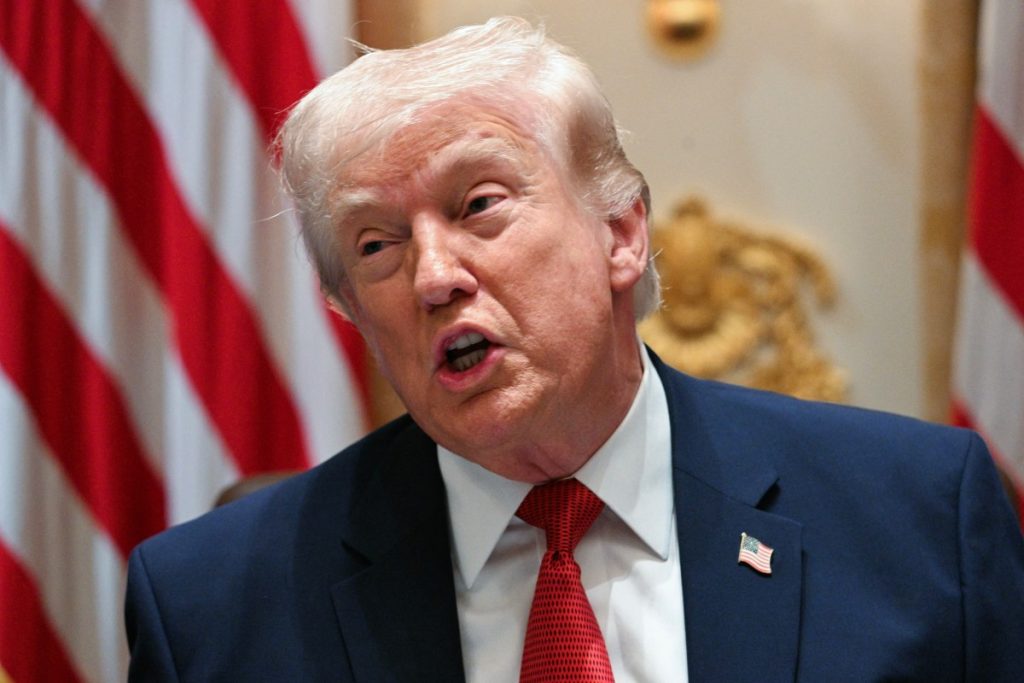
US President Donald Trump on Saturday warned Iran not to “blackmail” Washington with its flip-flopping on the fate of the Strait of Hormuz, after Tehran declared the strategic waterway once again closed.

“We’re talking to them. They wanted to close up the strait again — you know, as they’ve been doing for years — and they can’t blackmail us,” Trump said at a White House event.

Trump said there would be “some information” about Iran later in the day, adding: “We’re taking a tough stand.”

Iran’s military on Saturday declared the strait, through which about one-fifth of the world’s crude and liquefied natural gas normally passes, was once again closed, a day after saying it was open.

The post Iran cannot ‘blackmail us’ with Strait of Hormuz – Iran appeared first on Vanguard News.

Categories
Nigeria

The Missing Piece of the Puzzle – THISDAYLIVE

Since arriving at the Riyadh Air Metropolitano in February, Ademola Lookman has built a reputation for delivering in big games. He scored in his debut against Real Betis in the Copa del Rey. However, it was with his two-goal contribution (scored one and assisted another) against Barcelona in the semi-finals of the Copa del Rey that he actually announced himself to Atlético fans. The Nigerian must, however, have written his name indelibly in the hearts of Atletico faithful, as it was his goal that took the Los Rojiblancos to the semifinal of the UEFA Champions League after finding themselves 2-0 down early in the first half in the quarter-finals against Barcelona, which led to the question of whether the Super Eagles winger is indeed the missing jigsaw in Atletico puzzle. Across all competitions, he has become one of Atlético’s most important attacking players, with 10 goals contributions in just 15 matches

Ademola Lookman is not new to putting up exceptional performance on big European nights. Followers of the beautiful game would not forget in a hurry his hat-trick in the 2024 final of the UEFA Europa League against Bayer Leverkusen in Dublin, who until that night were yet to lose a game and thereby securing for Atalanta their first major trophy since 1963.

For Atletico faithful however, Lookman’s performance on Tuesday night’s UEFA Champions League quarter final against Barcelona at the Riyadh Air Metropolitano would remain indelible in their hearts.

After beating Barcelona 2-0 at the Nou Camp in the first leg penultimate week, Atletico Madrid are the overwhelming favourite to book the semi final ticket. Against all odds however, it took Barca just 24 minutes to level up proceedings, but Lookman came through for the home side, as he scored seven minutes after Barcelona second goal to send the Los Rojiblancos to the semi final.

Sharing his thoughts after he played the key role as Atlético Madrid booked their place in the semi-finals of the UEFA Champions League after edging past Barcelona 3-2 on aggregate, in  a tense and dramatic night at Riyadh Air Metropolitano in Madrid, Lookman told TNT Sports as per Al Jazeera, “It was a rollercoaster, with us going 2-0 down, and then it was a game of two halves, really. We stuck in there, and we got through to the semis.”

While Ademola Lookman’s goal was important for the result, it also placed him among Nigeria’s football greats.

With that strike, he became only the fourth Super Eagles player to score in a Champions League quarter-final. He now joins a special group that includes Victor Osimhen, Samuel Chukwueze, and Obafemi Martins.

Reflecting on that moment, he said: “As the game is going on, you are playing and the momentum changes and moments happen and then the pause (for the injury to Barcelona Femin Lopez) – it kind of switched us back into gear, and we were able to create a few chances, and we got the goal, and we tried to continue in that way in the second half.”

Expressing his delight at both the result and the team’s collective effort: “I’m very, very happy, of course, to play in this competition and to be here. It shows the credit to the staff, team, everybody in terms of the work and dedication, and the quality as well in this squad,” Lookman told CBS Sports Golazo.

“It wasn’t easy today but everybody dug in and everyone showed their hard work.”

Atletico showed resilience after falling two goals behind, demonstrating composure under pressure to claw their way back into the tie.

“Definitely going 2–0 down is not easy. They had the momentum at that time, and Juan comes up with a massive save against Fermín. Key moments like that give everybody belief to keep going — you will get your moments.”

Revealing the message in the dressing room at halftime, Lookman said: “To stay positive. Stay positive in the work in terms of what we believe in, knowing again we’ll get the moments for sure and we did.

“In the end, we got the result that we wanted and that’s the most important thing.”

Atletico Madrid will face either Arsenal or Sporting CP in the semi finals, and Lookman gave little away on his preferred opponent.

“In the semi-finals of the Champions League, whoever you get is a top team, whoever passes,” he concluded.

Former Super Eagles head coach, Sunday Oliseh labelled his compatriot the difference maker for Atletico Madrid in the contest.

“Talk about being an absolute influential player! I am extremely happy for Lookman. His goal made the difference. He is also showing so much maturity that is quite remarkable,” Oliseh posted on X.

For Atletico Manager, Simeone, he expressed satisfaction with the Nigerian’s performances so far, while also suggesting there is still more to come from him in the months ahead.

“He’s still evolving, he’s improving a lot defensively which makes him even more important and of course he’s carrying more weight in the team”, the Argentine said post-match.

“He’s brilliant offensively, he’s very courageous and he’s very good in one on one. Since I’ve been at the club, we’ve never had players like that with those features and well, we are betting everything on playing almost four forwards. Giuliano is a winger, he’s almost a forward and when he attacks, he’s an extra forward and when we attack we played from the heart.

“The amount of running we did was unbelievable and Lookman’s offensive importance giving pace to the team when he was on the ball. We need more from him, he has more in his tank and we’ve seen it in Nigeria and well, he’s always played great”, Simeone concluded.

Since joining Atlético, Lookman has made a strong impact, and this goal, his sixth for the club, could be his most important yet.

It not only sent his team into the semi-finals for the first time in 10 years but also moved him up the list of Nigeria’s top scorers in the competition. Only Victor Osimhen and Obafemi Martins have scored more goals than Lookman in Europe’s premier club competition.

Now, there is even more history within reach. Only two Nigerians have ever scored in a Champions League semi-final; Finidi George and Obafemi Martins. Lookman now has the chance to become the third when Atletico Madrid face Arsenal.

Categories
Nigeria

Ayra Starr announces release date for third studio album ‘Starr Girl’

Ayra Starr announces release date for third studio album ‘Starr Girl’

By Adegboyega Adeleye

Afrobeats pop star, Oyikansola Aderibigbe, popularly known as Ayra Starr, has confirmed that her third studio album, titled ‘Starr Girl‘, will be released in July 2026.

The singer revealed this during a recent appearance on The Jennifer Hudson Show, recounting how hard she had worked for the project.

“My album ‘Starr Girl’ drops in July…I’m so proud of this body of work. I put everything into it, and I can’t wait for the world to hear it,” she announced for the first time during the interview.

The upcoming album marks her third studio release, following her debut ’19 & Dangerous’ and her sophomore project ‘The Year I Turned 21.’ Fans have anticipated the third album since the Afrobeats sensation teased the project in 2025.

During her time on the show, she also performed her latest single, ‘Where Do We Go’, released in March.

The track follows releases in 2025, including the summer track ‘Hot Body’, the Grammy-nominated ‘Gimme Dat’ featuring Wizkid, ‘Who’s Dat Girl’ with Rema, and the Afro-R&B record ‘All The Love’ released for Valentine’s Day.

The post Ayra Starr announces release date for third studio album ‘Starr Girl’ appeared first on Vanguard News.

Categories
Nigeria

On a Mission to Future-proof Africa through Tech – THISDAYLIVE

Dr. Lola Olukuewu, a renowned AI entrepreneur and educator, is on a mission to equip Africans with the skills to thrive in the rapidly evolving tech landscape. As the founder of TOPAS Hub, one of Africa’s most eco-friendly tech hubs, and a mentor with BAFAI, Dr. Olukuewu is leading the charge to drive innovation and growth on the continent. With her historic achievement as Nigeria’s first female Certified Chief AI Officer, she is breaking barriers and setting new standards in the tech industry. In this exclusive interview with MARY NNAH, she shares her vision for Africa’s tech future, her experiences as a pioneer in the field, and her insights on AI, entrepreneurship, and leadership

Your achievement as the first Nigerian female certified as Chief AI Officer from the Copenhagen Institute of Technology is historic. How does it feel?

It is both humbling and deeply significant. While I appreciate the recognition, I see it more as a responsibility than a personal milestone. It represents what is possible for African women in technology and leadership. I hope it inspires more women to step confidently into spaces like AI, which are shaping the future of work and economies. For me, it reinforces my commitment to mentorship, and to creating more pathways for others to rise.

What drives you?

What truly drives me is impact – creating meaningful change at scale. Over the years in  my career journey, I have seen how access to the right knowledge and tools can completely transform lives and businesses. Today, with artificial intelligence, we are at a defining moment in history, and I am deeply motivated by the opportunity to ensure that Africa is not left behind. Through my work, especially with BAFAI, I am focused on equipping people with practical AI skills that help them improve efficiency, unlock new revenue streams, and compete globally. For me, it is about building people, not just businesses.

What is the secret to balancing multiple ventures as an entrepreneur and investor?

I would say it comes down to clarity, structure, and people. You need a very clear vision for each venture, and how they align with your broader purpose. Beyond that, building strong systems and empowering capable teams is critical. I rely significantly on technology and delegation to achieve much in record times. I’ve learned that it’s not about being everywhere or doing everything yourself, it’s about creating an ecosystem where each part can function efficiently and grow sustainably.

How do you approach mentorship, especially for women in tech?

My approach to mentorship is very practical and empowerment-focused. I don’t just share theory, I guide people on how to apply technology, especially AI, to real-life business challenges. For women in tech, I am particularly intentional because representation matters.

I encourage them to build soft skills, confidence, improve on relevant skills for their profession, and position themselves for leadership. Throughout my career, and especially through BAFAI, I have had the privilege of mentoring and coaching hundreds of professionals and entrepreneurs. I help them see what is possible, improve processes, increase productivity, and ultimately grow their income and impact.

What is the most challenging part of being a pioneer in Africa’s tech space?

One of the biggest challenges is navigating both infrastructure limitations and mindset barriers. Sometimes the technology is available, but adoption is slow due to lack of awareness or resistance to change. However, I see these challenges as opportunities. Africa – and indeed the Global South, is uniquely positioned to leapfrog stages of development if we embrace innovation intentionally. Being one of the pioneers means you must have resilience and the ability to see possibilities where others see obstacles.

How do you stay innovative and ahead in your industries?

Continuous learning is non-negotiable for me. Technology evolves rapidly, especially in AI, so I invest time in staying informed, attending global programmes, and engaging with forward-thinking communities. I also believe innovation comes from collaboration – being in the right rooms, having the right conversations, and constantly asking, “What’s next?” Curiosity and adaptability are key.

TOPAS Hub is one of Africa’s most eco-friendly tech hubs. What’s the vision?

The vision for TOPAS Hub is to create a space where innovation and sustainability go hand in hand. It’s not just about enabling startups or international businesses with the right meeting point, or creative space to work and thrive, it is also about building the ecosystem responsibly.

We are fostering an ecosystem where entrepreneurs can develop solutions that are both technologically advanced and environmentally conscious. I strongly believe that growth in the developing nations must be sustainable, and TOPAS Hub reflects that commitment.

You are an investor in AI-powered call center tools. What’s the impact?

The impact is significant because customer experience is at the heart of every successful business. AI-powered solutions like Ordibl (which is currently being fully developed), are helping organisations automate intelligently, respond faster, and maintain high-quality engagement with their customers. This not only improves efficiency but also reduces operational costs and increases scalability. It’s a clear example of how AI can directly drive business growth.

What is your take on sustainability in business and tech?

Sustainability is no longer optional, it is essential. Businesses today must think beyond profit and consider their long-term impact on the environment and society. I am an SDG 14 Advocate, encouraging as many as possible to consider the impact and implications of how we live and work on “Life Below Water”. In tech especially, we have a responsibility to build solutions that are efficient, inclusive, and environmentally conscious especially with AI that can pose significant impacts on the environment. This is something I actively promote

through both BAFAI and TOPAS Hub.

What is the best advice you’ve received, and who gave it?

One piece of advice or a mantra I have learnt, used many times, and that has stayed with me is: “Focus on the user and all else will follow.”. This is a philosophy I learnt during my time working at Google. It fundamentally shaped how I approach entrepreneurship. While financial success is important, true fulfillment comes from knowing that what you are building is creating value and making a difference in people’s lives.

How do you unwind and recharge?

I value moments of quiet reflection. I also enjoy learning. Sometimes, stepping away to read or explore new ideas helps me recharge mentally. For me, rest is not just about stopping, it is about renewing clarity and creativity.

What’s one thing people wouldn’t know about you from your professional profile?

People often see the achievements, but maybe not the depth of my passion for people. I genuinely find fulfilment in mentoring, and seeing others grow. It is something I take very  personally, and invest deeply in.

What is a personal sacrifice you’ve made for your career, and was it worth it?

Time is one of the biggest sacrifices. Building across multiple industries and leading at this level requires a significant commitment. However, when I look at the lives impacted, the people mentored, and the systems being built, I can confidently say it has been worth it.

What is next for Dr. Lola Olukuewu?

My focus is on scaling impact. I am expanding AI education and adoption through BAFAI, strengthening innovation ecosystems through TOPAS Hub, and continuing to contribute to global conversations around responsible AI, and encouraging entrepreneurship in various other sectors. The goal is to ensure that Africa and the wider Global South, are not just participants, but leaders in the future of technology.

Categories
Nigeria

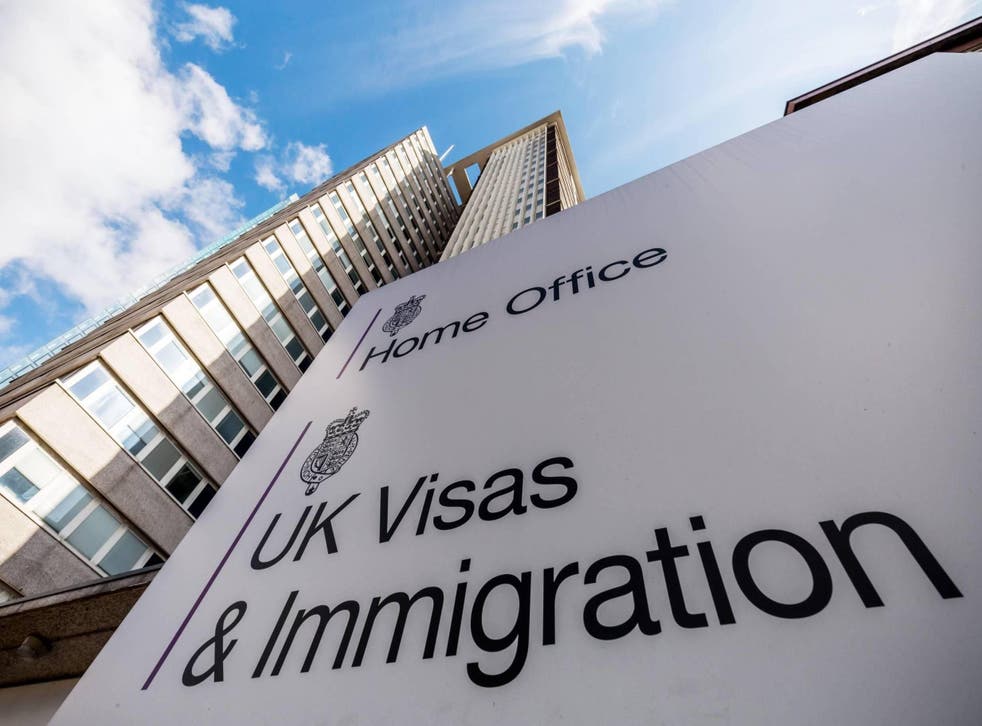
UK investigates claims asylum seekers claiming gay to remain in Britain

UK investigates claims asylum seekers claiming gay to remain in Britain

The government has launched an investigation following a BBC report that some migrants are being advised to make false claims about their sexual orientation or domestic abuse status in order to remain in the UK.

Downing Street said there were “robust safeguards” in place to ensure claims are “rigorously and fairly assessed”.

The prime minister’s spokesman added that the Home Office and the Immigration Advice Authority were working together to ensure “anyone potentially abusing our immigration system is held accountable”.

Opposition parties have called for sweeping reforms to the asylum system to prevent fraudulent claims.

The BBC investigation revealed that migrants whose visas are nearing expiry are allegedly being coached with fabricated cover stories and guided on how to obtain false supporting evidence, including letters,

photographs and medical reports. In some cases, law firms and advisers are said to be charging thousands of pounds to help migrants claim they are gay and at risk if returned to countries such as Pakistan or Bangladesh, enabling them to apply for asylum.

The report also found that some individuals are exploiting provisions designed to protect genuine victims of domestic abuse, which allow faster access to permanent residency. In certain instances, migrants were said to have entered relationships or marriages with British partners before making false abuse claims after arriving in the UK.

According to the findings, the number of people seeking fast-track residency on the basis of domestic abuse has risen to over 5,500 annually—an increase of more than 50% in three years.

Responding to the allegations, the prime minister’s spokesman said: “Both the Home Office and Immigration Advice Authority are investigating the claims made by the BBC, both yesterday and today, to ensure anyone potentially abusing our immigration system is held accountable.

“Any attempt to misuse protections designed to protect genuine victims from the devastation of domestic abuse is shameful and completely unacceptable.

“The home secretary has been clear that those trying to defraud the British people to remain in the UK will have their application refused and find themselves on a one way flight out of Britain.

“Where unethical and illegal practices are identified and evidence exists, legal practitioners will be referred to the police through the relevant regulatory body.”

No timeline has been provided for the investigation.

Asked whether the prime minister was confident in the current system, the spokesman said: “The asylum system is built on robust safeguards, so every claim is rigorously and fairly assessed, abuse is actively uncovered, and these procedures are continually reviewed to shut down misuse.”

Gaon Hart, who oversees the regulation of immigration advisers, described the issue as “abhorrent abuse of the system”, warning that a minority of advisers were tarnishing the sector’s reputation.

“Wherever there is potential for greed, there is and will be abuse and we will be addressing it,” he told BBC Radio 4’s Today programme.

Hart noted a rise in enforcement actions over the past year following complaints about unregulated advice and system manipulation. He added that the Home Office had referred several cases for investigation and increased funding to support prosecutions, while also calling for “greater clarity and simplicity in the system” and urging the public to report suspected malpractice.

Since returning to power in 2024, Labour Party has prioritised tackling illegal immigration and reforming the asylum system, though it faces the challenge of tightening rules while protecting vulnerable applicants.

Chris Philp, the Conservative shadow home secretary, said the system “must be totally overhauled” to ensure only those facing genuine persecution are granted asylum.

Meanwhile, Will Forster of the Liberal Democrats described the findings as “abhorrent”, adding: “We need an asylum system that is fair, controlled and efficient. Not the shambles the Conservatives left us with.”

Reform UK said it would, if elected, make facilitating a false asylum claim a “strict liability” criminal offence, carrying penalties of up to two years in prison.

Vanguard News

The post UK investigates claims asylum seekers claiming gay to remain in Britain appeared first on Vanguard News.

Categories
Nigeria

Peter Mbah and Leadership ‘Identity’ – THISDAYLIVE

By Olusegun Adeniyi

We gathered in Enugu last Thursday for the 5th Year Memorial and 4th Annual Innocent Chukwuemeka Chukwuma Impact and Legacy Lecture. The lecture was delivered by former Nigerian Electricity Regulatory Commission (NERC) chairman, Dr Sam Amadi, at the Centre for Memories. And something happened that was both comical and instructive. In his opening remarks, Amadi made allusion to the way Mrs Josephine Effah-Chukwuma always referred to her husband by his full name, Innocent Chukwuemeka Chukwuma, suggesting that the habit was perhaps a deliberate act of cultural preservation. 

However, with the unfiltered candour for which she is known, Josephine rose from her seat to set the record straight. The full-naming convention, she explained, had nothing to do with culture but rather to resolve a nagging confusion. There is, after all, another Innocent Chukwuma in Nigeria, the Nnewi-born industrialist who founded Innoson Vehicle Manufacturing (IVM), the country’s first indigenous automobile company. Both men are Igbo. Both bear the same first name and surname. Both are accomplished, though in vastly different spheres. But the mix-ups regarding who is who were constant and, at times, absurd, even by media houses that used their photographs interchangeably. The height of the crisis, Josephine told the audience, was when the two Innocent Chukwumas were assigned the same room at Transcorp Hilton in Abuja!

So, according to Josephine, calling her husband Innocent Chukwuemeka Chukwuma was the only reliable way to ensure that her Innocent was not mistaken for the other Innocent. A simple, practical solution to an extraordinary problem of identity. The room erupted in laughter. But as with most things that make us laugh, deeper lessons are also embedded. I have reflected on that anecdote since I left Enugu, because it also illuminates a question that applies far beyond the private frustrations of two men who share a name. For instance, in any field of human endeavour, there will always be others who share your title. What cannot be shared, or duplicated, is the quality of what you do with that title. In public life, as in private, the question of distinction matters.

Nigeria currently has 36 state governors. They all bear the same title, enjoy the same constitutional powers, and attend the same National Economic Council meetings, while sitting together at the same Council of State sessions with the President. Now the question: Does the title alone confer distinction, or must distinction be earned in the quality of one’s governance? These are the questions that Innocent Chukwuma’s life, and Josephine’s clarification, pose to every public office holder in this country. You can share a name, title, and even a hotel room with another person. But if your work does not distinguish you, then you are, for all practical purposes, invisible. I raise this because what I witnessed in Enugu last week was not confined to the memorial lecture. The state itself has become something of a case study in what happens when a governor decides that the office must be filled with substance.

It all started on 19th March (just about a month ago) in London, when I was at the ‘UK-Nigeria Project Agglomeration Compact Dinner’ held at the British House of Lords, on the sidelines of President Bola Tinubu’s State Visit. It was an investment forum organised by Mutandis Africa, founded by Ms Chinelo Anohu to showcase various economic opportunities that abound within the continent, especially Nigeria. Mbah used the occasion to sell what he is doing in Enugu State. The governor recounted the foundation he has laid in several sectors, including education, health, infrastructure, agriculture, housing etc. while promising huge returns on investments, for whoever would take the opportunity to come to Enugu.

Of course, I had read a lot about Mbah. But I was meeting him for the first time and was impressed by his engagement at the session. Since I had an already scheduled visit to Enugu, I told him I would like to see some of the things he claimed to have done. He promised that he would be available during my visit. So, the moment I arrived Enugu last week Wednesday (24 hours before the Innocent Chukwuma memorial programme), I was whisked by Mbah’s media people, led by my aburo, Uche Anichukwu, for a tour of projects that lasted until around 6.30pm when I met the governor in his office.

I can attest to the fact that in less than three years, Enugu State has undergone a physical and institutional transformation. The numbers alone are striking. The state has constructed or rehabilitated hundreds of kilometres of road and I journeyed through some of them. It has completed 260 ‘Smart Green Schools’ equipped with digital learning tools, science laboratories, and renewable energy, and I also visited a prototype. The state has rolled out primary healthcare centres that are powered by renewable energy, entered into a Joint Venture for a tractor assembly and service plant with a Danish company and another factory in partnership with the Chinese Haier Group to assemble smartphones, tablets, computers, smart boards, Android televisions, as well as train locals.

From Sunrise Flour Mills to Hotel Presidential (where I stayed) to Nigergas (now upgraded to produce significant volumes of medical and industrial oxygen) to Enugu United Palm Products Ltd., as well as Enugu Vegetable Oil Project, Enugu Songhai-Heneke Integrated Farm, and other hitherto abandoned projects, Mbah is reviving them while also establishing new projects, including farm estates. But it is not all of the governor’s projects that I agree with. For instance, I am firmly opposed to the idea of establishing airlines to which many governors, including Mbah, seem obsessed. Incidentally, the board of ‘Enugu Air’ is chaired by my egbon, Richard Agu who went out of his way last Thursday night to provide me delicious local chicken. And while the idea of a ‘New Enugu’ may seem attractive, the notion of aping Dubai to build luxurious skycrapers in an environment like ours does not appeal to me.

But there are many ideas of Mbah that I do agree with. I was at the ‘Command Centre’, the nerve end of security cameras mounted across the state for surveillance, and my conversation with the team leader helped me appreciate why Enugu is relatively safe. I am also impressed by Mbah’s investment in the education sector. In the 2024 budget, the administration allocated the sum of N134.9 billion, which represented 33 per cent of the entire budget of N521.5 billion to education. The sector also received a lion-share of N320.6 billion in the 2025 fiscal year, representing over 33.2 per cent of the total budget. Education got 32.27 per cent of the N1.62 billion 2026 budget. This huge investment has enabled Mbah to construct ‘Smart Green Schools’ in each of the 260 wards, introduced ‘Smart Secondary Schools’ in each of the 17 LGAs while reviving the technical schools which focus on training artisans with the aim to become respected and skilled professionals that are valued for their expertise.

The whole idea, as Mbah explained to me, is to replace the current outdated education curriculum that emphasises memorization or rote learning with a hands-on learning approach where individuals gain knowledge and skills through direct experience and reflection. But the numbers, impressive as they are, tell only part of the story. What is more significant is the ambition behind them and the way Mbah has been able to change the paradigm of governance. Such that capital expenditure far exceeds the recurrent in a nation where some governors expend more than 50 percent of their statutory allocations on ‘security vote’.

In 2024, for instance, recurrent expenditure in Enugu State accounted for just N107.2 billion, representing about 21 percent of the N521.5 billion budget for the year, while capital expenditure gulped N414.3 billion. That is 79 percent!  It even got better in the 2025 budget, with N837.9 billion allocated to capital expenditure, representing 86 per cent of the N971 billion budget, while recurrent expenditure accounted for N133.1billion, representing only 14 per cent. For this fiscal year’s (2026) N1.62 trillion budget, about 80 per cent is being allocated to capital expenditure. And for context, before Mbah’s administration, the state’s total annual budget hovered between N100 billion and N120 billion with a ratio of about 25 to 35 percent spent on capital expenditure.

When I asked Mbah where he found the money for all the projects he has embarked upon and the ones still in the pipeline, he said there were two answers to the question. “One is fortuitous because of the increase in allocations from the federation account while the second is that we were intentional and deliberate from Day One on what we intended to achieve and how to find resources for our projects.” Mbah then explained how he has been able to get money by blocking several leakages in the system. “Let me give you a simple example from the transport sector. You know all those N100 tickets that vehicles are charged at parks by touts. We immediately introduced e-payments and from N147 million a year, we started raking in N1.2 billion in a month.”

Available data supports Mbah’s efforts, especially in Internally Generated Revenue (IGR). The state’s IGR grew from N26.8 billion in 1922 to N37.4 billion in 2023, representing a 39.6 per cent increase. But Mbah’s administration scaled the IGR to N180.5 billion in 2024, representing a whooping 382.6 per cent growth. The state’s IGR further surged to N406.77 billion in 2025, which translates to 125.4 per cent revenue growth. Expectedly, Enugu State has leapfrogged in the national revenue chart. While the state placed 14th in 2022, the state placed 13th in 2023, and 5th in 2024. It placed 3rd in 2025 – although IGR data collation for 2025 is still ongoing and ranking subject to change.

Perhaps because of his private sector background, Mbah has also monetized several of the dormant assets, especially in the agriculture sector, with profitable partnerships. That, as he explained, is where he realizes a significant amount of funds. He denied the charge of overtaxing the people. “Don’t forget that taxation is in the Exclusive Legislative List. Whether it is Personal Income Tax, Company Income Tax, Value Added Tax or Withholding Tax, they can only be legislated by the National Assembly,” Mbah explained. “What we have done is to widen the tax net, introduce technology to cub leakages or sharp practices and optimise and monetise our assets.”

According to Mbah, the percentage of direct tax from the people in the state’s IGR is really minimal. “The data is available and you can go and confirm. Out of the N406.77 billion revenue in 2025, only N51.5 billion or 12.6. per cent came from tax. We want businesses and our people to grow so they can pay more. That’s why every component of our programmes is tied to empowerment so that when the people are productively engaged, they can pay more for the social services we provide.”

Mbah said when he assumed office, he established a committee comprised of representatives of government, organized labour, civil society, and market leaders. “The committee established that some of the things people call tax came from the activities of illegal revenue collectors. The recently passed Enugu State Harmonised Taxes and Levies (Approved List for Collection) Law, 2026, will finally eliminate those unauthorised collections that have needlessly burdened our people,” said Mbah who recently banned collection of daily revenue of N100 and N200 from petty traders. “In fact, we have charged some people to court, even this week.”

At the memorial lecture last Thursday, many speakers, including Mr Patrick Okigbo III, Mrs Ndidi Nwuneli, and Prof Joy Ngozi Ezeilo, spoke about the leadership deficit we have in Nigeria, based on the paper presented by Amadi. The problem with Amadi’s presentation was in focusing almost solely on the federal government without paying much attention to the sub-nationalities. He is not alone on this. Most Nigerians have practically allowed the governors a free pass even when there can be no real development in our country until people in the states begin to feel the impact of those elected to superintend their affairs.

While I left Enugu last Friday convinced that Mbah is doing a very good job in his state, I am also a bit apprehensive in passing judgement. In the last 27 years, I have seen promising beginnings in many states only to peter out into mediocrity, with bold visions dissolving into the comfortable haze of incumbency. So, at the end, the real test of governance in Enugu may not be what I saw on my visit, but what Mbah eventually leaves behind when the title passes to someone else. Fortunately, he understands that. As the governor told me during our chat, he is more concerned about projects and programmes that are sustainable and would last generations.

Meanwhile, my trip to Enugu was to honour Innocent Chukwuma who left behind the CLEEN Foundation, ‘Centre for Memories’, and many young people who carry his fingerprints on their careers. Beyond that, he left behind the proof that one life, lived with conviction and purpose, can alter the trajectory of an entire sector. That explains why five years after his passing, we would gather to honour his name, and his work. That is the ultimate distinction, as I pointed out in my tribute, Remembering Innocent Chukwuemeka Chukwuma (1966 – 2021) – THISDAYLIVE

For governors, ministers, and all who hold public office in Nigeria, the question is simple but unforgiving: When the title is gone, what will remain? Will your contribution be so clear, so unmistakable, that no one will confuse you with the dozens of others who held the same office? Or will you be just another name on a list, indistinguishable from those who came before and those who will come after?

Josephine Chukwuma found a practical solution to properly identify her husband; she simply uses his full name. But in public life, the solution is not in the name. It is always in the work. That precisely is what Peter Mbah is telling us in Enugu State.  

The Military and Bombing Errors 

The controversy over the legitimacy of the Jilli weekly market along the Borno-Yobe States’ border where another bombing error by the Nigerian Air Force (NAF) led to several fatalities is needless. What should concern all relevant authorities is that innocent lives were lost to what is fast becoming a recuring tragedy. Many of us can still remember that less than three years ago in Tudun Biri, Igabi Local Government Area of Kaduna State, dozens of people were similarly killed, and hundreds of others injured when a military drone bombed a gathering of residents who were reportedly celebrating Maulud. Nobody has heard anything about the report of the investigation ordered at the time or what happened to the victims who may have been abandoned.

Since we are dealing with people on the lower rung of the social ladder, the tendency is always to quickly forget about victims and move on in a nation where the lives of ordinary citizens count for little. On 17 January 2017, a NAF fighter jet mistakenly dropped bombs on settlements harbouring Internally Displaced Persons’ (IDPs) in Rann, Kala Balge local government area of the same Borno State, leaving several people dead, with humanitarian aid workers of the International Committee of Red Cross (ICRC) among those seriously injured. Although the late President Muhammadu Buhari made the usual pledge to investigate “this regrettable operational mistake”, nothing happened in the aftermath. And apparently no sufficient lessons were learnt by military authorities because we continue to witness these avoidable tragedies.

Let me be very clear here. Anywhere there are military operations, there is collateral damage. And we must commend our armed forces for their sacrifice over the years as we confront insurgency, banditry and sundry other criminal cartels who work against the peace and progress of Nigeria. But it is not enough for the military to just own up to all these killings, apologise and move on. At all times and in all circumstances, people in uniform and under authorized orders are accountable for lives, even in combat zones. It is therefore important for Defence Headquarters to investigate this and other accidental mass killings of innocent people that have occurred in recent times with a view to ensuring they do not happen again.

 • You can follow me on my X (formerly Twitter) handle, @Olusegunverdict and on www.olusegunadeniyi.com   

Categories
Nigeria

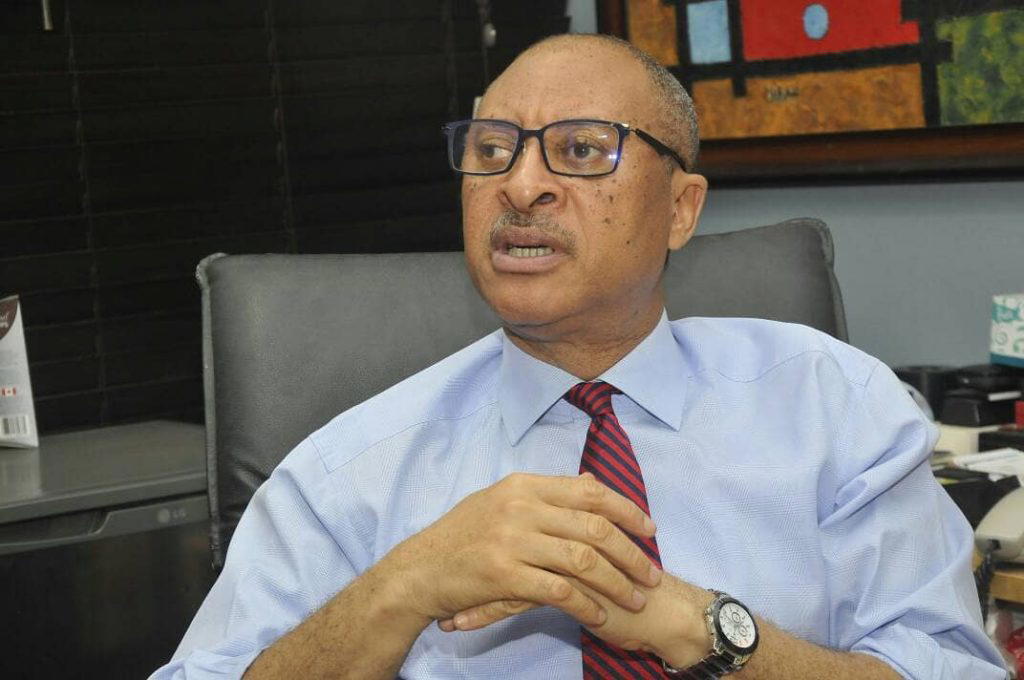
Sunday Dare blasts Pat Utomi for calling Tinubu’s reforms ‘Ponzi scheme’

Only opposition to FG are on social media; political parties silent - Pat Utomi

The Special Adviser to President Bola Ahmed Tinubu on Media and Public Communication, Sunday Dare, has criticised economist and public affairs commentator, Pat Utomi, over his remarks describing the Federal Government’s economic reforms as a “Ponzi scheme.”

Utomi had labelled the administration’s reform programme as “ridiculous” and “poorly structured,” drawing a sharp response from the presidency.

In a detailed rebuttal, Dare dismissed the claims as “exaggerated” and lacking “analytical depth,” arguing that Utomi’s contributions to national discourse often rely on “alarmist rhetoric rather than evidence-based critique.”

He also questioned Utomi’s track record in both the public and private sectors, suggesting a gap between his commentary and measurable outcomes from past engagements.

Defending the government’s economic policies, Dare said the reforms introduced under President Bola Tinubu are structural and aimed at addressing long-standing distortions in the economy.

He cited the removal of fuel subsidy in May 2023, which he said eliminated a major fiscal burden and improved revenue allocation to states, as well as the unification of exchange rates to boost transparency in the foreign exchange market.

According to Dare, these measures are consistent with recommendations from global financial institutions such as the World Bank and the International Monetary Fund.

He further pointed to improvements in Federation Account allocations, non-oil revenue performance, and efforts to stabilise external reserves as early signs of progress.

Dare argued that describing the reforms as a “Ponzi scheme” reflects a misunderstanding of macroeconomic principles, stressing that the policies are designed to eliminate inefficiencies, restore market confidence, and rebuild fiscal credibility.

While acknowledging the importance of scrutiny in a democratic system, he maintained that criticism must be “constructive, rigorous, and supported by viable alternatives.”

He also highlighted ongoing reforms in taxation, customs modernisation, and digital revenue systems as part of a broader strategy to strengthen the country’s economic framework.

Dare warned that unsubstantiated claims could distract from efforts to stabilise and reform the economy, adding that while dissent is essential, it must contribute meaningfully to policy debate.

The post Sunday Dare blasts Pat Utomi for calling Tinubu’s reforms ‘Ponzi scheme’ appeared first on Vanguard News.

Categories
Nigeria

Guinness Nigeria Surpasses N1trn Market Capitalisation – THISDAYLIVE

Kayode Tokede

Guinness Nigeria Plc has achieved a landmark milestone, surpassing the N1 trillion mark in market capitalisation on the Nigerian Exchange (NGX), underscoring strong investor confidence and a sustained track record of value creation.

As of April 10, 2026, the company’s market capitalisation stood at approximately N1.01 trillion, with an enterprise value of N1.05 trillion. 

This milestone reflects a significant re-rating of the business by the market, driven by improved fundamentals and a renewed growth trajectory.This achievement caps a remarkable 18-month period during which the company has delivered substantial improvements in shareholder value. As of April 12, 2026, Guinness Nigeria’s share price closed at N462.90, reflecting strong upward momentum and sustained investor confidence in the company’s strategic direction and performance outlook.The company’s latest audited financial results for the 18-month period, ended 31 December 2025, further underscore this transformation. 

Guinness Nigeria delivered revenue of N730.80 billion, while gross profit rose by 152 per cent to N230.48 billion, demonstrating strong margin expansion and improved operational efficiency.In a significant turnaround, the company recorded a net profit after tax of N41.16 billion, recovering from a loss position in the prior period. 

Commenting on the milestone, Chairman of the Board, Prof. Fabian Ajogwu in a statement said: “This is a defining moment for Guinness Nigeria and a strong validation of the strategic direction we are pursuing. 

“Crossing the N1 trillion market capitalisation threshold reflects the resilience of our business, the strength of our brands, and the renewed confidence of the investment community in our long-term prospects. We remain committed to disciplined governance, sustainable growth, and long-term value creation for all stakeholders.”

Categories
Nigeria

Bandits demand ₦30m over kidnapped UNIJOS student

By Florencemary Nwabueze

A wave of fear and outrage has gripped Nigerians following the emergence of a disturbing video showing a kidnapped student of the University of Jos (UNIJOS), identified as John Arum.

According to reports, the student was abducted by armed bandits while travelling along the Kaduna–Jos highway, a route that has increasingly gained notoriety for insecurity and kidnappings. The kidnappers are reportedly demanding a ransom of ₦30 million for his release.

The situation took a more alarming turn when the abductors allegedly used the victim’s phone to record videos of him being tortured and shared the footage in his class group chat.

The video, which has since circulated online, shows the student in distress, pleading for his life while being subjected to physical abuse.

A fellow student, Ezikima Asunga, confirmed the incident in a message shared publicly. He stated that the victim was his coursemate and raised concerns that the student’s family might not be aware of the kidnapping, as there has been no direct line of communication with them.

The footage has triggered widespread condemnation, with many Nigerians expressing anger over the continued deterioration of security across the country. Social media users have also pointed out that the kidnappers were not masked, raising questions about the possibility of identifying and apprehending them.

Public reactions have been intense, with citizens calling on security agencies, including the police and military, to act swiftly to rescue the victim and bring the perpetrators to justice. Many have also decried the increasing frequency of such incidents, describing the situation as a national emergency.

“He was kidnapped on his way to Kaduna from Jos. His captors are torturing him severely and using his phone to send pictures and videos to his class group. When asked if he’s a Christian, he denied it, hoping to save himself from pain, but the torture only got worse. He started calling on Jesus, which made his captors mock him and Jesus”.

As of the time of filing this report, there has been no official statement from security authorities regarding the incident or any ongoing rescue efforts.