Categories
New Zealand

Thundergrid and Art of the Possible launch new campaign

Electrification infrastructure company Thundergrid has launched a new national campaign in partnership with Art of the Possible, 1 Up and TIS.

Titled ‘From powerless to powerful’, the campaign has rolled out across billboards positioned opposite selected petrol stations in Auckland, reframing electrification as a practical response to fuel volatility, rising operating costs and the need for long-term energy resilience.

NZ’s fuel dependence

The campaign comes as new industry data highlights New Zealand’s exposure to imported fuel markets.

According to the 2026 Drive Electric State of the Nation report, New Zealand spends an estimated $7-9 billion annually on petroleum imports, while transport accounts for nearly three-quarters of the country’s oil consumption.

The report also found New Zealand remains 99% reliant on fossil fuels for transport energy, despite generating 88% of its electricity from renewable sources in 2025.

The future option

Thundergrid co-founder Jonathan Zukerman says businesses are increasingly viewing electrification as an operational resilience strategy rather than simply an emissions initiative.

“We’re seeing a noticeable shift in urgency. Businesses are no longer just exploring electrification as a future option. Rising fuel costs and ongoing global instability are forcing many operators to reassess how exposed they are to fuel markets they can’t control.

“Fuel costs are clearly part of that, but we’re also hearing growing concern around long-term fuel security, operational continuity and cost certainty.

“New Zealand imports most of its transport fuel, yet we already have one of the most renewable electricity systems in the world. Businesses are starting to recognise that electrification gives them more control over one of their largest operational costs,” says Zukerman.

Thundergrid co-founder Jonathan Zukerman.

From powerless to powerful

The renewed business interest comes amid wider growth in EV demand following recent oil market volatility, says Thundergrid.

The Drive Electric State of the Nation report found EV registrations increased by approximately 265% between February and March 2026, coinciding with renewed geopolitical instability and fuel price concerns.

The company adds that the conversation has now shifted beyond vehicles alone toward broader infrastructure and energy-management planning.

“Electrification is increasingly becoming an infrastructure and resilience conversation,” says Zukerman. “Businesses are looking for more certainty around energy costs, more control over operations and less exposure to global fuel markets they can’t influence.”

The new campaign focuses on the shift from feeling powerless in the face of volatile fuel prices and global supply pressure to becoming more operationally resilient through smarter energy infrastructure, charging systems and fleet planning.

The post Thundergrid and Art of the Possible launch new campaign appeared first on stoppress.co.nz.

Categories
New Zealand

Keeping digital advertising simple: A look behind the scenes at Scroll Media

StopPress sat down with Scroll Media’s Jane Ormsby for a look behind the scenes at what the company does, what’s trending in digital advertising and what’s on the horizon.


StopPress: Kia ora Jane! Let’s get started by looking at what Scroll Media offers – what’s the difference between Scroll and an advertising agency?

Jane Ormsby: Scroll Media is a digital advertising network – we hold the rights to sell the advertising space across a group of premium web publishers, apps, travel data, podcast ads and games.

Each month, Scroll reaches over three million unique users across our network here in Aotearoa. Some of our premium publishers include Pricespy, Newsroom, Concrete Playground, Rolling Stone, AccuWeather, Reuters, FIFA+, TicketMaster, Gaspy, Kick and NRL.com. By combining our extensive reach with standout formats, we help brands get noticed in a digital world. 

Jane Ormsby (right) says Scroll tries to keep the complicated world of digital advertising simple for clients.

Our model has also changed massively to keep meeting the market – we’ve tried to make it easier for independent publishers to get advertising dollars and get a more even playing field in Aotearoa New Zealand to support local publishers. This has certainly had its challenges, but the team are really happy with where Scroll Media is now. We have carved a niche representing exclusive platforms from Aotearoa and overseas.

Also our audio and gaming offering helps extend the reach of the media plan. We try and offer something innovative that other publishers are not thinking of to attract user attention.

SP: So, who are your clients?

JO: Ninety percent of our clients are media agencies planning advertising campaigns on behalf of their clients. With our exclusive inventory rights, we can guarantee advertisers the right message at the right time on specific websites, apps, games or podcasts.

By representing over 15 different publishers in our portfolio, we make it easy for media agencies to plan and buy across multiple sites and optimise for the best performance.

I’m really impressed with the quality of work and thinking that comes out of Kiwi media agencies. The challenges media agencies face with competitive forces are overwhelming but they constantly strive to do the best for their clients.

SP: What sort of ads do you offer?

A big chunk is premium IAB display ads, contextually targeted to specific sites. We also offer CTV, BVOD, and Pre Roll videos, with 15 seconds being the most popular.

Site takeovers, skins, and interstitials are examples of rich media that we sell a lot of, which generate huge engagement rates. We access games like Mahjong, Wordle, Candy Crush, Roblox and Angry Birds with in-game advertising, where we often gamify the creative to make it more engaging.

Scroll Media also offers premium digital audio, selling 15 and 30 second podcast ads. Additionally, with our Travel intender offering, we use email advertising and display to target travel intenders.

Plus we run sponsorships and branded content for integrated briefs. Digital media is complicated these days, and we try and simplify it.

SP: What are some of the big trends you are seeing?

JO: Audio represents a big shift in our growth. We’ve seen enormous advancements there because podcasts are so popular – the average person listens to over five podcasts a week: in the car, walking the dog or at home relaxing.

Digital audio is often forgotten on the media plan, so we are trying to fix that, as there is a huge missed opportunity for brands to capture attention in relevant podcasts.

SP: Audio is interesting; tell us more about that.

JO: Scroll Audio can reach over 70% of the digital audio market, with a curated list of over 300,000 podcasts, tailored to the brief. Thanks to our in-car audio capability, we are currently running a speed campaign for Waka Kotahi that targets people listening to podcasts while driving, encouraging them to slow down and obey speed limits.

With audio, we can reach several different listening apps and give a unified reach numbers, which our media agency clients love.

SP: What are some other examples of recent campaigns you have run?

JO: We run across many different verticals. Here are some recent campaigns which really stood out lately:

  • Working with the government to encourage Māori/Pacific people to enrol in the next election. We use postcode targeting and contextual relevant podcast ads to do this.
  • Campaigns on the Pricespy website always work well for retailers and telcos. I like how Spark continues to advertise on Pricespy around phones above a certain price point.
  • Helping Burger King reach gamers by running reward video within games.
  • Using our Amadeus travel intender data to target users coming into NZ from overseas to tell them to declare or dispose of anything to protect our natural environment.

I love the diversity of campaigns we work on. Every day is different and it never gets boring.

SP: What is on the horizon?

JO: We recently signed a partnership with a global rep house called Ad Scholars, which gives us Australian and NZ sales rights to FIFA+. The FIFA World Cup is the biggest sporting event in the world, and only comes around once every 4 years, so brands can access football fans on CTV and app. The interest in FIFA+ has been phenomenal, especially with impactful ad formats like L bars and picture in picture ads which are served at key moments, like when a goal is scored.

YouTube Video
YouTube Video

Strategic alignments are helping us grow our business. We also partnered with rich media vendor Azerion to build out our capability across more premium publishers, allowing media agencies to book high impact ads over multiple publishers. Some of the creatives on desktop and mobile are mind blowing and we love showing media agencies examples of InSkins from overseas and here in NZ.

An example of InSkins, run by Toyota for its new Hilux.

We are now supporting media agencies as they navigate advertising on ChatGPT, which allows sponsored ad placements to appear below AI-generated responses for Free and Go subscribers in Australia and Aotearoa. This is both incredibly exciting and challenging.


scrollmedia.co.nz

The post Keeping digital advertising simple: A look behind the scenes at Scroll Media appeared first on stoppress.co.nz.

Categories
New Zealand

Budget 2026: Health Industry Hopes For Continuation Of Funding Levels


Kate
Green
, Health Correspondent

Health
industry groups and experts aren’t expecting great surprises
from
Budget 2026
, but they’re hoping for a continuation of
previous levels of funding.

Here’s what a few key
players will be looking for when the documents land on
Thursday.

Primary care looking for a
boost

Royal New Zealand College of GPs president Dr
Luke Bradford said he was hoping for some more funding for
general practice.

“At the moment we spend about six
percent of health spend on primary care – the OECD average
is 14 percent,” he said.

That was leading to two
problems – first, capitation funding (that is, the amount of
money a practice is given by the government per person
enrolled) had not kept up with inflation, increasing the
amount patients themselves had to pay.

Second, wages
in general practice had not kept up with their hospital
counterparts, making recruitment and retention
tricky.

Increasing funding would reduce costs for
patients and improve pay and conditions for staff, which
would make recruitment easier, Bradford said.

Advertisement – scroll to continue reading

“By
investing in general practice, you save the health system
money quite dramatically.”

A report published last
week by public health campaigners Kaitaki Hauora pointed to
primary care as the most effective place for investment –
one health economist described it as “putting things much
further upstream to avoid any kind of downstream
costs”.

Bradford said he was expecting the budget to
be “relatively austere” overall.

“Last year we did see
a movement,” Bradford said. “We did see some shift in that,
but it has not yet tilted the balance for people’s back
pockets and our recruitment drives.”

New medicines,
and keeping the lights on

Patient advocate Dr Malcolm
Mulholland said he would be looking out for new Pharmac
funding, which would determine how many drugs on its list of
options for funding would become available.

“We know
that at the moment the waiting list of medicines that
Pharmac want to fund is over 100, and that will come at an
annual cost of some $250 million to $300 million.”

He
said the government had a mandate to invest more in health –
a recent poll of 1000 people, conducted by market research
company Perceptive for pharmaceutical lobby group Medicines
NZ, showed 55 percent of people ranked the health sector as
the top priority for funding, well ahead of the next most
important, economic development, at 15 percent.

The
other area Mulholland said he’d be looking at closely was
funding for Health NZ.

“A report came out very
recently that said just
to keep the lights on will cost $1.405 billion
. Anything
short of that, or any new initiatives without having new
money tagged to it, will actually be a deficit,” he
said.

“We’re very worried about what services in that
situation might be cut.”

That number wasn’t far off
what was forecast in last year’s Budget, which was
$1.37m.

“I would expect that funding to be relatively
the same, but when it comes to Pharmac, I really have no
idea.”

Aged care industry looking for funding grant
for rural facilities

Aged Care Association chief
executive Tracey Martin said she would be looking for
funding to keep the doors open at small, charity-run or
owner-operated aged care homes – particularly in rural
towns.

That would ideally take the form of a new
infrastructure grant fund, over a four-year period, she
said, at a cost of about $680 million over four years ($170
million a year).

“We just had a 40-bed facility close
on Monday,” she said. That was in Levin, run by the
Presbytarian Support Central, trading as Enliven
Central.

That meant the loss of 40 standard beds – the
ones that “people just living on superannuation can
afford”.

An infrastructure grant fund would stabilise
those facilities which were struggling, Martin
said.

She was also looking for the introduction of
admission and discharge fees, covered by the government, for
short-term care residents, because the bed day rates
currently were dependent on people staying for years, not
days or months.

According to a recent report by the
association, funding admission and discharge transaction
costs (on top of the daily bed day rate) would incentivise
providers to accept recovery patients, encouraging the end
goal to be patients returning home, at a cost of $156m over
four years.

Psychiatrists hope for funding to address
workforce shortages

Hiran Thabrew, chairperson of Tū
Te Akaaka Roa, the New Zealand branch of the Royal Australia
and NZ College of Psychiatrists, said they needed more
funding to address their 210 nationwide vacancies and ageing
workforce.

A lot of money had gone into mental health
in the past few years, but most had gone into primary care
and peer support services.

“There’s been relative
neglect of the needs of the specialist workforce,” he
said.

“We’ve seen that reduce over time, and as a
result, there’s been less access for people to specialist
mental health services.”

Any increase would be good,
he said, but specifically they were asking for $6m over five
years to increase the number of psychiatry trainees to
mitigate the effects of retirement on the workforce, and
another $3.5m over three years for 20 extra specialist
training places.

“The current government did increase
funding for new psychiatry trainees,” Thabrew said, but “not
as much as required to meet the impending shortage in the
coming decade”.

College of Emergency Medicine looks
for sustained funding

Michael Connolly, chairperson
of the New Zealand National Council for ACEM (the
Australasian College for Emergency Medicine), said they
wanted the government to focus on health as a priority,
“particularly at a time when EDs are under sustained
increased pressure, often at above at or above
capacity”.

He said he’d like to see an increase in
sustained investment which took a whole-system approach to
ease pressure on EDs, such as community care for mental
health, primary care, aged care facilities and
hospital-in-the home.

How much longer could emergency
medical workers carry on under strain?

“We deal with
constrained environments all the time,” he said.

“But
there’s increasing demonstration that people will reach a
breaking point. There’s the risk of staff going to other
places in the healthcare sector or places
overseas.”

Home carers look for sustainable
funding

Lisa Foster, chief executive of the Home and
Community Health Association, was also hopeful for more
funding.

“I think we’re quite pragmatic about the
environment we’re all facing,” she said – but as a
“preventative, cost-effective solution, we would really like
a commitment to sustainable funding.”

Home care
spanned so many different sectors, agencies and ministries,
and its funding channels included Whaikaha, ACC and Health
NZ.

So rather than a specific fund, she was hoping for
meaningful discussion on how prices were set.

“We can
obviously do more, the more funding that’s
provided.”

They were still working at putting a dollar
figure on it, with work underway to understand how home care
could keep people out of more costly alternatives like
hospitals and rest homes.

“It’s the golden goose,”
Foster said. “You don’t want to starve it.”

Cancer
organisation want more funding for medicines

Ah-Leen
Rayner, Breast Cancer Foundation chief executive, said
they’d be looking for “a meaningful increase in Pharmac’s
budget – one that helps clear Pharmac’s options for
investment list”.

A number of medicines currently on
the list had the potential to save the lives of people with
breast cancer, she said, including Keytruda, Trodelvy,
Abraxane and Enhertu.

“They aren’t untested ideas or
wishlist items, they’re treatments that have been thoroughly
assessed and waiting for funding, and if Pharmac had the
money, they would fund them”.

Funding cancer
medication would also save money on costly treatments and
hospital care in the longterm.

“I’ve tempered
expectations for this budget,” she said.

“The $604m
uplift Pharmac announced in 2024 was an important step and
we know it’s delivered progress, but there’s still a
significant backlog.”

Dentists call for more training
places, wider flouridation

Dr Robin Whyman, director
of dental policy at the Dental Association, said New
Zealand’s only dental school was ready to take more
students, and the government needed to invest in more
training places.

Numbers had not increased since the
1980s, nor had they kept pace with population growth, the
effect of an ageing workforce, or the health needs of an
ageing population.

Clinics were now waiting an average
of six months to fill vacancies, and in some regional areas
it can take close to a year, he said.

Additionally,
the association was calling on the government to commit to
expanding community water fluoridation.

“Prevention is
the cheapest investment there is, and every dollar spent on
fluoridation prevents multiple dollars in future treatment,”
Whyman
said.

© Scoop Media


Categories
New Zealand

Māori should be the kingmakers at the next election – but we need to vote

The power lies with the people. Whether we harness it is up to us.

As a young Māori man, I was disillusioned with politics. I didn’t see why I should care about a system that kept Māori oppressed. Statistics only supported my view that the Westminster system did not benefit Māori. I believed – and still do believe – that our political system was never meant to serve Māori.

A large part of my disenfranchisement stemmed from the success of former prime minister John Key, who was the leader of the country for the entirety of my teenage years. For me, Key was the epitome of the type of person the system was designed to serve. He was affluent, always well dressed, and Pākehā. People like him benefited from participating in politics – not people like me. Key and his counterparts had a firm grip on the political control of Aotearoa, so why would I bother validating this system and the illusion of choice by voting in an election? It was counterintuitive to my belief system.

Nearly 170,000, or 30% of eligible voters of Māori descent did not vote at the last election (compared to 21% for non-Māori). The number of Māori who did not is 5% of the total voting population and translates to around six or seven seats in parliament. Based on recent election results, this is enough to act as a kingmaker block, easily flipping the balance of power from one governing coalition to another. But these 170,000 people didn’t vote, their voices and influence instead going unheard, and I understand why.

Many Māori feel like I once did. They’re disillusioned, disenfranchised, disengaged with the system. A lot of us don’t see ourselves reflected in politicians and don’t believe the system serves us in any way. It’s not meant to. Most of us have better things to worry about than civic engagement, analysing policies and party lists. Left wing or right wing, political parties belong to the same bird. The world is run by men who use laws for tools, and we feel as though we don’t have a say on who controls those laws.

Now, we have another (arguably not as good) version of Key in power. An affluent male of European descent controlling what many Māori have coined the three-headed taniwha, or coalition government. In amongst the plethora of anti-Māori policies and stances taken by the taniwha, is a move to disallow voters to enrol to vote any later than two weeks before the election.

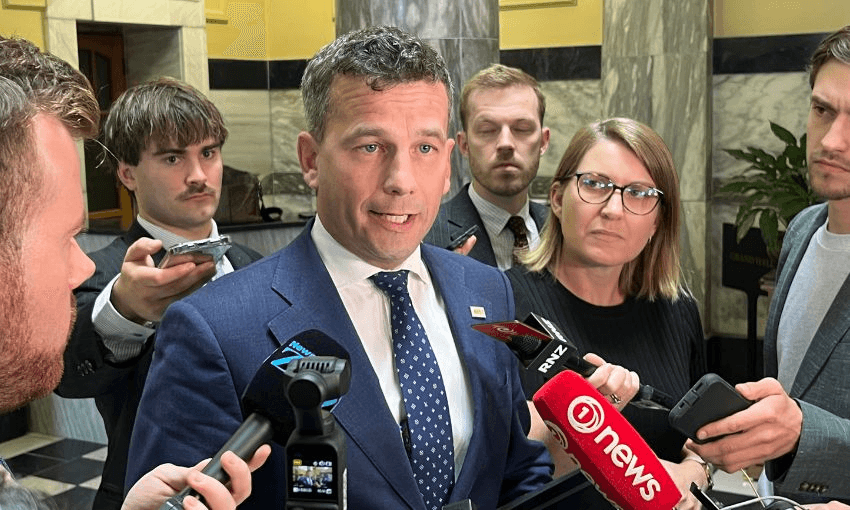
David Seymour speaks to reporters in parliament.David Seymour speaks to reporters in parliament.
‘I’m a bit sick of dropkicks’, says the leader of the Act Party. (Photo: Lyric Waiwiri-Smith)

“I’m a bit sick of dropkicks who can’t get their lives organised to follow the law,” said Act Party leader David Seymour last July when the changes were announced.

Many of those “dropkicks” (i.e. the 100,000 people who enrolled within the voting period in 2023) Seymour refers to are young and Māori. Data from the Electoral Commission shows that special votes – where people enrol or update their details within the voting period – are more likely to come from areas with larger proportions of Māori, Asian and Pasifika communities. We also know younger voters and voters on the Māori roll have higher odds of casting a special vote. Approximately 8,000 eligible voters of Mãori descent aged 18 or 19 enrolled for the first time, or updated their details, during the voting period in 2023.

The changes to the Electoral Act were billed by justice minister Paul Goldsmith as attempting to minimise the amount of time spent counting votes. But detractors say the changes are a blatant attempt to minimise the number of votes the opposition gets. Goldsmith even admitted the changes probably wouldn’t significantly speed up the process. “At this stage, we’re still planning for 20 days,” he said to the media at the time. That’s the same amount of time as the 2023 election.

Historically, special votes benefit parties on the left. By banning the ability for people to enrol to vote any later than 13 days before the election, combined with the abolition of prisoner voting rights, the government could be accused of methodically attempting to maximise its chances of reelection in November. With the government discriminately disempowering Māori voters, why would we want to engage at all?

During my time at university, I began learning more about our nation’s history – the systematic process of colonisation and enforcement of a foreign system of law and politics. There seems to be a hesitancy to view ourselves as a colony of Britain. But this denies our nation’s history. There are many unsavoury aspects of colonisation that stir up feelings of shame and guilt, but we are not responsible for the actions of our forefathers.

What we are responsible for is acknowledging the implications of their actions, the privileges and entitlements that come from those actions, and actively seeking to remedy the harm they caused. This is true for both Māori and non-Māori. 

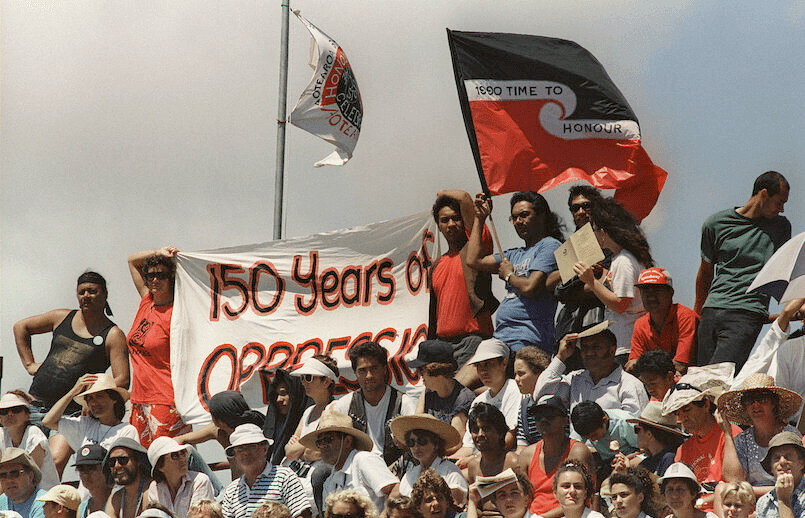
Māori have been protesting the imposition of the Westminster system since it began in New Zealand. (Photo: Manuel Ceneta/AFP via Getty Images)

As Māori, we must actively work to undo the harm caused by the colonisation of our nation. If we do not consciously strive for the betterment of our people, for the advancement of a system of laws and politics better suited for our needs and beliefs, then we allow our subconscious to become accepting of our present reality, therefore allowing ongoing oppression.

Voting – participating in the system – is a way we can work towards the liberation of our people. By choosing not to vote, by not engaging in the system, we allow others to decide who governs this country. We allow others to decide how our tax dollars are spent, the laws and policies we abide by, and the parameters of our existence in our land.

I understand why many don’t care. I still struggle some days to face the realities of the fabric of our society. But I want change. While choosing where to cast my vote often feels like choosing the lesser evil, I recognise that unless I engage with the system, I am allowing my subconscious to accept my present reality. I ain’t accepting it.

Categories
New Zealand

Forgetting a pen on your trip to Melbourne has become less of a problem

Goodbye paper arrival forms. A digital border trial is expanding to select flights from Auckland and Queenstown to Melbourne. Find out if you can skip the paperwork.

Categories
New Zealand

‘It’s like waking up in another world’ – mysterious illness keeps knocking out teen

A 14-year-old Palmerston North girl who has lost consciousness every three days for almost two years does not know who she is, where she is, or even what her parents look like, every time she wakes up.

“It’s like waking up in another world, but you don’t know what world you’ve come from,” says Amelia Guest.

Amelia was 12 years old the first time she passed out – she was out cold for 45 minutes.

Two years later, it is still happening and doctors do not know what is wrong, other than a general diagnosis of Functional Neurological Disorder (FND).

Her medical records show lengthy lists of symptoms, including loss of sight and hearing, as well as hallucinations.

Her parents said it was like the romcom movie 50 First Dates, except it is a horror story.

Amelia Guest and her service dog Sammy

Amelia Guest and her service dog Sammy
Photo: RNZ / Samuel Rillstone

‘She looked at me and she didn’t know who I was’

Amelia was thriving in 2024 – an outgoing, smart, happy kid. She loved dancing, playing sports and hanging out with her friends. Now she has few friends and just remembering the steps involved in brushing her teeth is a big deal.

Amelia was playing netball the first time it happened. Her Mum Lizi Guest caught her as she ‘fainted’. She was unconscious for 45 minutes.

“The first question they [the hospital] asked was, is she having boy troubles? Or, you know, are there any anxiety issues?

“And I was thinking to myself… I have anxiety issues. But I’ve never been unresponsive for 45 minutes,” said Guest

It was the start of years of appointments trying to work out why an otherwise healthy 12-year-old lost consciousness for nearly an hour.

After that first episode she was treated with medication for hemiplegic migraines and then two weeks later it happened again.

“I walked into the school hall, and I saw my child blue on the floor and completely unresponsive again, completely floppy.”

It happened again on her 13th birthday.

“When she woke up this was the first time, she looked at me and she didn’t know who I was.”

Guest said despite endless tests, the doctors had no answers.

Amelia Guest

Amelia Guest.
Photo: RNZ / Samuel Rillstone

‘We’d completely lost our child’

“From then Amelia lost all memory of who she was, including her date of birth, where she lived, what she looked like in the mirror, what siblings she had, who we were.”

She would get frights seeing her little sister on a trampoline, because what looked like a solid surface was flexing. Amelia could not even remember how to use her drink bottle.

Eventually she lost the ability to read and write, and was often nonverbal.

Her mother kept taking her back to the children’s ward, but due to her confusion Amelia was too agitated to be there.

The hospital said the only other option was Ward 21 – the Adults Mental Health Ward at Palmerston North Hospital.

Her parents did not consider that a viable option. She was 13 years and two days old, with no prior history of mental illness.

“We’d completely lost our child.”

“A as a mum, you kind of have this default assumption… for the 13 years prior, no matter how bad things were, whether she was hurt or physically sick or sad, I was going to be a source of comfort for her.

“And to look at your child and to see no recognition in their eyes… but also to see fear.

“I can’t think of anything worse.”

‘She was terrified of us’

After each episode, Amelia would slowly relearn things, taking at least 18 hours for her memory to slot back into place. Her parents each time convinced her of who they were and who she was.

“But everything she learned from that point she would retain until the next loss of consciousness. Sometimes up to 11 in one day.

“She was absolutely gone. And she was terrified of us.”

Guest had to remove everything from her bedroom, and clear the walls, leaving only a mattress on the floor.

Guest and her partner were fortunate enough to be able to take time off, but the costs of around the clock care were unsustainable.

“I found her sitting outside of our two-story window [on the windowsill], not with any self-harm intention, just because she had no concept of gravity.

“We couldn’t keep her safe at home without locking her in her bedroom.”

Meanwhile, doctors were making no advances in understanding her condition and accused Amelia of faking it.

“We actually got an e-mail from the neurologist… it said that, you know, Amelia is a normal, if slightly weird child, and her parents are contributing to the problem.”

Her parents stopped visiting for five days, but the episodes continued. RNZ has seen the subsequent apology.

After endless testing, EEGs, MRIs and lumbar punctures, doctors ruled out everything physical, landing on Functional Neurological Disorder.

“It’s a disorder of the brain network and the signals in her brain are misfiring.

“Which puts you in no man’s land because it goes over to mental health services, but it’s not really a mental health condition either.

“It’s not able to be treated by medication or anything like that.

“But equally, there’s nothing to cut out or zap into place from a neurological point of view.”

Guest said because it did not sit with any speciality in the already stretched medical system, they were left on their own with the child and adolescent mental health team, trying to understand the condition.

Her mum created resources for Amelia to use like a communication board when she was non verbal and picture print outs showing her who her parents were and what her sisters looked like every time she lost her memory. They hired a wheelchair for the days she couldn’t walk.

Amelia was completely different and so was their life, with no answer in sight.

Lizi Guest

Lizi Guest.
Photo: RNZ / Samuel Rillstone

‘You have to see it to believe it’

Carletta Macdonald is the team leader at Central Regional Health School for Manawatu, and has worked with Amelia for the past 18 months.

She is one of several students with FND. Macdonald said all of them presented very differently.

‘She’s gorgeous and wonderful… she can turn up and be 100 percent the kind of kid she was before.

“And then other times… She doesn’t remember how to use her legs…. we would have to remind her where the toilet was and who we were.”

Macdonald said she had never seen another child with the pattern like episodes Amelia has. Others with FND have often been triggered by traumatic brain injury.

“You have to see it to believe it.”

She said there is no way a condition like this could be faked for two years

“It’s a hard thing to imagine.

“But then when you see it in action, you see how hard she’s trying.”

Fighting to believe

On a good day, Amelia can have her makeup done, matched with a lip-gloss and perfectly slicked back hair.

Any onlooker would not know that she has re-taught herself how to read and write, and followed a checklist of how to brush her teeth.

But when it was bad – “A lot of the time I can’t speak… like, I know what I want to say, but it just doesn’t come out,” said Amelia.

She will spontaneously vomit and not understand why her stomach was hurting.

“It’s like waking up in another world, but you don’t know what world you’ve come from,” she said.

Amelia fights after each episode to put the pieces back together and feel safe around her parents.

“Sometimes it makes sense and sometimes I don’t believe it.”

She knows others might not believe her either.

“If you don’t see me at my worst, you don’t really understand me at my best, because they look very, very different.”

But there is a plan for that – Sammy the Service Dog.

Sammy the FND Service dog


Photo: RNZ / Samuel Rillstone

Team Sammy & Amelia

Pawsible Service dogs is a new charitable trust which is delivering some of the first canines to assist with FND in New Zealand.

Sammy and Natalie Ramm from the organisation have spent hours with Amelia, learning what her specific condition looks like and how he can help her.

“He is going to be help and keep me safe after an episode. He may be able to alert me to an episode. And then just give me some more independence and companionship.”

Amelia and her family have launched a Givealittle, fundraising to help contribute to the costs of getting Sammy.

Sammy can recognise when Amelia is getting tired – she starts jiggling and fidgeting and clenching her hands. Sammy knows to pop his head in her lap, forcing her to stop, relax and reset.

He will also be decked out with information on who to call if she has an episode.

“I look a bit older than I am and don’t look like I have a disability. He is a cue for if I don’t speak to someone or I don’t act a way you would expect me to act. He’s a cue to someone that something else is going on. It’s not just being silly or being a teenager,” said Amelia.

But the best thing he does, gives a 14-year-old her independence back.

And at the top of the list with her new freedom: “Maybe just walking into town or like going to a few shops by myself.”

‘We’ve tried to stop it’

Sammy will also relieve Amelia’s parents of having to spend every second or third night waiting for her to lose consciousness and the disorientation that follows.

In the two years since Amelia got sick, five days in the longest they had gone without her passing out. At its worst it was 30 times in one weekend. She was still nonverbal a third of the time.

“We’ve tried to stop it… we’ve literally dumped ice water on her. We’ve tried to distract her… we’ve tried everything.”

Now they just let it happen and once again prove they are her parents.

But Sammy has given Amelia so much purpose. She is fundraising, going to a special health school and getting her fitness up to walk round the block, said Guest

“Every day she can, whether she can talk or whether she can walk or whether she knows what’s going on, she goes to school and she tries her absolute best, even when that was just learning to count again.”

Amelia said she did not focus on what she had lost, she did not know what she was missing out.

But her parents know, despite how incredibly far she has come and the hope Sammy has given her, there is still a long way to go.

“One thing that’s sadder than your kids growing up is when your kids don’t have the opportunity to hit the milestones they should when they don’t have the opportunity to start high school.

“And that’s something that I never thought about before and I really wish I didn’t know now.”

Health New Zealand declined to speak about Amelia’s case.

Sign up for Ngā Pitopito Kōrero, a daily newsletter curated by our editors and delivered straight to your inbox every weekday.

Categories
New Zealand

Speight’s marks 150 years

Speight’s New Zealand is marking its 150th anniversary, from its beginnings as a small local Dunedin brewery on Rattray Street in 1876.

Today, 150 years on, Speight’s sells one million litres every week and accounts for around one in five beers sold in Aotearoa.

Move with the times

Lion chief operating officer and New Zealand country director Craig Baldie says the anniversary reflects a brand that has continually moved with the times.

“Speight’s is New Zealand’s oldest brewery and is still operating at its original Rattray Street site in Dunedin.

“Over the past 150 years, the brand has continued to evolve in response to changing consumer preferences while remaining true to what people know and trust about Speight’s.

“That authenticity which is anchored in its southern values has enabled the brand to connect with New Zealanders over generations,” says Baldie.

Lion chief operating officer and New Zealand country director Craig Baldie.

A brand that grew with the country

James Speight, Charles Greenslade and William Dawson founded the brewery in Dunedin at a time when the city was one of the country’s busiest and most influential centres.

By the late 1880s, Speight’s had taken its place on the world stage, winning gold medals at international exhibitions and earning the name Gold Medal Ale, a legacy still stamped on every label today.

Within just over a decade, it had become the largest brewery in the country, exporting across the Pacific and putting Dunedin on the map as a brewing powerhouse.

The brewery says it has helped shape and reflect a distinctly Kiwi idea of mateship, as shown in its ads which include the Southern Man and “Good on ya, mate”.

Over the years, those stories have evolved with the times. Campaigns like ‘The dance’ portrayed a more modern take on friendship and having someone’s back. Showing that the expression of mateship may shift but the sentiment behind it remains the same: a Speight’s drinker is always there to help a mate.

Add to that decades of the bottle cap questions, backing southern rugby and even shipping a pub halfway across the world, Speight’s has long held a place at the heart of Kiwi culture, the brewery adds.

A rise 150 years in the making

Speight’s says it continues to hold that place in Kiwi culture, with its sales increasing 4.4% last year despite a general downward trend in beer consumption of 10% across the country.

A key inflection point came in 2017 with the launch of Speight’s Summit Ultra, developed in response to growing demand for lower-carb options.

“We identified early that consumers overseas were looking for lighter styles of beer that aligned with more balanced lifestyles, without compromising on taste,” says Baldie.

“Summit Ultra has been instrumental in reshaping the brand’s trajectory and has played a significant role in its recent growth.”

The Speight’s range now also includes craft beer and alcohol-free options.

Speight’s celebrations

To mark its 150th anniversary, Speight’s has released a commemorative can available nationwide.

In recognition of its Dunedin roots, Speight’s is also releasing a limited-edition Whisky Collection based at the Dunedin brewery and a Gold Medal Hokey Pokey ice cream collaboration with Patti’s & Cream.

A commemorative event will also be held at the Dunedin brewery to recognise the brand’s origins and ongoing connection to the region.

“This anniversary is an opportunity to acknowledge the role Speight’s has played in New Zealand’s history, as well as the people who have contributed to its success over the years. It’s also an exciting moment to celebrate Speight’s legacy and look ahead, with confidence in the brand’s continued growth,” says Baldie.

The post Speight’s marks 150 years appeared first on stoppress.co.nz.

Categories
New Zealand

Teen arrested after three police vehicles rammed during pursuit of stolen car

A stolen car incident across Canterbury ended with three police vehicles rammed, a highway bridge closed, and a teenager in custody.

Categories
New Zealand

Review: Ready Gamer Mum does a disservice to NZ mothers

Tara Ward is just a mum, standing in front of a TV show, asking it to stop grinding.

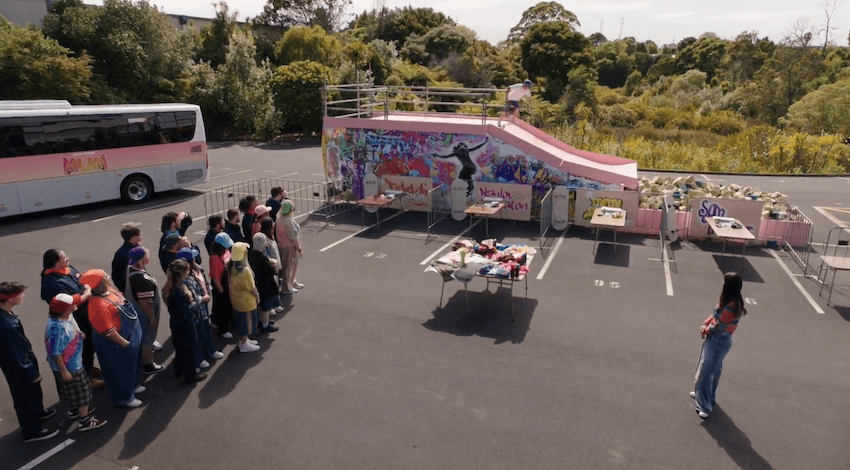
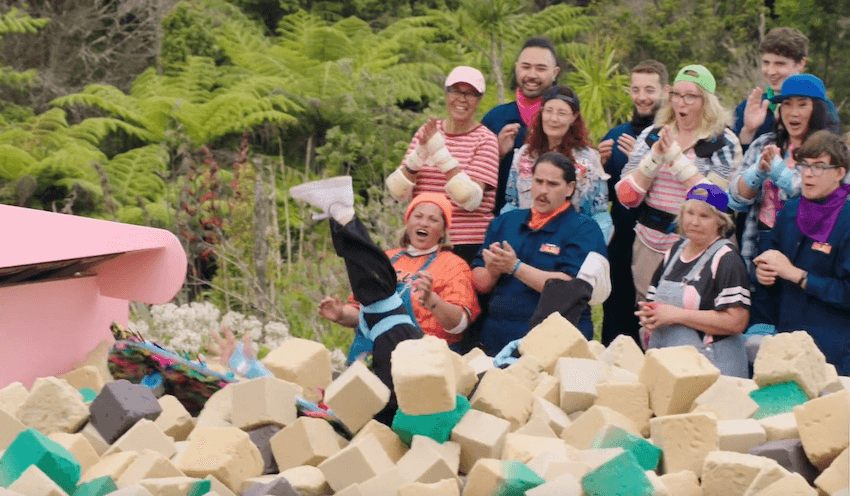
The Nek Minnit man is on top of a big, pink skateboard ramp, plonked somewhere in a suburban Auckland carpark. “Wassup,” he greets the group of mums and their children gathered below, who cheer at this unexpected celebrity appearance. Nek minnit, he leaps onto his skateboard, glides down the short ramp and flies into a giant foam pit. It’s Levi Hawken, broadcaster Tegan Yorwarth tells us, and he’s skated into the first episode of Ready Gamer Mum to judge which mother has created the most stylish giant skateboard. 

TVNZ’s new competition series Ready Gamer Mum is an original format developed by South Pacific Pictures from an idea by Tom Hutchison, which sees 10 expert gamers and their “not so tech-savvy” mothers play video games to win $50,000. The catch? The mums are the only ones allowed to touch the controller. “We take ten gamers’ mums out of the home and into the hot seat,” the show’s trailer promises. Hosted by Yorwarth, episode one challenges the teams to play Tony Hawk Skater Pro, which is why these mothers are standing in that car park, ready to prove their skating prowess in the real world. 

Nek minnit, it’s the Nek Minnit guy

Moments earlier, the 10 teams had entered the Ready Gamer Mum arena for the first time. The show began with an upbeat Lego Masters NZ-type vibe, with lots of energy and enthusiasm from the players and plenty of good-natured ribbing between the generations. These mums have come on the show to spend time with their adult children, with 73-year-old Sandra the oldest mother to compete, having first picked up a game controller just two weeks earlier. 

Ready Gamer Mum wants to flip the family dynamic by showing how kids can teach their parent new tricks. Nine of the 10 expert gamers are men, and while we don’t learn much about their mothers in the first two episodes, the show’s official bios hint at accomplished lives lived far beyond the gaming chair. Sandra is a retired interpreter originally from Burma. Rebekah, 56, raised six children, while dairy farmer Rachel homeschooled her son Romy and his four siblings. Lisa, 52, spends zero time gaming. “I’m the mum who unplugged the internet. I thought it would be better for them to be outside,” she says.  

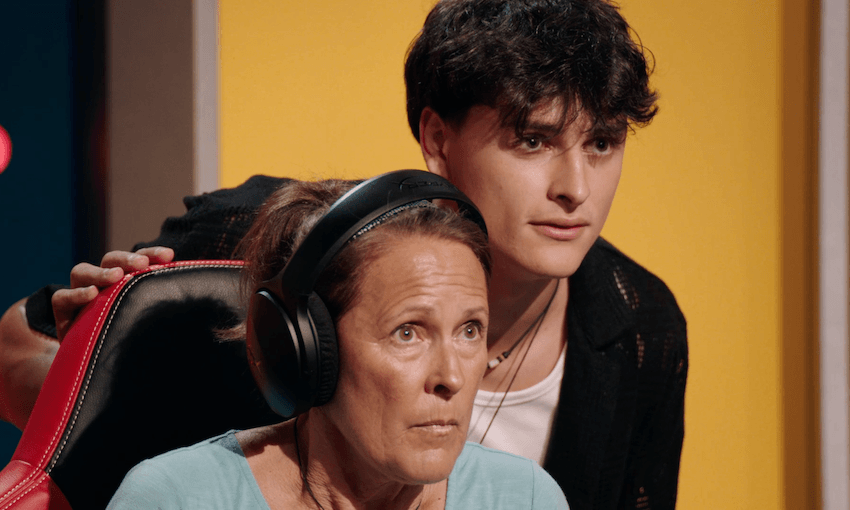
Rachel and Romy compete in Ready Gamer Mum (Photo: TVNZ)

The mums get a few hours to practice the new game, in the hope they’ll become “mildly competent”, as Yorwarth puts it. While these maternal legends should probably be relaxing in the nearest five-star hotel ordering room service and counting all the sleepless nights their kids have given them over the years, they’ll do anything to avoid disappointing their offspring by getting a low score and being eliminated. That includes throwing themselves down a pink skate ramp in front of old mate Nek Minnit. “One last hug before she slides to what I can only imagine is her untimely demise,” pipes up Tony Lyall, who along with fellow comedian Brynley Stent, provides some hilarious whip-smart commentary of the side quest challenges.  

Ready Gamer Mum has all the hallmarks of wholesome family entertainment, apart from one important thing. There’s an underlying joke here about older mothers that the show won’t admit to making. This show isn’t called Ready Gamer Dad, or Ready Gamer Boomer, or Ready Gamer Someone Who’s Never Gamed Before. It’s Ready Gamer Mum, and its success relies on tired stereotypes about how uncool and incompetent mothers are. They can’t work technology, they look funny sliding down a ramp, look how much they love crafts. Into the foam pit you go, ladies! 

Bon voyage

Mostly, it’s hard to know what Ready Gamer Mum is saying. It’s no surprise that women who have dedicated the past few decades of their lives to raising families, building careers and performing endless unpaid domestic work aren’t immediately good at gaming, given they’ve had neither the time or freedom to sit in a chair for hours, grinding and ollie-ing or whatever the fork it is you do on Tony Hawk Skater Pro. Taking these mums “out of the home” to play video games is a bold claim in 2026, and the fact that in episode one, the show chooses to dress them in costumes that will give them “main character energy” shows how wonky this concept is. These wonderful mothers already have main character energy. Ready Gamer Mum just doesn’t want to see it. 

It’s rare to have so many women of an older generation on one TV show, so kudos to Ready Gamer Mum for that – it’s just a shame they’ve diminished these interesting, intelligent women to what they can’t do, then made them compete against each other. Perhaps as the season unfolds, these women will take on their children and show them how it’s really done, or perhaps Ready Gamer Mum will find some mature women who are already expert gamers and celebrate their skills too. Or maybe, instead of telling their mothers what to do, the sons could try out some new things that mums are really good at, like enduring the gender pay gap, navigating the health challenges of perimenopause, or being shamed for having the audacity to age naturally

Either way, this uncool old mother is ready to come out of the home and tip her backwards skater cap at Ready Gamer Mum in thanks. Aren’t I lucky to live in a world where men know how to make machine go beep?

Ready Gamer Mum screens on Thursdays on TVNZ2 at 7.30pm and streams on TVNZ+.

Categories
New Zealand

TVNZ youth platform Re: News closes

Re: News, TVNZ’s news platform for rangatahi, is closing down on May 29.

Re: was set up in 2017 to serve the young people of Aotearoa and has spent nearly a decade doing just that.

The news that the platform is ending was officially announced on Re: News’ Instagram account on May 25.

At the NZ Media Awards on May 22, 2026, Re: journalist Zoe Madden-Smith was awarded Video Journalist of the Year for the second year running.

During her acceptance speech, Madden-Smith said winning the award and being made redundant in the same fortnight is “pretty wild” but that she’s proud of what the platform achieved.

She also hopes the award win highlights the importance of youth journalism.

Re: News’ Zoe Madden-Smith won Video Journalist of the Year at the NZ Media Awards in 2025 and 2026.

A difficult decision

A spokesperson from TVNZ says the broadcaster has made the “difficult decision” to wind up the editorial side of Re: News after not being able to find “an ongoing way to fund this work”.

“Content might be produced under the Re: brand in future where there are viable commercial or funding pathways to do so.

“We’re proud of what Re: News has delivered,” the spokesperson added.

A decade of stories

Since 2017, Re: News constantly innovated to reach rangatahi audiences. It produced a range of content including daily news headlines on social media, written articles, documentaries, series and investigations,

Re: hosted the Young Voters’ Debate and social media series Politics in 60 Seconds ahead of the 2023 General Election.

Its work has also been recognised across that time. Re: took out Best News, Current Affairs or Specialist Publication at the NZ Media Awards in 2023 and 2024. Meanwhile, journalist Baz McDonald won Video Journalist of the Year in 2023 and was a finalist again in 2024.

The platform has also been through significant turmoil. In 2024, a major business restructure at TVNZ cut the Re: team from 12 to four.

Now, at the time of closure, just three journalists remain: Madden-Smith, McDonald and Te Ahipourewa Forbes.

The post TVNZ youth platform Re: News closes appeared first on stoppress.co.nz.