Categories
South Africa

New forensic science laboratory unveiled in KZN as SAPS grapples with severe DNA backlogs – The Mail & Guardian

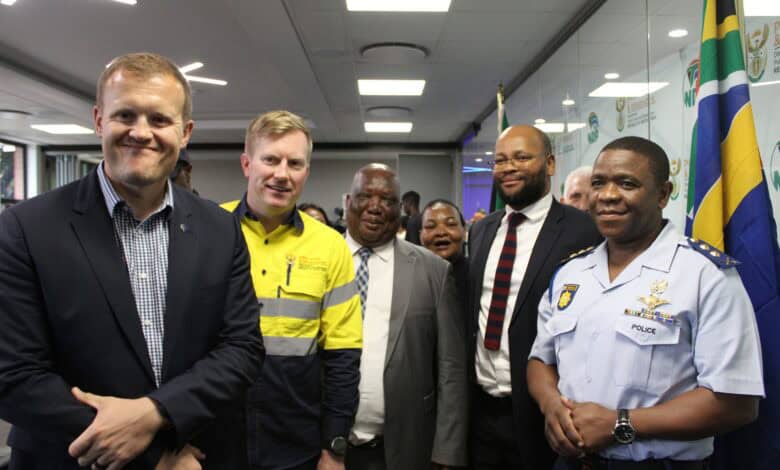
Police minister Prof Firoz Cachalia, his two deputies Cassel Mathale and Shela Boshielo, KZN premier Thamsanqa Ntuli, KZN provincial commissioner Nhlanhla Mkhwanazi and Ian Cameron, the chairperson of the portfolio committee on police

Government delegation together with saps officials during the official the opening of a SAPS forensic laboratory in Durban. Photo: Supplied.

With KwaZulu-Natal being one of the top provinces accounting for the highest number of DNA and forensic toxicology backlogs, provincial authorities believe the new forensic lab was a step in the right direction.

The privately owned facility was presented in Durban on Friday by Dean Macpherson, the minister of public works and infrastructure.

“When the forensic services are delayed, fragmented or compromised justice suffers. Cases are delayed, investigations weakened and victims continue to live in fear while criminals live without it,” Macpherson asserted during the handover. 

He explained the forensic lab will support the forensic investigative work of the SAPS in the province. 

“It brings together specialised forensic services into a single, secure, fit for purpose environment strengthening the the state’s ability to process evidence and support investigations thereby improving the integrity of the criminal justice system,” he said.

According to Macpherson, the intervention was a temporary measure with plans afoot to build a world class state-owned forensic lab in Pinetown. 

A high level provincial and national delegation attended the event. This included Police minister Prof Firoz Cachalia, his two deputies Cassel Mathale and Shela Boshielo, KZN premier Thamsanqa Ntuli, KZN provincial commissioner Nhlanhla Mkhwanazi and Ian Cameron, the chairperson of the portfolio committee on police.

Mathale described the unveiling as a vital cog in the country’s journey towards the building of a capable and technologically oriented police service.

“Forensic science is a cornerstone of modern intelligence led policing. It enables us to move beyond reliance on circumstantial evidence and towards scientifically verified facts,” he said.

Over the years, KZN had relied on a single forensic lab located in Amanzimtoti which contributed to high number of cases being unresolved. The province had to look to a state lab in Pretoria to ease the burden which would go for months before the DNA evidence could be brought to court. Things recently came to a head in Inanda police station when victims of sexual crimes lamented waiting for periods for DNA samples results compromising their cases. 

According to recent crime statistics, the township located in the south of Durban leads the pack in the province in terms of rape incidents.

Ntuli noted the laboratory signalled a strategic shift in the province’s approach to policing, one that integrated science, technology, and evidence-based investigation. 

“This facility represents our commitment to building a safer KwaZulu-Natal, where policing is guided not only by bravery, but by precision, truth, and scientific rigour,” Ntuli said.

It emerged last year that nationally, the DNA backlog stood at 140 000 cases. Gauteng topped the backlog at 31 000 cases awaiting DNA results. Other provinces with the highest DNA backlogs include the Western Cape and Eastern Cape.

Categories
South Africa

Watershedding not cool – The Mail & Guardian

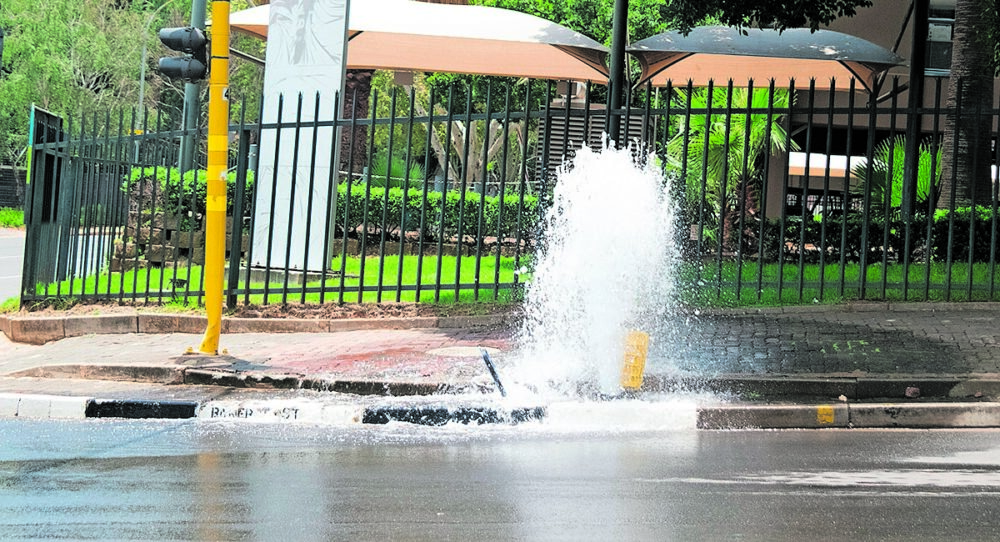
Water Main Burst Shutterstock

One example of the risks of shutting off a water system is causing more leaks. A rapid pressure drop can cause water hammer, a shockwave that can be damaging. Photo: WaterCAN

There has been an increasing amount of commentary on the inevitability of “watershedding”, as if this is as easy to implement as loadshedding for electricity.

Hot take: it isn’t.

While loadshedding causes numerous problems such as reducing the viability of businesses, damaging appliances if there is a surge when power turns on and loss of perishables if fridges and freezers are off too long, the issues with turning water on and off are more complicated and harder to manage.

In simple terms, if you turn electricity off, it goes off at every point of use simultaneously. When it turns on, it turns on for everyone – give or take a few complications such as power surges. Water is different. Water is incompressible so if pipes are full and pressure is applied, in an idealised situation, pressure should spread evenly. However, it is not that simple as there is variable friction in the pipes, there can be air pockets and parts of the system may drain out more than others.

A water system is also fragile under repeated closure and opening.

One example of the risks of shutting off a water system is causing more leaks. A rapid drop in pressure can cause water hammer, a shockwave that can be damaging. You can experience this on a small scale at home when you close a tap too fast and feel or even hear a pounding in the pipes. At the level of large-scale reticulation, water hammer can be very destructive.

Another big problem with leaks is that a pressurised system stays relatively clean because the pressure pushes away from a leak. Take the pressure away and contamination has no barrier to making its way into the system. It is even possible that the effect of draining the system causes negative pressure (suction), which sucks contamination in through the leak in the water pipe. Dragging in environmental contamination defeats the object of water purification, which removes not only solid dirt but sanitises the water with chlorine gas. While the residual chlorine in the pipes should remove any small quantity of bacteria, it is not sufficient to sanitise a large-scale ingress of contamination. This becomes even worse when the water leak is proximal to a sewer leak.

As seen at the consumer level, this leak problem manifests as obviously dirty water that is unfit to drink or wash or – worse – water that looks clean but is contaminated with harmful bacteria.

Another big issue with turning off a large part of a water system is that it drains and refills unevenly, meaning that some areas have water for a large part of the supposed outage (maybe even the entire period) and others are without water for longer than the planned outage. If watershedding is on a high-frequency schedule such as one day on, one day off, some areas end up getting no water at all or only a trickle.

Besides bacteria, other harmful environmental contaminants could find their way in through a leak. That is another whole story; I focus here on bacteria since they form part of routine testing.

The two types of bacteria routinely tested for are coliforms and E. coli (full name: Escherichia coli). Why these two specifically? They are indicators.

Bacterial testing is usually done by placing a sample on an agar layer on a petri dish (a plastic disc with raised edges). Agar is a gel derived from seaweed and it is treated with a growth medium to feed bacteria and can be designed to change colour when specific bacteria multiply. The same petri dish can be used to test for both coliforms and E. coli; the two come up as different colours. Each dot that appears on a test corresponds to growth of a large number of bacteria and is called a colony forming unit (CFU). Counting CFUs provides an indication of the level of contamination. The water testing standard in South Africa is that up to 10 CFUs of coliforms is acceptable; no E. coli should be found.

Coliforms are a diverse class of bacteria and are found widely in nature, including in untreated water. Testing for coliforms is an indicator of whether chlorination has worked as designed and also tests for whether contamination has entered the pipes after treatment. Most coliforms are harmless; only a small fraction can call illness. The purpose of testing for them is to indicate whether other possibly more harmful bacteria have escaped chlorination.

E. coli is a type of coliform so why test for it separately? E. coli is present in the gut of all warm-blooded animals including humans. Mostly, it is beneficial, playing a crucial role in digestion. A few strains of E. coli are harmful and can cause illness – sometimes severe illness. However, this is not the primary reason for testing for E. coli. Because it is found in all guts of warm-blooded animals, it is an indicator of faecal contamination – fancy terminology for shit in the water.

Faecal contamination is bad news because of many other harmful bacteria that can be spread this way including cholera, typhoid and hepatitis A. This is why there is no permissible safe level of E. coli in a water sample. It’s not the E. coli that is the biggest cause for concern but what may be there that is not included in the test. Testing for E. coli is sufficient in general because as soon as you know there is faecal contamination, the risk of other waterborne diseases escalates. If there is no measurable E. coli, the risk of such diseases is acceptably low.

So back to watershedding: this is a really bad idea for a number of reasons. It can damage infrastructure, result in inequitable access to water and contamination of the water supply. The real issue here is failure of a key component of municipal infrastructure management, meter reading. If meters were read regularly, penalty charges could be imposed for excessive consumption, particularly at times of shortage when water restrictions are in effect. Instead, with widespread lack of reading, collective punishment of the entire community is used by turning off water for everyone.

The government keeps talking about Back to Basics. What is needed is not talk but action. Where meter reading has failed, this should be remedied. And no, smart meters are not the answer. 

Philip Machanick is an emeritus associate professor of Computer Science at Rhodes University and a PR councillor for Makana Citizens Front

Categories
South Africa

Suspended EMPD deputy chief Julius Mkhwanazi arrested on fraud and corruption charges – The Mail & Guardian

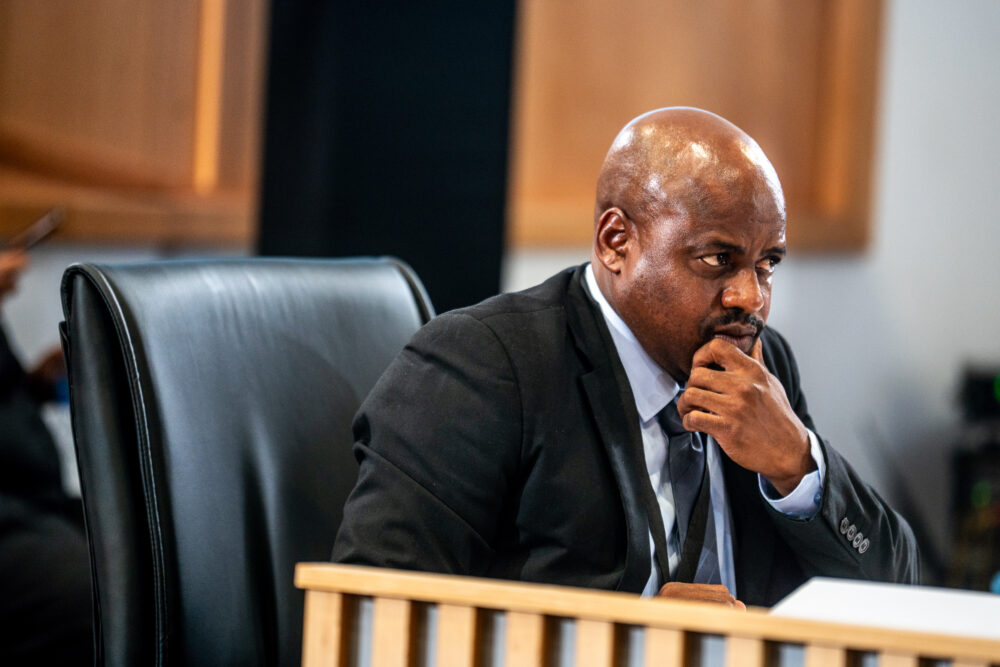
Juliusmkhwanazi Dsc8553

Suspended Ekurhuleni Metro Police Department (EMPD) deputy chief Julius Mkhwanazi. Photo: Delwyn Verasamy

Suspended Ekurhuleni Metropolitan Police Department (EMPD) deputy chief Julius Mkhwanazi has been arrested.

Mkhwanazi was apprehended by the SAPS Madlanga Commission Task Team on Saturday morning on charges of fraud, corruption, and defeating or obstructing the ends of justice.

In a statement, police spokesperson Athlenda Mathe said the task team is still searching for other suspects linked to the case.

She said the arrests emanate from an ongoing investigation into corruption within the EMPD.

“No further comment will be provided on the merits of the case at this stage. All suspects are expected to appear before the Boksburg Magistrate’s Court on Monday, 20 April 2026,” she said.

This week, the Madlanga Commission of Inquiry heard evidence of an alleged rogue operation by EMPD officers, in which lithium-bearing rocks worth about R14 million were confiscated from a Rosebank residence and later went missing while in police custody.

Suspended EMPD deputy chief Mkhwanazi denied being involved in the operation, which is alleged to have been carried out by EMPD officers acting outside their jurisdiction.

Mkhwanazi has also been implicated in the death of Emmanuel Mbese in 2022, where he is accused of instructing that Mbese’s body be dumped in a river to conceal the alleged involvement of EMPD officers.

He is further accused of leading a SWAT team within the EMPD that was allegedly involved in hijackings, kidnappings, extortion, theft, and corruption.

Categories
South Africa

Here are the Daily Lotto and Daily Lotto Plus numbers

Daily Lotto and Daily Lotto Plus results.

Daily Lotto and Daily Lotto Plus results.

Graphic: Mihle Mdashe/News24. WinWin.artlab/Canva/supplied

Here are the Daily Lotto numbers:

Here are the Daily Lotto Plus numbers:

Download the News24 app via the Play or iTunes App stores and get a free alert moments after each Lotto draw with the winning numbers. Tap here to download the News24 Android App or here to download the News24 iOS App.

*Please note that the information provided herein is third party information.Whilst every effort is expended to ensure that the information provided is true and accurate, we are not responsible for errors, omissions or any loss which an individual may experience. See the National Lottery terms and conditions here.

Discover the Truth

Step into a world where the truth shines bright, and every headline is worth your time. With News24, you’re not just reading the news; you are part of a community that values knowledge and insight. Immerse yourself in compelling stories, sharp analyses, and content that keeps you ahead of the curve.

Categories
South Africa

SA’s rhinos are ‘more valuable alive than dead’ – The Mail & Guardian

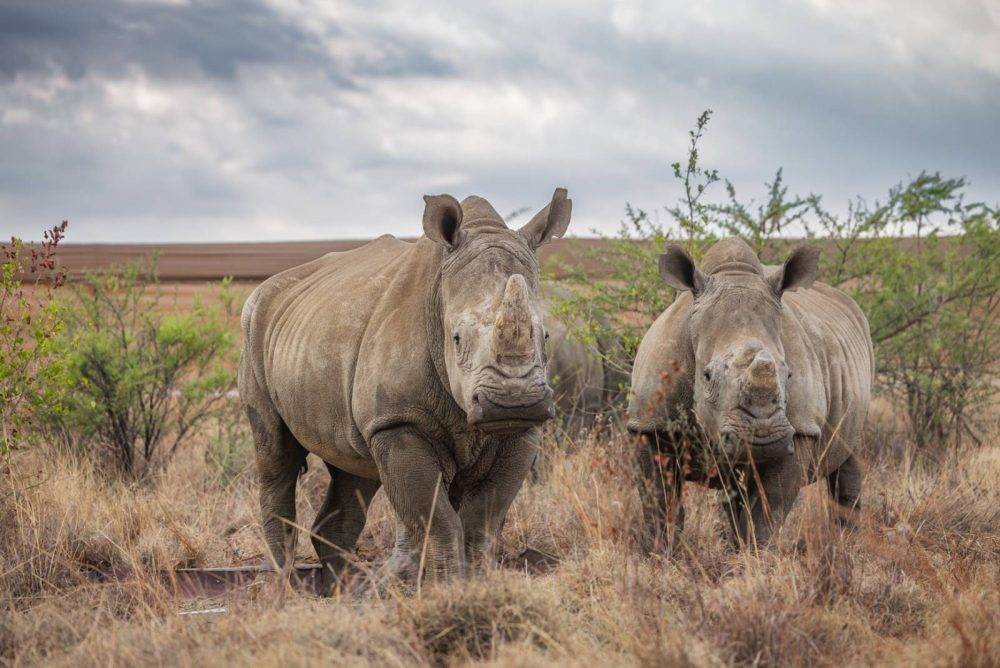
Rhinorewildreleasedinokengbywikiwestwewildafrica2mb 28

The Minister of Forestry, Fisheries and the Environment, Willie Aucamp, has unveiled a new national plan to safeguard South Africa’s rhinos, positioning conservation as both an ecological and economic project and signalling a shift toward broader public and private participation in protecting the species.

Published in the Government Gazette this week, the revised Black and White Rhino Biodiversity Management Plan (BMP) consolidates more than a decade of policy into a single framework, aimed at strengthening coordination and confronting the persistent threat of poaching.

“The Black and White Rhino BMP provides a holistic strategic framework and detailed action plan to strengthen rhino conservation in South Africa,” Aucamp said, adding that it would place efforts “on a renewed and more coordinated course”.

South Africa remains central to global rhino conservation, home to most of the continent’s remaining populations. 

The country has previously brought the southern white rhino back from the brink of extinction — from fewer than 50 animals in the early 1900s to tens of thousands at its peak — and now holds a significant share of Africa’s black rhino population. 

Today, it is estimated to hold roughly two-thirds of the continent’s rhinos, making its policy choices globally consequential.

But poaching, driven by transnational criminal syndicates supplying demand in Asian markets for traditional medicine and luxury goods, continues to threaten both species. 

“Increased demand for rhino horn, which is the driver behind the increased rhino poaching, remains a concern,” the BMP said. “Illegal trade in rhino horn is understood to be driven by crime syndicates operating nationally and internationally, to supply horn for traditional medicine and craft markets in consumer countries mostly in Asia. 

“Most of the losses of rhinos to poaching have been experienced in large state-managed protected areas such as Kruger National Park and Hluhluwe-iMfolozi Park, but all areas with rhinos have faced increased poaching pressure since the early years of the 21st century.”

Security costs have surged more than five-fold since 2008, placing strain on both public conservation budgets and private reserves, and underscoring the limits of a protection-only approach. At the same time, smaller, fragmented populations and ongoing habitat pressures are emerging as longer-term risks to the species’ survival.

“At the end of 2022, 32% of black rhino and 61% of white rhino in South Africa were privately or community owned with a trend of increasing private and community ownership over the past two decades,” it said.

Against this backdrop, the new plan marks a shift in thinking: conservation alone is no longer seen as sufficient. Instead, the BMP frames rhinos as both ecological assets and economic drivers, emphasising that their long-term survival depends on broader societal value.

“Efforts within South Africa to develop the biodiversity economy and to ensure that an increased number of South African citizens value rhino, are seen as important in combatting the pressure of poaching on rhinos,” it said. 

According to the BMP, coordinated and structured efforts by the government, the private sector and communities are urgently needed to address the rhino poaching challenge. 

“The current BMP therefore aims to introduce an approach to rhino ownership and participation in the upstream and downstream economies such that a rhino is more valuable alive than dead.” 

The strategy merges earlier plans for black and white rhinos into a single integrated framework, reflecting the overlap in threats and management needs. 

It also draws on years of policy development, including high-level government reviews and anti-trafficking strategies that now treat wildlife crime as a form of organised transnational activity rather than isolated conservation offences.

The plan adopts what is described as a “whole-of-society” approach. More than 700 stakeholders, from communities and traditional leaders to private landowners, conservation NGOs and scientists, were consulted in its development, reflecting an effort to broaden both responsibility and benefit. Rhinos are keystone species, as well as a source of national pride and can play a role in fostering social cohesion, according to the revised plan.

This shift is already visible on the ground. A growing share of the country’s rhino population is now held outside state parks, with private and community ownership expanding steadily over the past two decades. 

In some cases, these populations now make up the majority of white rhinos and a significant proportion of black rhinos, signalling a structural change in how conservation is financed and managed.

The plan seeks to formalise and scale this trend, linking conservation outcomes with economic inclusion and transformation. It places particular emphasis on ensuring that communities living alongside rhinos derive tangible benefits, a longstanding gap in conservation policy that has often fuelled conflict and undermined local support.

At its core are five priorities: improving biological management of rhino populations, strengthening security and anti-poaching efforts, expanding community empowerment, managing legal and illegal demand for rhino horn and reforming legislation. 

These are supported by enabling measures focused on sustainable financing, improved communication and the use of technology and innovation to enhance monitoring and enforcement.

Implementation will initially be led by the department of forestry, fisheries and the environment, with a new national rhino conservation coordination committee set to be established to oversee alignment across government, private sector and civil society actors. 

The body is expected to play a central role in improving coordination in a sector often criticised for fragmentation.

“This multi-stakeholder coordinating committee… will play a central role in facilitating the implementation of the BMP and strengthening collaboration across the rhino conservation sector,” Aucamp said.

The plan also incorporates species recovery into broader management strategies, including the potential rewilding of large privately held populations, such as the roughly 2 000 white rhinos recently acquired by African Parks, signalling a move toward integrating private conservation assets into national recovery efforts.

Categories
South Africa

Part 2 – The Mail & Guardian

Kgm

Remembered: The genocide of the Tutsi was not the product of primordial tribal feeling but it was the product of a political project, carefully constructed over decades. Photo: Rwanda Government

People often assume — and I understand why — that events of the magnitude of genocide shatter all social norms, including gender and kinship, reducing human relations to pure, undifferentiated violence. 

But this is not entirely what happened in Rwanda. What happened was both simpler and more disturbing: the genocide, though extreme, did not entirely rupture ordinary life. Rather, it bent the ordinary into new, violent shapes.

Kinship — the web of obligations and identities that structures Rwandan social life — did not disappear during the genocide. It was repurposed. 

Some Hutu drew on it as a moral resource, risking their lives to hide Tutsi, acting from what the philosopher Michel Foucault called prise de conscience — a sudden, clarifying awakening of conscience: a moment in which a person, steeped in an atmosphere of violence and dehumanisation, nevertheless finds within themselves the capacity to recognise the humanity of another.

These people exist. They deserve to be remembered and honoured.

Others, in their perverse ingenuity, found ways to weaponise those kinship ties. They used the structures of family — the roles of son, wife, daughter-in-law — to create a veneer of protection that served simultaneously as a mechanism of control and abuse, without a flicker of guilt.

My mother’s friend, for instance, found refuge with a Hutu man she knew — a family acquaintance. At his house, she was coerced into the role of umugore (wife) to the son who had brought her home and umukazana (daughter-in-law) to his father. 

Her captors invoked kinship to shield her from harm by other Interahamwe militia: she was family; she was not to be touched. And the same imposed kinship was used to justify sexual assault against her.

I cannot compare my suffering to hers. I will not. The horror of what was done to her and to the tens of thousands of women who endured rape during the genocide is not a scale on which any other suffering can be weighed. 

But there is something her tragic experience and mine share: the
fact that our survival required us to perform an identity that was not our own. We became kin, not by blood but by necessity, enacting roles we had not chosen because the alternative was death. 

We, the victims, were not passive. We were active participants in our own preservation — calculating, adapting, inhabiting roles we had not chosen. The alternative was death.

What ordinary life reveals 

I have spent years trying to understand what my experience means — not only for me but for how we think about what happened in Rwanda.

The dominant narrative of the genocide — the one that travels most easily, that fits most neatly into available moral frameworks — is a narrative of pure, primal hatred: two tribes, ancient enmity, inevitable catastrophe. 

The narrative is not only incomplete; it is, in important ways, false. 

The genocide of the Tutsi was not the product of primordial tribal feeling. It was the product of a political project, carefully constructed over decades, that deliberately mobilised ethnic identity and directed it towards mass murder. 

And it unfolded not in a vacuum but amid ordinary social life, through the exploitation and distortion of structures — kinship, neighbourhood, community — that had, until very recently, served purposes of connection and belonging.

What my experience of performative kinship reveals is the extent to which the genocide was simultaneously extreme and ordinary, cataclysmic and mundane — both a rupture and a continuation. 

The family who sheltered me was, by any measure, participating in genocide: they were killing Tutsi every day. 

They were also, in their own logic, maintaining a family, going to work, returning home, sitting down to eat. These things coexisted. 

The horror and the domesticity did not cancel each other out.

This complexity matters — not to excuse, not to relativise but to understand. Because understanding is the only thing that gives the dead what they are owed.

I am still becoming 

My mother survived. My uncle survived. I survived.

We did not survive intact — no one does — but we survived.

In the decades since, Rwanda has rebuilt itself with a determination that is both admirable and at times, unsettling in its deliberate insistence on forward motion. 

There are things that have not been said, things that cannot yet be said — silences maintained because the full reckoning with what happened, how and why, is too much to bear collectively. I understand this. I do not condemn it. I only note it, because I believe the silences are where the most important work remains to be done.

The word umwana means child. It means son. It means the person who belongs to you, who carries your name forward into the future. For two years, I was someone else’s umwana, performing a belonging I did not feel in order to remain alive long enough to eventually become my own. 

I am becoming.

Becoming umwana – a son: Part 1

Nelson Gashagaza is a survivor and writer.

Categories
South Africa

Gauteng water crisis may amount to human rights violation, SAHRC warns – The Mail & Guardian

Gautengwater

The water crisis has become a defining feature of municipal service delivery in Johannesburg, Tshwane and Ekurhuleni, with the greatest impact felt in poor and marginalised communities.

In October 2023, the Johannesburg Water Crisis Committee took a step that many thought would go nowhere: it wrote to the South African Human Rights Commission about the worsening water crisis across the city.

“We documented the outages. We raised the impact on our families, schools, clinics and livelihoods. We demanded accountability. Today, we are seeing the result of that sustained pressure.”

The commission announced this week that it had launched an investigative inquiry into Gauteng’s sustained and deepening water crisis, warning that the situation might amount to a systemic human rights violation rather than a series of isolated service delivery failures.

Its Gauteng provincial office said the decision followed a large volume of complaints from communities across the province detailing persistent water shortages, ageing and poorly maintained infrastructure, governance breakdowns, contamination risks and recurring service delivery disruptions.

The commission said the crisis had become a defining feature of municipal service delivery in Johannesburg, Tshwane and Ekurhuleni, with the greatest impact felt in poor and marginalised communities.

“The impact of the water crisis is disproportionately borne by poor and marginalised communities, residents of informal settlements, schools, healthcare facilities, early childhood development centres and social care institutions,” said the investigative inquiry’s terms of reference.

The consequences include compromised sanitation, increased public health risks, disruption of education and healthcare services and the erosion of human dignity.

“The crisis has also produced secondary systemic harms, including the emergence of informal and exploitative water distribution economies commonly referred to as ‘water tanker mafias’, who benefit from the dilapidated infrastructure.

“In many communities, prolonged outages have created dependence on unregulated private water tankers, entrenching inequality, profiteering and the commodification of a constitutional right.”

Municipalities lacked sufficient functional water tankers, logistical capacity and coordinated emergency distribution systems, leaving them increasingly dependent on private suppliers, it said.

The commission noted that the scale, persistence and systemic nature of the failures raised prima facie concerns of a systemic human rights violation, warranting a formal public inquiry.

At its core, the inquiry reframes the crisis beyond infrastructure failure, to examine whether the state is meeting its constitutional obligation to progressively realise access to sufficient water.

Access to water is a foundational human right, with the Constitution placing obligations on the state to respect, protect, promote and fulfil it. Where access is unreliable, unsafe or unequal, the impact extends beyond service delivery failure to affect rights to dignity, equality, life, health and a safe environment.

The inquiry, scheduled for 19 to 21 May 2026, will assess the extent, nature and root causes of Gauteng’s water crisis. This includes infrastructure breakdowns, ageing systems, planning and budgeting constraints, governance weaknesses and inadequate emergency response mechanisms.

It will also examine whether municipalities, water boards and national departments have taken reasonable steps to ensure access to water in line with constitutional obligations.

A central focus will be the lived experience of affected communities, where outages have become entrenched and essential services are routinely disrupted. 

The commission will assess impacts on public health, education, sanitation and dignity, and determine whether the situation constitutes a systemic violation of human rights.

It warned that if systemic failures were confirmed, the implications could extend beyond service delivery reform and require urgent corrective action to address widespread violations of fundamental rights.

The commission said its inquiry was intended to contribute to durable solutions ensuring equitable, consistent and dignified access to water across Gauteng.

As part of the process, the SAHRC has called for written submissions from affected communities, government departments, municipalities, water boards, civil society organisations, researchers, advocacy groups, private sector actors and members of the public.

Submissions may address the causes of the crisis, its impact on communities, existing interventions and proposals for sustainable water provision.

The Johannesburg Water Crisis Committee said it was preparing a submission to the commission.

The deadline for written submissions is 30 April 2026, after which selected stakeholders may be invited to present oral evidence during hearings.

Written submissions and correspondence may be delivered by hand or emailed to the Gauteng provincial office at Sentinel House Office Park, Parktown, Johannesburg, or via [email protected].

Categories
South Africa

eThekwini pushes back as Macpherson halts EPWP funding over corruption claims – The Mail & Guardian

Dean Macpherson

Public Works and Infrastructure Minister Dean Macpherson says the Expanded Public Works Programme is too important to be captured by corruption.

The eThekwini Metro municipality has pushed back against Public Works and Infrastructure Minister Dean Macpherson’s decision to withhold Expanded Public Works Programme (EPWP) grant funding for the 2026/27 financial year — amid allegations of jobs for sex and cash — insisting it has implemented comprehensive remedial measures.

This follows a material irregularity flagged by the Auditor-General of South Africa (AGSA) in 2021/22 that prompted Macpherson’s decision, which was announced on Tuesday.

eThekwini Metro said it “has noted recent public comments made by the minister” and remained “committed to upholding the integrity of the EPWP and to ensuring that the programme continues to benefit communities in a responsible, transparent and accountable manner”.

It said that when the AGSA informed it of the irregularities relating to EPWP payments, the metro “immediately implemented a series of remedial actions to address the matter and to prevent any recurrence”.

Those included an investigation into and assessment of the irregularity, recovery of losses where applicable, disciplinary and/or legal action against implicated officials and strengthening of internal control systems and verification processes.

“Ethekwini remains resolute in strengthening governance, reinforcing accountability and safeguarding public funds,” it said.

The metro said it “continues to cooperate fully with the AGSA and has been submitting regular progress reports on the implementation of the remedial action plan, in line with legislative requirements”.

Macpherson announced the funding hold at a briefing in Durban on Tuesday, attended by KwaZulu-Natal MEC for Public Works and Infrastructure Martin Meyer and EPWP deputy director-general Carmen-Joy Abrahams. 

He gave the municipality 30 days to pass a council resolution endorsing a full investigation, detailed remedial action plan with timeframes, quantification of losses, recovery of funds and consequence management.

“The irregularity relates to payments made for services not rendered in contravention of Section 65(2)(a) of the Municipal Finance Management Act,” Macpherson said.

“This means that the municipality was unable to provide verifiable records, including attendance registers and supporting documentation to demonstrate that work was actually performed by the individuals who were paid.”

The minister said the AG’s findings indicated the database included “ghost beneficiaries,

deceased beneficiaries, beneficiaries employed elsewhere in government and beneficiaries with no valid identity numbers”.

The AGSA notified the accounting officer of the irregularity on 13 December 2022. The issues resulted in a material financial loss of R3.28 million by 31 October 2022, with a likely further loss of R2.34m for payments to ineligible beneficiaries employed elsewhere in the state.

The metro said its city integrity and investigations directorate (CIID) concluded its probe into payments to deceased participants and those concurrently employed in government departments and state-owned entities in October 2025.

The CIID recommended disciplinary action against six employees, recovery processes, timely termination of beneficiaries, centralisation of the EPWP payment function, reporting of criminal cases and termination of deceased participants and “double dippers”.

“Disciplinary proceedings were instituted in accordance with Section 62(1)(e) of the

MFMA and the Municipal Regulations on Financial Misconduct Procedures and

Criminal Proceedings,” the metro said.

It said disciplinary proceedings against five employees were under way and “all relevant documentation and supporting evidence” had been submitted to the AGSA.

To address root causes, the city said it had centralised the EPWP payment function, enhanced recruitment and verification procedures, strengthened payroll controls and

improved monitoring.

“Strict verification controls now apply to EPWP payment processing. Changes to banking details require in‑person identity verification, written requests, supervisory approval and the maintenance of a formal register of amendments,” the metro said.

Monthly time and attendance records were verified and authorised by supervisors, reconciled with payroll records and supported by compliance checklists and declarations to maintain a clear audit trail, it said. 

Regular cross‑checks were also undertaken against the department of public works database to identify participants employed elsewhere in government.

“Monthly internal reviews are conducted to verify days worked, pay rates and leave records and to identify any duplicate or irregular payments. Where discrepancies are detected, formal recovery processes are initiated,” it said.

Potential criminal matters have been reported to the police, with three cases of alleged violation of Section 32(6) of the MFMA under investigation.

Meyer noted during the media briefing that 18 whistleblowers had come forward with complaints about corruption in EPWP allocations, including allegations of jobs for sex and demands for payment or political affiliation. 

He described sex for jobs as “a form of sexual abuse and a form of rape” requiring criminal charges. 

Macpherson said the EPWP was too important to be captured by corruption and warned that similar action could follow in other municipalities.

Categories
South Africa

Water Institute of Southern Africa on SA’s wastewater crisis – The Mail & Guardian

Water Treatment Works 5356 Dv

Of the 848 wastewater treatment plants assessed nationwide, 396 are in a critical state, while only about a quarter are performing at a standard that meets regulatory requirements. Photo: Delwyn Verasamy

South Africa’s wastewater treatment system is in a deep crisis, with nearly half of all plants assessed classified as critically non-compliant — a failure that is contaminating rivers, dams and drinking water sources across the country.

This is the stark warning from the latest Green Drop findings, described by the Water Institute of Southern Africa (Wisa) as a “diagnostic of a national essential service in critical condition” rather than just a technical audit.

Of the 848 wastewater treatment plants assessed nationwide, 396 are in a critical state, while only about a quarter are performing at a standard that meets regulatory requirements.

“That’s not a statistic to skim past,” said Lester Goldman, its chief executive. “It means that right now, across communities from Limpopo to the Western Cape, poorly treated or untreated sewage is finding its way into rivers, dams and the water sources that millions of people depend on for drinking, for farming, for survival.”

For too long, Goldman said, wastewater treatment plants had been treated as invisible infrastructure, the “big toilets” of the country that attracted attention only when they overflowed. 

“When nearly half of our plants fail to meet basic standards, that invisibility becomes dangerous.”

The crisis is often attributed to ageing infrastructure and constrained municipal budgets. While both are real pressures, they are not the root cause.

Goldman pointed to a deeper structural breakdown: a fragmented governance system shaped by procurement delays, under-costed tariffs and financial models that do not reflect the true cost of maintaining wastewater infrastructure.

Municipalities, he said, were being squeezed from multiple directions but the underlying problem was also one of institutional focus and accountability.

Compounding the crisis was a widespread misunderstanding of regulatory requirements.

Many municipalities, Goldman said, were operating as though outdated compliance frameworks were sufficient, when in fact, current regulations required measurable performance outcomes and functional service delivery.

“The gap between where many municipalities think the bar is and where it actually sits is, in itself, a governance failure,” he said. “We cannot manage what we do not accurately measure and we cannot fix what we refuse to hold to modern standards.”

The regulatory disconnect has allowed underperformance to persist without consequence, even as environmental and public health risks escalate.

Despite systemic failures, Wisa said the human capacity to fix the system existed.

Across the country, skilled engineers, scientists and process controllers continued to operate plants under increasingly difficult conditions, often without adequate resources or institutional support.

The disconnect between skill and support was one of the most damaging aspects of the crisis, he said. 

As one process controller in Limpopo said: “We know how to run these plants. We keep improving. But without support, we can’t apply what we know. And when superiors don’t even show up to roadshows, you have to ask: Why wouldn’t they want better water, better staff, better communities?”

Goldman said that when leadership was absent, even the most skilled professional became a “spectator to a slow-motion disaster”.

Wisa positioned itself as a technical and professional body, not an operator or regulator. Its role, Goldman said, was to set standards, certify skills and strengthen the professional pipeline that kept the sector functioning.

But it cannot compensate for governance failures. “We don’t operate plants and we don’t have the legislative power to sanction municipalities,” Goldman added. “What we can do is ensure there is a competent, ethical and empowered workforce ready to deliver when the system allows it.”

However, he cautioned that professionalisation alone cannot reverse systemic decline without parallel reforms in funding, enforcement and municipal governance.

Reversing the deterioration of South Africa’s wastewater system will require simultaneous action across three fronts.

First, enforced accountability, with real consequences for municipal leadership failures rather than procedural compliance. Second, financial realism, including tariff and funding structures that reflect the true cost of maintaining functioning wastewater systems.

And third, institutional support, ensuring technical staff have the authority and resources needed to translate expertise into effective service delivery.

Cleaner rivers, safer drinking water, improved public health outcomes and more resilient ecosystems remain achievable, but only if institutional systems align with technical capacity, according to Goldman.

“At Wisa, we remain committed to professional excellence and to the practitioners who deliver it every day,” he added. “Now we need the rest of the system to meet us there.”

Categories
South Africa

EPWP funding to eThekwini halted over ‘jobs for sex’ and ghost beneficiaries scandal – The Mail & Guardian

Mr Dean William Macpherson National Assembly Minister Of Public Works And Infrastructure

Minister of Public Works and Infrastructure Dean Macpherson

Public Works and Infrastructure Minister Dean Macpherson has announced that his department will withhold Expanded Public Works Programme (EPWP) funding to eThekwini Metropolitan municipality following an alleged jobs for sex, relatives, political affiliates and cash scandal that has led to payments being made to individuals who did not qualify as beneficiaries.

Macpherson’s decision, announced at a briefing in Durban on Tuesday, follows material irregularities flagged by the Auditor-General of South Africa (AGSA) in the municipality’s administration of the programme in 2021/2022.

KwaZulu-Natal MEC for Public Works and Infrastructure Martin Meyer and deputy director-general for the EPWP, Carmen-Joy Abrahams, were present at the briefing. 

The AG report, which was republished in the eThekwini’s draft annual report released for public comment in January, detailed payments made on the EPWP to individuals who did not qualify as beneficiaries, including fictitious “ghost” beneficiaries, deceased beneficiaries and beneficiaries employed in other state institutions. 

It also noted payments made without sufficient supporting documents or proof that tasks were performed, in non-compliance with the Municipal Finance Management Act (MFMA).

The non-compliance resulted in a material financial loss of R3.28 million by 31 October 2022, with a likely further loss of R2.34 million for payments to ineligible beneficiaries employed elsewhere in the state.

According to the report, the accounting officer was notified of the material irregularity on 13 December 2022 and provided responses, including progress reports, but the auditor-general assessed that adequate progress had not been made in implementing recommendations by an extended deadline. 

These included a full investigation into root causes and possible financial misconduct under the MFMA, recovery of losses, implementation of effective expenditure controls, disciplinary action against officials and reporting to the police where criminal acts are suspected.

Macpherson said his decision to cut EPWP grant funding to the metro for 2026/7 until it investigates the matter and takes corrective action, was not taken lightly. 

He said the decision was prompted after he received correspondence from the AGSA regarding the material irregularity identified in the municipality’s administration of the grant dating back to 2021/2022.

“The irregularity relates to payments made for services not rendered in contravention of Section 65 of the Municipal Finance Management Act. 

“This means that the municipality was unable to provide verifiable records, including attendance registers and supporting documentation to demonstrate that work was actually performed by the individuals who were paid,” he said.

“The AG’s findings indicate that the municipality’s database included both beneficiaries, deceased beneficiaries, beneficiaries employed elsewhere in government and beneficiaries with no valid identity numbers.”

The matter was serious because funds intended to support poor and unemployed people through work opportunities had been diverted elsewhere. “For many people, EPWP is the difference between food and no food. It is the difference between a household making it through the month or not,” he said.

“When EPWP is abused, it is not only taxpayers who are being robbed. It is the poorest South Africans who are being robbed. It is the unemployed person who should have received an opportunity, but did not,” said Macpherson.

The minister has directed that eThekwini must, within 30 days, pass a council resolution endorsing a full investigation, a detailed remedial action plan with timeframes and support for disciplinary and, where appropriate, criminal proceedings. The municipality must also quantify the loss, identify improper beneficiaries, recover funds and institute consequence management.

“We do not have the luxury of looking away … That is why I have directed to withhold EPWP fund transfers to eThekwini metropolitan municipality in the new 2026/27 financial year until the necessary corrective action has been taken,” he said.

The metro bears responsibility for its expenditure controls, payroll, beneficiary management and record-keeping, while the national department acts to prevent further exposure of funds, the minister said.

According to Meyer, so far 18 whistle-blowers had come forward with “credible and actionable” complaints about corruption involved in the allocation of EPWP jobs in the city.

“These sentiments are similar in nature to the numerous complaints that KZN Public Works and Infrastructure has been getting on its recently launched EPWP anti-fraud and whistleblower portal … where complaints primarily relate to concerns about a lack of transparency in recruitment processes, alleged political interference in recruitment and operational challenges within certain municipalities,” he said.

Meyer said the matter had also emerged as the number one complaint across communities in the province. He said some applicants had complained that they had been asked to pay for jobs, while others were asked for sex or to prove their political affiliation in exchange for work.

Abrahams said her department would support the metro to implement processes and controls to manage the EPWP system.

“It is important when things go wrong that we deal with consequence management,” she said. “We recognise that the AG has engaged us as a partner in relation to this and we will be engaging with regard to the incentive grant because that is the tool we have available as the branch. 

“We will, if need be, engage national treasury in regard to the allocation that gets given to the metro,” said Abrahams.

“We want eThekwini to address the audit challenges. We want them to improve on their coordination. We want all the sectors to be revived within the metro… that work opportunities are created and that they take the technical support offered by us and the province,” she said.

However, Meyer noted that whistleblowers had been reluctant to open criminal cases. “The most desperate and the poor are being exploited. They have got these jobs and are very scared of losing the income they have or being victimised by the people in their community.

“So while we know for a fact sex for jobs exists and people do report it, it’s very difficult for us to take any actions,” he said. “But let me be clear, sex for jobs is a form of sexual abuse and a form of rape and it needs criminal charges to be laid for people like that to end up in orange uniforms and be a guest of the government in Westville prison or others.”

Macpherson and his team said that despite the challenges, they aim to depoliticise the programme as it remains a vital tool to provide meaningful work opportunities, valuable skills and support to struggling communities.

“The EPWP is too important to be captured by corruption. It is too important to be weakened by poor controls. And it is too important to fail the people who depend on it,” he said.

Macpherson warned that the metro was not being singled out but that similar action would follow if abuse is identified in other municipalities.

Whistleblowers can report suspected corruption via a QR code on the KZN department’swebsite here.