
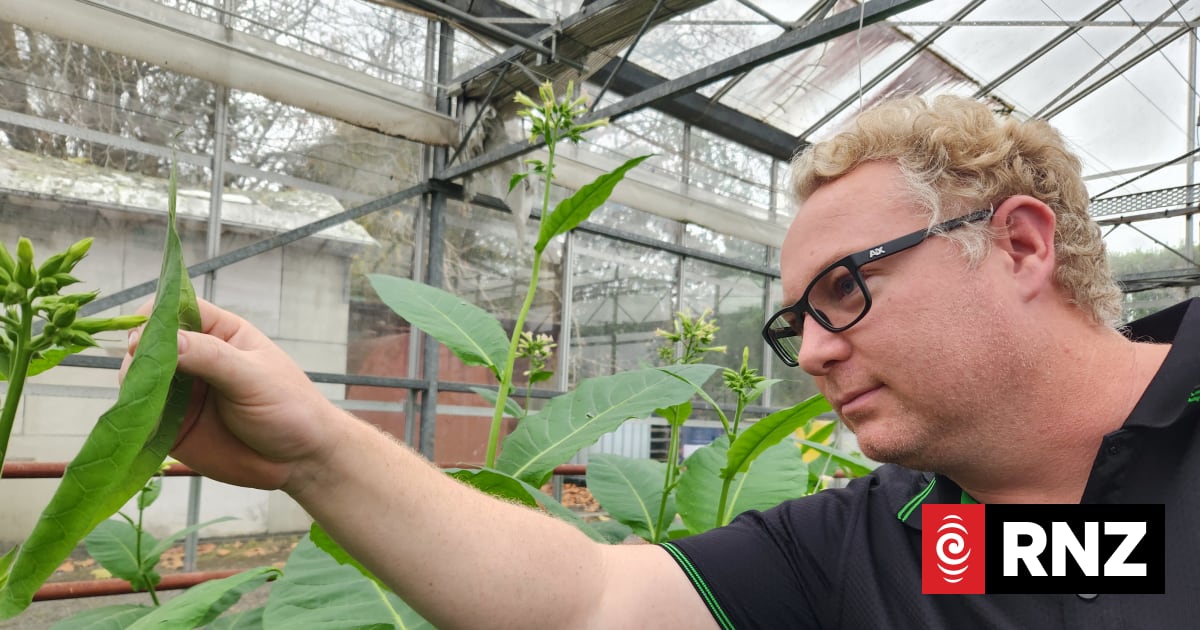
Most growers try to get rid of pests, but at a former tomato greenhouse near Karaka, Chris Thompson and his team need them to thrive.
He picks up a leaf of a tobacco plant – grown for its “pest magnet” qualities – and finds greenhouse whitefly swarming on its underside.
While most growers would be grimacing, Thompson has a smile on his face – these tiny bugs and their eggs are fodder for some of the beneficial insects his firm Bioforce rears and sends to growers and gardeners around New Zealand.
Bioforce’s Chris Thompson inspects banker plants used to house and feed insects
RNZ/Sally Round
“As a beneficial insect farmer, we have to produce both the pest and the good bug because many of the good bugs will only eat that pest.”
“Billions” of the bad (including aphids, spider mites, and psyllids) and the good are bred in a series of insect rooms.
“Imagine if you’re a wolf farmer and you have to farm sheep to feed the wolves. Keeping the wolves out of the sheep is actually the most challenging part of your job,” he told Country Life on a tour of the insect farm.
A force to be reckoned with
Follow Country Life on Apple Podcasts, Spotify, iHeart or wherever you get your podcasts.
The tiny organisms are harvested using a proprietary method which Thompson keeps close to his chest. They are then despatched to growers around the country and as far as Singapore.
Keeping predator and prey in balance is a never-ending task.
“The collection means that we have to have someone working every single day of the year. There is no rest.”
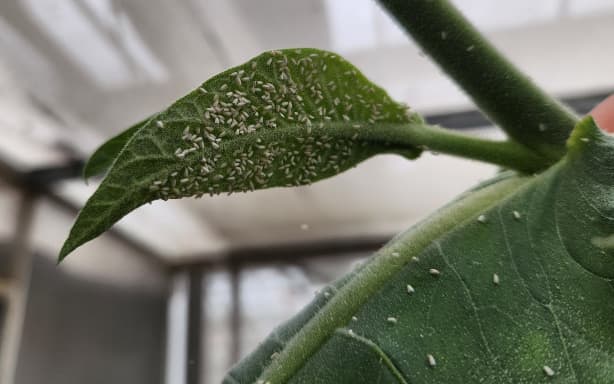
Breeding whitefly on a tobacco leaf as food for beneficial insects
RNZ/Sally Round
Thompson said he had always wanted to farm bugs and started helping out on the farm at the age of 11.
The farm was established by his father John Thompson, an analytical chemist, nearly three decades ago.
Since then the team has commercialised about a dozen beneficial insects with evocative names like Enforce, Poultry Defender and Hyper-Mite.
The younger Thompson’s mechanical engineer training brings other valuable skills to the business.
“There’s no one out there that just supplies equipment for breeding bugs. There’s many things that are extraordinarily small and then very, very high counts.
“I would assume by head of livestock that we would be the biggest farmers in the country.”
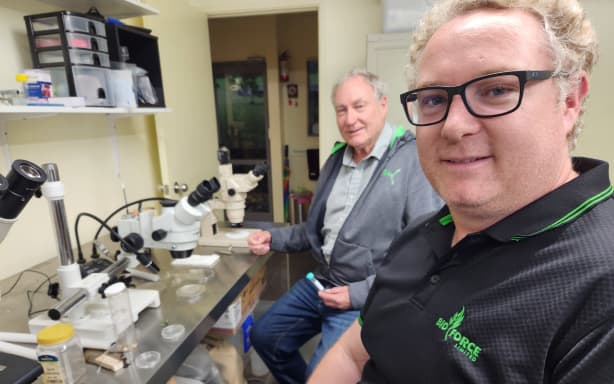
Chris Thompson (R) and his father John Thompson
RNZ/Sally Round
Thompson points out some minute dots on a plant in one of the breeding rooms – they are tiny parastic wasps with the grim habit of inserting their eggs into whitefly nymphs, eventually killing them.
“They may just look like a speck of dust to most people, but if you attentively watch them, they are moving. At full size, they’re about 0.9 of a millimeter long and being the shape of a needle, that means they’re very, very thin.
“They have about a two to three week lifespan as an adult and in that time they could kill 200 to 300 white fly eggs or larvae.”
And they’re greed is all the more helpful for Bioforce’s customers, numbering up to 12,000 a year.
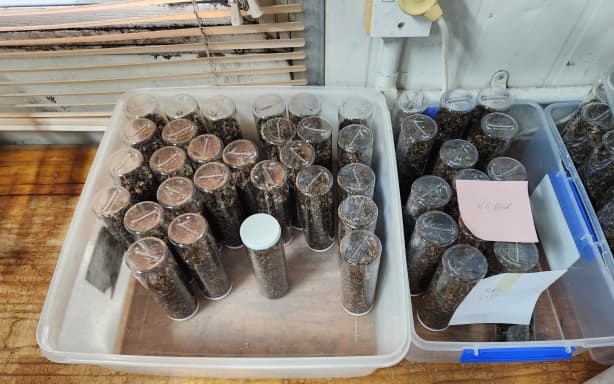
Beneficial insects ready for despatch
RNZ/Sally Round
“Typically you’ll find with many of these predator insects that they will kill more than they eat.
“That’s almost like I guess, a child going through a cake shop eating all the icing off the muffins.”
Bioforce was a finalist in this year’s Primary Industries New Zealand Awards for its breakthrough biological control work with Engytatus, a bug which feasts on whitefly, aphids and other insects.
“Engytatus will try and try their best to be a glut and eat all of them.”
The insect is in demand among commercial tomato growers, Thompson said.
“Engytatus now has already made its way into I think it’s about 25 percent of the commercial tomatoes in New Zealand and that’s largely limited by us still producing and trying to roll it out.”

Discussion about this post