









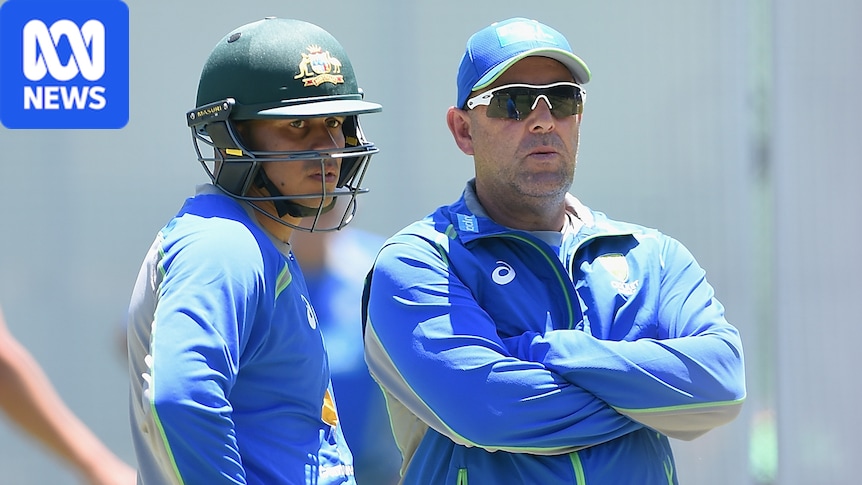
Darren Lehmann Responds to Controversial Ball-Tampering Allegations
Former Australian cricket coach Darren Lehmann has asserted that ball tampering has been a longstanding issue in international cricket, yet he refutes Usman Khawaja’s claims of widespread awareness regarding the 2018 sandpaper incident.
Lehmann held the coaching position during the infamous Cape Town Test match, where Cameron Bancroft was caught using sandpaper to manipulate the ball’s condition. The fallout from this event resulted in suspensions for Bancroft, captain Steve Smith, and vice-captain David Warner, leading to Lehmann’s resignation.
In his statements to Nine newspapers, Khawaja emphasized, “Not the batters, not the bowlers, not the staff. All of us,” implying shared knowledge of the tampering strategy within the team.
Responding to these allegations in an interview with ABC Sport, Lehmann denied having any prior knowledge of the sandpaper plan and expressed skepticism that all members of the Australian camp were complicit.
He maintained, however, that ball tampering has historically been prevalent in cricket: “I don’t think everyone would have known [about the use of sandpaper]. You do know ball tampering is going on because it’s been happening for 150 years,” he stated.
Lehmann acknowledged the severity of the situation: “It’s just how it’s being done, and how you would know to that extent? That’s an individual case by case, to be fair,” he noted. He expressed regret over the impact of these accusations, saying, “Now it is obsolete. That doesn’t make it right either, but that’s the case, and we paid a heavy price for that.”
Khawaja further mentioned that he had recommended the team take collective responsibility after Bancroft’s actions came to light. Lehmann, who now serves as a co-host on the ABC Cricket Podcast, admitted he could neither confirm nor deny this conversation, citing his absence from meetings at the time.
Lehmann remarked, “There were two change rooms obviously, and there were meetings going on everywhere. To be perfectly honest I was in meetings with Cricket Australia a lot,” indicating the complexity of the situation.
He also denied knowledge of an alleged discussion between Bancroft and a coaching staff member believed to be integral to the sandpaper scheme. A spokesperson from Cricket Australia affirmed confidence in the findings of their initial investigation, emphasizing that speculation has surrounded the case for years without substantial new evidence.
Reflecting on the emotional toll the controversy has taken, Lehmann described his experience in a “really dark place” following the incident, noting that Khawaja’s accusations have resurfaced painful memories for him and others involved. He added, “End of the day, Cricket Australia had their findings. It was a really tough week, two weeks, at that time going through the process.”
Despite the division in opinions among players, Lehmann professed empathy for those affected by the allegations and stated, “For the families and the people involved, I feel for them right now because it’s taking them back to a really bad place.”
Lehmann also commented that Khawaja did not reach out to him prior to making his claims public, suggesting that discussions could have taken place earlier. “Could he have said this at the time? I suppose that’s one of the things in the book. I mean, books are there to sell,” he remarked.
The conversation surrounding the ball-tampering incident continues, with former players expressing mixed sentiments about the newly revealed claims. Ryan Harris called it “a bit disappointing” that Khawaja waited so long to share his perspective, while Jason Gillespie questioned the believability of a narrative in which only a few were aware of the plan.
As the cricket community reflects on the lasting fallout of the 2018 scandal, the debate over accountability and transparency within the sport remains relevant.









Discussion about this post