







Election Coverage in Aotearoa: The Power of Brand and UX
A profound transformation characterizes the media landscape in Aotearoa during the lead-up to Election 26, emphasizes Amanda Wilson. As audiences navigate an increasingly complex array of platforms, distinct branding and user experience (UX) have become vital assets in election coverage.
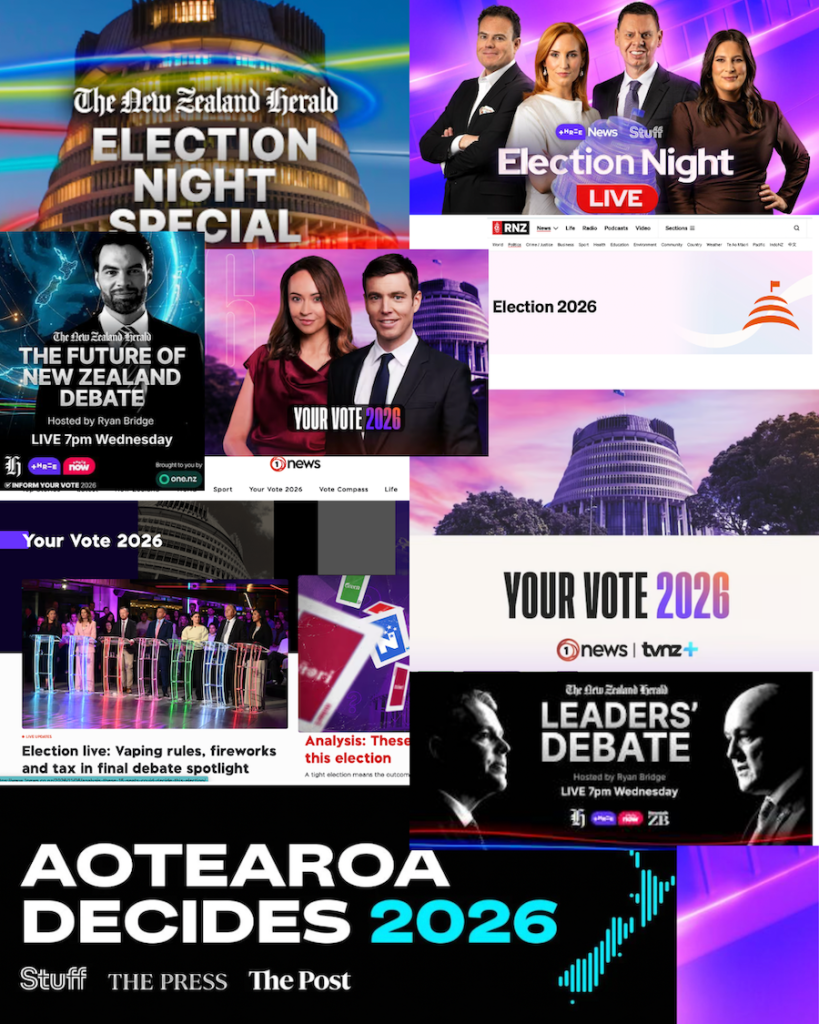
In a world saturated with information, a structured approach to election reporting is essential. A consistent visual identity — complete with branding elements like color schemes and thematic names — facilitates recognition for audiences seeking to engage with election content. While some industry players may deem this unnecessary, Wilson argues it is crucial for effective media consumption.
Comprehensive election coverage is an embedded expectation for media outlets. However, providing this content within a well-crafted, recognizable framework distinguishes one’s offerings from the competition. Such meticulous branding conveys dedication and investment in the electoral process, suggesting that the outlet is committed to delivering high-quality news.
This branding strategy enhances visibility amidst a fragmented media environment. Clear assets allow audiences to swiftly locate and follow coverage of the election. For instance, 1News has effectively branded its election coverage as “Vote 2026,” ensuring viewers can easily find it in their navigation bar, thus enhancing user experience.
The coverage reflects how media organizations are positioning themselves within the broader ecosystem, revealing collaborative tendencies and strategic priorities. For those paying close attention, the interplay of alliances and partnerships among publishers offers fascinating insights.
Reflections on a Changing Landscape
Wilson expresses a sense of nostalgia for a bygone era in which her role as marketing director at MediaWorks limited her to specific platforms. Collaborations with influential stations like Newstalk ZB and coverage on popular stations such as The Rock were beyond her reach, an experience that fuels her admiration for today’s fluid media dynamics.
Now, evolving media collaborations seem more accessible than before. Traditional alliances mingle with emerging partnerships, creating a dynamic ‘media mash-up.’ TVNZ continues to showcase the power of television through a robust election package, “Vote 2026,” indicating that television remains a compelling medium for event-driven viewership.
Meanwhile, NZME showcases the strengths of its own integrated ecosystem, leveraging brands like Newstalk ZB and the NZ Herald to maximize reach and engagement during the election cycle.
Television’s Ongoing Relevance
Reflecting on her experiences at NZME, Wilson notes a striking transformation in broadcast spaces, observing how areas like reception and cafés are now repurposed as dynamic studios. The convergence of channels underscores the changing nature of media consumption; audiences are seeking content across multi-platform environments.
The recent leaders’ debate showcased how NZME‘s coverage not only commanded attention but also involved an effort to prioritize audience engagement. While the coverage aired through traditional platforms, it increasingly felt aligned with the energy of NZME, foreseeing a shifting narrative in the media landscape.
While some analysts proclaim that “video killed the radio star,” radio stations have remarkable resilience, now often blending video content into their operations. Although ownership structures like Sky overseeing Three and Stuff producing Three News complicate things, the importance of clear branding remains consistent as audiences navigate their options.
Fostering Talent in a Shifting Media Landscape
In elections, control over coverage equates to dominance over news audiences, a concept that remains intact despite the changing landscape. Political journalists were once the embodiment of media brands during electoral seasons, but Wilson notes that these professionals continue to find traction, regardless of the channels that retain their services.
She reminisces about political figures whose names resonated in her earlier experiences, emphasizing that although the structures have altered, talent endures as a central asset. The ethos of adaptability, championed by leaders like Brent Impey during her tenure at MediaWorks, remains relevant today.
Emergence of Challengers
While Wilson anticipated a broader influence from media challengers during the election—such as unorthodox platforms and politically biased channels—the results showed a persistence in traditional media’s ability to command audience attention. This suggests that, despite fragmentation, established brands continue to resonate with viewers.
As the electoral season unfolds, it becomes clear that clever collaborations enable media outlets to reclaim reach, ensuring their content remains accessible and relevant. The evolving landscape, filled with established entities and emerging players, creates a captivating dynamic that observers continue to analyze.
With the excitement of Election 26 underway, the media remains competitive and innovative, catering to an audience that yearns for both quality and accessibility in news coverage.
Amanda Wilson, formerly the Marketing Director of MediaWorks, now leads both These Guys I Know and Circulate. Her insights into the media landscape reflect her ongoing fascination with its complexities and transformations.








Discussion about this post