








Assessment of Lunar Crater Degradation and Its Implications for Water Preservation
Recent Insights from AGU Advances
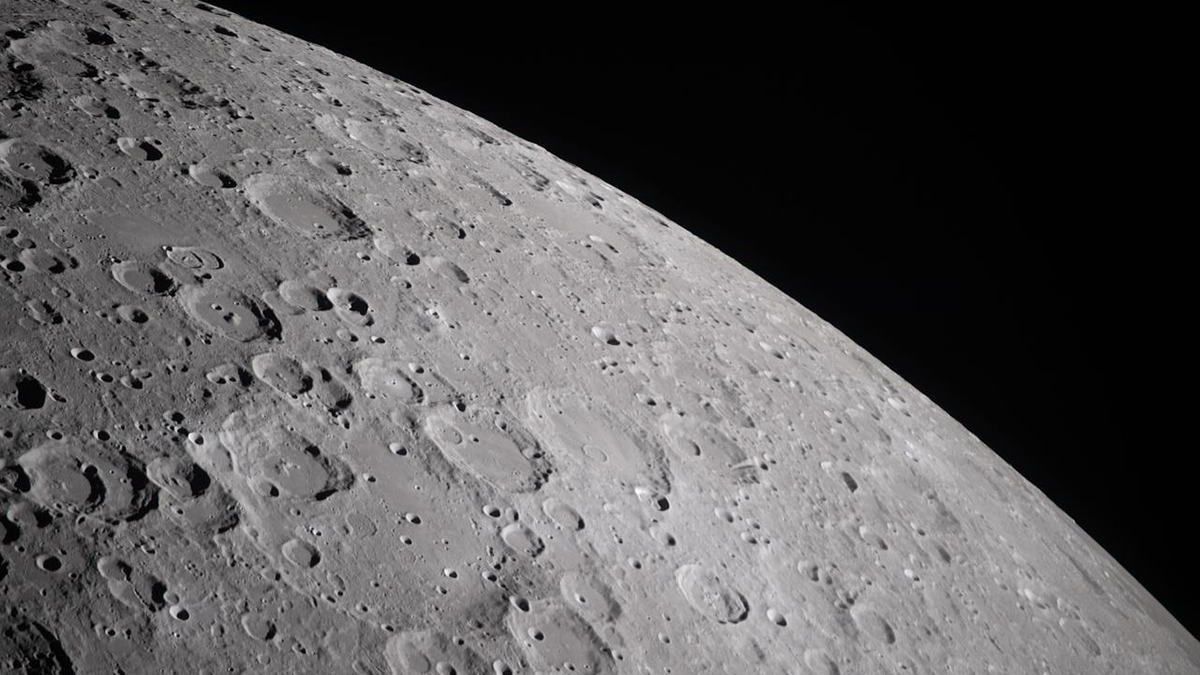
Lunar impact craters serve a dual purpose in planetary science: they are instrumental in dating the surface of the Moon and act as cold traps that can retain water ice. A significant challenge in utilizing these craters for age determination lies in their degradation over time—hence, understanding the dynamics of this degradation is crucial.
Key Findings from Zhang et al.
A study conducted by Zhang et al. (2026) delves into the characteristics of small lunar craters, specifically those with diameters ranging from 50 to 500 meters. Through numerical simulations that model both crater formation and their subsequent evolution, the researchers compared These models to actual observed crater dimensions.
Influence of Size and Topography
The study highlights that degradation rates of these craters are significantly impacted by both their size and the surrounding topography, such as the differences between maria and highlands. This research not only enhances the understanding of degradation rates but also offers improved estimates for crater retention ages, thereby refining timelines for lunar geological history.
Implications for Lunar Water
Importantly, these small craters serve as repositories for water, capturing it from both impact events and from hydrogen accumulating due to solar winds. Therefore, comprehending the longevity of these craters is vital for insights into the potential origin and preservation of lunar water resources.
Citation
Zhang, M., Fa, W., Tong, J., & Liu, Y. (2026). Degradation rate and lifetime of small impact craters on the Moon. AGU Advances, 7, e2026AV002542. Link to full paper
—Vincent Salters, Editor, AGU Advances






Discussion about this post