









EU Leaders Struggle to Finalize Seven-Year Budget Amid Disputes
Brussels, November 26, 2026 — Leaders of the European Union were unable to reach a consensus regarding the bloc’s upcoming seven-year budget during a special European Council summit held in Brussels on Thursday. Significant divisions persist between fiscally conservative member states and the ‘Friends of Cohesion’, hindering progress toward a final agreement.
Despite the budgetary impasse, the leaders did reach a consensus on nominating Spain’s Pablo Hernández de Cos as the next president of the European Central Bank (ECB), and they expressed overwhelming support for enhanced financial aid to Ukraine.
Budget Negotiations Fall Short
Discussions surrounding the multiannual financial framework (MFF) for 2028–2034 were largely focused on a revised proposal introduced by European Council President António Costa last Saturday. This proposal aimed to trim the European Commission’s initial budget request of nearly €2 trillion by €204 billion, equating to approximately a 10 percent reduction.
However, the proposed concessions were deemed inadequate to reconcile the differences between net contributors and net beneficiaries of the EU budget. Following the meeting, Costa confirmed, “We didn’t reach an agreement.” He elaborated that some member states sought further reductions, while others opposed any cuts and even suggested reversing certain reductions, particularly in the Cohesion budget.
Frugals vs. Friends of Cohesion
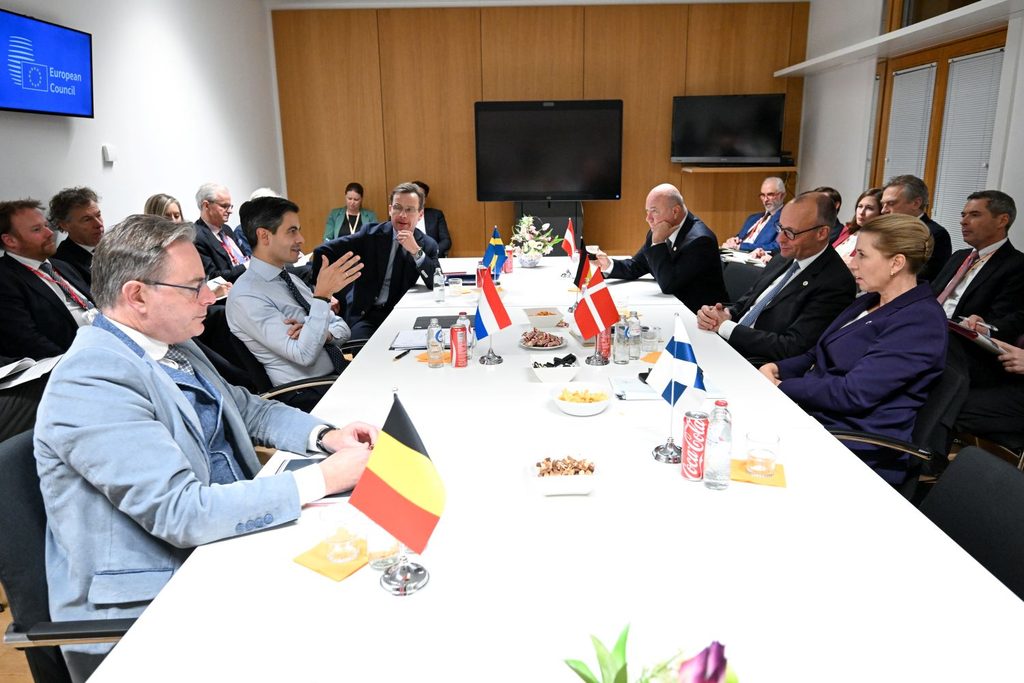
Germany, leading a coalition of fiscally conservative nations including the Netherlands, Austria, Sweden, Denmark, and Finland, advocated for even deeper cuts to overall EU spending. Chancellor Friedrich Merz emphasized that reductions should total several hundred billion euros, indicating that Costa’s compromise fell short of their expectations.
In contrast, the ‘Friends of Cohesion’ group, predominantly composed of central, eastern, and southern European nations, opposed any cuts to funding aimed at regional development and agricultural support. French President Emmanuel Macron also voiced his dissent, labeling the proposed €204 billion reduction a “strategic error” and asserting that national contributions should not rise.
Additionally, Austria expressed reluctance to reduce agricultural funding while favoring an overall smaller budget, while the Netherlands pushed for reallocating funds from traditional policies towards enhancing innovation and competitiveness. Costa noted, “A large majority of member states called for the preservation of funding for agriculture and cohesion.”
His compromise proposal included substantial increases in funding for competitiveness (120 percent) and defense (232 percent) compared to the current budget, while maintaining average national contributions around 0.82 percent of gross national income. The plan also outlined five potential revenue streams, projected to generate around €60 billion annually when combined with existing resources.
Costa remains optimistic about achieving a unanimous agreement by the year’s end, though both expenditure and revenue discussions are still unresolved.
Support for Ukraine’s Financial Needs
In addition to the budget discussions, EU leaders reviewed a European Commission initiative for an additional loan to support Ukraine’s financial requirements for 2027 and beyond, in collaboration with international partners. “Twenty-four member states endorsed the proposal,” Costa reported, noting that Bulgaria intends to participate solely in the non-military aspects, focusing on regions with its national minority. “We will revisit this matter in December,” he added.
Consensus on ECB Leadership
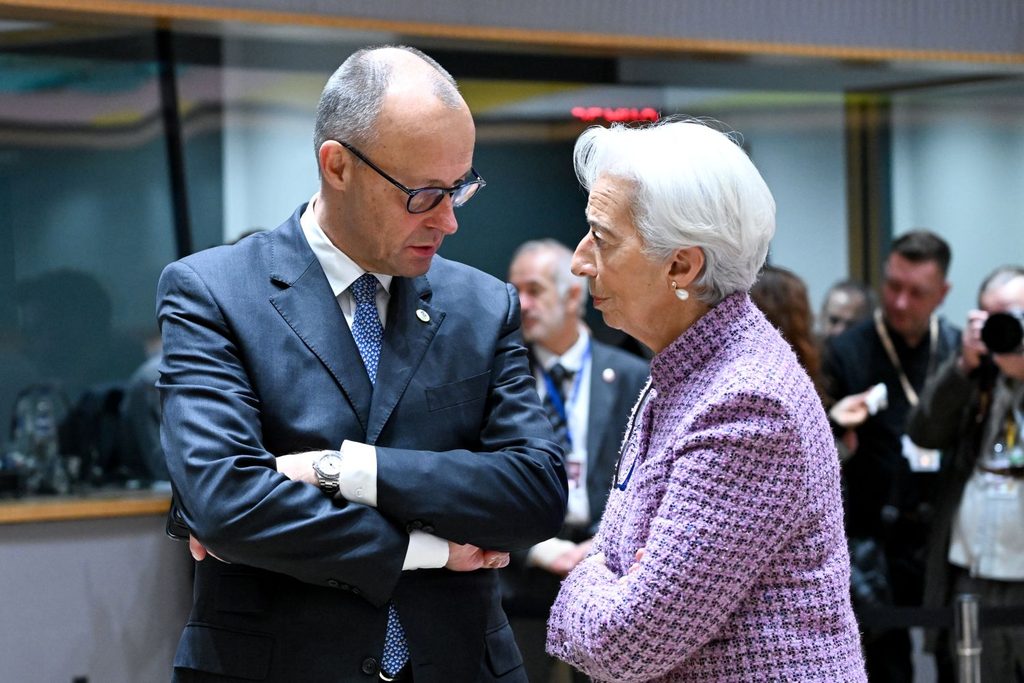
In contrast to the ongoing budget debates, EU leaders successfully agreed on candidates for three key positions within the ECB. Pablo Hernández de Cos is poised to succeed Christine Lagarde in February 2027 for a non-renewable eight-year term. Additionally, France’s Laurence Boone and Germany’s Markus Brunnermeier were nominated to fill the roles of Isabel Schnabel and Philip Lane on the ECB’s executive board.
The European Parliament and the ECB’s governing council will be consulted regarding these nominations, with Costa anticipating a formal decision at the upcoming December European Council meeting.
MAIN PHOTO
President of the European Council, António Costa, addressing the special European Council – November 2026 © European Union





Discussion about this post