
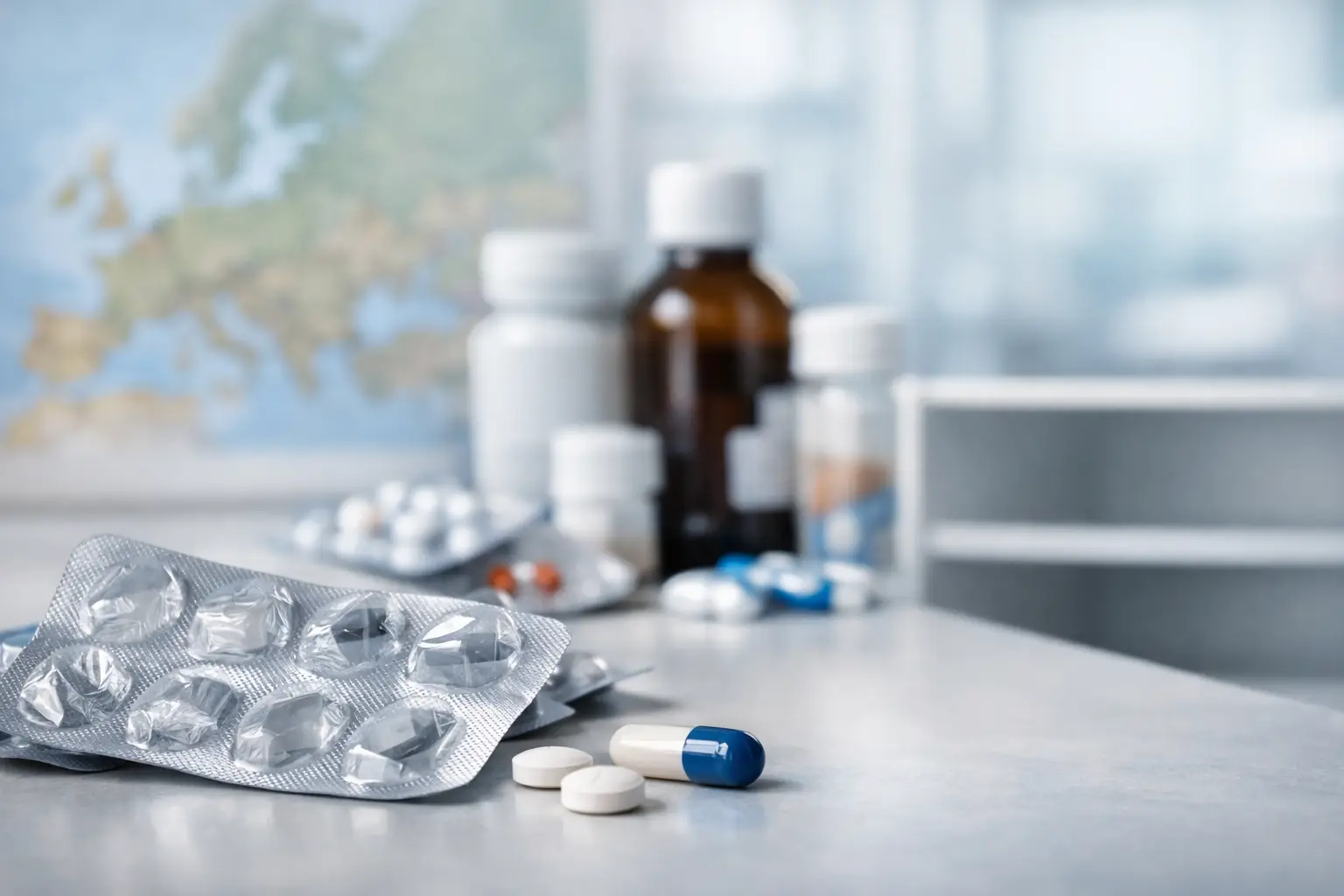
Europe medicine shortages are exposing fragile supply chains, weak coordination and rising patient risk across the EU and UK healthcare systems.
A child with an infection is sent from one pharmacy to the next because a basic antibiotic is unavailable. A cancer patient is told the hospital is managing stock week by week. A parent cuts tablets in half to stretch a prescription until Monday. European medicine shortages are no longer a technical problem buried in regulatory paperwork. They have become a public-interest failure with direct consequences for patients, pharmacists, doctors and already strained health systems.
This is not one crisis with one cause. It is a chain of vulnerabilities – globalised manufacturing, thin inventories, pricing pressure, fragmented procurement, rising demand and poor cross-border coordination – colliding at the same time. The result is a market that looks efficient on paper but becomes brittle under stress.
Why European medicine shortages keep happening
For years, European health systems have relied on a pharmaceutical supply model built around cost control. That has delivered cheaper generics in many areas, which matters for public budgets. But it has also created a race to the bottom in some parts of the market, especially for older, low-margin medicines such as antibiotics, injectables and common hospital drugs.
When prices are squeezed too far, manufacturers leave the market or reduce production lines. That does not always trigger alarm immediately, because remaining suppliers can often cover normal demand. The problem appears when a factory shuts temporarily, a quality issue halts output, shipping is delayed, or winter illnesses surge. Then a shortage in one country quickly becomes a shortage across several.
Much of the active pharmaceutical ingredient production used in Europe is also concentrated outside the continent. That does not automatically mean insecurity – global trade is a normal part of medicine supply – but concentration brings risk. If too few plants make a key ingredient, any disruption can travel fast through the system.
There is also a structural governance problem. Health policy in Europe is partly national, partly European, and often politically fragmented. Member states guard control over pricing and reimbursement, while the EU has a growing but still limited role in coordination, monitoring and crisis response. That leaves gaps. A medicine may be authorised centrally, manufactured globally, purchased nationally and rationed locally. Accountability is then dispersed precisely when patients need clarity.
The real cost of medicine shortages in Europe
The public debate often treats shortages as an inconvenience. In practice, they are a patient-safety issue and, in some cases, a rights issue.
For people with chronic conditions, continuity matters. A change in formulation, dosage or brand can create confusion, side effects or reduced adherence. For hospital clinicians, a shortage means switching protocols at speed, finding alternatives, recalculating doses and accepting higher room for error. Pharmacists spend hours sourcing stock, contacting prescribers and explaining to anxious patients why a medicine that existed last month has effectively vanished this week.
The burden is not evenly shared. People in rural areas, poorer households, elderly patients and those with language barriers are less able to ring round multiple pharmacies, travel longer distances or challenge administrative dead ends. Shortages therefore amplify existing inequalities in access to care.
There is also a democratic accountability problem. Citizens are often told shortages are caused by vague “global pressures”. Sometimes that is true. But political choices shape resilience. Governments decide how hard to squeeze prices, how to structure tenders, whether to maintain strategic reserves, how much domestic production capacity to support and how transparent to be when supply fails. When shortages persist, they should be examined as policy outcomes, not natural disasters.
Which medicines are most at risk
The medicines most vulnerable to shortage are often not glamorous or novel. They are the essential, everyday products on which public health quietly depends.
Antibiotics for children, fever medicines, insulin-related products, anaesthetics, chemotherapy agents and sterile injectables have all been affected in different periods and jurisdictions. Generic medicines are especially exposed because margins can be so low that only a small number of manufacturers remain. If one exits, competition is reduced but resilience is reduced too.
Hospital medicines present a particular challenge. They may require complex manufacturing, cold-chain handling or specialist ingredients. If they disappear, substitution is harder. In community pharmacy, shortages can sometimes be managed with a different brand or pack size. In oncology, intensive care or surgery, alternatives may be clinically inferior or simply unavailable.
What European institutions can – and cannot – fix
Recent years have brought more urgency from European institutions. There has been greater discussion of strategic autonomy in health, better shortage monitoring and stronger cooperation between regulators. The pandemic also changed the political mood. It became harder to pretend that supply chains would always self-correct.
Still, expectations should be realistic. The European Commission and medicines agencies can improve data-sharing, early warning systems and joint action. They can support diversification and encourage stronger manufacturing capacity in Europe. They can also pressure for more transparency about where ingredients and finished medicines are made.
But they cannot, on their own, erase the fragmentation built into Europe’s health landscape. National governments still control many of the levers that matter most, especially pricing, procurement and reimbursement. If capitals continue to reward the cheapest bid without accounting for resilience, shortages will remain likely.
A more serious approach would treat supply security as part of health security. That means accepting some trade-offs. More resilient supply may cost more. Multiple suppliers are less fragile than single-source dependence, but not always cheaper. Strategic stockpiles can protect patients, but they require management and funding. The question is not whether resilience has a price. It is whether Europe is willing to pay it before the next disruption, rather than after it.
European medicine shortages and the market failures behind them
At the centre of the problem is a contradiction that policymakers have been slow to confront. Medicines are treated as market goods for procurement purposes, yet as essential public goods when they run short.
That contradiction distorts incentives. Manufacturers are expected to provide uninterrupted supply even where profit margins are minimal and contracts unstable. Governments want competition, but in some categories they have designed markets so lean that competition disappears. Hospitals are told to save money, then left exposed when the cheapest supply chain snaps.
This is why the debate cannot be reduced to blaming industry or blaming regulators. Some companies have been insufficiently transparent about manufacturing disruptions. Some states have underinvested in resilience. Some procurement systems reward short-term savings over continuity. The failure is shared, which is precisely why reform is difficult.
A more credible policy mix would include tougher reporting duties for supply interruptions, procurement rules that value continuity and manufacturing diversity, and targeted support for critical medicines where market incentives plainly fail. It may also require more serious European cooperation on stock management during peak demand periods, so that national panic does not worsen regional scarcity.
What patients and families can do when shortages hit
No patient should have to compensate for systemic failure, but people do need practical options when medicines become hard to find.
If a prescribed medicine is unavailable, the first step is to speak to the pharmacist, not simply move from one shop to another in frustration. Pharmacists can often identify equivalent products, expected delivery dates or whether the prescriber needs to issue an alternative. For ongoing treatment, ask early rather than waiting until the last tablet. That gives more room for substitution if needed.
If the medicine is clinically essential and alternatives are unclear, contact the prescribing doctor promptly. In some cases there may be a different strength, formulation or therapeutic option. In others, switching is not straightforward, which is why medical advice matters. Patients should avoid rationing doses unless specifically instructed, even though many are tempted to do exactly that.
It is also worth documenting repeated problems – dates, pharmacies visited, medicines unavailable, advice received. Complaints to health authorities or patient bodies carry more weight when they show a pattern rather than a single bad afternoon. Public pressure matters because shortages often remain politically invisible until they become impossible to ignore.
A test of whether Europe can govern essentials
Medicine shortages expose more than logistical weakness. They reveal how Europe governs essentials under pressure – who gets protected, who absorbs the risk and which failures are tolerated until they become scandalous.
For a continent that speaks often about strategic capacity, social rights and health security, the inability to guarantee steady access to ordinary essential medicines is not a minor embarrassment. It is a warning. If European systems cannot reliably supply antibiotics, cancer drugs or basic paediatric treatments, then the problem is not merely operational. It is political.
The immediate fixes matter, but so does the larger principle. Medicines should not be treated as just another procurement category to be managed at the cheapest possible rate. They sit at the point where market design, public health and human dignity meet – and that is exactly where governments are judged most clearly.


Discussion about this post