
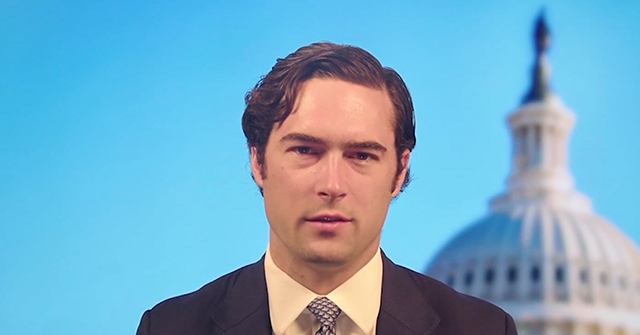





Tiny Kox, the Dutch head of a venerable watchdog on European democracy, has denied being a Kremlin fixer after one Russian spy described him as a top contact in leaked files.
“Such claims were false and unfounded”, Kox’s private office told EUobserver by email on Wednesday (14 September).
-
Former PACE secretary general Bruno Aller (r) at official meeting with Russian president Vladimir Putin (l) in Moscow in 2002 (Photo: kremlin.ru)
The 69-year old left-wing politician became president of the Parliamentary Assembly of the Council of Europe (PACE) in Strasbourg, France, in January 2022.
Like the EU, the Council of Europe [CoE] was created to forge European unity after World War 2, but has 46 member states.
PACE expelled Russia in March and Kox loudly condemned its invasion of Ukraine.
But according to Russian intelligence reports leaked to Dossier Center, a London-based NGO, Kox was seen as a darling of Kremlin interests before his elevation to PACE’s top job.
In the Russian files, Valery Levitsky, an officer in Russia’s GRU military-intelligence service, describes Kox as someone who could “make it happen” for the Kremlin in Strasbourg.
In a document from June 2017, Levitsky speaks of Kox’s potential help on delaying the ejection of Pedro Agramunt, a pro-Kremlin Spanish former PACE president, from office.
In a report from December 2017, Levitsky also says that “according to Tiny [Kox], everything should be finished in our favour by April,” speaking in the context of a lobbying campaign to restore Russia’s voting rights in PACE.
PACE suspended Russia’s rights in 2014 after it first invaded Ukraine. Its voting rights were eventually restored in 2019 before its PACE expulsion this year.
Levitsky was Russia’s consul general in Strasbourg before France expelled him in 2018 on grounds of espionage.
He was already enlisted in the Russian armed forces [of which the GRU is part] when he was Russia’s deputy consul in Marseilles, France, between 1995 and 1998, a Dossier Center document shows.
Levitsky was also a graduate of the Pushkin Higher School of Air Defense Radioelectronics and the Military Diplomatic Academy in Moscow before making France his second home.
The GRU’s man lobbied for Kox to get the PACE top post via go-betweens in Strasbourg even after he’d been made persona non grata by France, Dossier Center’s documents revealed.
In one leaked report in 2021, Levitsky described Kox as a shoe-in for the PACE presidency, for instance.
“The rapporteur [Kox], the future president of the assembly, is quietly putting it [a Russian wish] on his list of priorities to change the position. He cannot write it in black and white,” Levitsky said of Kox, referring to Kox’s March 2021 PACE report entitled ‘The Assembly’s Vision for CoE Strategic Priorities’.
Levitsky’s circle
Other senior PACE faces were also part of Levitsky’s ring, Dossier Center’s leaked files indicate.
These include Agramunt, who publicly disgraced himself by visiting Russia’s bloodthirsty ally, Syrian president Bashar al-Assad, in 2017. They also include Bruno Aller (a French ex-PACE secretary general) and René van der Linden (a Dutch former PACE president).
EUobserver asked Kox’s office detailed questions arising from Dossier Center’s files, such as: “Has he [Kox] ever heard of, met, or corresponded with Mr Valery Levitsky and what was their relationship?”.
“In December 2017, did Mr Tiny Kox advocate restoring Russia’s voting rights in PACE or discuss the idea at a dinner with Mr van der Linden?”, we also asked.
Kox’s office said he’d prefer to answer in-depth questions in a face-to-face interview in future.
Kox is well known in The Hague after being secretary general and senate speaker of the Socialist Party, a minor faction in the Dutch parliament.
He was also a member of the Dutch parliamentary assembly to Nato in Brussels from 2003 to 2010.
Levitsky is now a deputy head of the Russian parliament’s international cooperation department in Moscow.
France kicked out a further 35 Russian diplomats on grounds of spying in April as part of a wider EU reaction to the Ukraine war.
Russia’s permanent representation to PACE used to have some 80 staff before it was booted out of the assembly in March, but PACE believes most have now gone home.
The Dossier Center is funded by Mikhail Khodorkovsky, a former Russian business baron who became a dissident. The NGO hunts Russian espionage in Europe.








Discussion about this post