









New Zealand Celebrates a Decade of Support for Svalbard Global Seed Vault
New Zealand is commemorating ten years of its involvement with Norway’s Svalbard Global Seed Vault, often referred to as the “doomsday vault,” by dispatching 300 seed samples to the Arctic Circle. This contribution underscores the nation’s commitment to global agricultural biodiversity.
Margot Forde Genebank: A Repository of Genetic Diversity
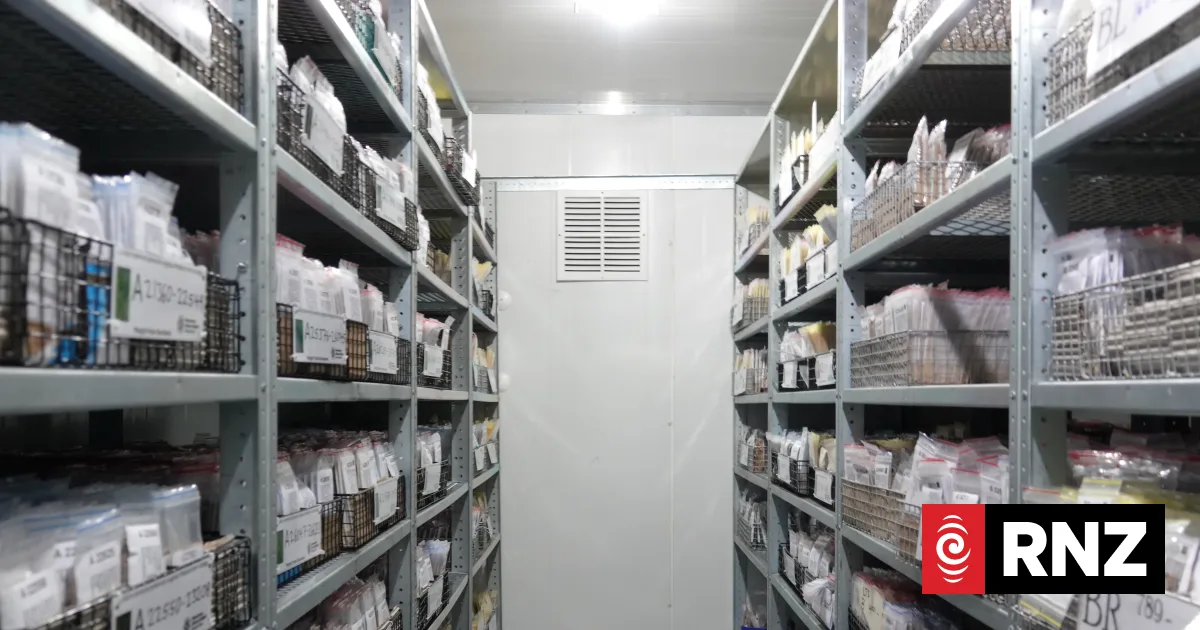
The seeds are sourced from the Margot Forde Genebank located in Palmerston North. During a recent tour, director Kioumars Ghamkhar highlighted the extensive collection housed within the facility. Despite its unassuming exterior, the genebank contains an impressive 180,000 packets of seeds, each representing a unique genetic profile.
Anticipating a Modern Upgrade
After 12 years at the helm, Ghamkhar expressed enthusiasm for the upcoming transition to a modernized facility, scheduled to be operational by March. The genebank bears the name of one of his predecessors and has evolved significantly since its origins in the 1930s and 1940s, formally establishing itself in the 1980s.
A Safety Net for Global Agriculture
The genebank serves as a critical insurance policy against potential crop failures. The facility features a secure entrance, with stringent protocols ensuring that at least 150 seed samples of each variety remain preserved.
Expanding Collections and Collaborations
Since the establishment of the Bioeconomy Science Institute, which integrates various Crown entities including AgResearch and Plant and Food, the genebank’s collection has been steadily growing. Ghamkhar noted the recent influx of new seeds, including 10,000 accessions of pine trees, which are vital for both ecological and economic purposes.
Focus on Economic Vitality
New Zealand’s genebank is committed to maintaining its role as the nation’s primary repository for seeds, encompassing a wide array of crops including wheat, canola, and key grass species such as perennial ryegrass and clover. While native species are included, the main focus remains on economically significant crops.
Innovative Storage Techniques
Visitors to the current facility must don heavy jackets due to the low temperatures maintained for seed preservation, typically between 0-4 degrees Celsius, with a smaller vault operating at -20 degrees Celsius. Each seed packet is meticulously labeled with QR codes and color-coded for easy identification and tracking.
Operational Insights from Experienced Staff
Inside the genebank, facility manager Michelle Williamson, who brings over 30 years of experience, explained the comprehensive process of documenting and storing seeds. The genebank also fulfills requests from plant breeders and researchers both domestically and internationally.
Looking Ahead: Enhancements and Contributions
Ghamkhar emphasized that the current cooling system, dating back to the 1980s, will be replaced by one offering greater flexibility and efficiency. The new facility will feature six vaults, with many samples stored at -20 degrees Celsius to ensure longevity, potentially preserving them for 50 to 100 years.
Economic Impact and Future Prospects
While the genebank currently lacks the resources to assess seed viability, plans are underway to acquire the necessary technology. Ghamkhar estimated that the genebank has contributed approximately $1 billion to New Zealand’s economy over the past 20-25 years. Looking forward, the genebank is expected to send a variety of materials annually to the global seed vault, with a particular emphasis on clover, a crucial component of the local economy.








Discussion about this post