[ad_1]
The labels helped embalmers avoid mixing up bodies but had a deeper purpose, said Thum. “It also kind of functions like a memorial, almost like a tombstone or a stela.”
Curators borrowed several mummy tags for the exhibition, even though they don’t match up with the portraits on view.
“A lot of this exhibit is about what’s not here,” said Thum. “What can we learn from what’s left?”
Six souls, one portrait
“It has a bit of a puzzle quality to it,” when you look at it with the naked eye, conservator Kate Smith said about the composite portrait below. Thanks to technical imaging, a more complete picture is emerging.
Researchers can tell fragments were inserted into the main panel, probably to make it more desirable to art buyers. They also know from analysis of brushwork and materials that the inserted pieces are fragments from other ancient portraits.
“They’re all to be valued in that they’re all artifacts,” said Smith.
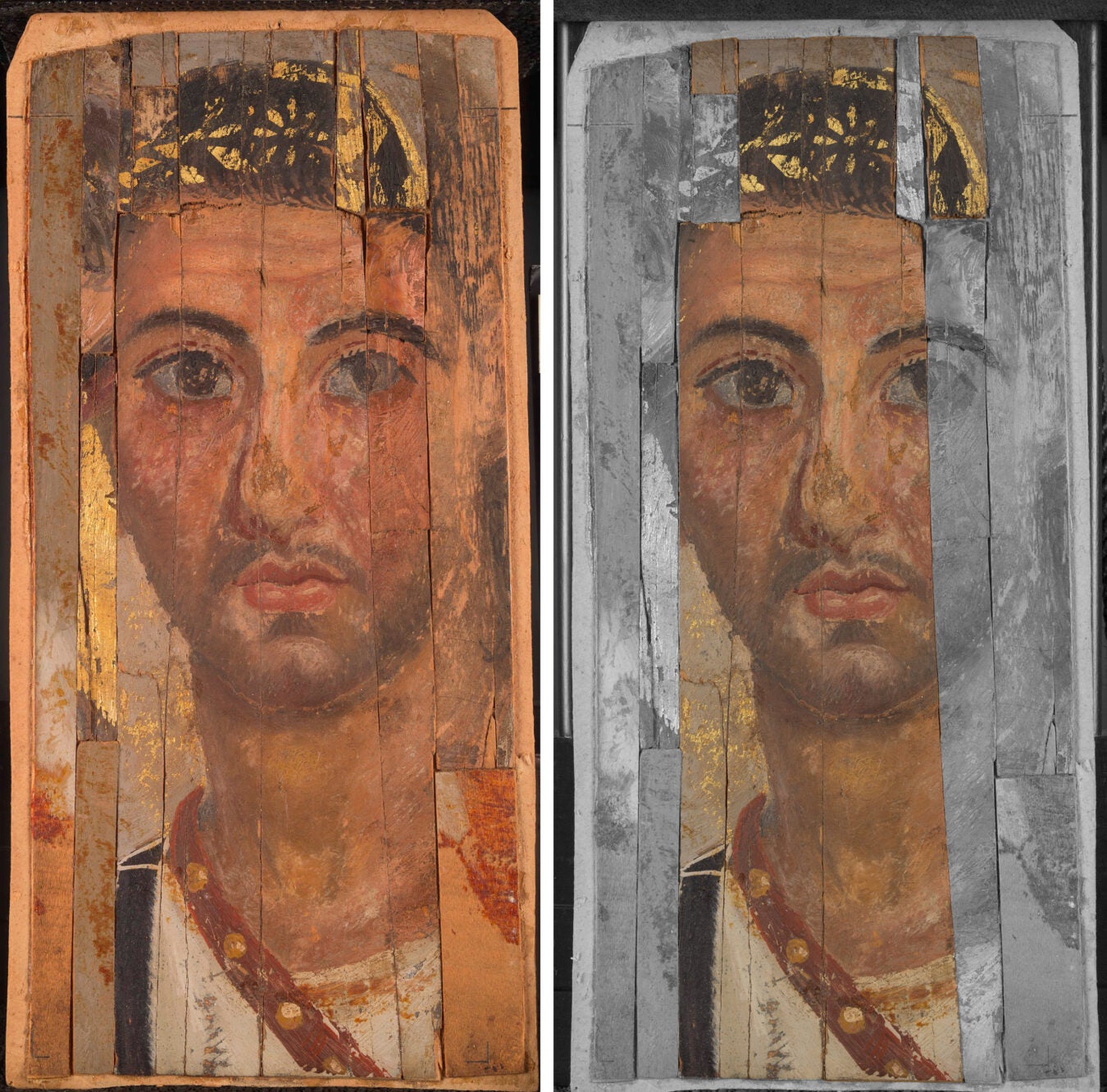
Diagram (right) illustrates which fragments are related to the main portrait and which were determined to be added.
© Harvard Art Museums
“We think that there were six people represented in this,” added associate conservation scientist Georgina Rayner.
“It’s a moment to remember that this is really a desecration,” Smith said.
© Harvard Art Museums
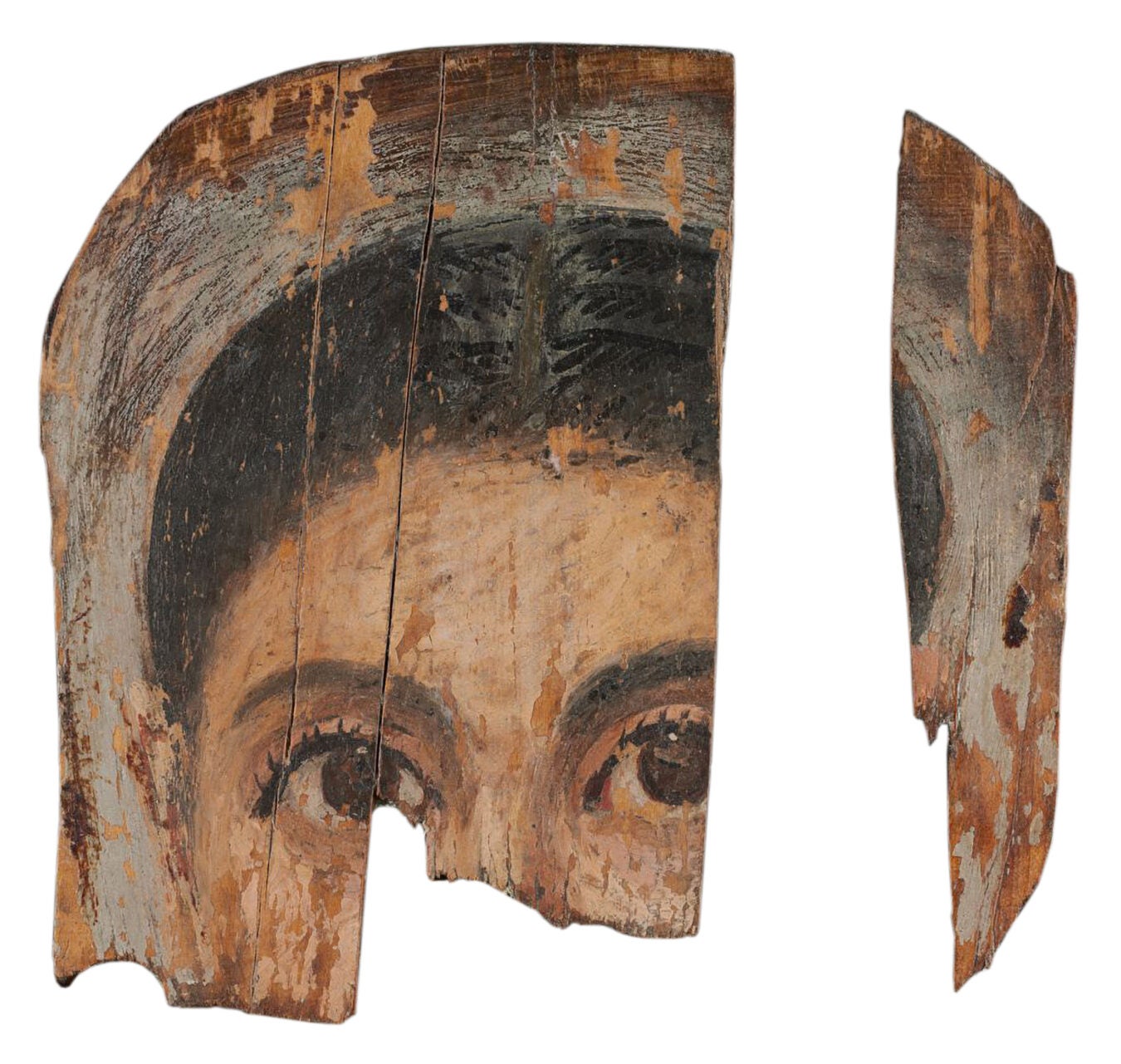
This fragmentary portrait of a woman, left broken, offers a counterpoint to the composite. “Still very powerful, but much of her is lost. … They’re all fragmentary in some way but she is less legible,” said Smith.
Artist’s hand
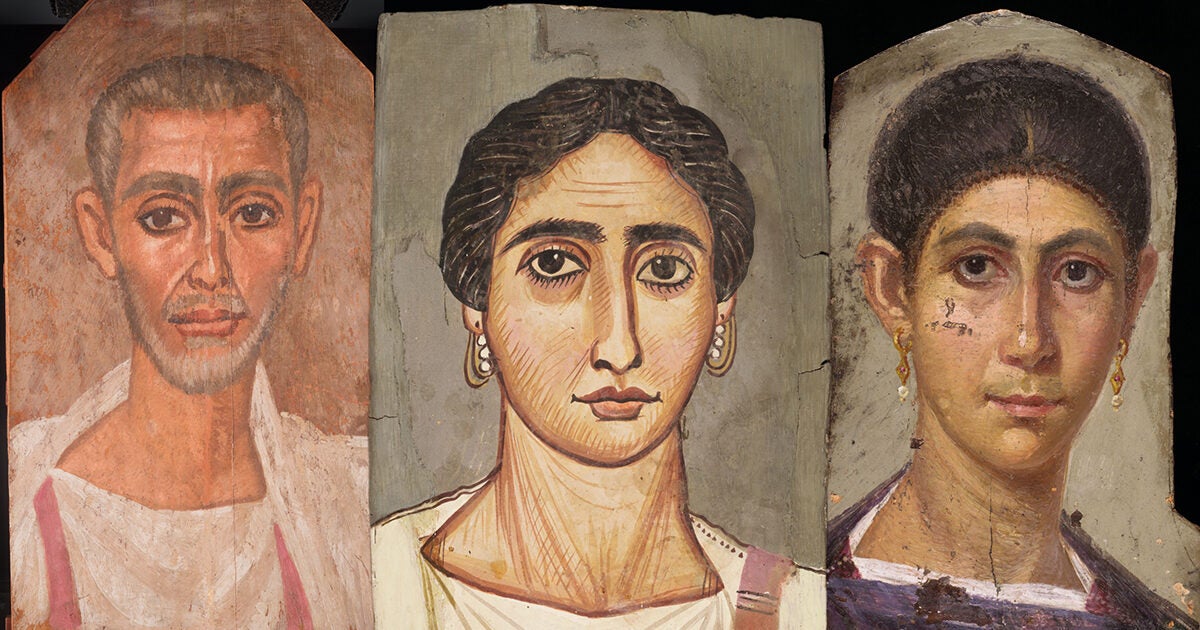
Funerary portraits were unsigned by artists, so researchers have attempted to find signatures in date, style, and materials. Some researchers attribute the four examples below to one artist or workshop.
[ad_2]
Source link