
Garmin watch prices have gotten more expensive than ever, but it doesn’t seem to matter to the people buying them.
I have no idea how many people will buy the $2,000 Garmin Fenix 8 Pro MicroLED; it’s a novelty, first-gen device with noticeable tradeoffs. But Garmin keeps reporting record-setting profits on watches while bumping up prices across its entire lineup. Who’s to say the Fenix 8 Pro won’t find a credulous audience? It’s still cheaper than a Rolex!
In 2025, Garmin fans have grumbled about higher watch costs, the new Garmin Connect Plus subscription, the massive bootloop crash, and especially when Garmin cut off new features for the year-old Fenix 7 Pro to push the Fenix 8. “I’ll never buy a Garmin watch again” has been a pretty common refrain on forums, and rivals like COROS and Polar would happily take their business.

This hasn’t stopped Garmin from climbing into the 5th-best-selling wearable brand in 2025, with a nearly 30% year-over-year growth, closing in on Samsung in 4th. Either the “never again” people weren’t honest with themselves, or new customers happily took their place.
Garmin’s recent earnings paint a clear picture. In Q3 and Q4 2024, the $1,200 Fenix 8 and $900 Enduro 3 helped the “Outdoor” watch sales climb by about $230 million YoY. Last quarter, the $550 Forerunner 570 and $750 Forerunner 970 helped its “Fitness” sales grow by $177 million YoY.
Garmin has told investors that it would raise watch prices to combat tariffs, probably anticipating that this would offset lower sales. Instead, it seems like people are primed to accept higher prices and are skipping the mid-tier models to get the best specs and price-locked features.
Having become attached to my $800 Garmin Venu X1, I certainly won’t judge! But I’m curious if people’s love of expensive Garmins is coming from a genuine need for the best features or from Garmin cleverly wielding our fear of missing out into overspending.
Garmin’s price-locking is paying off

Most smartwatch brands stick to a consistent price, only bumping it up for inflation every few years. Upgraded sensors, better hardware, and new health features are the norm. The onus is on them to convince you to keep paying the same price every year or two.
Garmin takes a very different approach. It usually takes 2–3 years to sell a new watch in each lineup, and it charges more for every new feature. So when the Forerunner 570 added a mic, speaker, and better health sensors, Garmin logic meant that it couldn’t cost the same as the Forerunner 265 anymore.
Garmin’s price tier strategy means certain tools, such as dual-band GPS or training load, will never come to cheaper watches. For example, the Instinct 3 was designed for hikers but didn’t get topographic maps, making rival watches like the COROS NOMAD look much better by comparison.
Likewise, Garmin’s running tolerance tool, which could help beginner runners understand their body’s limits, is also locked off the cheaper Forerunners, upselling those beginners to a premium model they might not need.
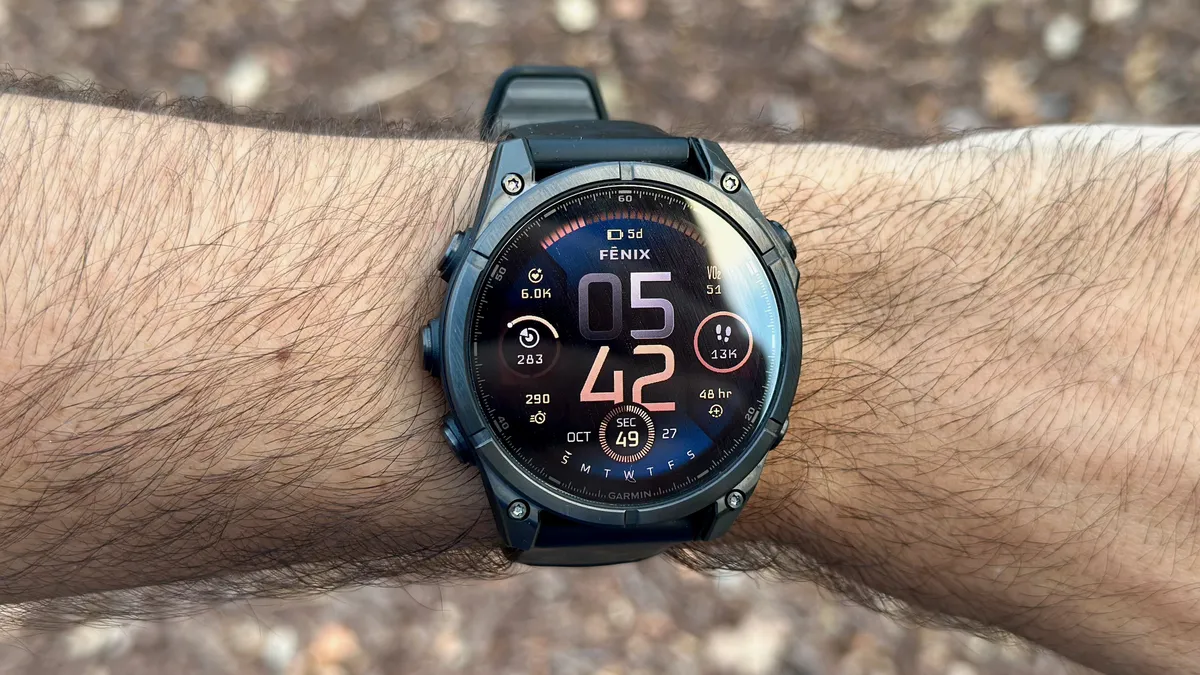
The problem is, this strategy works! People want the price-locked features, so they pay extra for them. There’s no pressure on Garmin to share its best tools with cheaper models because people give in and pay for better quality. Garmin’s earnings make this crystal clear.
A mid-tier Garmin watch feels both expensive and limited. However, when they reach the smartphone price range, it lends them a certain mystique, as if they must be good to cost that much. People want the Fenix 8 because of its exclusive features, even if they don’t use them, and the extra battery life even if it’s superfluous.
How much SHOULD you spend on a Garmin watch?

I’m not trying to single out Garmin for having high prices. Samsung watches are more expensive than ever, particularly the Watch 8 Classic and Watch Ultra. Polar bumped up its watch prices by hundreds of dollars to combat tariffs. And Apple arguably unleashed the floodgates for exorbitant smartwatches with the Apple Watch Ultra.
But with the Fenix 8 Pro launch, it’s a good time to cover the fact that cheaper Garmin watches can still be great, even with Garmin restricting features from them.
I’ve previously written about the three best cheap Garmin watches for beginners: the Vivoactive 6, Forerunner 165, and Lily 2 Active. That advice still applies if you have a $300-and-under budget; most everyday athletes will get everything they need from one of these.

But you can spend a little more than that without overspending. I’d say $500 is the cutoff: Most of our best Garmin watch picks cost less than that, and you likely don’t need to spend more than that, except for these specific scenarios:
- You’re someone who goes on all-day hikes and can’t make do with a smartphone map app, or backpack for days with limited access to power sources.
- You regularly go skiing, diving, surfing, or other more specific sports that lower-end models don’t track as well.
- You want to leave your phone at home for workouts and use the Fenix 8 Pro’s LTE calling and satellite messaging — at least until we get more affordable Garmin LTE watches.
Outside of these scenarios, you can find everything you need under $500 with a Venu 3 (mic and speaker, 5th-gen sensors with ECG, a sleeker design); Instinct 3 (military-grade ruggedness, flashlight, longer battery life with a solar option); or Forerunner 265 (dual-band GPS, training load, run coach plans, daily workout recs).
Garmin makes these watches feel like compromise picks to upsell you, but everything else a premium watch would offer — titanium cases, voice commands, spare hours of GPS tracking — is probably something you can live without.
Of course, I love my extra-fancy, overkill Garmin watches and would be a hypocrite to say you shouldn’t overspend on expensive maps, rich-people sports, and excess battery life. Grab yourself a premium Fenix 8 Pro or Forerunner 970 and enjoy.