






Harper’s Memoirs Reveal Insights on Carney’s Potential Role in Government
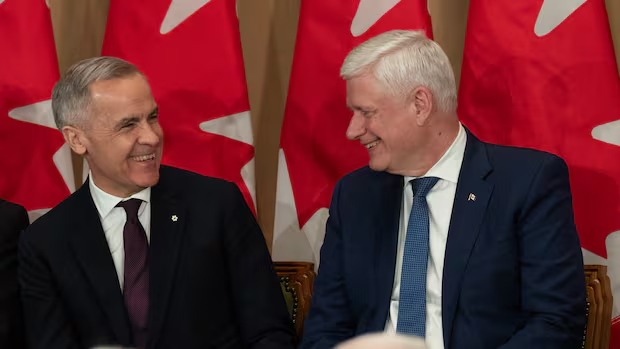
Former Prime Minister Stephen Harper has disclosed that he considered offering Mark Carney, then the Governor of the Bank of Canada, a position within his Conservative government in 2012, although not as finance minister immediately. This revelation comes from Harper’s newly published memoir, Here for Canada: Memoirs of the 22nd Prime Minister.
In the memoir, Harper shares that while the finance minister position was occupied at the time, he communicated to Carney that he would be a leading candidate if the role became vacant in the future. “Obviously, I did not offer him the post of minister of finance, as it was then not available. However, I indicated that, if he chose to join the government, he would be the leading candidate should the post come open,” Harper states.
Carney Reflects on Political Transition
In a recent interview with CBC News during the 2025 Liberal leadership race, Carney confirmed that Harper had indeed asked him if he would serve as his finance minister in 2012. Carney expressed that he believed it would be inappropriate to transition directly from his role at the Bank of Canada to a political position.
While Harper acknowledges Carney’s effectiveness as bank governor, he also notes that Jim Flaherty, the then-finance minister, was increasingly concerned that Carney harbored aspirations for a political career and possibly sought the Liberal leadership—speculations that circulated widely at the time. “This was a serious concern for us,” Harper wrote.
Strategic Offer and Career Decisions
Harper recounts his discussions with Nigel Wright, his chief of staff, who suggested that extending a job offer would either retain Carney’s expertise or dissuade him from pursuing a leadership bid with the Liberals since he was in a non-partisan role as bank governor. Ultimately, Carney decided to remain outside of partisan politics, soon after securing a prominent position as the Governor of the Bank of England.
Harper’s book, spanning nearly 650 pages, touches on various aspects of his political career, including the speculation surrounding Carney. The author felt it necessary to address this issue as it has “occasionally cropped up in the media.”
Reflections on 2015 Election Campaign
In his memoir, Harper provides a rare first-person account of his last election campaign and the circumstances leading to his government’s defeat in 2015. He reveals that he considered stepping down in the summer of 2014 to rejuvenate his party but opted to continue leading through a difficult race ahead of the 150th anniversary of Confederation.
Additionally, Harper disclosed that he was blindsided by the controversial “barbaric cultural practices hotline” announced during the 2015 election campaign. He learned of it while preparing for a French debate when it appeared on his screen. Harper expressed his anger upon recognizing that he was not consulted on this divisive policy, which ran counter to outreach efforts with multicultural communities.
Political Insights and Current Stance
Spanning decades of Canadian political history, Harper’s memoir also reflects on pivotal moments, including confrontations with world leaders and significant national events. He shares insights from his time at the World Economic Forum (WEF), which he attended twice as Prime Minister. In a notable shift in perspective, Harper now opposes the WEF, describing it as a forum that no longer serves its original purpose and has devolved into a gathering for advancing the interests of an elite group.
If he were to serve as Prime Minister today, Harper states he would withdraw Canada from the WEF, indicating a departure from his previous stance during his tenure in office.









Discussion about this post