








Trump and Netanyahu Clash Over Iran Strategy
In a recent escalation of tensions between the United States and Israel, President Donald Trump and Israeli Prime Minister Benjamin Netanyahu have experienced a significant rift regarding military action against Iran. While Trump advocates for a diplomatic approach, Netanyahu is pressing for immediate military action, aware that his chances to act decisively may diminish with the potential rise of Gadi Eisenkot as Israel’s next prime minister.
Netanyahu’s Urgency Amid Political Uncertainty
As the political landscape in Israel evolves, Netanyahu recognizes that his window of opportunity to address the Iranian threat may be closing. Gadi Eisenkot faces a crucial deadline of December 6 to form a government, with a possible extension of 14 days. If unable to forge a coalition, Israel could face new elections, allowing Netanyahu to remain in a caretaker role with additional time to consider military options against Iran.
Despite Netanyahu’s readiness to strike Iran, Trump previously convinced him to delay action until after recent elections. Now that those elections have concluded, Trump’s reluctance to pursue immediate military engagement has generated frustration for Netanyahu.
A Heated Exchange Between Leaders
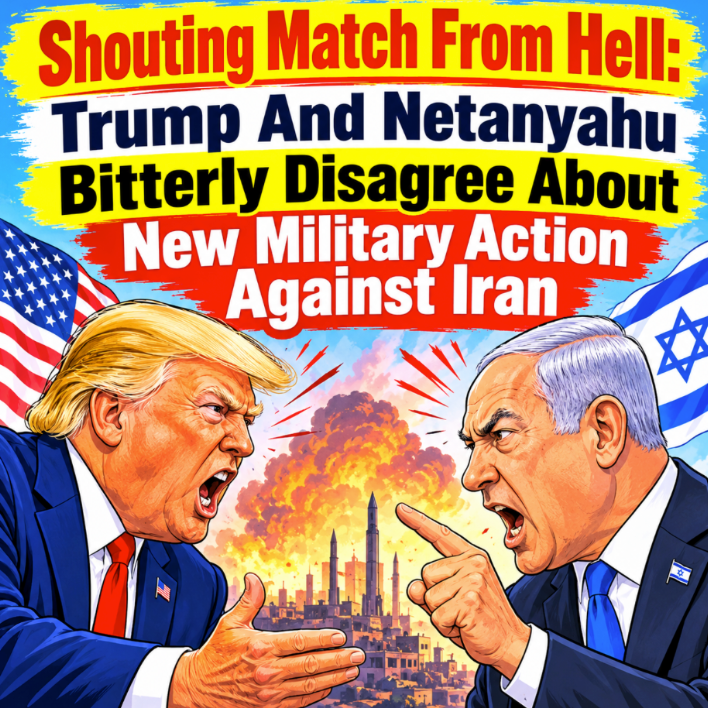
Reports indicate that Trump and Netanyahu recently engaged in a heated telephone conversation, described by insiders as “a shouting match from hell,” centered on the escalating situation in Iran. According to Israeli news outlet Ynet, Netanyahu continues to advocate for military operations, while Trump favors diplomatic discussions, even as little progress has been made in negotiations for months.
Diverging Views on Iran’s Nuclear Ambitions
While the Trump administration wishes to explore the potential for an agreement with Tehran, Netanyahu expresses skepticism. He believes that Iran poses an ongoing nuclear threat that cannot be mitigated without the regime’s collapse. This fundamental disagreement has become a focal point of tension between the two leaders.
Iran’s Stance and Threats Amid U.S. Military Presence
Iran has made its demands clear, asserting that the U.S. must agree to seven core conditions to end hostilities. Notably, Iranian Security Chief Mohsen Rezaei recently stated that Iran will not permit any enriched nuclear materials to leave the country, which raises alarms about the nation’s nuclear ambitions.
Rezaei has also threatened to retaliate against U.S. military bases in Europe if they are used to launch attacks against Iran, underlining the potential for conflict escalation. He emphasized, “If American aircraft take off from any military base, even in a European country, to bomb Iran, we will strike those bases as well.”
Broader Implications for the Region and Beyond
The prospect of renewed conflict has significant ramifications for regional stability, and the situation continues to be precarious. Iran has voiced intentions to target facilities in Israel, including the nuclear reactor at Dimona, raising concerns over the potential for an unprecedented military response from Israel.
The ongoing confrontations suggest that a resolution to the longstanding tensions between the two nations remains elusive. As these dynamics unfold, the ramifications extend beyond geopolitical boundaries, impacting global energy prices and the economic stability of countless households, particularly in the United States.
Heating Costs Expected to Surge
This winter, Americans are bracing for an increase in heating costs, largely attributed to the ongoing strife in the Middle East. According to the National Energy Assistance Directors Association (NEADA), households are projected to spend an average of $1,002 on home heating, marking a 7.1% increase from the previous winter.
States like New York are forecasted to witness an even steeper rise in heating expenses, with costs estimated to reach nearly $2,977, a staggering increase of 70.2% compared to last year. This financial strain highlights the broader economic impact of geopolitical conflict, underscoring that any temporary pauses in fighting are likely to be just that—temporary.
As 2026 progresses, the landscape is primed for further volatility, suggesting that global energy, food, and fertilizer crises may escalate, bringing new challenges as the world approaches 2027.









Discussion about this post