









Once-in-a-Lifetime Exhibition of St. Francis of Assisi’s Relics Opens in San Francisco
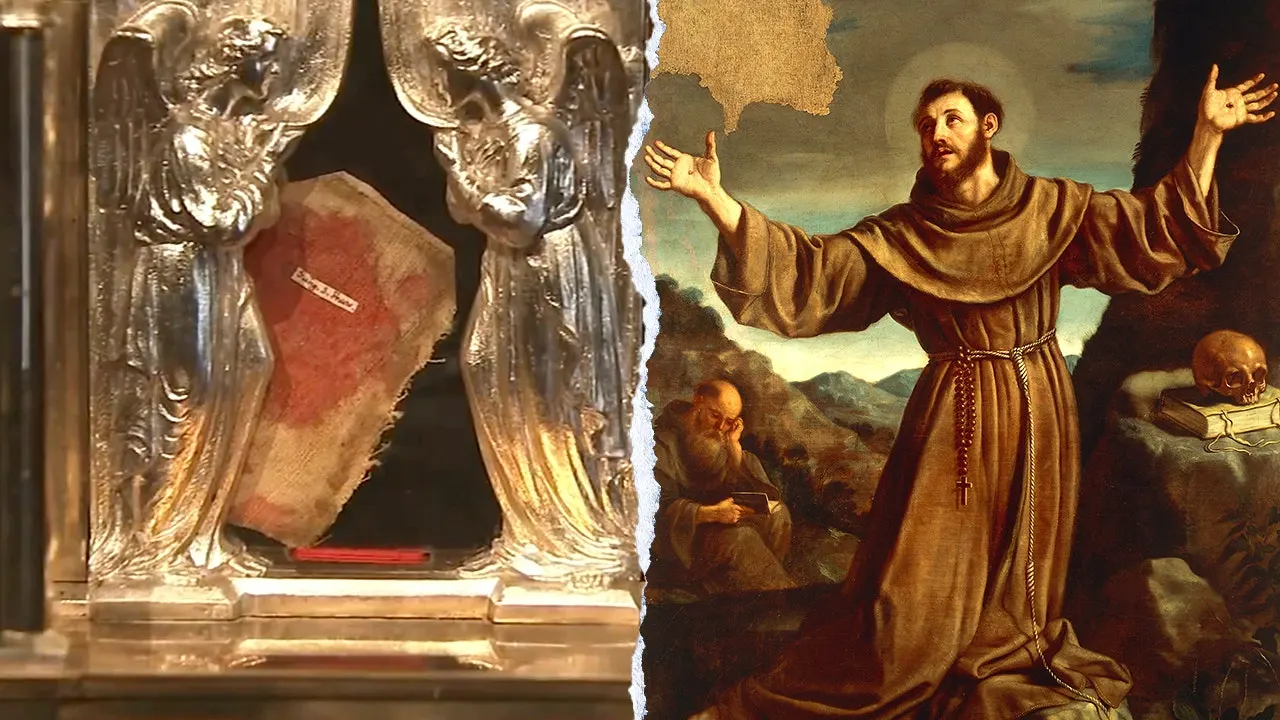
Visitors to San Francisco have a unique chance to witness an extraordinary artifact believed to hold the blood of St. Francis of Assisi, revered as one of Christianity’s most beloved saints. This exhibition marks the first occasion the relic has ever left Italy.
Significance of the Display
The relics are currently exhibiting at the Cathedral of St. Mary of the Assumption and will be on display until November 28. This event commemorates the 800th anniversary of St. Francis’s passing, who lived from approximately 1181 to 1226. St. Francis is widely recognized for founding the Franciscan Order and for his role as the patron saint of animals.
Highlight of the Exhibit
The showcase includes a painted panel of St. Francis from around 1290, but the centerpiece is the Bandage Relic of the Stigmata. This ancient cloth is believed to have absorbed the saint’s blood and has captured the attention of many. Notably, the blood appears remarkably red even after 800 years.
(FOX 2 San Francisco)
Cultural Impact of the Relics
Candida Moss, the Edward Cadbury Professor of Theology at the University of Birmingham, emphasized the importance of the relics’ arrival in San Francisco, a city named after St. Francis. Moss noted that the saint enjoys broad admiration beyond the Catholic community, being revered by Orthodox Christians, Anglicans, and Lutherans alike.
“This will likely turn into a pilgrimage site,” Moss suggested, highlighting St. Francis’s universal appeal rooted in his profound transformation from a wealthy young man to a champion of the poor.
Defining Moments in St. Francis’s Life
The bloodstained bandage is linked to a transformative moment in St. Francis’s life when he reportedly received the stigmata during a vision of a seraph. This connection to Christ’s suffering has contributed to St. Francis’s enduring legacy.

(Marks/Getty Images; FOX 2 San Francisco)
Preservation and Authenticity Questions
Moss noted the exhibition also raises important questions regarding the preservation and authentication of religious relics. While some objects attributed to St. Francis have been proven inauthentic, the current relics possess a well-documented provenance.
Despite the credibility of St. Francis’s documented relics, Moss mentioned that other pieces, like a tunic once thought to belong to him, were carbon-dated to a period well after his death, revealing them as “pious forgeries.”
The reason the blood on the bandage remains vibrantly red has yet to be determined, and Moss indicated it has not undergone any carbon dating to confirm its age.

(Fine Art Images/Heritage Images/Getty Images)
A Singular Opportunity
Moss urged visitors to take advantage of this rare exhibition, emphasizing its significance to church history. “This is a really singular opportunity to come into contact with high-status relics,” she stated.
“You can’t acquire anything like this. This is the first time these relics have left Italy,” she added, underlining the unprecedented nature of the exhibition.
“This is an important part of church history worth experiencing for oneself,” Moss concluded.









Discussion about this post