
The ABC seems to have made an epoch-changing shift in its political reporting: One Nation — its perpetual boundary-busting apparently making it an agenda-setter — is the new capital-O Opposition.
It’s not the result of a single direction made in some secretive ABC backroom: it’s the accumulation of thousands of reporting decisions made over the past 12 months, filtered through the national broadcaster’s attempts to skate through impartiality with mindless both-sides thinking.
The result is a feedback loop that informs what stories are covered, how they’re framed, who is interviewed, and where (and how often) a One Nation frame is placed in a bulletin. It peaked last week, when the ABC pumped out its second national forum, this time on migration. The programming happened to coincide with One Nation’s “net-negative” migration policy announcement — not just in timing, but also in how it framed the issue as a “challenge” and in its blokey-leaning choice of panellists.
It went about as well as you’d expect. Barnaby Joyce was given the chance to argue out his new party’s policy with the Liberals’ equally migrant-hostile Andrew Hastie, largely leaving the hard work of standing up for migrant Australia to the two women with lived migration experience — Dr Anne Aly and Nyadol Nyuon — stuck out on the wings of the stage, separated by the five men in between them, plus host David Speers.
By Thursday, the Labor government had announced its own solution to the largely imagined problem created by One Nation (with plenty of help from the ABC), aiming to tighten temporary visa rules in a bid to reduce net overseas migration. Meanwhile, the Liberals remain stuck between wanting to sound like a keep-em-out One Nation while still reinforcing employer wishes for a temporary (and thus more disposable) workforce.
Over on Aunty’s straight news side — where reporting remains rigidly faithful to the facts — the forum was largely ignored. But being factual doesn’t help when the big decisions determining what constitutes news continue to centre Pauline Hanson and One Nation and elevate the issues she raises. Sure, the ABC thinks it’s providing the in-depth scrutiny that the One Nation surge is calling for. But it’s coming at the cost of legitimising and normalising the destructive rhetoric of what just over a year ago was widely considered a dangerous fringe movement.
It feels like Australia is reliving the early Trump moment. Back in 2016, so-called “Trump whisperer” Salena Zito wrote in The Atlantic that the political press was taking what the US president said literally, but not seriously, while his supporters understood it the other way around. The right quickly used this framing to sneer at out-of-touch legacy media, but it also allowed news media to comfortably assume that the radical right don’t — and couldn’t possibly — mean what they say.
As a result, Hanson’s endeavours in rewriting the political terrain — such as through recent punch-down attacks on First Nations peoples, or on the entitlements of people living in social housing, or on legal restraints on military violence — are laundered through the press as everyday stumbles under the bright glare of media scrutiny (or, at worst, as simple personality clashes, all open to resolution through some form of apology, no matter how qualified).
Taken seriously, Hanson’s broadsides are more strategic interventions to direct political debate. Part shocking, part titillation, they’re political bait that’s all but irresistible to our personality-focussed news media. They’re comments that pander to the collective understanding of the right-wing that has aggregated around One Nation (according to opinion polls, at least), reminding them why they distrust institutionalist Liberals like Andrew Hastie and assuring them that it’s okay to sneer at Anthony Albanese for his social housing background.
Related Article Block Placeholder
Article ID: 1264965
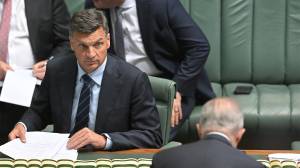
The public broadcaster is clearly being squeezed. On one side — which apparently includes John Howard — there’s too much attention placed on One Nation; on the other, the right-wing party wants to keep the ABC as an enemy, barring it from events and launches. The result is the steady normalisation of the radical right, which is not simply an Australian problem. Legacy media around the world — desperate, Ed Sheeran-like, not wanting to be seen to be taking sides — are grappling with how to deal with the support of surging right-wing parties.
In the US, Trump has now banned CNN, MS NOW and Politico from the White House, following his ban of the AP in 2025. Meanwhile, a report leaked out of the BBC last year that the organisation was considering how it could frame and order stories (both in news and drama) to better appeal to supporters of the UK Reform Party.
In the wake of the right-wing Alternative for Germany election win in the small east German State of Sachsen-Anhalt earlier this month, radical right leaders around the world declared that their parties were no longer fringe. They’re the new centre. Like its sibling parties overseas, One Nation is happy to take on the mantle of the real opposition. More dangerously, media normalisation is encouraging its self-image as the party of a wholly mythical “real” Australia.
Discussion about this post