








Once exploitable, they are now expendable. But they have reinvented themselves in ways that haunt the industry that milked their toil in South Africa’s mines to build Africa’s most industrialised economy while providing global markets with a mother lode of gold and other commodities before tossing them on history’s scrap heap.
Many are zama zamas, still working the gold veins in appalling conditions to feed transnational networks of organised crime. Others have been recycled into recyclers, collecting garbage in Johannesburg’s northern suburbs for resale.
Some are raiding cattle along the Lesotho frontier, while former mining comrades from Mozambique have helped to devastate the rhinos in the Kruger National Park to feed illicit Asian demand for their horns.
And the rural regions from which they were drawn, including the old Transkei, remain outposts of subsistence farming and poverty, producing a wave of migration to urban areas lacking jobs.
The late musician Johnny Clegg once sang that “the warrior’s now a worker, and his war is underground”. Many of these workers are warriors once again and their war is yielding bitter fruit.
They represent a growing underclass spawned by the decline of South African mining’s once vast migrant labour system, which employed almost 500,000 foreign workers at its peak. That number now stands at 35,000.
Remittances from the wages of Lesotho citizens working in South Africa’s mines amounted in 1987 to an astonishing 236% of the mountain kingdom’s GDP. They now equal 21%, a “remittance shock” without parallel in modern global economic history.
The expansion of the migrant labour network throughout the 20th century had massive regional and global consequences. As the curtain falls on it, the seismic shocks are profound.
The rise and fall of the migrant labour system – and the ANC’s failure to deal with the fallout because of corruption and incompetence – is on glaring display at the Vulingcobo Junior Secondary School in the former Transkei, reached by a rough dirt track off the N2.
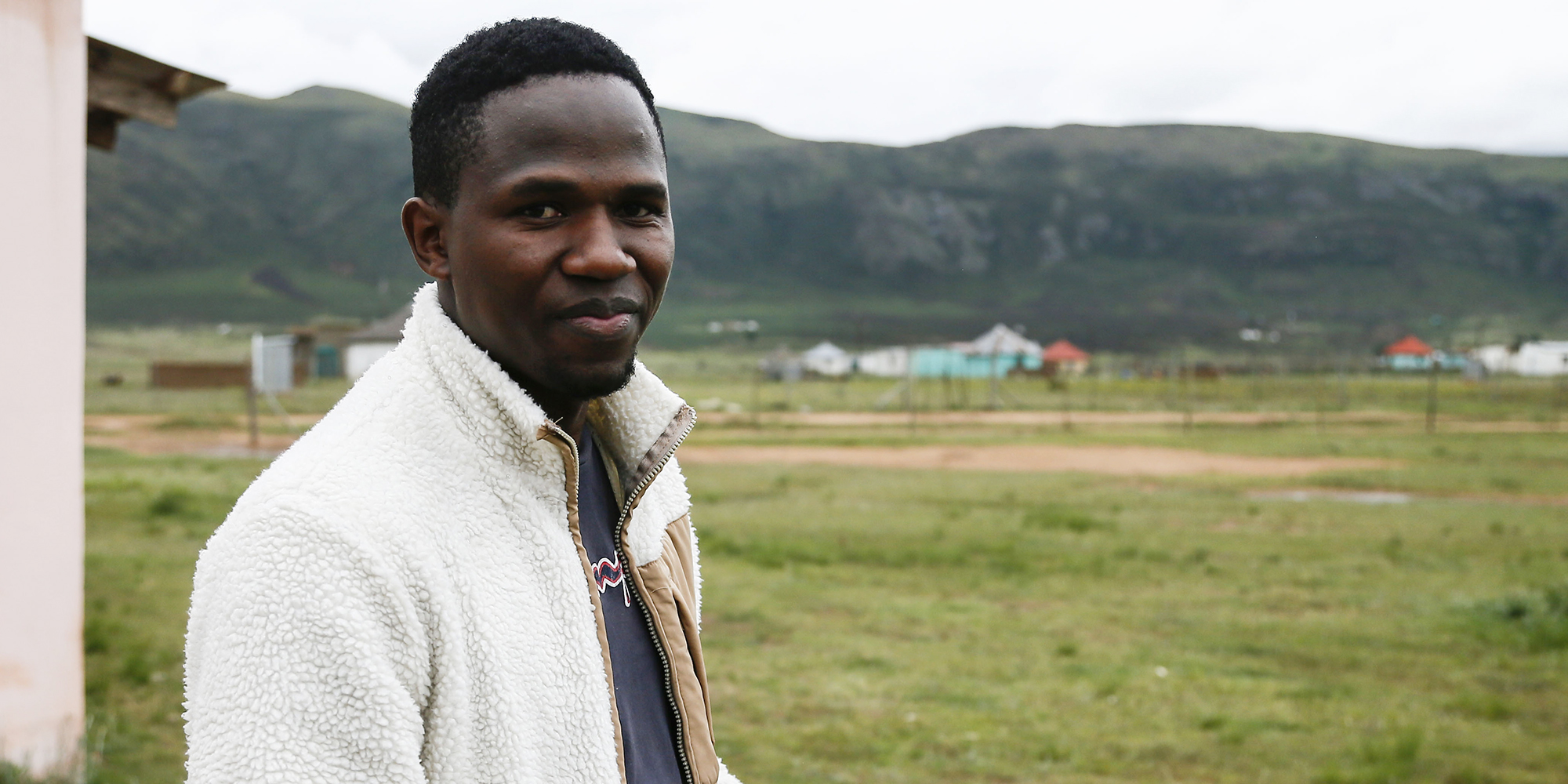
Mandla Yawa points at the school’s pit latrines. Protruding in the open air from a concrete base sprinkled with rat droppings, this indignity once passed for sanitation.
“I was using toilets like this,” said Yawa (31). A few metres away stood foul-smelling concrete outhouses that initially replaced the pit latrines. Nearby are new proper toilets being erected by Yawa’s employer, the metals producer Sibanye-Stillwater.
Mining companies are increasingly filling the gaping voids left by the state. This is partly regulatory obligation as they require a “social and labour plan”. It is also rooted in environmental, social and governance concerns – ESGs – in response to growing pressure for a kinder approach to capitalism.
Much of this expenditure is targeted at infrastructure around the mines. The industry needs roads to operate, solar plants to supplement Eskom and a semblance of service delivery to surrounding communities to keep social unrest in check.
Reparations
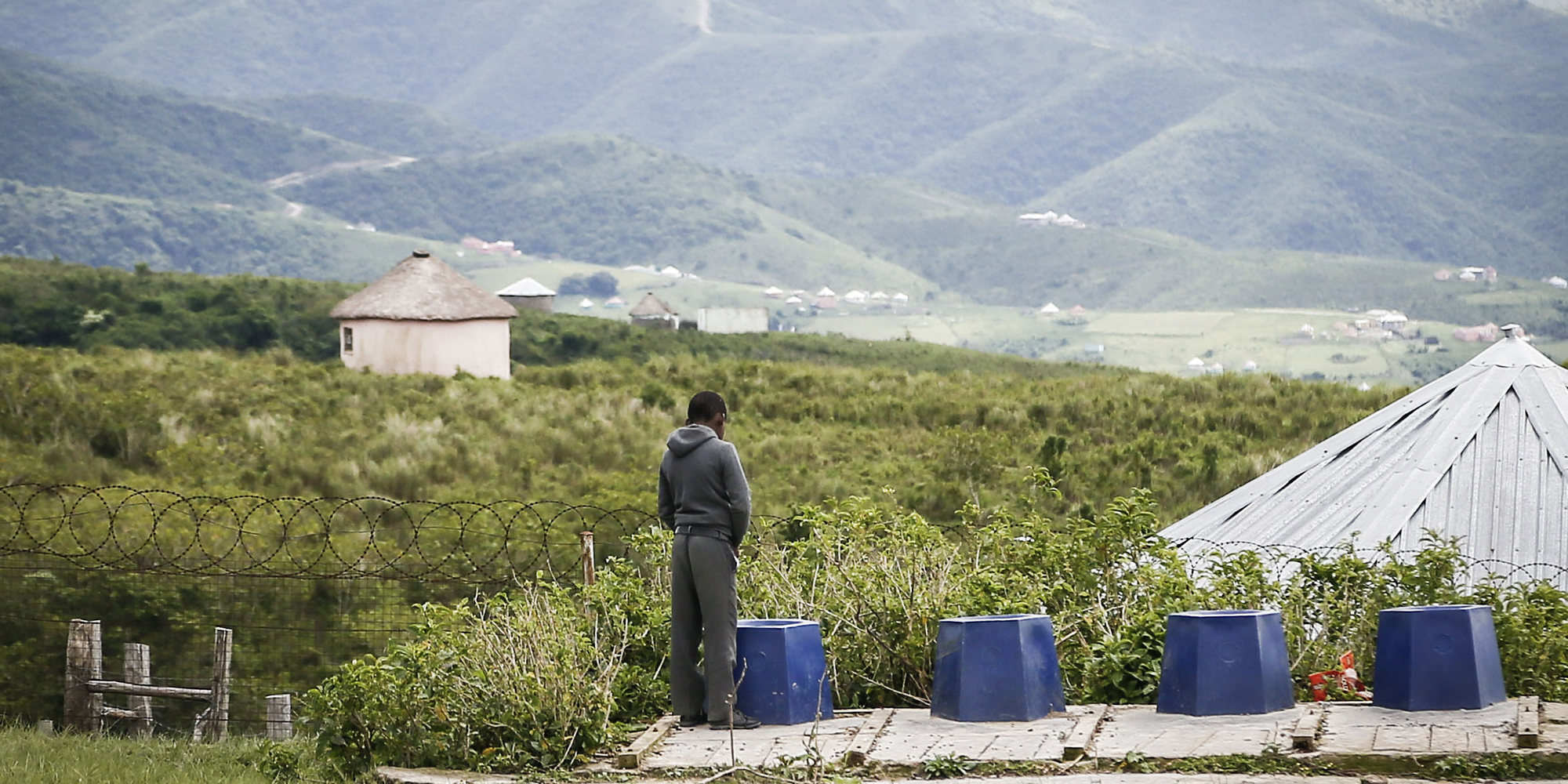
In former “labour-sending areas” such as the old Transkei, these projects can also perhaps be seen as reparations. “For decades, our people served the mines, [which] were the beneficiaries of the migrant labour system. They still have a lot to do,” Tsipa Simpiwe, a district circuit manager for schools in the old Trans-kei, told DM168 on the grounds of another Sibanye project – Skhenjna High School, a new and impressive-looking school that the company is building at a cost of R72-million.
Sibanye employee Yawa, who comes from the former Transkei and showcased some of the company’s social projects in the region to DM168, is emblematic of this process of atonement, his family history an unflattering window on the migrant labour system.
His older brother Cebicile was among the 34 miners shot dead by police at Lonmin’s Marikana mine in August 2012. His father is a silicosis sufferer who recently received about R150,000 in compensation as part of a R5-billion class action suit on behalf of miners with the incurable lung disease.
After his brother – the family breadwinner – was killed fighting for R12,500 a month at Marikana, Lonmin funded Yawa’s undergraduate studies. He went on to obtain a PhD in parasitology. Parasites such as ticks are a danger to the cattle revered in his rural Xhosa culture. Sibanye, which in 2019 acquired Lonmin’s assets, hired him in 2021 – a hopeful turn in the family history.
Yawa seems genuinely proud of the projects. Given his background and academic success, he is aware of education’s life-changing potential. “This will be a proper school,” he said on the grounds of Skhenjna.
At the Vulingcobo school, the new toilets will be welcomed. So would a meal. The children were released from school at noon the day DM168 visited because the daily meal they are supposed to receive from the Department of Education had not been provided. Hunger awaited many at home.
Roots
For decades, men from the Bantustans and neighbouring states provided a vast reservoir of migrant labour that was ruthlessly exploited by South Africa’s mining industry. The gold price was fixed for much of the 20th century, posing a dilemma to the Randlords: how to suppress costs to maintain profits.
The answer lay in one cost the mines could control: wages. For more than half a century the real wages of migrant black mineworkers actually declined, according to numerous historians – a feat of exploitation that paid massive dividends for the Randlords.
Transkei, Lesotho and Mozambique emerged as the main sources of labour, providing 60% of the mine workforce from 1989 to 1996.
A little-known facet of this arrangement – the Deferred Pay Interest Fund – in the Transkei has been unearthed by historians Michael Glover and Duncan Money of the University of Leiden in the Netherlands. Long before Sibanye and other companies began spending money on social projects there, the industry was making “social expenditures” – but in ways that entrenched the region’s dependency on mining.
“For much of the 20th century, a portion of the wages owed to African mineworkers was deferred and remitted to them only at the end of their contracts… Mineworkers did not receive this interest; it was, instead, deposited into a fund controlled by the mining industry,” they write in a 2021 article in the Journal of Southern African Studies.
“Although the fund had a mandate to spend on welfare projects in labour-sending regions, patterns of spending clearly show how it was used to support the reproduction of the migrant labour system.
“Payments were used as patronage for local elites … Payments were consistently directed away from education for able-bodied students, because education would reduce the pool of unskilled labour.”
Today, the tsunami of migrant labour has been reduced to a trickle.
“At about 35,000 of 460,000 employees, the number of migrant workers from neighbouring countries is a quarter of the levels a decade ago,” the Minerals Council SA said in August. The numbers from the former Bantustans have also declined, though this data is harder to pin down.
In 1987, when South Africa was still the world’s top bullion producer, its gold mines employed 554,000 people. By 2021, that number stood at 94,000. For the entire mining industry, current numbers are almost half of the 1980s figures.
There has also been a pivot to recruiting from “host communities”. This is partly a consequence of the Marikana massacre and the renewed scrutiny this brought to the migrant labour system.
Dr Crispen Chinguno, a senior lecturer at Sol Plaatje University, told DM168: “There is a focus now on the communities around the mines, where people in the past were reluctant to work in the mines. What is happening now is a crisis of unemployment is pushing a lot of people from such communities to want those jobs which were once done by migrants.”
With an official unemployment rate of almost 34%, South Africa’s jobless cannot afford to be fussy. For the old labour-sending areas, it is catastrophic.
Visit Daily Maverick’s home page for more news, analysis and investigations
Remittances
One lens through which to view the issue is the remittances flows from mineworkers’ wages to the labour-sending areas. Lesotho provides the most striking example.
According to World Bank data going back to 1975, no economy has been as reliant on remittances as Lesotho.
In 1975, remittances from its citizens working abroad – almost all of which would have been from mineworkers’ wages – equalled 81.4% of Lesotho’s GDP, the highest such ratio of any country measured that year. Lesotho would hold that title for more than three decades.
By 1987, foreign remittances amounted to 236% of Lesotho’s GDP. But, by 2020, Lesotho’s global ranking had fallen to 14th, with remittances amounting to 21% of its GDP.
In Lesotho there are few alternatives to that income. Pudeletso Salae, a Lesotho citizen who was an organiser when the National Union of Mineworkers was formed in 1982 – he was Cyril Ramaphosa’s first assistant at the union – told DM168 that the loss of remittances was fraying the social fabric.
“The impact of these retrenchments is causing poverty, it’s causing crime. And the worst part of it is agriculture. We don’t have enough arable land in Lesotho,” Salae said in a telephone interview from Maseru.
The former Transkei has also undergone a remittance shock. In 1970, about 70% of its income was derived from migrants’ wages, according to the study on the Deferred Pay Interest Fund.
Money, one of the co-authors, told DM168: “Men go to the mines, and they send money back, and they come back sick or crippled,” he said.
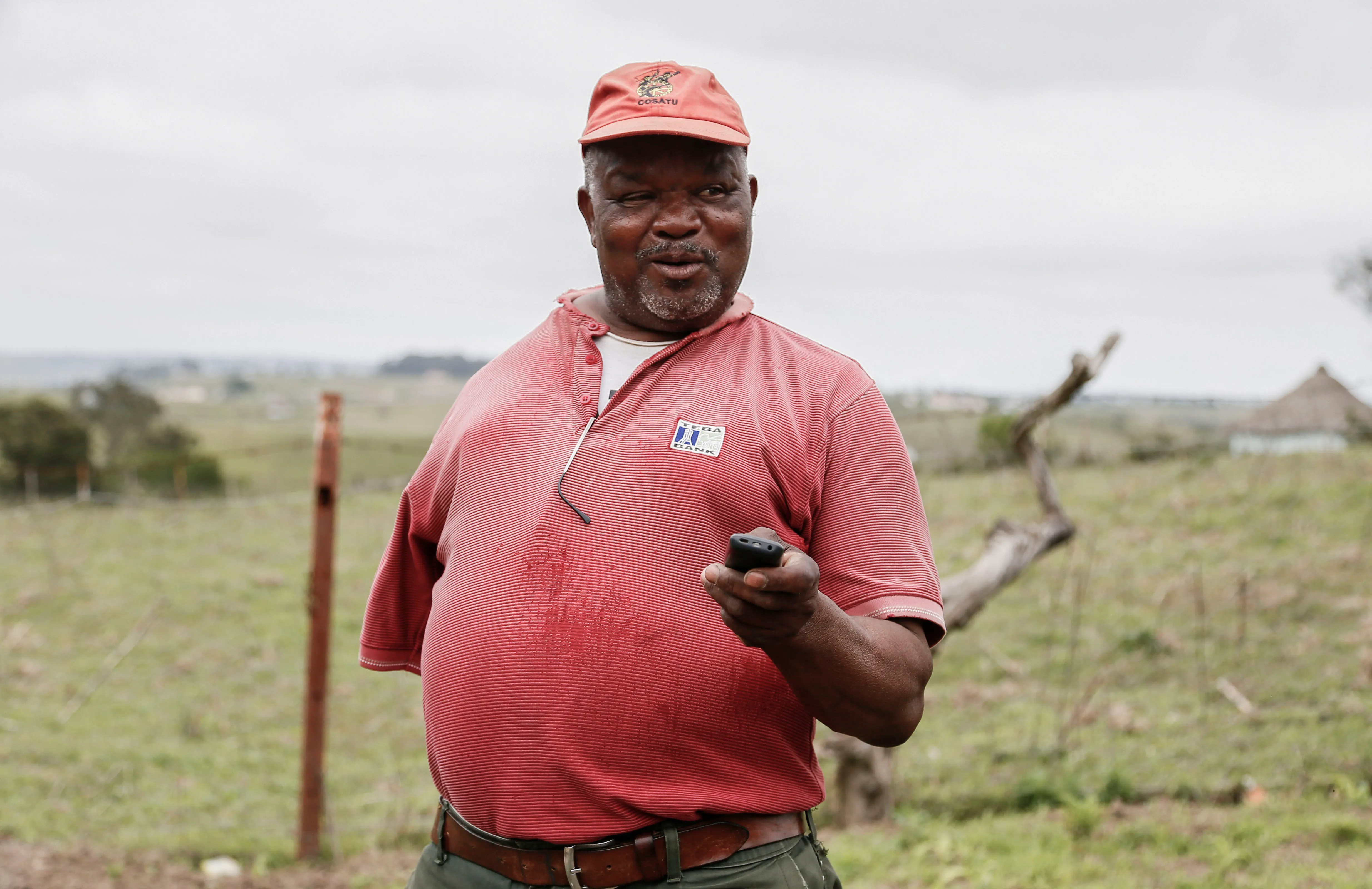
Eastern Cape after losing an arm. (Photo:Felix Dlangamandla)
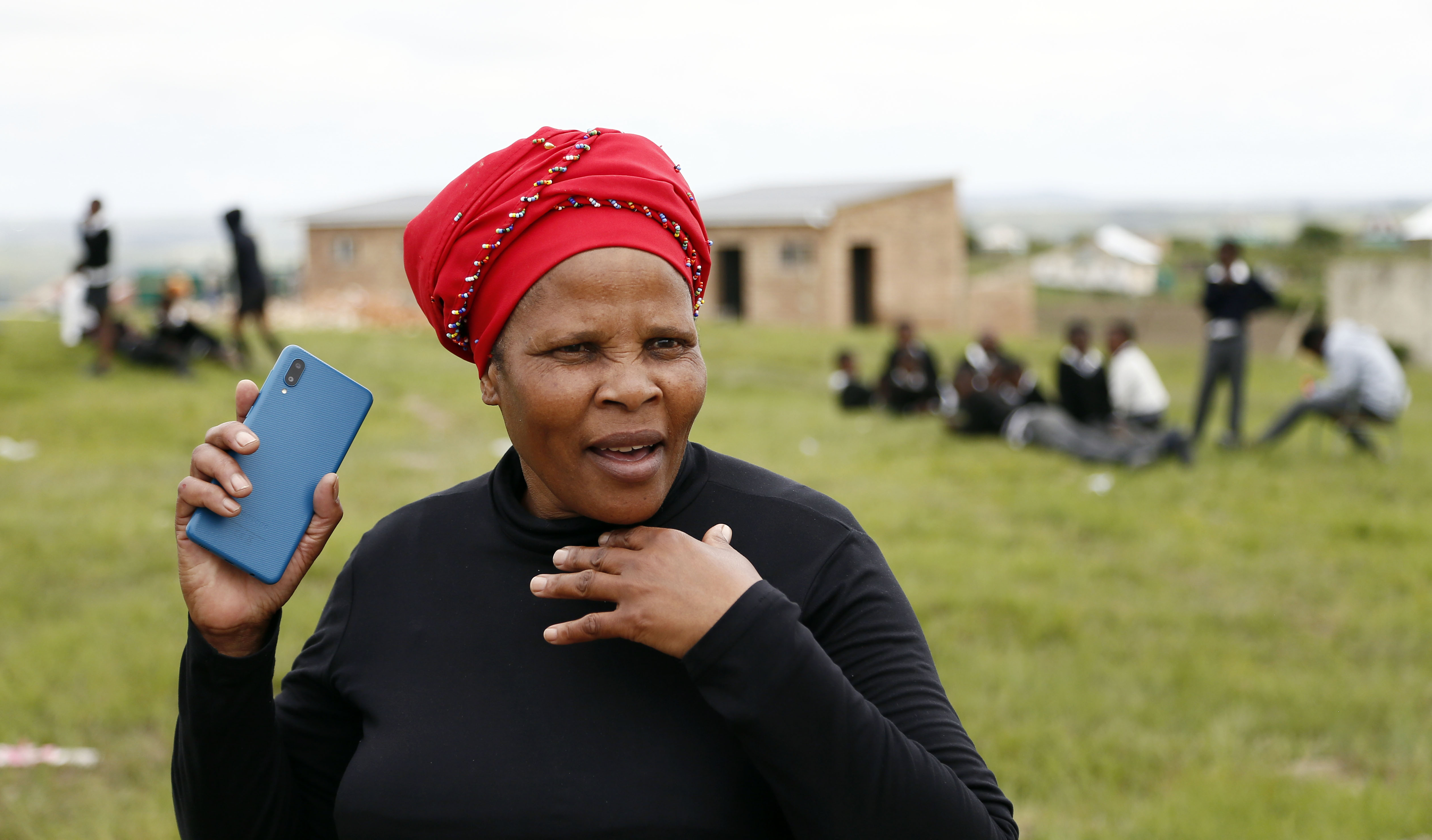
Sixanaxa Nizi is a visible example of this, having returned to the region missing his right arm. A jovial man wearing a Cosatu baseball cap, he told DM168 that he lost the limb in an accident on the coal mines near Witbank. He said the only other option for his generation was herding livestock. Three of his sons have gone to the mines but have been retrenched.
For decades, “poverty wages” were the norm in the sector. But for subsistence farmers they were a lifeline. Lydia Dyasi, who has taught at the Vulingcobo school since 1997, said she owed her education to her two brothers who worked in the mines.
But how do young men from the Transkei and Lesotho now raise cash for cattle for lobola and to establish a rural homestead?
Reckoning
Some become zama zamas. The consensus is that most of them are from Lesotho and Mozambique. In 2016, the Minerals Council estimated 70% of them were undocumented foreigners, a state of affairs that stokes the embers of xenophobia.
Intergenerational tensions and a warrior ethos seem ingrained in African cattle cultures, historians such as John Illife have noted. Heap hopelessness and humiliation on young men from such societies and you have a recipe for the violence that defines the zama zama world, as well as that of the cattle raiders.
Dr Jane Buys, a security analyst with Free State Agriculture, told DM168 that in recent years there had been a surge of cattle and sheep rustling along the border between Lesotho and South Africa, involving heavily armed gangs linked to organised crime.
In the Zastron area of the Free State, she said, commercial livestock farming had become unviable in the face of the onslaught.
The dangers that zama zamas endure underground speak of sheer desperation. Exploited in the past by the formal mining industry, these men are now exploited by transnational criminal networks.
The Minerals Council estimates South Africa’s mining industry spends R2.5-billion a year on security, much of it aimed at curtailing zama zamas, who also target working mines, using bribery and intimidation to gain access.
The decline of mining has also taken a heavy toll on the rhinos of the Kruger. Many of the poachers come from impoverished rural communities in southern Mozambique that once sent men to South Africa’s mines.
Rebecca Witter of Appalachian State University in North Carolina has recently made this link in an article in the academic journal Conservation and Society with the provocative title Rhinos as the “Mine”.
“…for the ancestors of George, Eli and Morris [a trio of Mozambique rhino poachers whose real names are concealed], working underground was a risk worth taking. First, the work could be lucrative, providing men with money to purchase food, cattle, guns, and ivory; to pay colonial taxes and recruiting fees; to offer lobola or bride price; and to establish independent homesteads apart from their parents,” Witter writes.
Poaching has now assumed that role in some ways. One of the poachers, George, revealingly referred to rhinos as “the mine”.
Renewal
There are initiatives to right the wrongs of this past and chart a better future. It is easy to be cynical, but the process of healing and redress needs to start somewhere.
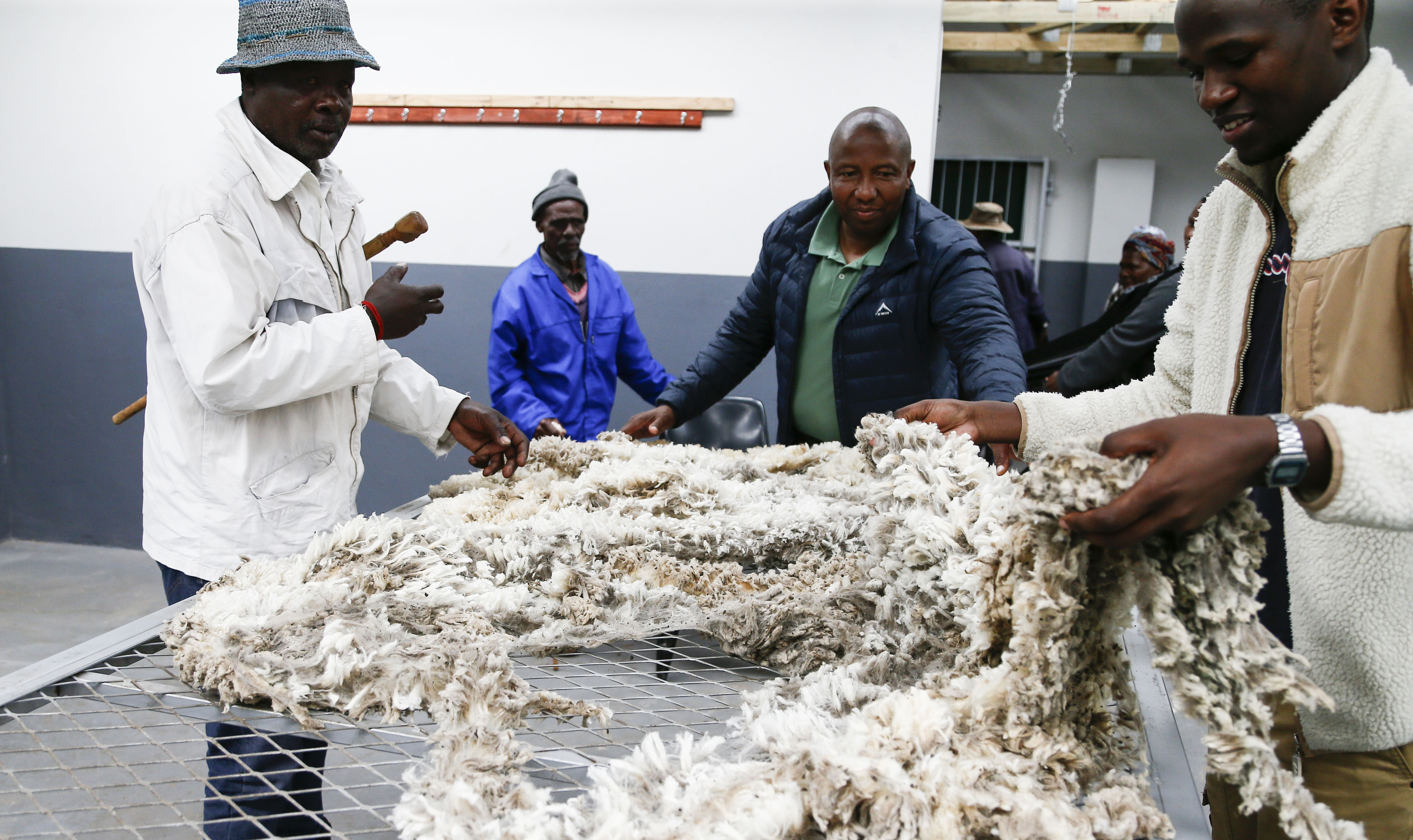
The Sibanye projects DM168 visited – including two that help emerging wool farmers – are linked to its “Marikana Renewal” programme.
Sibanye, which did not exist when the massacre took place, launched the programme to finance development around Marikana and in the former labour-sending areas, where many of the murdered miners originated. It includes educational funding for the children of the men who died and the building of homes for their widows.
Sibanye has also returned the Marikana mine to profitability, saving 30,000 jobs in the process. And its workforce is much better paid than it was a decade ago.
Many of these workers will not hail from the old labour-sending areas, especially the foreign ones. The future prosperity of mining and its more equitable distribution of money will leave behind the men whose brawn helped to build it.
Renewal efforts should be applauded, but the legacies of the migrant labour system are not easily undone. DM168
This story first appeared in our weekly Daily Maverick 168 newspaper, which is available countrywide for R25.












Discussion about this post