









The information boards, an output of the ReTTA1 project through support from WWF Kenya, have been placed at strategic landing sites in Kenya and Tanzania. They include a wide range of taxa, including turtles, dolphins, whales, sharks, molluscs, corals, and other marine species, all of which are protected by national law. In addition, trade in a number of the species is restricted internationally by CITES2.
As well as listing the species that fishers are banned from catching, the info boards detail the fishing methods, and gear that are prohibited in each country (such as spearguns, monofilament nets and electrification) and the minimum permitted mesh size of fishing nets. Making such regulations clearly visible at each landing site will provide compliance officers with the capacity to regulate fishing gear. The text on the info boards is in both Swahili and English, and local fish names have been used to make the boards fully accessible to stakeholders.
Managing wildlife from overexploitation goes beyond just legislation; laws must be understood by those concerned and effectively upheld by law enforcement. These new info boards will help officials identify species that have been caught illegally, as well as inform fishers of what they are not allowed to catch.”
Camilla Floros, Project Leader – ReTTA
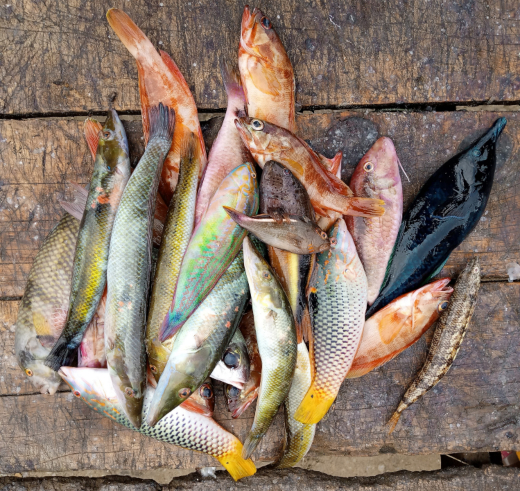
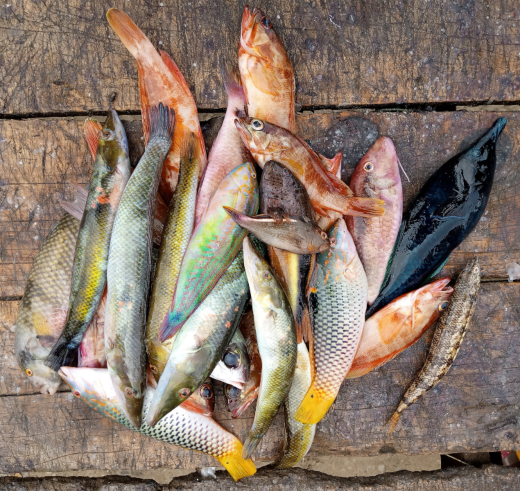
Earlier in 2022, TRAFFIC counted 489 different marine species for sale at artisanal fish markets – an incredible diversity – prompting concern over indiscriminate fishing methods. Nationally protected species were also on offer, including the Humphead Wrasse Cheilinus undulatus listed as Endangered and Bowmouth Guitarfish Rhina ancylostoma listed as Critically Endangered on the IUCN Red List of Threatened Species™.
A 2020 TRAFFIC report, Nearshore Fisheries Along the Coasts of Kenya and Tanzania (available upon request), found that inadequate enforcement of fishing laws in Kenya and Tanzania is largely down to insufficient funding, lack of compliance capacity and knowledge of protected marine species.
Responses from local stakeholders:
These boards remind every fisherman to fish by following the laws. They are important because if we fish randomly, we will wipe out all the fishes and then suffer absence of fishes in the ocean.”
Sadi Juma, a fisher from Tanga.
I am so delighted with these info boards from TRAFFIC – this is a great support to the government of Tanzania as they are very handy in exercising our enforcement job. The info boards are indeed going to be very useful in quickly identifying protected species and referencing the laws. They are a very helpful tool in raising awareness among local fishing stakeholders on the species and gear that are prohibited. We don’t expect lack of awareness excuses any more from fishers and traders.”
Jacob Nalaila, Officer in charge, Fisheries Division Tanga Region, Ministry of Livestock and Fisheries.
These boards are very clear; I like the fact that they are also in local language. They are going to increase awareness of our people, so as to manage their behaviour and protect the species for sustainable use.”
Hamisi Abdallah Hamis, Chairman BMU-Buyuni fish landing site.
View the info boards







Discussion about this post