
The iPhone 18 Pro is Apple doubling down on what it thinks a “Pro” iPhone should be. It’s faster, heavier, has longer-lasting battery life, and more capable. Plus, there’s a new variable aperture camera leading the way.
I’ve spent the last week using the iPhone 18 Pro and iPhone 18 Pro Max. Here’s everything you need to know.
Design and colors
Apple debuted a striking new design with last year’s iPhone 17 Pro lineup, including a full-width camera bump plateau and a two-tone back.
In my review, I described the changes as “polarizing.” I said the camera plateau along the back was Apple finally embracing the camera bump, but that I’d prefer consistency between the aluminum and glass cutout on the back.
I think that has been the general public reaction, too. I heard from a lot of iPhone 17 Pro buyers who didn’t like the two-tone design and opted to cover it up with a case when they might have otherwise gone case-less.
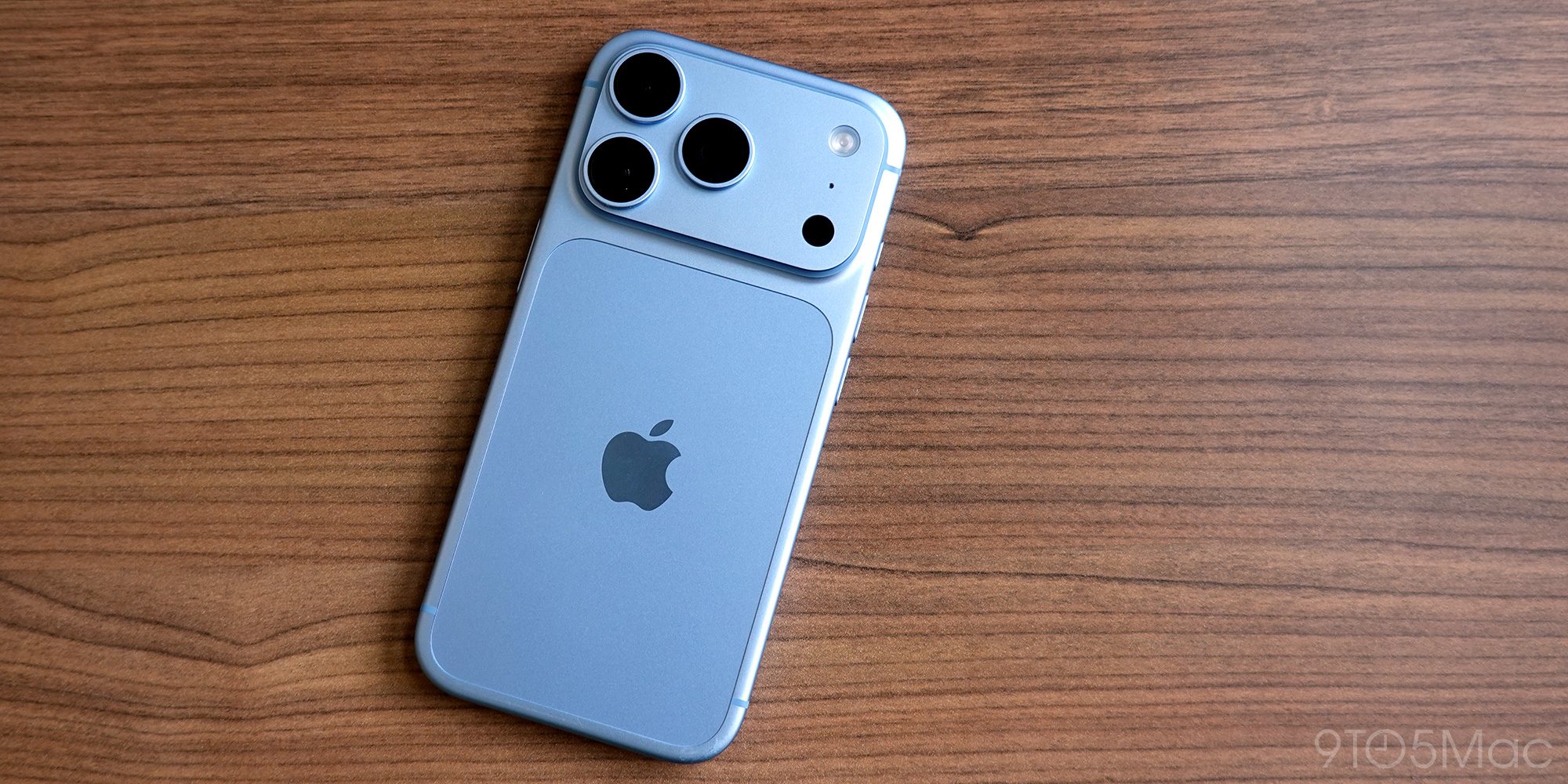
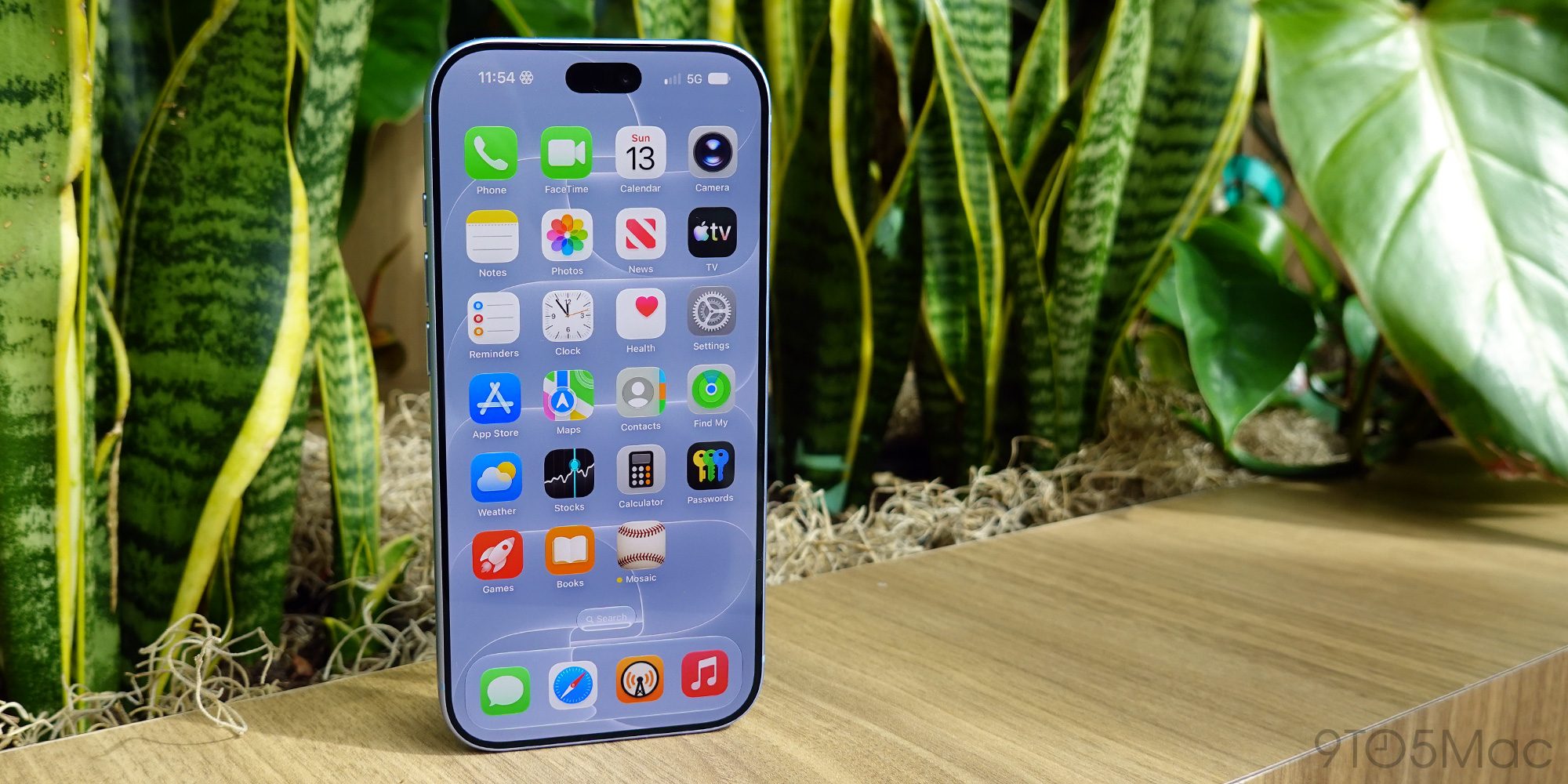
With the iPhone 18 Pro, Apple has debuted a new color-matched back design. That is, the glass cutout on the back now matches the color of the aluminum, for the most part. It looks fantastic. You can still see and feel the seam where the glass meets the aluminum, but the overall appearance here is much better.
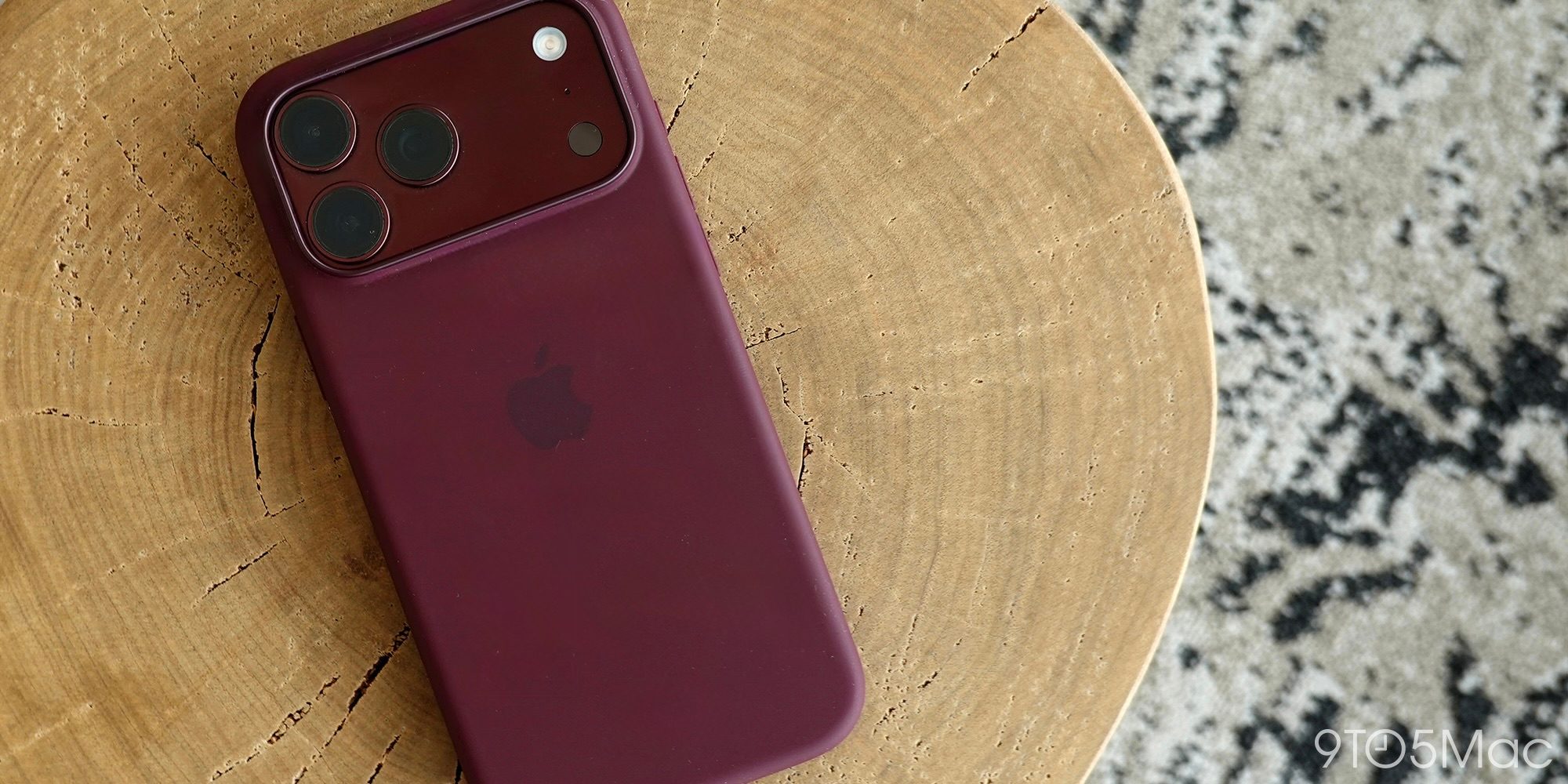
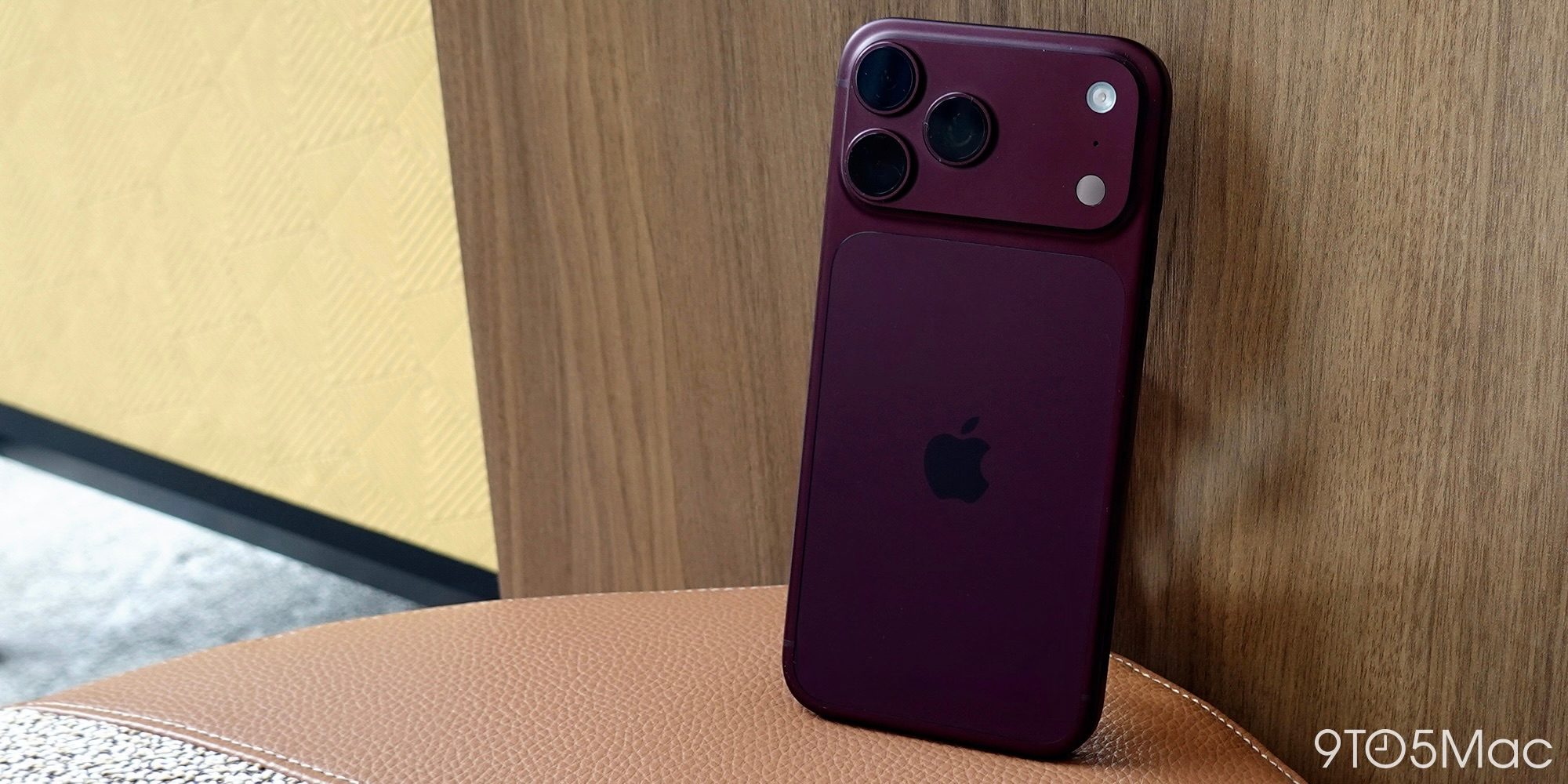
The iPhone 18 Pro is available in four colors: burgundy, glacier, silver, and black. If I had to pick a “flagship” color for this year, I’d say it’s burgundy. It’s not as bright and flashy as last year’s cosmic orange, but it’s unlike anything we’ve seen on an iPhone before. It’s a beautiful mix between a deep red and purple, shifting depending on lighting.
Meanwhile, glacier is a light blue that I’d describe as similar to, but slightly lighter than, the sierra blue of the iPhone 13 Pro. However, unlike the sky blue MacBook Air that can easily pass for silver, it is unmistakably blue.
Of all the iPhone 17 Pro colors, the silver was most afflicted by the two-tone back design. Apple’s signature silver aluminum design was marred by the white glass on the back. This year, the silver iPhone 18 Pro looks stunning thanks to Apple color-matching the silver aluminum to the glass.
And for those who were upset the iPhone 17 Pro wasn’t available in black, I’m happy to report that the black iPhone 18 Pro is the darkest Pro iPhone that Apple has ever made. There’s no mistaking it for a space gray or midnight. It’s black.
My review units are the iPhone 18 Pro in glacier and the iPhone 18 Pro Max in burgundy. I adore the burgundy and it stands out as my favorite this year. Glacier is nice, but doesn’t have quite enough “pop” for my liking — especially after last year’s cosmic orange.
Size
The iPhone 18 Pro and iPhone 18 Pro Max are both heavier than their predecessors, while the overall footprint (including thickness) has not changed this year:
Pro
| Model | Thickness | Weight |
|---|---|---|
| iPhone 15 Pro | 8.25 mm (0.32 in) | 187 g (6.60 oz) |
| iPhone 16 Pro | 8.25 mm (0.32 in) | 199 g (7.03 oz) |
| iPhone 17 Pro | 8.75 mm (0.34 in) | 206 g (7.27 oz) |
| iPhone 18 Pro | 8.75 mm (0.34 in) | 211 g (7.44 oz) |
Pro Max
| Model | Thickness | Weight |
|---|---|---|
| iPhone 15 Pro Max | 8.25 mm (0.32 in) | 221 g (7.81 oz) |
| iPhone 16 Pro Max | 8.25 mm (0.32 in) | 227 g (7.99 oz) |
| iPhone 17 Pro Max | 8.75 mm (0.34 in) | 233 g (8.22 oz) |
| iPhone 18 Pro Max | 8.75 mm (0.34 in) | 249 g (8.78 oz) |
I’m glad Apple isn’t shying away from making the phones heavier if it means better cameras, battery life, and performance. That said, there’s a limit to how heavy a “Max” phone can be while still being comfortable to hold, and with the iPhone 18 Pro Max, I think we’ve reached it.
The added weight over its predecessor is obvious the moment you pick up the iPhone 18 Pro Max. It’s right at the edge of what I’m willing to carry, and for me, that’s enough reason to choose the iPhone 18 Pro instead.
Dynamic Island
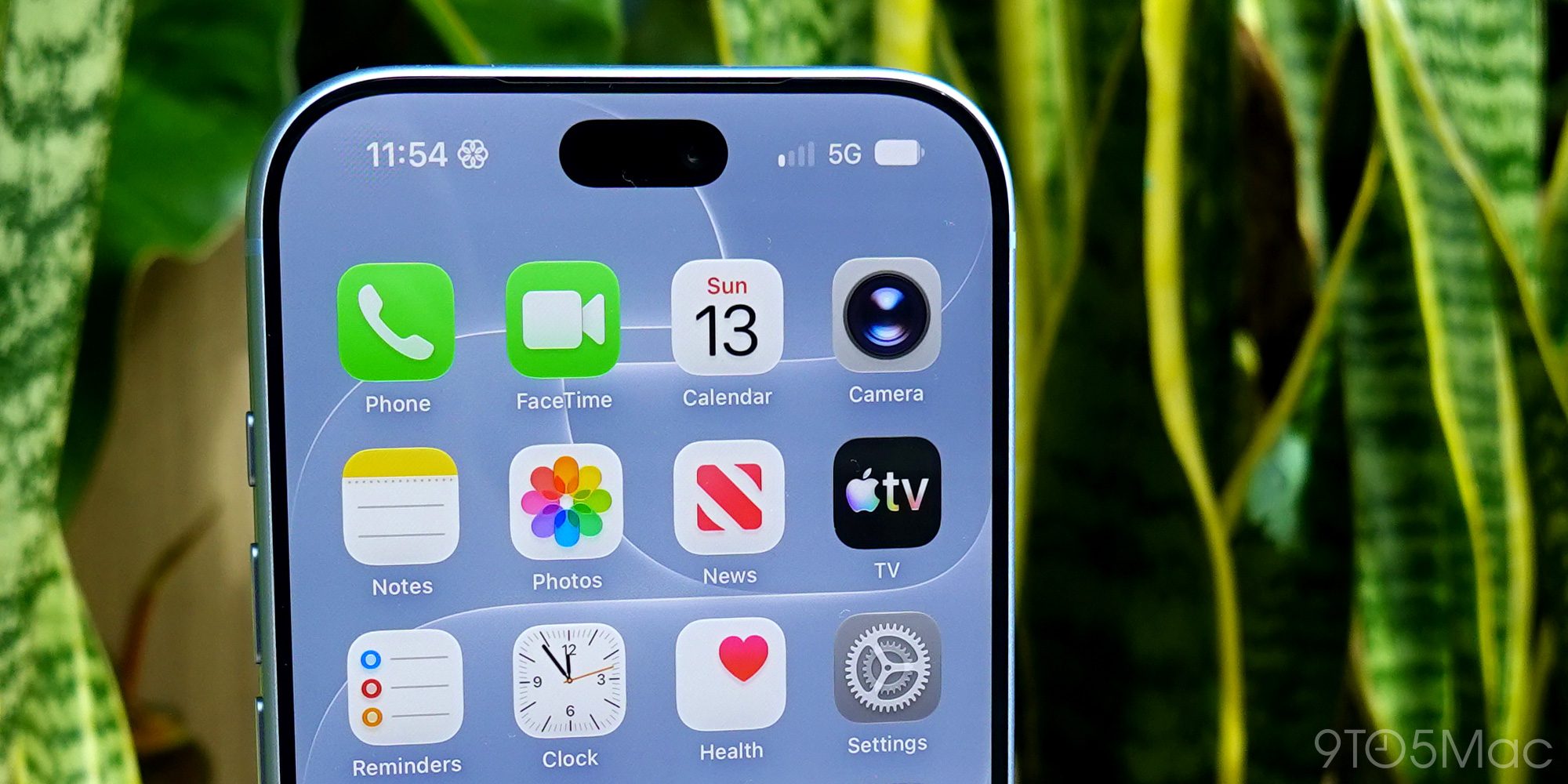
The other big change with the iPhone 18 Pro design is the Dynamic Island. The new Dynamic Island is around 25% smaller than before. This was made possible by moving the infrared camera for Face ID beneath the display, with Apple using a section of brighter pixels to let just enough of the infrared light through for Face ID.
The smaller Dynamic Island is immediately noticeable. You can clearly see the additional space between the Dynamic Island and things in your iPhone’s status bar, like the time and cellular signal bars.
Where it really shines, though, is through the software optimizations Apple has made to take advantage of it.
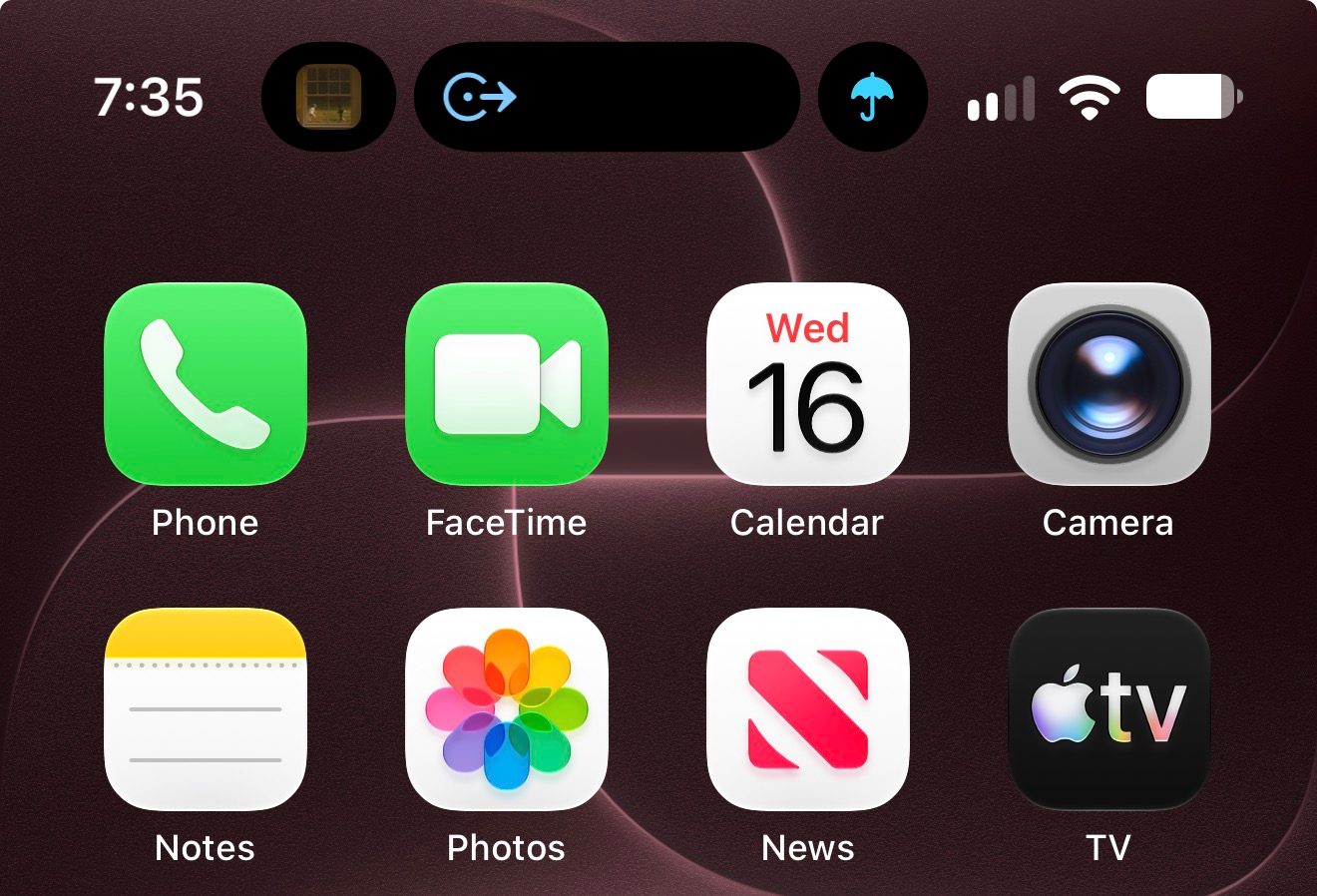
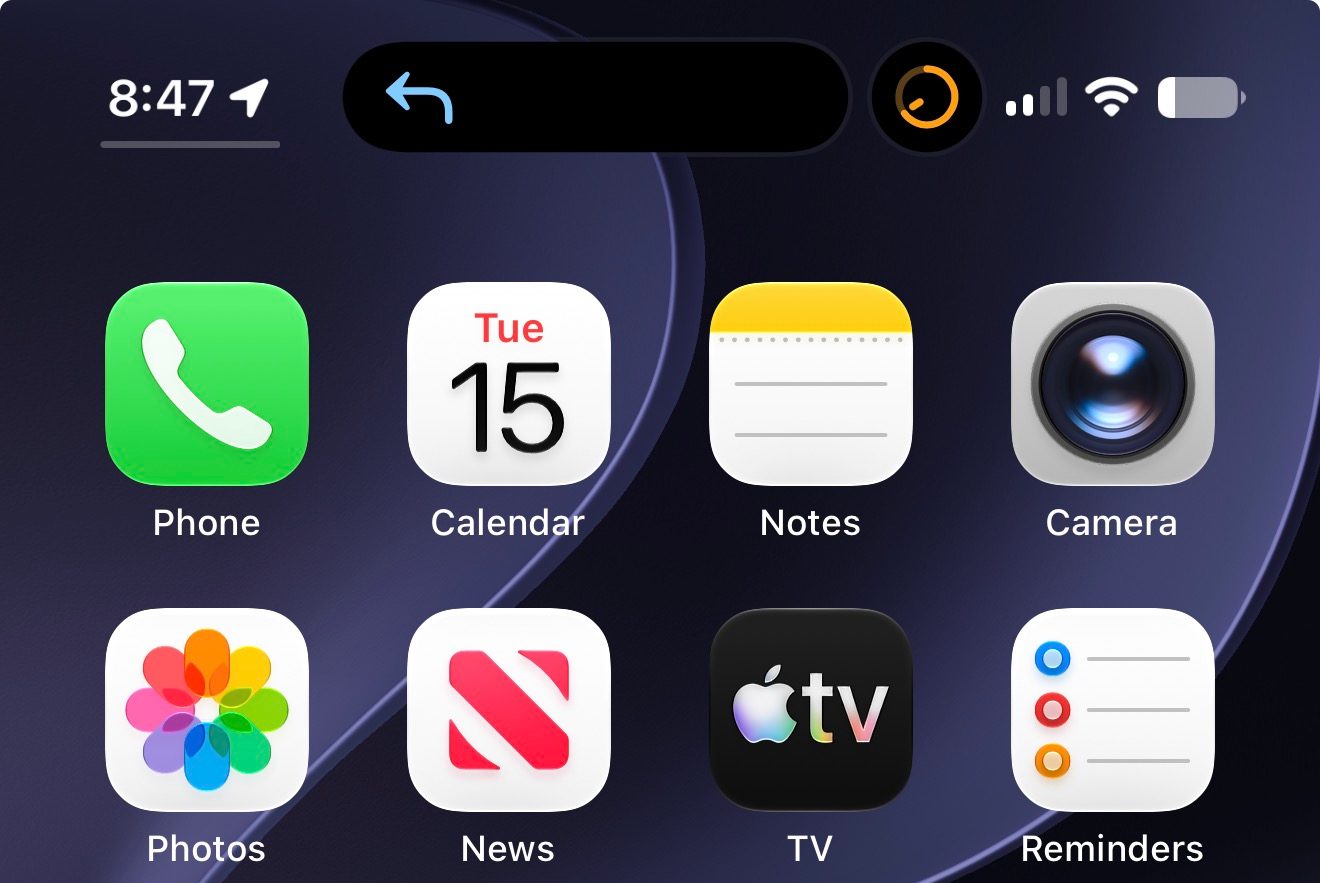
The headlining change is that you can now have three Live Activities at the same time. You can have one bigger Live Activity in the middle, with smaller ones on either side.
In my testing, what I’ve actually appreciated most is what happens when you have two Live Activities running at the same time. Thanks to the smaller Dynamic Island, the second Live Activity that appears on the right side can now show more information.
Here’s what having two Live Activities looked like on the iPhone 17 Pro:
And here’s what it looks like on iPhone 18 Pro:
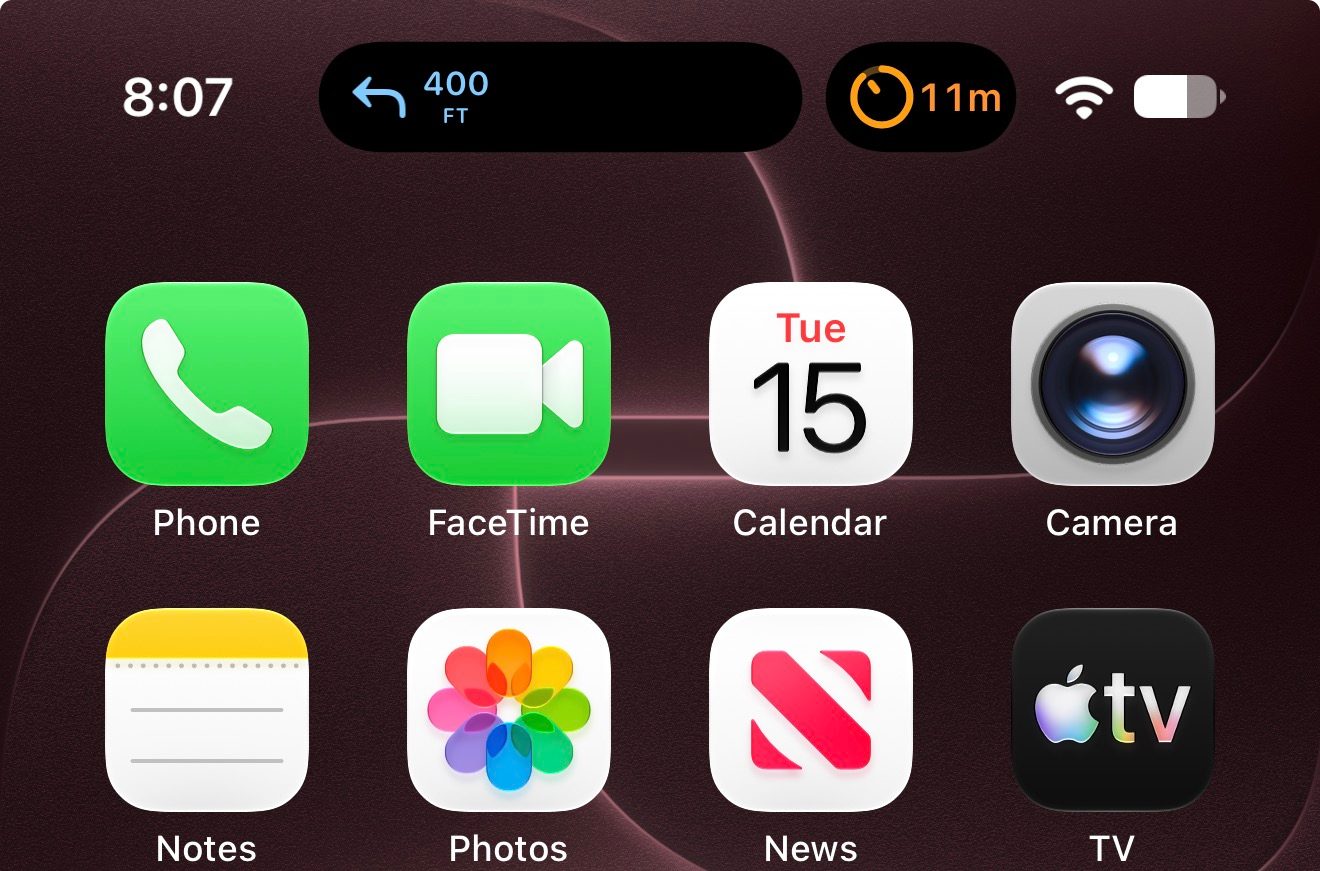
Instead of having to long-press to view additional information, the smaller Dynamic Island means you can now see that right in the Live Activity itself. It’s a useful change that I’ve already come to appreciate over the last week.
I haven’t noticed any downsides to the Face ID infrared camera moving under the display. Face ID still works just as well as it did before. In bright sunlight, you can see the infrared camera below the display. In normal lighting, however, it’s indistinguishable from the rest of the display.
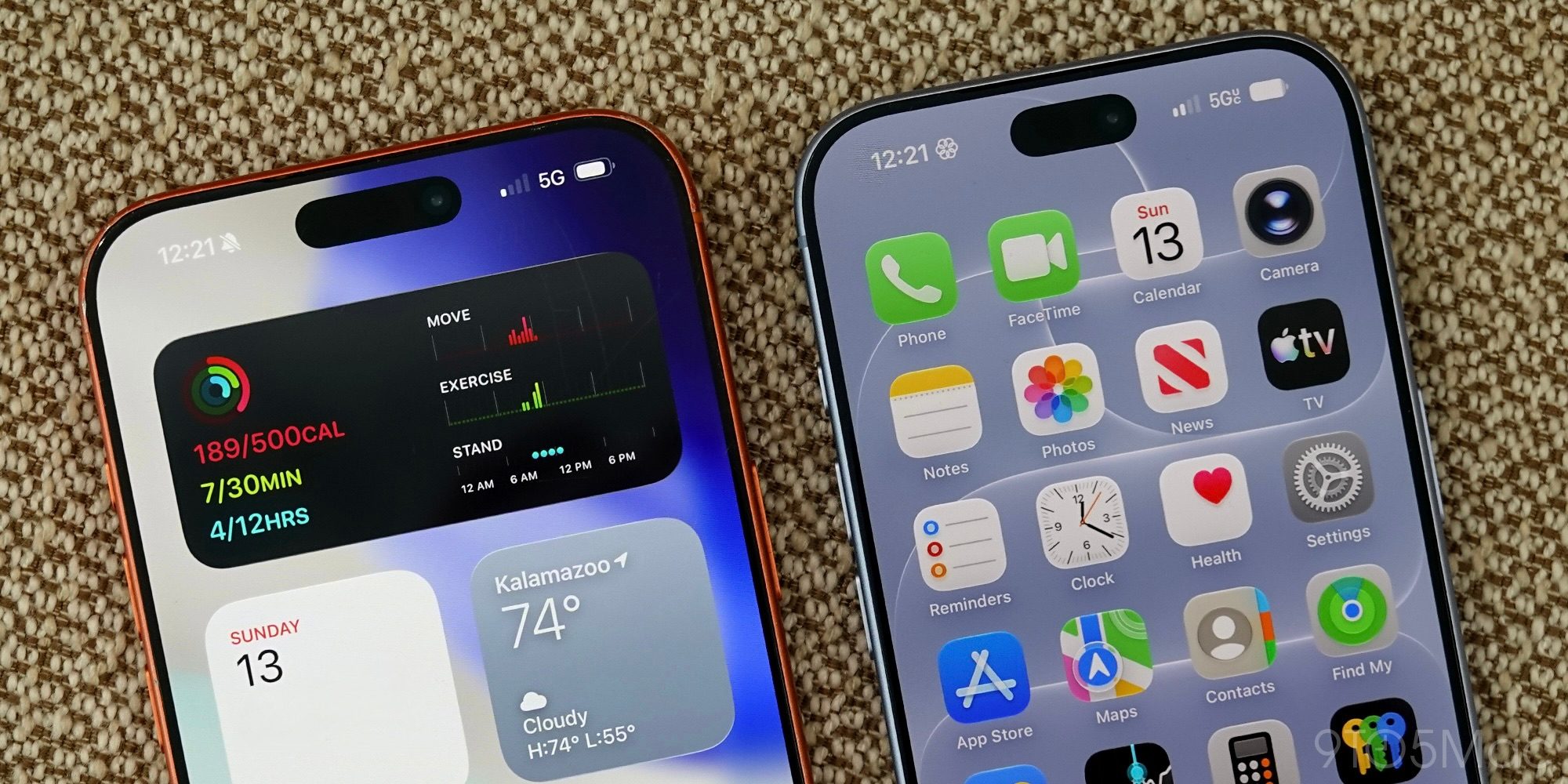
iPhone 17 Pro Max (left) vs iPhone 18 Pro (right)
Thermals and performance
The iPhone 17 Pro marked a huge leap for iPhone performance thanks to a completely revamped thermal management system with an Apple-designed vapor chamber. This year, Apple has made another jump.
The iPhone 18 Pro is powered by the A20 Pro chip. The memory now sits side-by-side with the chip, rather than physically on top of the chip itself. This new packaging technology means the A20 Pro chip can attach directly to the iPhone 18 Pro’s vapor chamber.
Apple says the vapor chamber inside the iPhone 18 Pro has 3x the surface area of the iPhone 17 Pro’s vapor chamber. It is also using new materials, including more thermally conductive graphite and nano-twin copper that moves heat away from the display.
Benchmarks only tell a fraction of the story, but in my testing, they matched, and in some cases even exceeded, Apple’s claims. The iPhone 18 Pro’s A20 Pro CPU consistently came in between 22 and 27% faster than the A19 Pro, while the GPU landed between 40 and 45% faster.
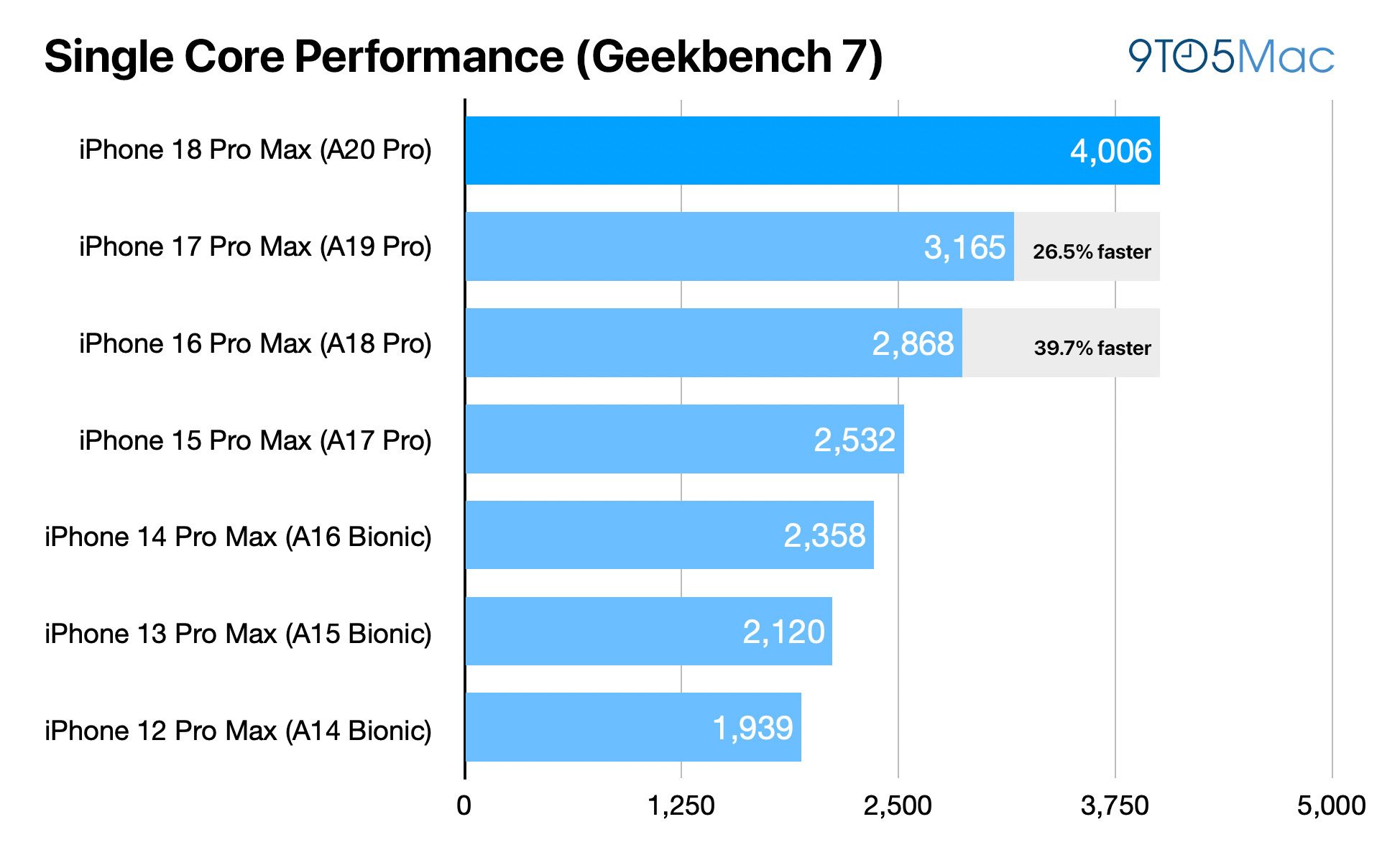
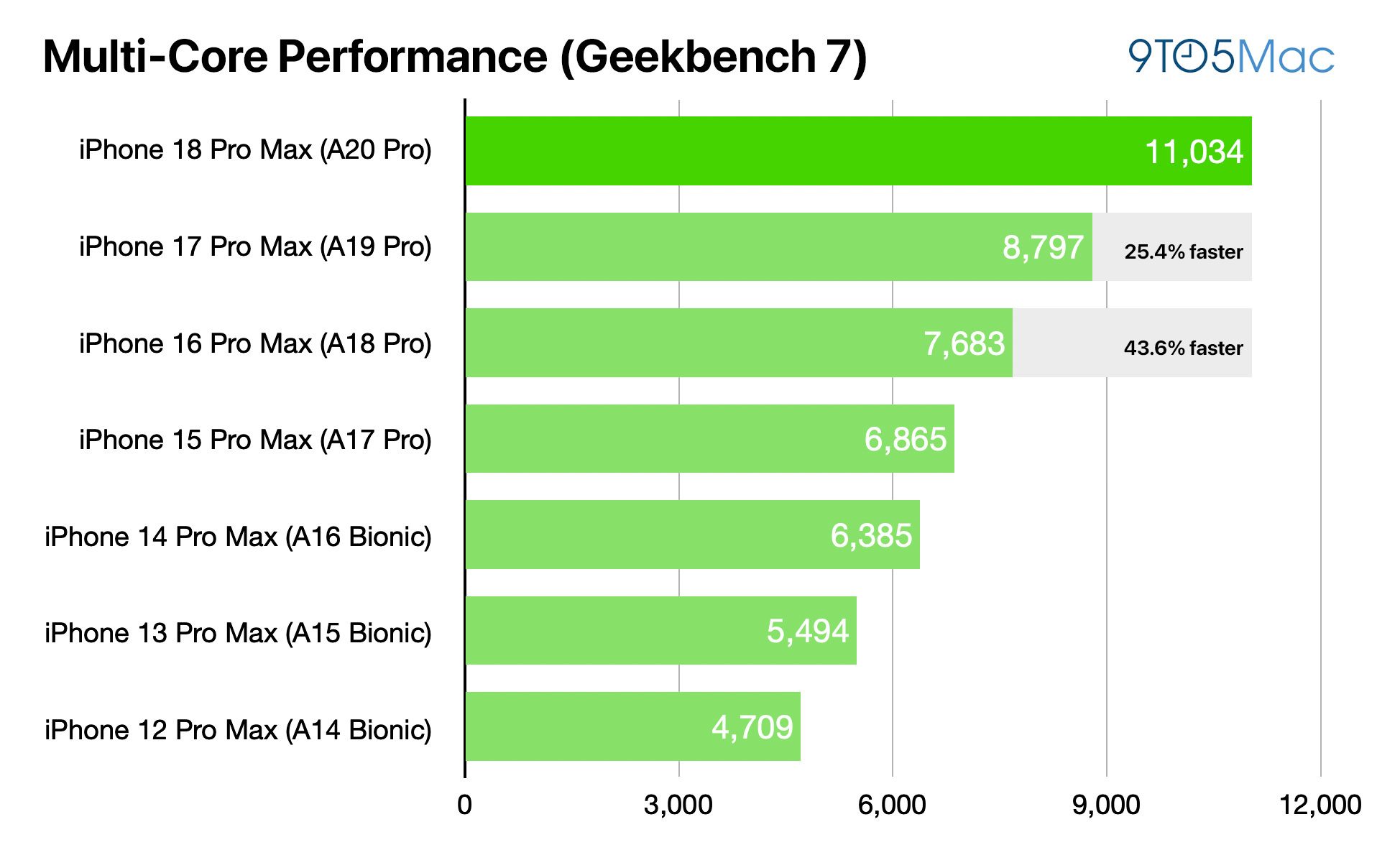
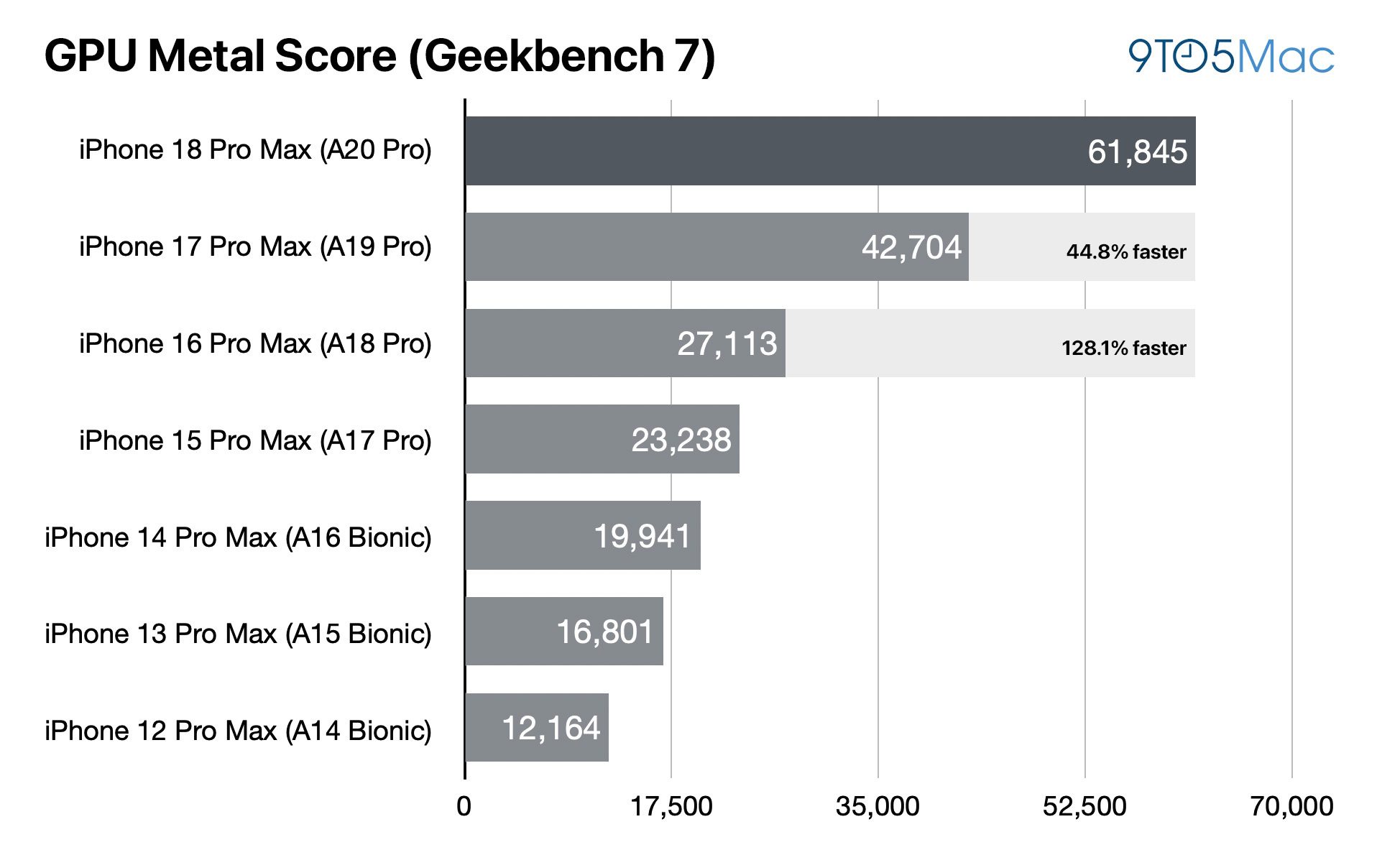
I did not expect such a dramatic year-over-year leap in performance and thermals. To have two consecutive years of this level of change is an incredible feat by Apple’s teams.
We’ve come a long way from the iPhone 15 Pro and iPhone 16 Pro. Both of those phones suffered from poor thermals, leading to throttled performance and the devices themselves getting uncomfortably hot to the touch.
Three years ago, thermals were the iPhone’s biggest weakness. With the iPhone 18 Pro, they’ve become one of its biggest strengths.
Battery life
Apple’s stats around battery life haven’t been particularly useful in the past. After all, who is using their iPhone to watch 45 hours of continuous video playback? Regardless, here are the stats for this year and other recent iPhone generations.
| Model | Video playback (local) | Video playback (streamed) |
|---|---|---|
| iPhone 15 | 20 hours | 16 hours |
| iPhone 15 Plus | 26 hours | 20 hours |
| iPhone 15 Pro | 23 hours | 20 hours |
| iPhone 15 Pro Max | 29 hours | 25 hours |
| iPhone 16 | 22 hours | 18 hours |
| iPhone 16 Plus | 27 hours | 24 hours |
| iPhone 16 Pro | 27 hours | 22 hours |
| iPhone 16 Pro Max | 33 hours | 29 hours |
| iPhone 17 | 30 hours | 27 hours |
| iPhone 17 Pro | 33 hours | 30 hours |
| iPhone 17 Pro Max | 39 hours | 35 hours |
| iPhone Air | 27 hours | 22 hours |
| iPhone 18 Pro | 36 hours | 33 hours |
| iPhone 18 Pro Max | 45 hours | 40 hours |
Where applicable, these figures are for the eSIM-only models sold in the US and a handful of other markets. Apple says versions with a physical SIM card get about two hours less video playback.
Apple touts that the iPhone 18 Pro Max offers the “largest increase in battery life ever on iPhone.”
This year, Apple is also providing a new “typical use” battery life measurement for the iPhone 18 Pro and iPhone 18 Pro Max. Apple says this number is based on a “combination of passive and active use of a variety of applications, including but not limited to messaging, photos, music, social media, video streaming, games, web browsing, and navigation.”
- iPhone 18 Pro typical use battery life: Up to 24 hours
- iPhone 18 Pro Max typical use battery life: Up to 30 hours
It’s going to be interesting to see how that “typical use” stat evolves over the years, but I’m glad Apple is finally offering useful battery metrics.
During my review period, I’ve primarily been using the iPhone 18 Pro Max. I’m easily able to make it through a day and a half on a charge, starting each day around 6 a.m. and not needing to plug in until lunchtime the following day at the earliest. I’ve spent less time with the smaller Pro, but in the days I used it, it comfortably lasted a full day.
Camera
Apple’s headlining change for the iPhone 18 Pro is the addition of a new variable aperture 48MP Fusion Main camera. It’s the first time the iPhone has featured a variable aperture camera. As Apple explained during the iPhone 18 Pro launch, the design consists of six laser-cut blades that transition between ƒ/1.48, ƒ/1.8, ƒ/2.8, and ƒ/4.0.
There are really two iPhone 18 Pro camera stories.
The first is for everyone who leaves the camera on Auto. The variable aperture works without you touching anything, and in my testing it made a difference in two situations: at night, where the camera opens to ƒ/1.48 and gathers more light, and in scenes with something close to the lens, where it stops down to ƒ/4 and keeps both the subject and background sharp.
In ordinary daylight, the aperture is still moving, often to ƒ/4, but on a typical landscape scene, the change in aperture makes little visible difference compared with the iPhone 17 Pro, since there’s nothing close enough for the extra depth of field to matter. The photos themselves do look different, but that’s down to the new image pipeline, which I’ll get to below, not the lens.
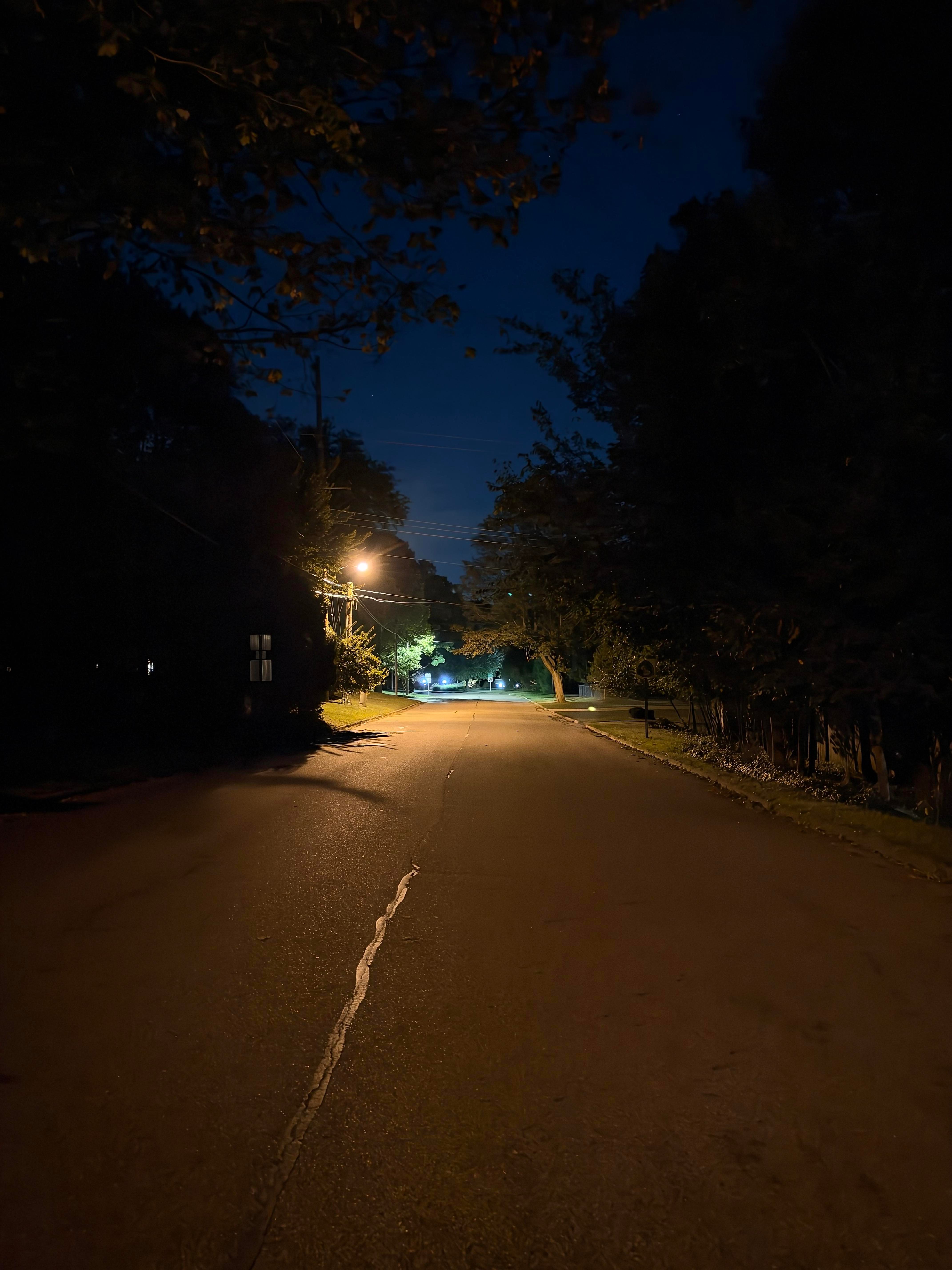
No Night mode
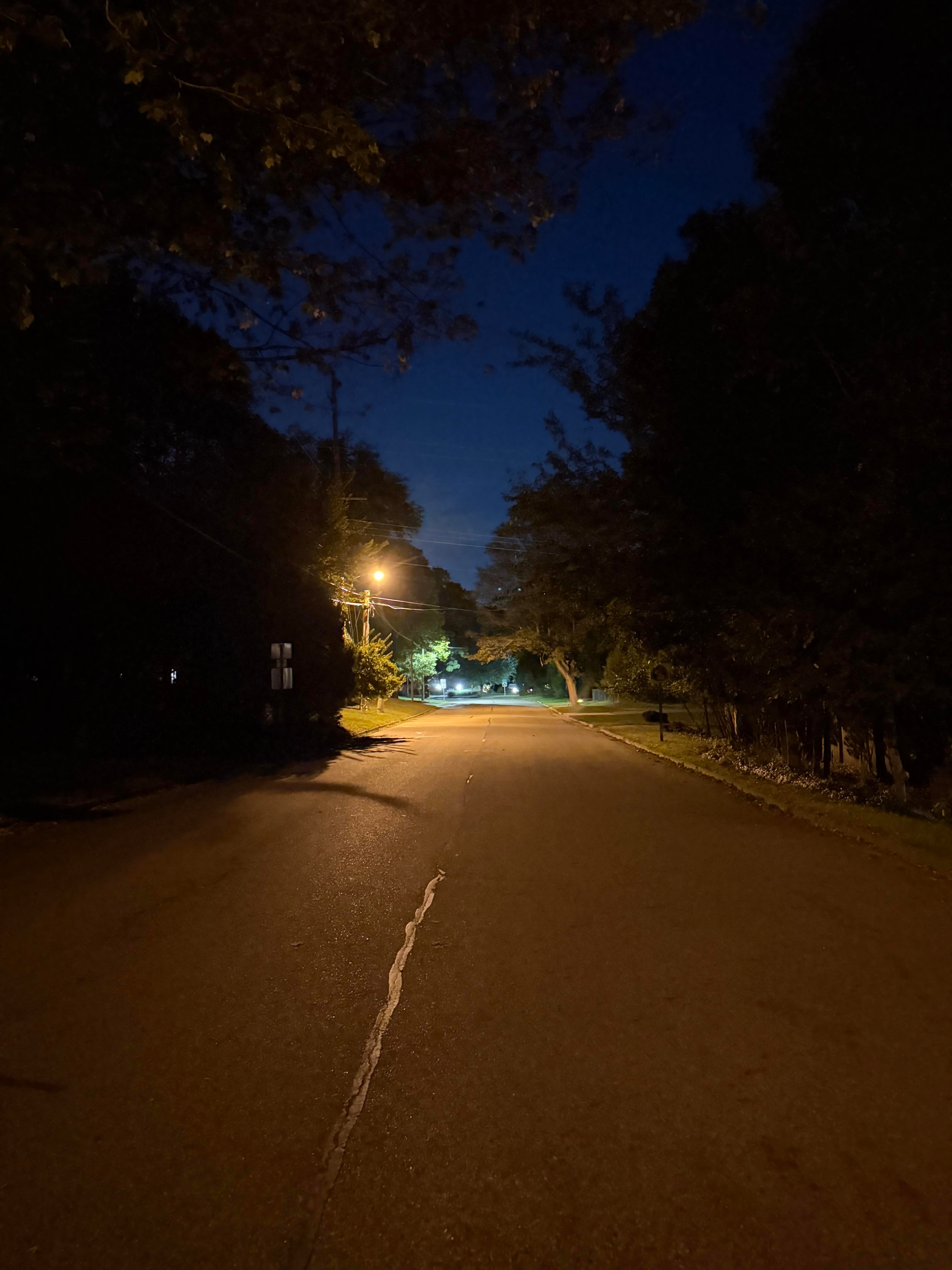
iPhone 17 Pro Max: ƒ/1.78, 1/15s, ISO 12,500
iPhone 18 Pro Max: ƒ/1.48, 1/15s, ISO 10,000
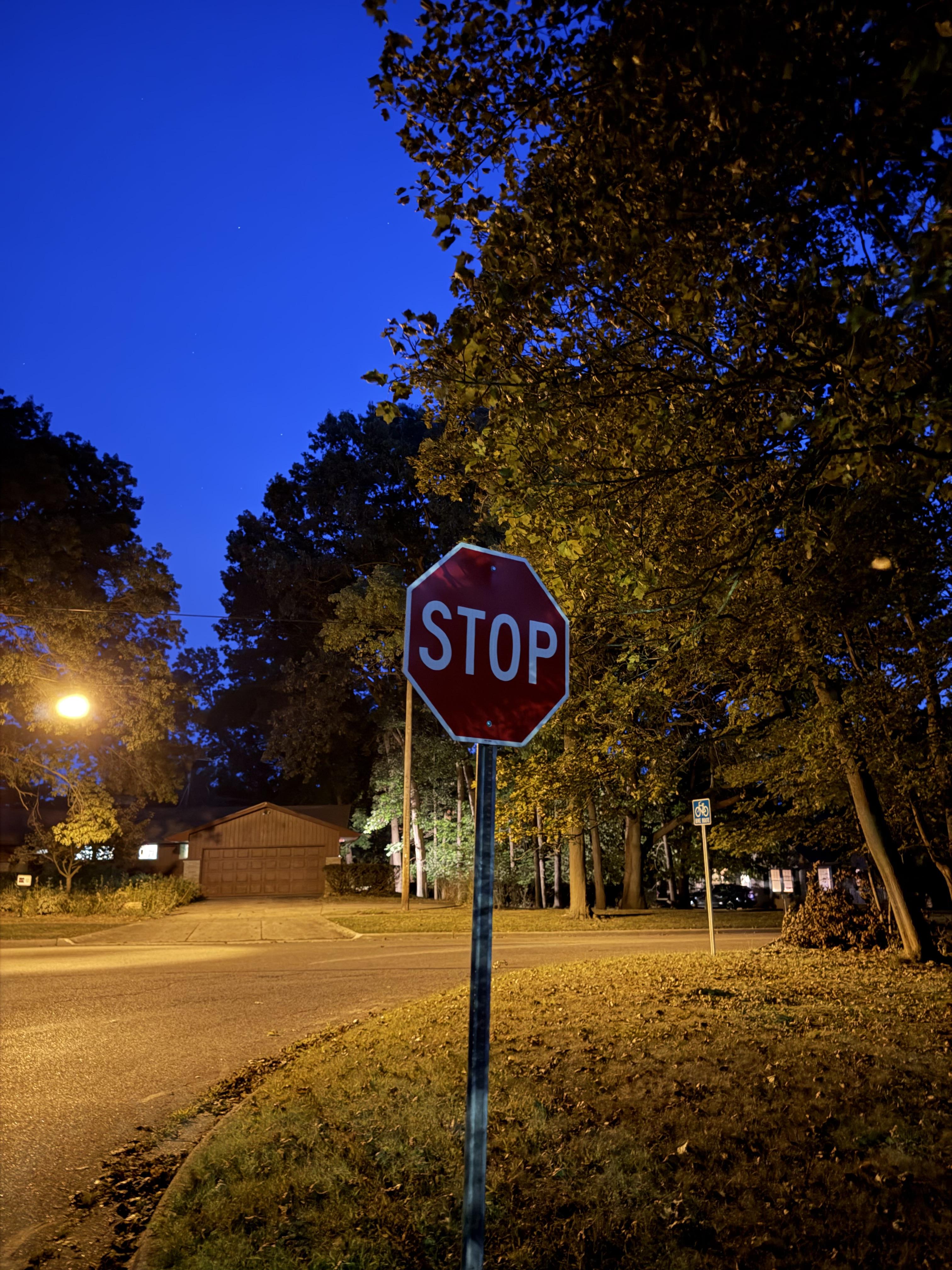
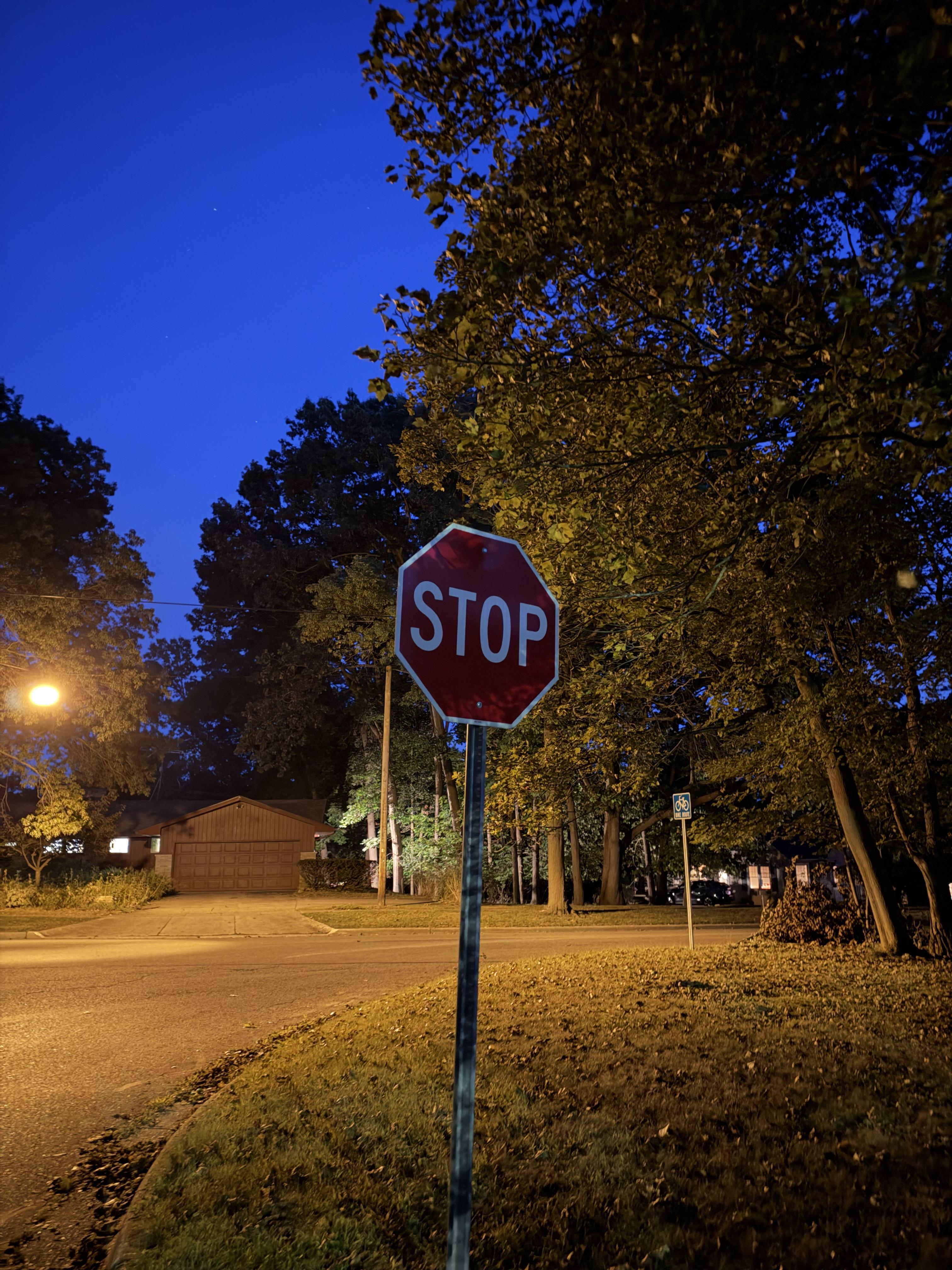
Night mode
iPhone 17 Pro Max: ƒ/1.78, 0.5s, ISO 3,200
iPhone 18 Pro Max: ƒ/1.48, 0.5s, ISO 2,500
The night gain is the easiest to measure. Across my comparisons, the iPhone 18 Pro consistently used a lower ISO than the iPhone 17 Pro in the same scene at the same shutter speed. In this example, both cameras shot at 1/15 second, but the iPhone 18 Pro used ISO 10,000 compared with ISO 12,500 on the iPhone 17 Pro. The wider ƒ/1.48 aperture lets in more light, reducing how much the camera needs to amplify the signal and helping cut down on noise. You can really notice it in the detail of the trees and the sky.
For Night Mode, capture times are slightly shorter thanks to the ƒ/1.48 aperture. Taking a Night Mode picture is often a test of your hand stability, so anything Apple can do to reduce that time is greatly appreciated.
Depth of field is the other half of the aperture story. A wide aperture like ƒ/1.48 keeps a narrower slice of the scene in focus, while a smaller aperture like ƒ/4 keeps much more of it sharp, front to back.
On an iPhone, that difference is most noticeable when your subject is close to the camera. And importantly, this is real optical depth of field, not the computational blur that iPhone creates in Portrait mode.

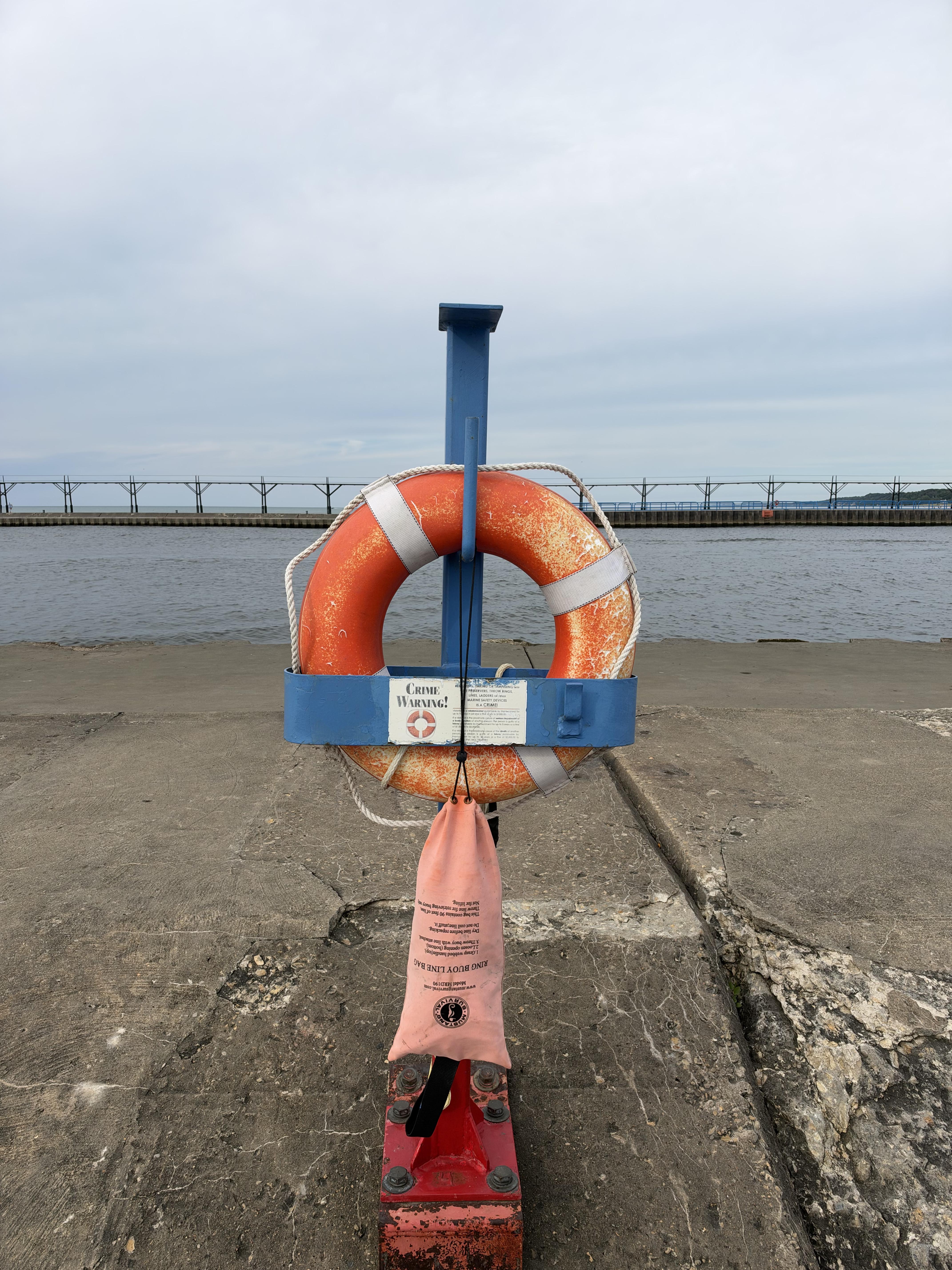
In this example shot of a buoy, the iPhone 18 Pro stopped down to ƒ/4 on its own. The buoy, concrete, and far pier are all sharp. The same shot on the iPhone 17 Pro, fixed at ƒ/1.78, kept the buoy sharp but let the background go slightly soft. The same logic applies to group photos, where stopping down can help keep the back row as sharp as the front.
In this dog example, I manually switched between ƒ/1.48 and ƒ/4. Look at the treeline and its reflection — sharp at ƒ/4, soft at ƒ/1.48, while Blake stays sharp in both:


The second story is for pro photographers. For that crowd, the iPhone 18 Pro unlocks a wider array of new creative opportunities. You can set the aperture yourself, enabling things like six-point starbursts on streetlights at ƒ/4. Pro controls also add manual shutter speed, white balance, and a live histogram, and the whole panel is customizable so you can choose which settings you want quick access to.
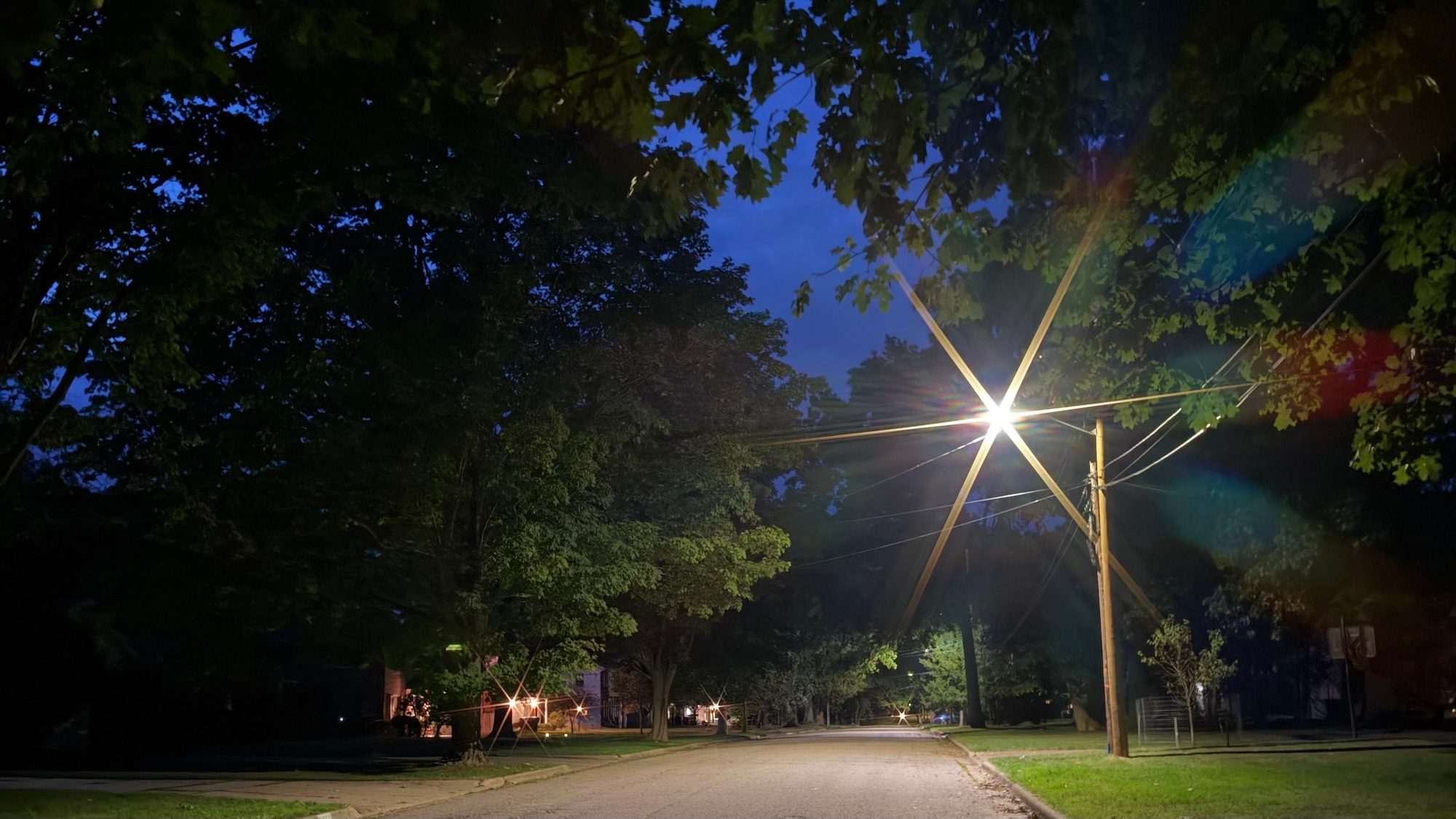
Personally, I fall into the first category. I am not a pro photographer. I rely on Apple’s automatic settings to capture the best possible photo in almost every scenario. I think the iPhone 18 Pro does exactly that, just like the iPhone 17 Pro did before it. The difference is that the variable aperture means there’s more happening in the background to make my photos better, and I don’t have to worry about any of it. That’s what I want from my iPhone.
More on iPhone 18 Pro camera
Apple touts an upgraded computational image pipeline for “sharper, more detailed shots.” In my testing, I found a subtle but noticeable difference, particularly with the 48MP Main camera. Pictures from the iPhone 18 Pro are consistently a touch brighter than the same shots from the iPhone 17 Pro, as you can see below.
The iPhone 18 Pro also offers Photographic Styles 3 for texture and grain control. As someone who loves Photographic Styles, I’m glad to see Apple continuing to improve the feature after last year’s major update.
A few other iPhone 18 Pro camera tidbits:
- Audio Mix can now isolate music in videos.
- The Cinematic effect for videos can now be applied after the fact. This is a fantastic change, as you can now decide after shooting a video whether the effect works for the scene.
- Timelapses now support 4K resolution and Dolby Vision HDR.
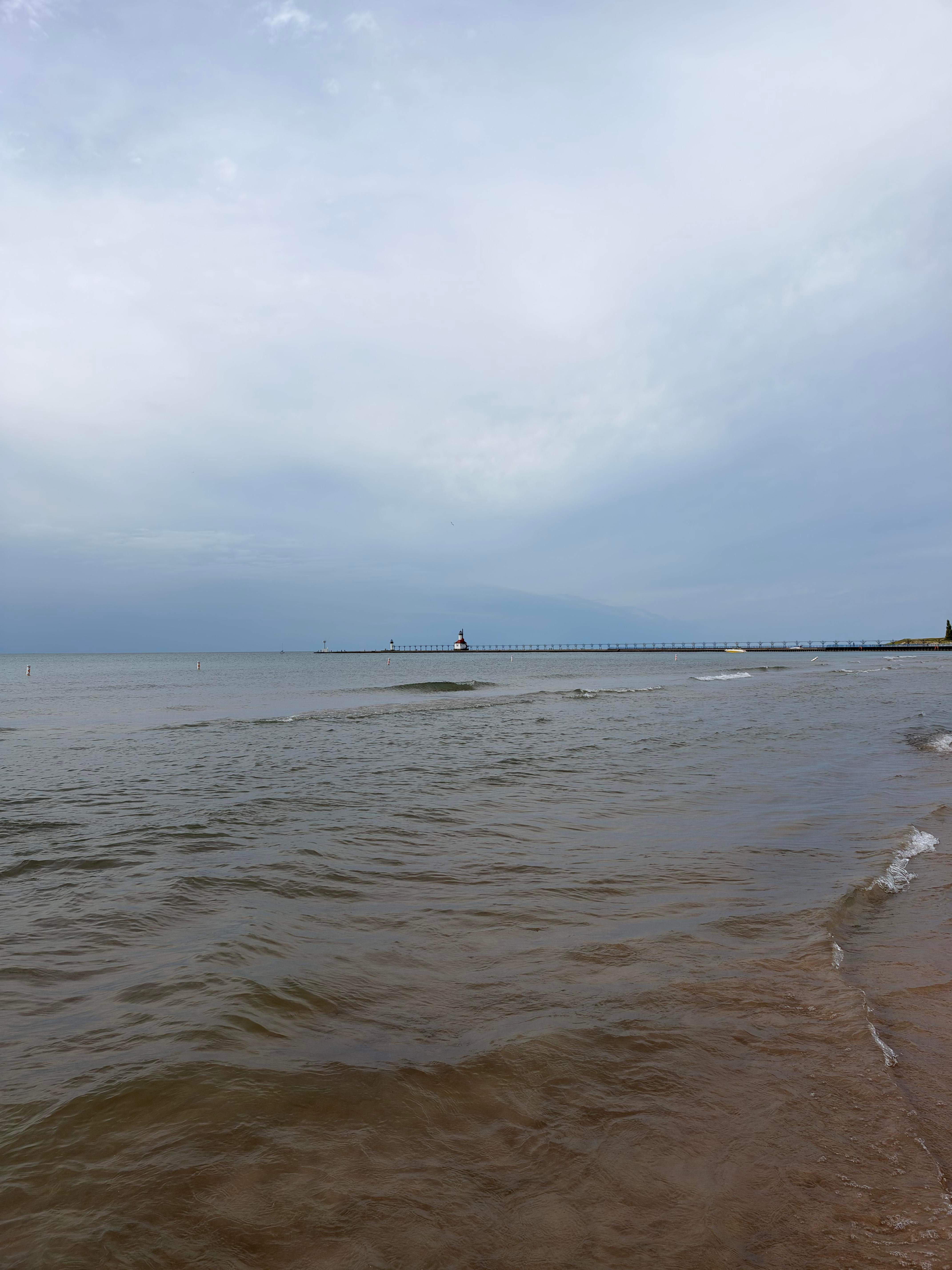
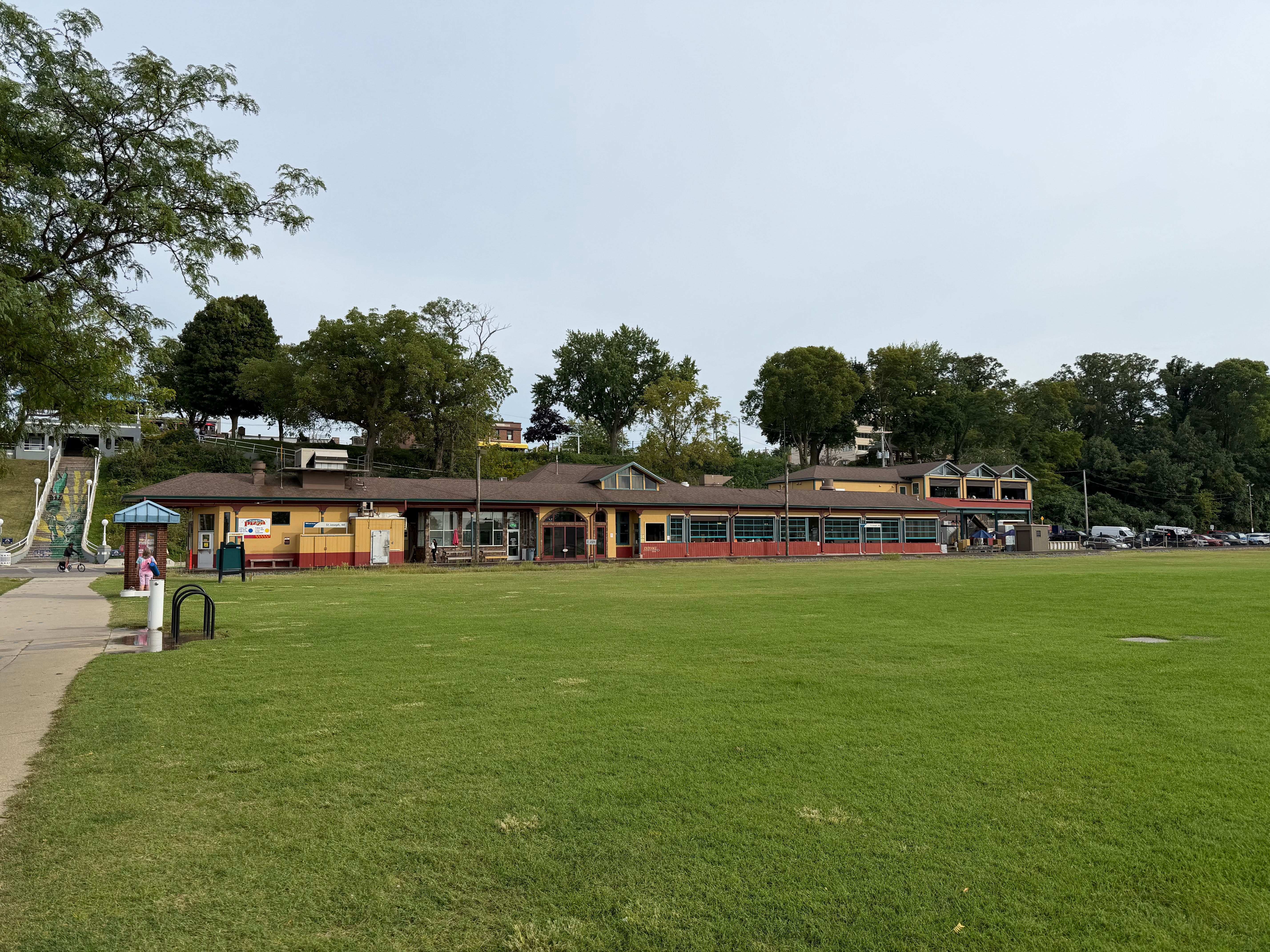
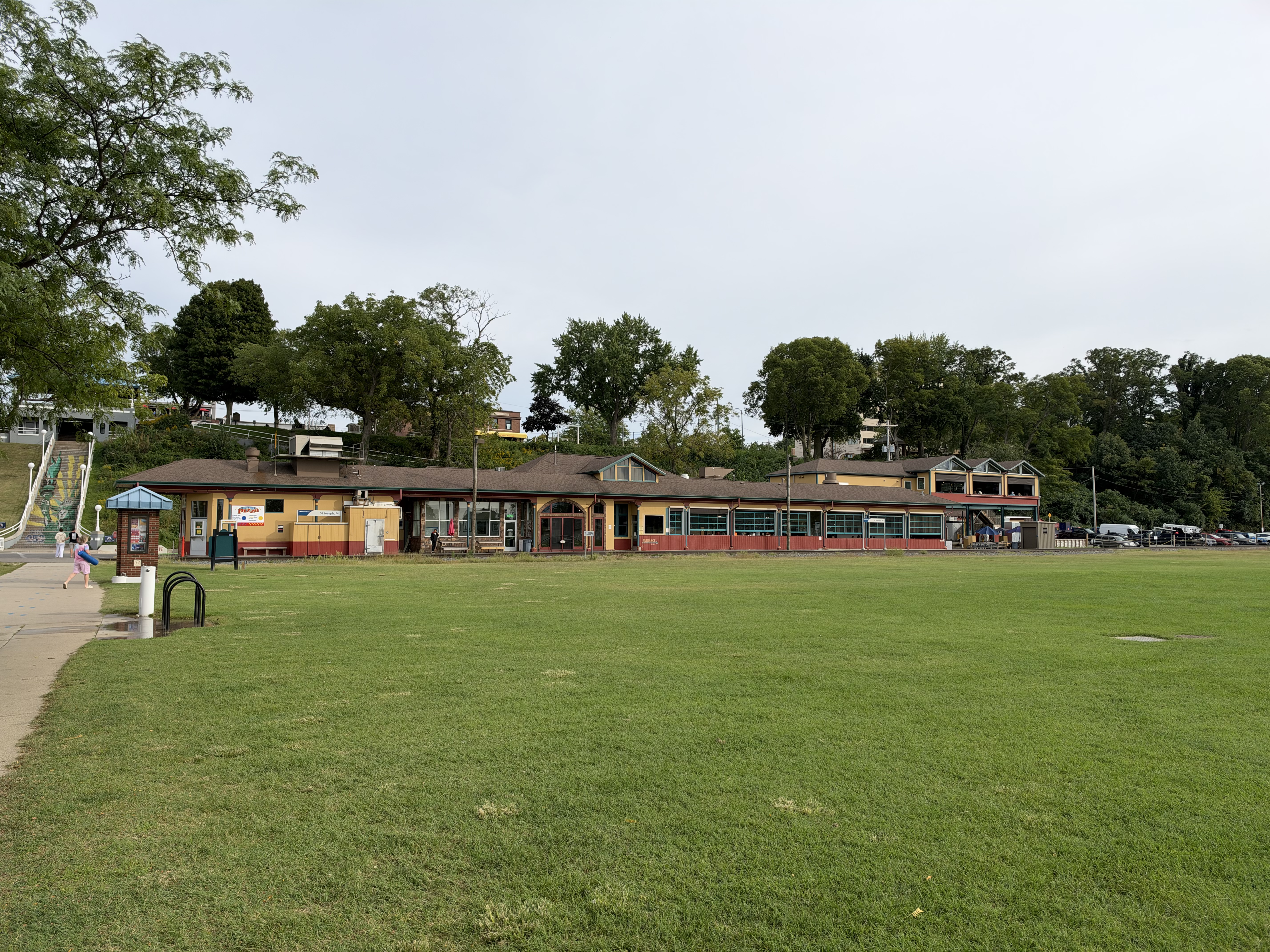
Here are a few more sample shots from the iPhone 18 Pro Max compared to the iPhone 17 Pro Max. Both phones were set to the Standard Photographic Style for every comparison in this review.



Pricing
The iPhone 18 Pro starts at $1,199 for 256GB of storage. The iPhone 18 Pro Max starts at $1,299 for 256GB. That’s a $100 price hike for the base configurations over last year’s models. The price increase, however, is more dramatic as you upgrade storage capacities.
For example, last year’s 1TB iPhone 17 Pro was $1,499 and the 1TB iPhone 17 Pro Max was $1,599. This year, the 1TB iPhone 18 Pro is $1,799 and the 1TB iPhone 18 Pro Max is $1,899.
| Storage | iPhone 18 Pro | iPhone 18 Pro Max | Step up | Last year’s step up |
|---|---|---|---|---|
| 256GB | $1,199 | $1,299 | — | — |
| 512GB | $1,399 | $1,499 | +$200 | +$200 |
| 1TB | $1,799 | $1,899 | +$400 | +$200 |
| 2TB | $2,399 | $2,499 | +$600 | +$400* |
*2TB was only available on the iPhone 17 Pro Max. It is new for the iPhone 18 Pro this year.
The pricing suggests Apple ate some margin on the 256GB and 512GB configurations and made it back on the higher tiers. I think a lot of iPhone buyers can get by with 256GB of storage, and the majority can comfortably live with 512GB. It’s people who need 1TB or 2TB who are most affected by these price hikes.
9to5Mac’s Take
Last year, Apple drew a clear line in the sand for what it thought the iPhone Pro should be. The iPhone 17 Pro was the best, most capable, most unapologetically “Pro” phone Apple had ever released. It made design tradeoffs in favor of offering significant upgrades in performance, thermal headroom, and camera capability.
Now, the question is: What happens the year after Apple gets the formula right?
As it turns out, the answer is simple: more of the same. Apple has doubled down on its strategy. The iPhone 18 Pro takes the foundation of the iPhone 17 Pro and pushes it even further. There is a massive leap in performance, the camera is more capable, the Dynamic Island is smaller, and battery life is even better. That, of course, comes at the cost of the iPhone 18 Pro and iPhone 18 Pro Max being even heavier than their predecessors.
Ultimately, if you’re using the iPhone 17 Pro right now, there’s little reason to upgrade to the iPhone 18 Pro. If you’re using an iPhone 16 Pro or earlier, I’d say now’s a great time to make the leap.
I’ve gone this whole review without mentioning the iPhone Duo, which is set to launch next month. If the iPhone Duo is the new kid on the block, the iPhone 18 Pro is a familiar old friend, and I mean that in the best way possible.
My favorite iPhone 18 Pro accessories |
Follow Chance: Threads, Bluesky, Instagram, and Mastodon.


FTC: We use income earning auto affiliate links. More.

Discussion about this post