










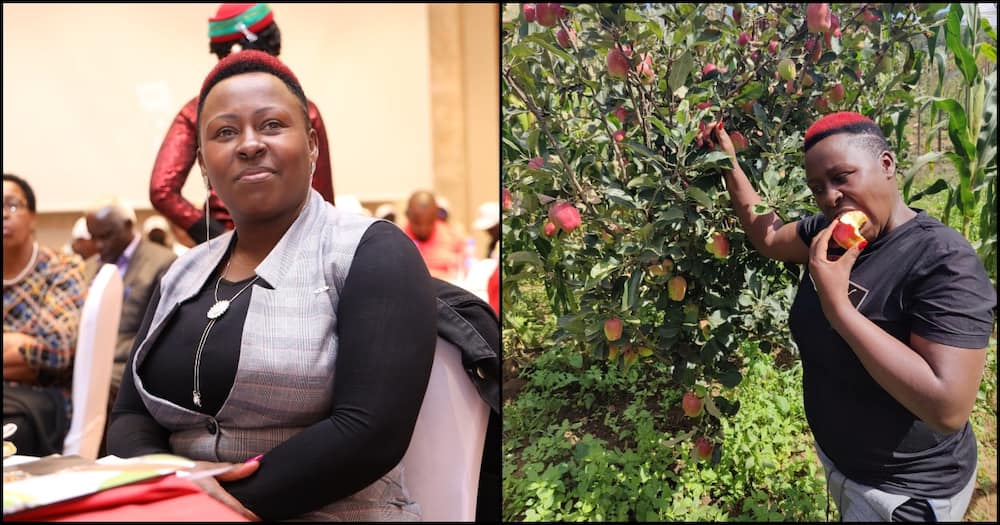
A youthful female farmer in Laikipia County is making a fortune from an apple farming venture inspired by her father’s success in agriculture.
Source: Facebook
Kate Wambugu of the Wambugu Apples’ Farm said her father ventured into apple farming in 1985, and 45 years later, she is following in his footsteps.
Speaking to Business Hour KE, a YouTube channel, the farmer said she christened the apple variety she grows, Wambugu Apple, after her father, Mr Wambugu.
“This is the 45th year we are farming. My father was the founder of the Wambugu Apple, he started in 1985, and it was named after him,” Kate said.
Currently, Kenya imports a huge percentage of apples from South Africa, Egypt and the Middle East.
PAY ATTENTION: Follow us on Instagram – get the most important news directly in your favourite app!

Read also
Kakamega Graduate Turns to Farming After Failing to Find Job, Harvests KSh 20k Monthly
Wambugu, however, is optimistic that the country will soon have its own local apples as farmers in Kenya are exploiting alternative ways to grow the products.
According to Wambugu, apple farming is one of the most lucrative ventures that need less orientation. One needs land, water and manure only to feed the tree.
Seedlings are also easily accessible in the market. Apple farming, she added, is not labour-intensive as many farmers perceive.
“Once you plant the seedlings, it takes nine months only for the trees to start producing fruits,” Wambugu explained.
“One acre can accommodate 600 seedlings. However, you can start with a few seedlings. One tree can also produce close to 200 fruits at the bare minimum per harvest,” she added.
Wambugu further underlined that the good thing with apple trees is that you can harvest them for 100 years.
An acre of apple farm can fetch her about KSh10 million after harvest. A farmer can also make three harvests in a year, depending on the plantation season.

Read also
Black South Africans break into once white-only wine industry
Success in apple farming is, nonetheless, attributed to feeding the plants with enough manure.
Currently, local farmers sell their products in Karen, with some exporting them to the United Kingdom (UK).
Apples are, however, analysed by the Kenya Bureau of Standards (KEBS) and other relevant agencies to ascertain whether they meet the quality standards before being sold or exported.
PAY ATTENTION: Click “See First” under the “Following” tab to see TUKO News on your News Feed
Source: TUKO.co.ke








Discussion about this post