[ad_1]
In 2017 I led the SABC News team that covered the elections in Kenya. The SABC Bureau had done sterling work covering election campaigns in the run-up to the election. The Johannesburg team had to become acquainted with the country’s political dynamics. Fortunately, we had to go to Kenya earlier to help the team cover the State visit of Kenya’s grandson, US President Barack Obama. It was during that time I got more education about the politics of Kenya. I learned a lot about the political dynasty that has for years divided Kenya. This is my assessment of the just concluded elections and how the political dynasties in Kenya are on their death-bed.
Like previous elections in Kenya, the 2017 electoral campaigns in Kenya were characterised by ethnic rhetoric and the usual names in the country’s political dynasty dominated the political discourse. With the likelihood of a closely contested election, there were fears that the country would experience political violence similar to the one witnessed in 2007/8. On the eve of the elections, Nairobi was almost deserted as many chose to go to the countryside. There was no economic activity.
The election was a two-horse race between President Uhuru Kenyatta who was seeking his second and final term against Raila Odinga who was running for the fourth time.
The two have a history. Odinga’s father Jaramogi Oginga Odinga was Uhuru’s father’s (Jomo Kenyatta) Vice President but the two men fell out over what is said as ideologies. The 2013 and 2017 elections seemingly renewed those tensions, especially after Uhuru Kenyatta was declared the winner of the hotly contested race.
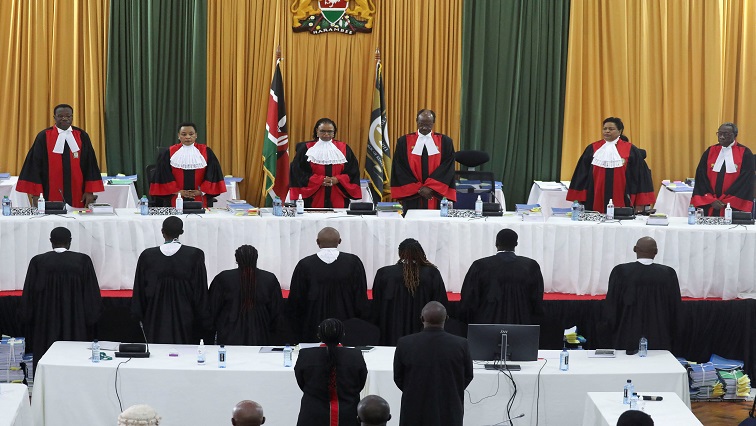
Odinga once again went to the Supreme Court of Kenya and lodged a petition disputing the outcome of the polls. The Supreme Court ruled that there were irregularities and illegalities in the electoral process and ordered a fresh presidential election.
Kenyatta garnered 98% of the vote in the rerun after Odinga boycotted over claims that the electoral commission was not competent enough to carry out free, fair, and credible elections. It was celebrations in his camp and the then Deputy President-elect William Ruto was credited for leading Kenyatta’s campaign.
Protests then followed Kenyatta’s victory. In January Odinga swore himself in as the “people’s president” further heightening tensions in the country.
Demonstrations then followed in opposition strongholds every week until March 2018, when Kenyatta and Odinga agreed to a truce, known in Kenya as the “handshake.”
Ruto, the Deputy President, was left out in the cold. Indeed, he would have to fight the 2022 elections without the backing of his boss, Kenyatta, who had placed his support behind Odinga, a political dynasty in the making.
Because of Ruto’s decision to campaign under the “bottom-up economic model,” the election was about bread and butter issues rather than tribalism.
Political analyst Professor Gitile Naituli summarised it, “Ruto has single-handedly changed the focus of this election from tribes to the economy.”
With that, he seemed to have managed to vanquish the political dynasties and families that have dominated Kenya’s politics since independence.
After falling out with President Kenyatta following the handshake between his boss and former Prime Minister Raila Odinga, Ruto saw the battle to edge him out of the succession race as one pitting the knowns (or what he called dynasties) versus the unknowns.
Kenyatta is the son of Kenya’s first President Jomo Kenyatta, while Raila is the son of former Vice President Jaramogi Oginga Odinga.
He took his fight and message to the people and the people seemed to have responded as he expected.
In the August 9th General elections, Ruto managed to beat Uhuru in Central Kenya where the Kikuyu community ignored the incumbent and gave the vote to Ruto’s allies and also gave Ruto the presidency against Uhuru’s preferred successor – Raila Odinga.
In his Rift Valley backyard, Ruto campaigned against the sons of his political mentor the late President Daniel Arap oi, his United Democratic Party halted the political careers of Moi’s sons Gideon Moi, who was vying to retain his Baringo County senatorial seat and Raymond Moi who was also vying to retain his parliamentary seat.
Ruto while not really an outsider has managed to wrestle power from a clique of families that have dominated politics and the economy of Kenya. Ruto stated at a press conference that day that he had been cleared by the Supreme Court.
“Today by voting for me, the millions who woke up early, they have opened doors and gates for their own children in every village, knowing very well their children can be leaders and every child is free to dream and to aspire to any office. And working hard believing in God, they can get to wherever they want to go.”
As Kenya focuses on the future, the country might as well have shaken the demon of tribalism. The big challenge, however, will be to shake the demons of corruption and ensure that in the next election the youth will have an interest in participating to choose their leaders.
Sophie Mokoena is SABC News Foreign Editor.
[ad_2]
Source link