









California’s New Governor: Xavier Becerra Takes Office with Unique Political Landscape
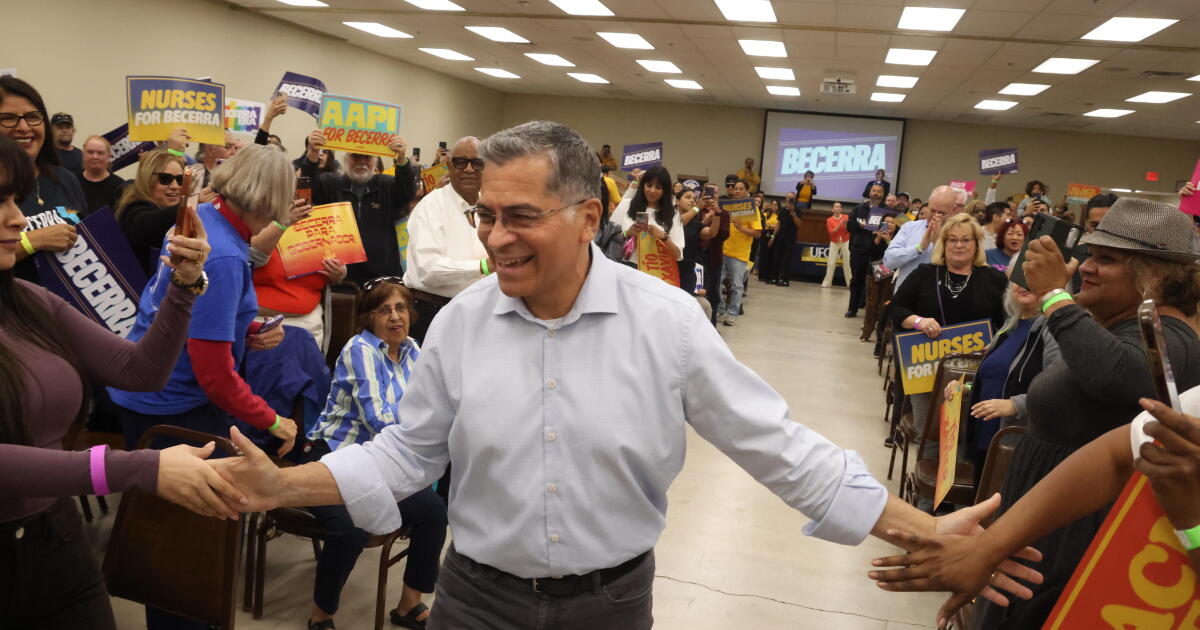
SACRAMENTO — In a spirited election night address, Governor-elect Xavier Becerra celebrated his victory in Sacramento, proudly displaying a campaign shirt from the Laborers’ International Union of North America (LiUNA). “LiUNA in the house,” he declared, igniting cheers among the union members present. However, it is noteworthy that LiUNA remained the sole union backing him throughout his campaign.
A Shift in Political Dynamics
In a tumultuous 2026 gubernatorial election cycle, Becerra faced challenges in securing endorsements from organized labor, which typically plays a pivotal role in California’s Democratic politics. Historically, new Democratic governors have taken office with substantial support from powerful unions, but Becerra’s situation marks a significant departure from this tradition.
“For the first time in decades, a Democratic governor will assume office without significant obligations to the major unions and other influential interest groups,” remarked Dan Schnur, a political communication instructor at USC and UC Berkeley. “Becerra has a unique opportunity to establish a more independent agenda than his predecessors.”
The Role of Unions in California Politics
In the past, unions have wielded considerable influence in California elections, mobilizing vast numbers of workers to support candidates aligned with their values. Endorsements from prominent unions, such as SEIU California and the California Teachers Association, often come with substantial financial contributions, bolstering candidates’ campaigns. Once elected, governors typically maintain close relationships with union leaders, acknowledging their support.
In contrast, Becerra’s path to victory was marked by a fragmented labor endorsement landscape. Unlike Gavin Newsom, who received early backing from teachers’ unions during his 2018 campaign, Becerra faced hurdles as many unions opted to endorse other candidates in the crowded Democratic primary.
Unions’ Missed Opportunity
The California Federation of Labor chose to endorse four candidates in March 2026, none of whom were Becerra. Following the withdrawal of Rep. Eric Swalwell from the race, the California Teachers Association eventually endorsed billionaire Tom Steyer, who promised to increase funding for education through tax reforms.
While SEIU California initially supported Swalwell, they later made a dual endorsement of both Steyer and Becerra, which limited Becerra’s ability to fully capitalize on union backing during a fiercely competitive primary campaign.
“Labor’s attempts to align with perceived frontrunners backfired,” noted Republican consultant Rob Stutzman, claiming that many unions misjudged the political landscape. As a result, organized labor finds itself in an unfamiliar position as Becerra takes office, potentially seeking to rebuild their relationship with the new governor.
Looking Ahead: Becerra’s Relationship with Unions
Despite the initial lack of support from many unions, Becerra’s history and connections within the labor community may foster a more cooperative relationship moving forward. His past experiences as a laborer and his family ties to the union movement resonate with labor leaders, such as Joseph Cruz of LiUNA, who emphasized Becerra’s understanding of workers’ challenges.
In his victory speech, Becerra presented himself as a “new sheriff in town,” expressing a commitment to labor issues and hinting at a collaborative approach with various advocacy groups. His proposed policies, including restoring healthcare coverage cuts for undocumented immigrants and penalizing large corporations that do not provide affordable healthcare, align with labor priorities.
Potential for a Collaborative Administration
As Becerra prepares to assume office, there are indications that he may prioritize inclusivity, particularly with advocacy groups that were not initially supportive. His appointment of Teri Holoman from the California Teachers Association as his transition director suggests an openness to engaging with a broader range of stakeholders.
Political analysts predict that Becerra’s administration may foster collaboration across the political spectrum, creating opportunities for various interest groups to have a voice in state governance. This approach contrasts sharply with the early days of Newsom’s governorship, where labor’s influence was more pronounced.
In a shifting political landscape, Becerra’s unique position may allow him to redefine the relationship between California’s government and both labor and business communities, setting a new tone for governance in the state.




Discussion about this post