
• Home
  • Insight
  • Blog
  • Business
  • Entertainment
  • Health
  • Politics
  • Shop
    • Gift Shop
    • Value Shop
    • Store
    • Bargain Shop
    • Discount
  • Sports
  • Tech
  • Travel
  • USA
  • Video
  • World
    • Asia
    • Africa
    • South America
    • North America
    • Europe
    • Oceania
Friday, October 23, 2026
No Result
View All Result
Subscribe Now
  • Home
  • Insight
  • Blog
  • Business
  • Entertainment
  • Health
  • Politics
  • Shop
    • Gift Shop
    • Value Shop
    • Store
    • Bargain Shop
    • Discount
  • Sports
  • Tech
  • Travel
  • USA

    Tom Skerritt, who starred in ‘Picket Fences,’ ‘Alien’ and ‘Top Gun’ has died : NPR

    Kansas Senate rivals clash over Trump, party loyalty in heated debate

    Is Rabies Making a Comeback?

    Kohen Wiley’s Family Says Investigators Didn’t Contact Them Before Concluding Cops Did No Wrong

    Peralta, Caminero, Diaz lead Rays to win over Guardians and a trip to the World Series

    What “Once Upon a Time in Harlem” can teach us about arguing over Black art

    4 dead, 39 injured in explosion at Canadian military training base

    Texas Man Found with Pipe Bombs, Guns, Three Illegal Aliens near Border

    Two players to bet on Sunday

  • Video
  • World
    • Asia
    • Africa
    • South America
    • North America
    • Europe
    • Oceania
The Insight Post
  • Home
  • Insight
  • Blog
  • Business
  • Entertainment
  • Health
  • Politics
  • Shop
    • Gift Shop
    • Value Shop
    • Store
    • Bargain Shop
    • Discount
  • Sports
  • Tech
  • Travel
  • USA

    Tom Skerritt, who starred in ‘Picket Fences,’ ‘Alien’ and ‘Top Gun’ has died : NPR

    Kansas Senate rivals clash over Trump, party loyalty in heated debate

    Is Rabies Making a Comeback?

    Kohen Wiley’s Family Says Investigators Didn’t Contact Them Before Concluding Cops Did No Wrong

    Peralta, Caminero, Diaz lead Rays to win over Guardians and a trip to the World Series

    What “Once Upon a Time in Harlem” can teach us about arguing over Black art

    4 dead, 39 injured in explosion at Canadian military training base

    Texas Man Found with Pipe Bombs, Guns, Three Illegal Aliens near Border

    Two players to bet on Sunday

  • Video
  • World
    • Asia
    • Africa
    • South America
    • North America
    • Europe
    • Oceania
No Result
View All Result
No Result
View All Result
Home Investing

“Made in Germany” Does Not Mean What It Once Did

by Theinsightpost
September 28, 2026
in Investing
0 0
0

by Martin Armstrong

There was a time when you paid more for a German automobile because “Made in Germany” actually meant something. Mercedes-Benz, BMW, Audi, Porsche, and Volkswagen built an international reputation around engineering, quality, and precision. People willingly paid the premium because Germany was supposed to build the machine better than everyone else. That reputation became one of the foundations of Germany’s entire export economy.

Now Volkswagen Group is recalling 2.86 million Volkswagen and Audi vehicles because a screw in the steering system can corrode and potentially fail, causing a loss of steering. The recall covers Volkswagen Tiguan, Touran, Golf, Golf Variant, and Caddy models produced over an eleven-year period, along with Audi Q3s built between 2017 and 2024. Germany’s KBA says there have been no known injuries or property damage, and Volkswagen says the replacement takes about an hour. Fine. Recalls happen to every manufacturer. But this could hardly come at a worse time because the larger German automobile industry is already fighting for its life.

“Made in Germany” simply does not carry the economic weight it once did. German manufacturers are asking consumers to continue paying a premium while Chinese manufacturers have rapidly closed the gap in quality and, in areas such as batteries, software, electronics, charging, and manufacturing efficiency, have become formidable competitors. Brand loyalty only survives as long as consumers believe they are receiving something superior for the additional money.

The Germans are admitting the problem themselves. Mercedes-Benz said this week that manufacturing automobiles in Germany is NOT internationally competitive, particularly because of labor costs. Mercedes production chief Michael Schiebe warned employees that unless costs come down, the company could eventually close one German assembly plant and one powertrain plant. Volkswagen has already embarked on the largest restructuring in its 89-year history as it battles overcapacity and Chinese competition. It lost its position as China’s best-selling automobile brand to BYD in 2024 and fell behind Geely the following year. Volkswagen is now cutting tens of thousands of jobs and reducing production capacity.

Then there is Porsche, once the crown jewel of Volkswagen. Volkswagen has taken a €6 billion write-down on its Porsche stake after another €2.7 billion impairment the previous year. Porsche has been battered in China and made costly mistakes during the transition to electric vehicles. Its profitability has fallen so dramatically that Volkswagen’s budget Skoda operation has overtaken it on margins. What is the fundamental change? China unexpectedly learned how to manufacture.

For decades, Western companies treated China as a source of cheap labor. They moved manufacturing there, transferred technology, constructed supply chains, trained workers, and taught Chinese companies how Western industry operated. Politicians assured everyone this was globalization and that Europe would simply move toward higher-value industries.

Well, China moved up the value chain too. The European Central Bank now openly admits that China’s industrial rise is pushing European companies out of global markets, particularly in machinery and transportation equipment. Germany is the most exposed of the major European economies because its export profile most closely resembles China’s. The Chinese are no longer merely producing inexpensive toys, textiles, and household goods. They are competing directly in the industries Germany once believed belonged to it.

Automobiles are the perfect example. Chinese brands accounted for about 9% of EU automobile sales during the first half of 2026, according to industry data cited by Reuters, and AlixPartners estimates they could reach 16% of the broader European market by 2030. Meanwhile, foreign manufacturers’ share of China’s own automobile market has collapsed from 64% in 2020 to roughly 32% this year. China first displaced the foreign manufacturers at home. Now it is coming after them abroad.

This is how economic power shifts. It does not happen because somebody holds a press conference announcing that Germany is no longer competitive. Consumers simply stop buying the product.

The European response, naturally, has been tariffs and protectionism. Rather than asking why Chinese manufacturers can increasingly offer competitive vehicles at lower prices, Brussels wants to construct walls around the European market. But tariffs do not make German factories more efficient. They do not lower Germany’s energy or labor costs. They do not produce better batteries, faster software development, or cheaper automobiles. They merely force European consumers to pay more while giving domestic manufacturers additional time before reality arrives.
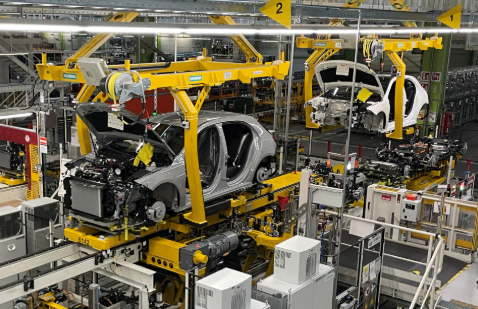
Germany inflicted much of this upon itself. It abandoned cheap Russian energy without constructing a competitive replacement, pursued an expensive energy transition, buried industry beneath regulation, and simultaneously demanded that its automobile manufacturers spend enormous sums transforming their product lines. Reuters estimates that the post-2022 energy shock added roughly €1,000 to the cost of manufacturing a vehicle in Germany. You cannot continuously raise the cost of production and then act surprised when someone else produces the same product for less.

This is the part politicians never understand. Consumers are not charities. Someone shopping for a vehicle does not care about preserving the German industrial model. They look at price, quality, technology, reliability, range, features, and financing. If a Chinese manufacturer can provide more technology for €10,000 less, telling that customer about Germany’s glorious manufacturing tradition will not close the sale.

Germany once earned its premium through engineering. The danger now is believing the badge itself entitles manufacturers to that premium forever. The Volkswagen recall is therefore symbolic of a much larger problem. Again, there are no reported injuries and every major manufacturer issues recalls. But Germany can no longer afford repeated blows to the perception that its products justify their higher prices while Chinese competitors are advancing at breathtaking speed. Reputation takes generations to build and remarkably little time to lose once consumers discover alternatives.

Germany’s automobile industry was not simply another business. It was a pillar of the country’s postwar economic model, supporting manufacturers, suppliers, engineers, skilled workers, exporters, and entire communities. If that industry continues losing competitiveness, the damage will spread far beyond Volkswagen dealerships. China did not destroy German manufacturing. Germany helped destroy its own competitive advantage while China spent decades building one.

The words “Made in Germany” once allowed a manufacturer to charge more because the customer assumed German engineering meant something exceptional. That reputation still has value, but it is no longer enough by itself. The Chinese are forcing the Germans to compete again on price, technology, efficiency, and quality rather than living off a reputation built by previous generations. If Germany cannot do that, no tariff from Brussels and no amount of nostalgia will save its automobile industry.

Got a news tip or correction? Let us know

If you got something out of this, please chip in to keep this site running, or subscribe to go ad-free.

0 views

ShareTweetSend
Previous Post

“Big Cherry” by Photographer Ksenia Mikhailova

Next Post

Moscow seizes Russian assets of German food retailer Metro

Related News

Investing

If You’re Making More Money Than Ever But Still Feel Broke, Hear This

October 22, 2026
Investing

The AI Debt Bomb: How Big Tech Could Trigger a Global Market Collapse

October 22, 2026
Investing

How to Start Your Rental Portfolio in 2027 (No Experience, Little Money)

October 21, 2026
Investing

5 Signs That The Housing Market Will Be Deeply Frozen For The Foreseeable Future

October 21, 2026
Next Post

Moscow seizes Russian assets of German food retailer Metro

Discussion about this post

Subscribe To Our Newsletters

    Customer Support


    1251 Wilcrest Drive
    Houston, Texas
    77042 USA
    Call-832.795.1420
    e-mail – news@theinsightpost.com

    Subscribe To Our Newsletters

      Categories

      • Africa
      • Africa-East
      • African Sports
      • American Sports
      • Arts
      • Asia
      • Australia
      • Business
      • Business Asia
      • Business- Africa
      • Canada
      • Defense
      • Education
      • Egypt
      • Energy
      • Entertainment
      • Europe
      • European Soccer
      • Finance
      • Germany
      • Ghana
      • Health
      • Insight
      • International
      • Investing
      • Japan
      • Latest Headlines
      • Life & Living
      • Markets
      • Mobile
      • Movies
      • New Zealand
      • Nigeria
      • Politics
      • Scholarships
      • Science
      • South Africa
      • South America
      • Sports
      • Tech
      • Travel
      • UK
      • USA
      • Weather
      • World
      No Result
      View All Result

      Recent News

      Todd Blanche refuses to rule out DOJ blocking election certification

      October 23, 2026

      Bible Expert Affirms Miracle Power Didn’t End in the Bible: ‘The Heart of Christ Has Not Changed’

      October 23, 2026

      Pacers star Tyrese Haliburton moved to tears after long-awaited return from Achilles injury

      October 22, 2026

      The Black Stars’ AFCON Qualifying Start Leaves Them Bottom of Group C

      October 22, 2026
      • Home
      • Advertise With Us
      • About Us
      • Corporate
      • Consumer Rewards
      • Forum
      • Privacy Policy
      • Social Trends

      Theinsightpost ©2026 | All Rights Reserved. Theinsightpost is an Elnegy LLC company, registered in Texas, USA

      Welcome Back!

      Login to your account below

      Forgotten Password?

      Retrieve your password

      Please enter your username or email address to reset your password.

      Log In

      Add New Playlist

      We are using cookies to give you the best experience on our website.

      You can find out more about which cookies we are using or switch them off in .

      No Result
      View All Result
      • Home
      • Insight
      • Blog
      • Business
      • Entertainment
      • Health
      • Politics
      • Shop
        • Gift Shop
        • Value Shop
        • Store
        • Bargain Shop
        • Discount
      • Sports
      • Tech
      • Travel
      • USA
      • Video
      • World
        • Asia
        • Africa
        • South America
        • North America
        • Europe
        • Oceania

      Theinsightpost ©2026 | All Rights Reserved. Theinsightpost is an Elnegy LLC company, registered in Texas, USA

      The Insight Post
      Powered by  GDPR Cookie Compliance
      Privacy Overview

      This website uses cookies so that we can provide you with the best user experience possible. Cookie information is stored in your browser and performs functions such as recognising you when you return to our website and helping our team to understand which sections of the website you find most interesting and useful.

      Strictly Necessary Cookies

      Strictly Necessary Cookie should be enabled at all times so that we can save your preferences for cookie settings.

      Cookie Policy

      More information about our Cookie Policy

      Clear examples do more than decorate an explanation: they show how an idea behaves under recognizable conditions. In education and software documentation alike, strong illustrations begin with a defined goal, then reveal the steps, assumptions, and result without unnecessary detail. A practical test example should state the input, expected output, and boundary condition, because these elements show whether a rule works beyond the simplest case. Including a contrasting case also helps readers distinguish a valid application from a tempting but incorrect one, while concise notes explain why the outcomes differ. When examples are updated with current data and checked against the underlying rule, they remain useful across classrooms, product guides, and professional training.
      Bij toegang tot Belgische casino’s via een tablet kunnen spelers accountgegevens, spelvoorwaarden en betaalopties overzichtelijk raadplegen, terwijl informatie over casinos zonder cruks aanvullende context biedt bij het beoordelen van beschikbare toegangsregels. Een stabiele mobiele verbinding en goed leesbare beveiligingsfuncties zijn daarbij belangrijk voor leeftijdscontrole, accountbeheer en verantwoord spelen.