

- Written by: Guest Contributor
Last updated: 13 February 2025
Nara’s cherry blossom (sakura) season usually starts from the last week of March and into the first two weeks of April. This region, home to spectacular natural scenery, is one of Japan’s popular blossom destinations. The Somei Yoshino cherry tree, a variety developed in the last century, lends a mysterious beauty to the region.
As you plan your cherry blossom viewing trip, here are ten of Nara’s best blossom spots, ranging from some of the most well-known to the more obscure, along with information on the best time to visit and local festivals.
1. Nara Park: Encounter deer relaxing under the cherry blossoms

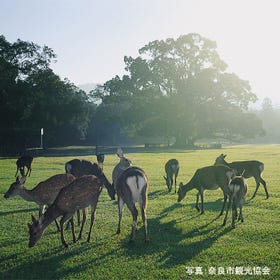
Nara Park’s playful deer under the cherry blossoms
Nara Park is located at the foot of Mt. Wakakusa, adjacent to historical cultural heritage sites such as the Great Buddha of Todaiji Temple, Kasuga Taisha Shrine, and Kofukuji Temple.
Famous for its 1,300 wild sika deer, the park is one of Japan’s top tourist destinations – and a gorgeous site for Nara cherry blossoms. With a total area of 511 hectares, most of the vast site is wooded, but about 1,700 cherry trees grow in the open areas, and the park has been selected as one of Japan’s 100 Best Cherry Blossom Spots.

Small and elegant Naranokokono Ezakura
With about 800 in total, nearly half of the trees are of the Yaezakura variety. There are also early-blooming Higanzakura and Yamazakura, as well as varieties unique to Nara Prefecture like Nara no Yaezakura, which is the city emblem of Nara City, and Nara no Kokono Ezakura (Nara Kuju Sakura).
Nara no Kokono Ezakura are densely populated in Chayama-enchi at the foot of Mt. Wakakusa. The area is carpeted in petals immediately after full bloom and is a popular destination for cherry blossom connoisseurs.
The rare light green Gyoiko Sakura blossoms of Nara Kasugano International Forum IRAKA located in the southeast corner of the garden are a must-see.

The current park took shape in 1881
One of Nara Park’s other highlights is the area around Sagi-ike Pond and the Ukimido gazebo. The cherry blossoms dye the pond pink, making it a romantic spot. Lit up every year, it’s even more fantastic at night.
2025 Cherry Blossom Information
- Forecast flowering: April 2 / Peak bloom: April 10 (For yaezakura: flowering around April 31 / peak bloom around April 27)
- Official website
-

-
Address
The area covering Kasugano-cho, Zoshin-cho, Takabatake-cho, and Noborioji-cho in Nara, Nara, 630-0000
View Map
-
Nearest Station
Kintetsunara Station (Kintetsu-nara Line)
5 minutes on foot
-
Phone Number
0742-22-0375
-
Address
2. Sahogawa Riverbed: Row of Nara cherry blossom trees planted by a local magistrate

The Saho River, mentioned in the Manyoshu
One of the Yamato River’s tributaries, the Saho River flows through Nara City and is joined by the Akishino River near Yamatokoriyama City before flowing into the Yamato River itself.
Loved since ancient times, many songs about the Saho River are included in the Manyoshu, the oldest existing collection of Japanese poems called waka.
Along both riverbanks, both banks, 5 kilometers of cherry blossom trees continue uninterrupted, making it one of the most famous viewing spots for Nara cherry blossoms.

When in full bloom, the flowers dye the surface of the river pink
According to one theory, the row of trees was planted when Toshiakira Kawaji, a magistrate at the end of the Edo Period, sought to improve Nara’s scenery. Since Somei Yoshino cherry trees have a short lifespan, the original trees have been replaced many times.
Still, some older trees are said to have lived for 170 years, and the local residents carefully preserve these trees known as “Kawaji sakura.” While they aren’t specifically marked, they can be identified at a glance, so it’s fun to look for them when you visit.

The row of cherry blossom trees carefully tended by local residents is worth a visit
Most visitors stop near Kintetsu Nara Station, where lanterns light up the blossoms during the Sakura Festival, making the season even more lively.
2025 Saho River / River Cherry Blossom Festival
- Venue: Between Shimocho Keibashi and JR Sahogawa Railway Bridge
- When: End of March – early April; Night light up from sunset – 8 PM
- Admission: Free
- Forecast flowering: April 2 / Peak bloom: April 10
-
Sahogawa Riverbed
佐保川河川敷
-
Address
Horencho, Nara City, Nara 630-8113 -
Nearest Station
5-minute walk from Kintetsu Shin-Omiya Station
・Phone: 0742-22-3900 (Nara City Tourist Center)
-
Address
3. Yamato-Koriyama Castle Ruins: See the Gotenzakura from the castle tower

You can see the cherry blossoms in bloom around the castle ruins from the castle tower observatory
Yamatokoriyama City is a castle town adjacent to southwest Nara City. Yamato-Koriyama Castle was reportedly built in the Middle Ages by Akechi Mitsuhide and Todo Takatora and based on the administrative offices of the late Heian period (around the latter half of the 12th century).
It has been selected as one of the “Continued Top 100 Japanese Castles” and “100 Best Cherry Blossom Spots in Japan” and currently exists as “Yamato-Koriyama Castle Ruins Park.”

The wonderful synergy of stone walls and cherry blossoms
When Toyotomi Hideyoshi’s younger brother, Toyotomi Hidenaga, became the castle’s owner, he expanded it by converting tombstones and Buddha statues for use in the walls. This rough “nozura” stone wall remains to this day, and its visible upside-down Buddha face has become a tourist attraction known as “Sakasa Jizo.”
Approximately 800 cherry trees, called “Gotenzakura,” have been planted around the water-filled moat. The petals fall on the moat’s surface, creating a “flower raft” that’s also one of the castle’s springtime attractions. The Yamato-Koriyama Castle Festival is held as these Nara cherry blossoms come into bloom and includes parades of armor-wearing participants.

At night, you can enjoy the fantastic cherry blossoms illuminated by the light of Bonbori lanterns
2025 Yamato-Koriyama Castle Festival
- Venue: Around the castle tower, etc.
- When: end of March – early April (*Jidai procession and events, as well as cherry blossom lighting are also planned)
- Inquiries: 0743-53-1151 (Yamatokoriyama City Hall, Regional Promotion Division, Tourism Strategy Office)
- Forecast flowering: March 31 / Peak bloom: April 7
- Official website
-
Yamato-Koriyama Castle Ruins
郡山城跡公園
-
Address
Jonaicho, Yamatokoriyama-shi, Nara 639-1011 -
Nearest Station
7-minute walk from Kintetsu Koriyama Station on the Kintetsu Kashihara Line, or a 15-minute walk from JR Koriyama Station
・Phone: 0743-52-2010 (Yamatokoriyama City Tourism Association)
・Castle admission: Free -
Address
4. Takada Senbonzakura: Often found in top blossom spot rankings

A stunning cherry blossom tunnel that stretches 2.5 kilometers north and south on both banks
The cherry blossoms on the banks of the Takada River, which flows through Yamatotakada City, the site of Senritsudera Temple, were first planted in 1948 by local volunteers.
Known as “Takada Senbonzakura,” it has become one of the most visited Nara cherry blossom destinations. Along a 2.5 kilometer stretch, about 1,200 Yoshino, Yamazakura, Itohigan, Itozakura, and Yaezakura cherry trees bloom each spring.

The combination of trains and cherry blossoms is a beloved sight
Relatively easy to get to, 70-year-old trees have beautiful branches and the blossoms that decorate the gentle banks of the Takada River center around Onaka Park, always drawing a crowd.
Bonbori lanterns, lit at dusk, are also part of the show and attract nightly visitors to witness the fantastic illuminated cherry blossoms.

The number of cherry blossoms and the length of the row of trees are overwhelming! The branches are also wonderful!
2025 Folk Songs, Dance, and Outdoor Tea Ceremony Festival
- Venue: Onaka Park, Yamatotakada City, Nara Prefecture, around Takada River
- When: Early April (Illumination from 6:30 PM to 9 PM during the blooming period)
- Phone: 0745-22-1101 (Yamatotakada City Industrial Promotion Division)
- Forecast flowering: April 1 / Peak bloom: April 8
- Official website
-
Takada Senbon Sakura
高田千本桜
-
Address
183, Onaka, Yamatotakada Shi, Nara, 635-0095 -
Nearest Station
10-minute walk from Kintetsu Takadashi Station, a 13-minute walk from Kintetsu Yamatotakada Station, or a 13-minute walk from JR Takada Station
-
Phone Number
0745-22-1101
・Admission: Free
-
Address
5. Ishibutai Kofun: A postcard-like scene! Nara cherry blossoms add color to the huge tumulus

Built in the 6th century, Ishimuro Kofun was constructed by stacking 30 megaliths
The Ishibutai Kofun is a burial mound from the late Kofun period (around the 7th century) in Asuka, in Nara’s Takaichi District. Due to the collapse of the horizontal upper portion of the stone chamber and its appearance, the kofun is referred to as a “stone stage.”
The chamber is 19.1 meters long, with the entrance chamber (housing the casket) measuring about 4.7 meters high, 3.5 meters wide, and 7.6 meters deep. The total weight of the massive stones is estimated to be 2,300 tons.

The combination of Nanohana and cherry blossoms is one of the area’s highlights
The area around Ishibutai Kofun is now a park. When about 60 Yoshino cherry trees bloom around the stone stage, they are lit up, giving Asuka’s ancient historical site a surreal atmosphere.

The stone stage looks like a reclining body surrounded by a beautiful cherry blossom landscape
2025 Ishibutai Kofun Cherry Blossoms
-


-
Address
254, Shimasho, Asuka-mura, Takaichi-gun, Nara, 634-0112
View Map
-
Nearest Station
Kashiharajingumae Station (Kintetsu Minami-Osaka Line / Kintetsu-kashihara Line / Kintetsu-yoshino Line)
27 minutes by bus
-
Phone Number
0744-54-4577
-
Address
6. Buzan Kagurain Hasedera: The Flower Temple that heals the heart

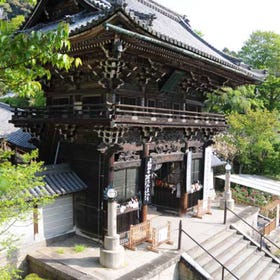
The courtyard blossoms as seen from the main hall are truly spectacular!
Buzan Kagurain Hasedera is located on the side of Mt. Hase, which is close to the Hase-kaido road that connects Nara and Mie prefectures. Hasedera, surrounded by lush forests, and Mt. Hase have long been known as the “Land of Misogi” as a place of purification.
Said to have been founded in 686, the famous temple appears in The Pillow Book, The Tale of Genji, and Konjaku Monogatari.

The beauty of the cherry blossoms when looking up the 399-step stairway is exceptional
Hasedera, which is solemn yet beautiful and peaceful, is also known as the “Flower Temple” because of the many flowers that grow on the grounds throughout the year, including photinia, peony, and lotus.
The temple is beautiful in all seasons but is exceptional in spring. Approximately 1,000 Yoshino, Yamazakura, and Yaezakura trees bloom around Hasedera, as well as especially spectacular Shidarezakura weeping cherry trees.

The famous temple is loved for its flowers
2025 Hase-dera Cherry Blossoms
-
-
Address
731-1 Hatsuse, Sakurai City, Nara Prefecture, 633-0112
View Map
-
Nearest Station
Hasedera Station (Kintetsu-osaka Line)
15 minutes on foot
-
Phone Number
0744-47-7001
-
Address
7. Onoji Temple: Two Koito Shidarezakura over 300 years old

A must-see for the rare 300-year-old weeping cherry trees
Located along the Uda River that runs through Uda City, Onoji Temple is associated with the Shingon sect’s Murouji Temple, which was famous for allowing women to enter, unlike other Shingon temples like those on Mt. Koya.
After passing through the main gate, you’ll see the temple’s two rare Koito Shidarezakura trees, which are about 300 years old. Also, ten more splendid weeping cherry trees decorate the temple precincts.

Early- and late-blooming trees blossom in sequence, so you can enjoy an extended viewing period

Koito-shidarezakura and Beni-shidarezakura paint the temple grounds
2025 Onoji Cherry Blossom Festival
- Venue: Onoji Temple grounds
- When: Early to mid-April (Illumination is from sunset to around 9 PM)
- Admission: Standard admission fee applies
- Inquiries: 0745-82-2457 (Uda City Commerce and Tourism Division)
- Forecast flowering: Around April 1 / Peak bloom: April 8
- Official website
-
Onoji Temple
大野寺
-
Address
1680 Muro Ono, Uda-shi, Nara 633-0315 -
Nearest Station
5-minute walk from Muroguchiono Station on the Kintetsu Osaka line
-
Phone Number
0745-92-2220
・Hours: 8 AM – 5 PM
・Admission: 300 yen
・Closed: Open daily -
Address
8. Hongo’s Matabei Sakura: A cherry tree connected to the Sengoku warlords

One of Japan’s most majestic cherry trees, Matabei Sakura
Matabei-zakura in Uda City’s Oudahongo district is one of Japan’s most famous cherry trees. Encircled by a stone wall, the giant tree’s branches spread out majestically, with the surrounding trees and flowers completing the picturesque scene.
A member of the Edohigan species, it’s approximately 300 years old, and has a height of 13 meters and a trunk circumference of 3 meters. It is named “Matabei-zakura” because it is said to grow on the site of Sengoku warlord Matabei Goto’s residence during the siege of Osaka.

The tree’s stunning branches, paired with peach blossoms
According to legend, Matabei lived here among the peaceful cherry blossoms, but considering the date of his death and the age of Matabei-zakura, the tree had to have been planted after his passing. However, its splendid appearance is still reminiscent of the legendary warrior.

Matabei Sakura fascinates visitors
2025 Matabei Sakura Festival
- Venue: Around the Matabei Sakura tree
- When: Cherry blossom season (Local store hours vary)
- Admission: Free (voluntary maintenance donation of 100 yen)
- Forecast flowering: Around April 1 / Peak bloom: April 8
-
Matabei-Zakura
又兵衛桜
-
Address
Oudahongo, Uda-shi, Nara-ken 633-2156 -
Nearest Station
From Kintetsu Haibara Station, take the bus bound for Ōuda and get off at the Ōuda Kōkō-mae bus stop. From there, it’s a 15-minute walk.
・Phone: 0745-82-2457 (Uda City Commerce and Tourism Division)
-
Address
9. Mount Yoshino / Shimosenbon: “Ichimoku Senbon” Yamazakura that cover the world heritage mountain

Amazing view: 30,000 trees of 200 varieties
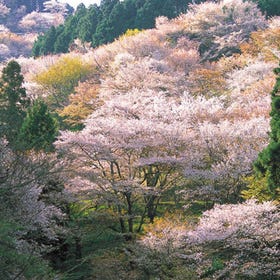
The cherry blossoms on Mt. Yoshino are referred to as “Ichimoku Senbon,” because visitors can see 1,000 cherry blossom trees in full bloom in a single glance.
Because there are so many trees scattered across Mt. Yoshino’s slopes, they’re divided into four areas: Shimosenbon (“lower thousand” at the foot of the mountain), Nakasenbon (“middle thousand”), Kamisenbon (“upper thousand” near the summit), and Okusenbon (“inner thousand” leading to Mt. Sanjogatake).

The cherry blossoms bloom in sequence, beginning with the “lower thousand” trees
The flowers of the lowest altitude Shimosenbon bloom from the beginning of April until the end of the month. Visitors can take in the panorama of a thousand cherry trees from the Nanamagarizaka slope and the Shimosenbon observatory, making it a popular cherry blossom viewing spot.
At night, the mesmerizing view is lit up for further enjoyment. Shimosenbon has long been known as the section of Mt. Yoshino with the most cherry blossoms.

The Yoshinoyama Ropeway leading to Shimosenbon is within walking distance of Yoshinoyama Station
2025 Mount Yoshino Cherry Blossoms
-
Mount Yoshino (Shimosenbon)
吉野山(下千本)
-
Address
Yoshinoyama, Yoshino-cho, Yoshino-gun, Nara-ken 639-3115 -
Nearest Station
Kintetsu Yoshino Line Yoshino Station to Yoshinoyama Ropeway Yoshinoyama Station
・Phone: 0746-34-2522 (Yoshino Visitors Bureau)
・Admission: Free -
Address
-
-
Address
Yoshinoyama, Yoshino-cho, Yoshino-gun, Nara, 639-3115
View Map
-
Nearest Station
Yoshino Station (Kintetsu-yoshino Line)
-
Phone Number
0746-39-9237
-
Address
10. Mount Yoshino / Nakasenbon: Gorgeous view of one of the best cherry blossom viewing spots in Japan!

Mt. Yoshino awash with various shades of cherry blossoms. A superb view you must see at least once.
There are countless wonderous cherry blossom viewing spots all over Japan, but if you had to choose only one to visit, you couldn’t exclude Mt. Yoshino.
Approximately 200 species and 30,000 cherry trees, mainly Yamazakura, cover the mountain, and during cherry blossom season, the flowers spread like waves from the foot to the summit with overwhelming, magical beauty.

Overlooking Kinpusenji Temple, the main temple of the Shugendo religion, which is registered as a UNESCO World Heritage Site
Why are there so many cherry blossoms on Mt. Yoshino? After a thousand days of penance on Mt. Kinpusen En no Gyoja, the founder of Shugendo, realized the doctrine of Kongo Zao Gongen, which was said to have been carved into a cherry tree, which, in turn, became a sacred tree.
With roots in this legend, the number of cherry trees on Mt. Yoshino grew as Shugendo trainees and adherents continued to plant trees on the mountain. It’s no exaggeration to say that the magnificent view has been created by the heartfelt Japanese faith in nature.
In the Nakasenbon area, the trees look like a waterfall flowing along the ridge, creating one of the best vistas.

The magnificent view of Mt. Yoshino covered with cherry blossoms
-
Mt. Yoshino (Nakasenbon)
吉野山(中千本)
-
Address
Yoshinoyama, Yoshino-cho Yoshino-gun, Nara 639-3115 -
Nearest Station
20 minutes by seasonal bus from Yoshino Station on the Kintetsu Yoshino Line to Nakasenbon Park bus stop
・Phone: 0746-34-2522 (Yoshino Visitors Bureau)
・Admission: Free -
Address
-
-
Address
Yoshinoyama, Yoshino-cho, Yoshino-gun, Nara, 639-3115
View Map
-
Nearest Station
Yoshino Station (Kintetsu-yoshino Line)
-
Phone Number
0746-39-9237
-
Address
Nara has plenty of unique points of interest in a prefecture where the history of Japan lives on. One of the key attractions is the opportunity to see many types of cherry blossoms throughout the season, each with a distinct appearance, making Nara an excellent destination for your cherry blossom viewing tour.
Text by Click. Translated by Gabriel Wilkinson.
*This article was originally produced in March 2020 and updated in February 2025. Cherry blossom blooming time, event schedule and details are subject to change.
*This information is from the time of this article’s publication.
*Prices and options mentioned are subject to change.
*Unless stated otherwise, all prices include tax.