
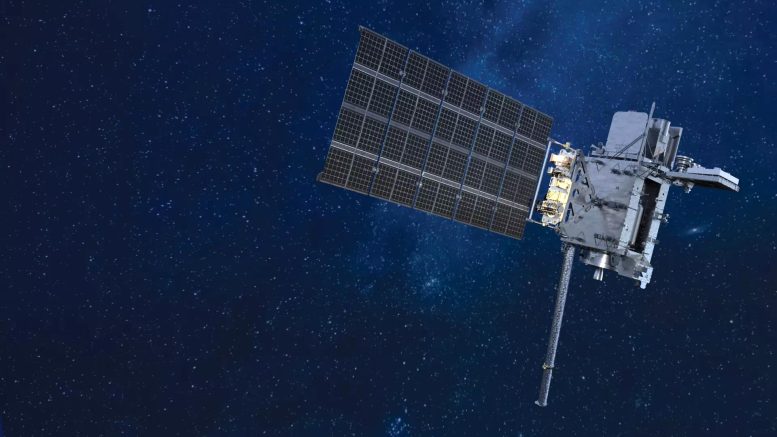
NOAA’s GOES-U is the fourth and final satellite in the Geostationary Operational Environmental Satellites (GOES) – R Series, the Western Hemisphere’s most sophisticated weather-observing and environmental monitoring system. The GOES-R Series provides advanced imagery and atmospheric measurements, real-time mapping of lightning activity, and space weather observations. Credit: NASA
The Geostationary Operational Environmental Satellite U (GOES-U) is set for launch on a 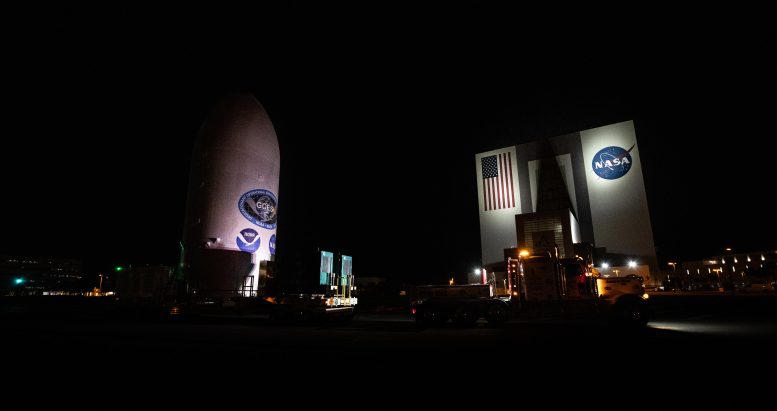
Crews transport NOAA’s (National Oceanic and Atmospheric Administration) Geostationary Operational Environmental Satellite (GOES-U) from the Astrotech Space Operations facility to the SpaceX hangar at Launch Complex 39A at NASA’s Kennedy Space Center in Florida beginning on Friday, June 14, 2024, with the operation finishing early Saturday, June 15, 2024. Credit: NASA/Ben Smegelsky
Launch Preparations for GOES-U Satellite
The Geostationary Operational Environmental Satellite U (GOES-U) has now passed several important milestones ahead of its upcoming launch aboard a SpaceX Falcon Heavy rocket from Launch Complex 39A at NASA’s Kennedy Space Center in Florida.
Technicians at Astrotech Space Operations facility in Titusville, Florida lifted the National Oceanic and Atmospheric Administration’s (NOAA) GOES-U satellite onto the payload adapter and the payload attach fitting on June 10, enabling GOES-U to securely attach to the top of its Falcon Heavy rocket.
Satellite Integration and Fueling
This milestone follows recent fueling operations where teams loaded over 5,000 pounds of hypergolic propellant and oxidizer into the satellite, which will be used to provide it with thrust in orbit. The GOES-U satellite now weighs a total of 10,956 pounds.
Teams next encapsulated the 20-foot-tall satellite inside two payload fairing halves in preparation for connecting it to the rocket on June 13.
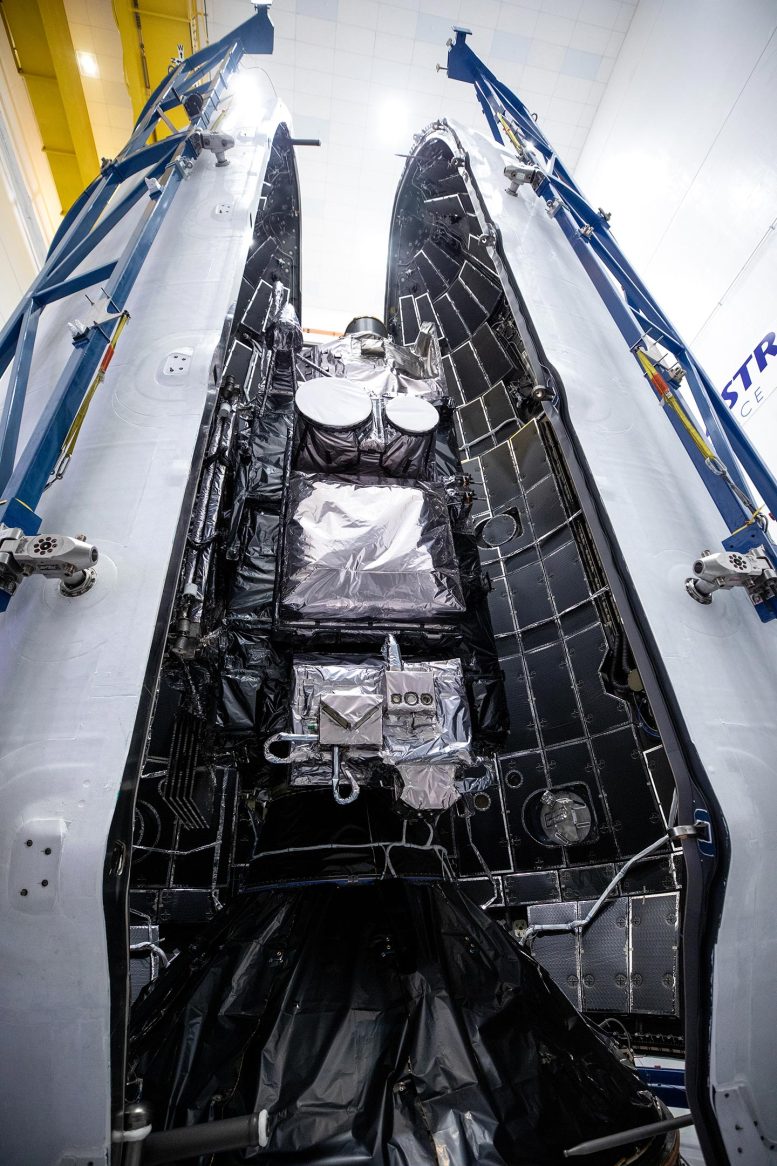
Technicians prepare NOAA’s GOES-U for encapsulation inside payload fairing halves on Thursday, June 13, 2024, at the Astrotech Space Operations facility in Titusville near NASA’s Kennedy Space Center in Florida. Credit: NASA/Ben Smegelsky
Final Pre-Launch Procedures
During the ascent phase of the launch, the fairing halves will protect GOES-U from aerodynamic pressure and heating. Once GOES-U no longer requires this protection, approximately four minutes after liftoff, the halves will be jettisoned and return to Earth, where SpaceX crews will recover them for use on future missions.
After encapsulation, workers transported the spacecraft from Astrotech’s facility to NASA Kennedy and SpaceX’s hangar at the spaceport’s Launch Complex 39A, on June 15.
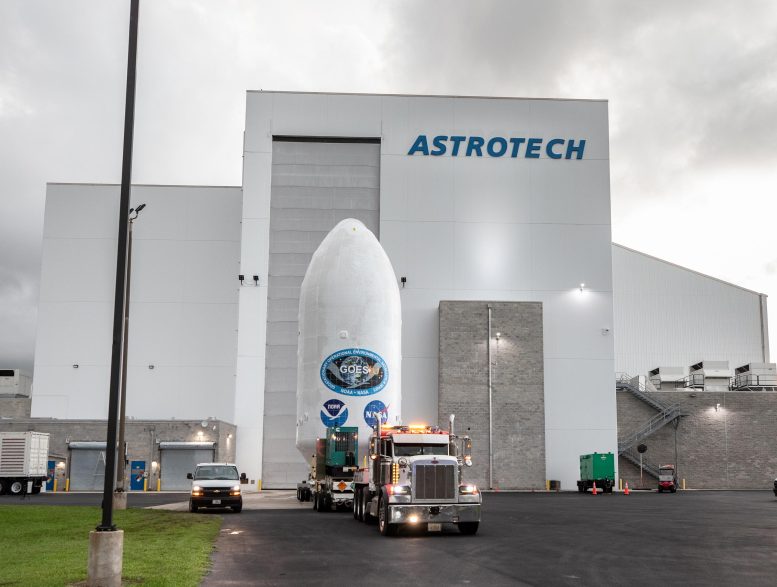
Crews transport NOAA’s GOES-U from the Astrotech Space Operations facility to the SpaceX hangar at Launch Complex 39A at NASA’s Kennedy Space Center in Florida beginning on Friday, June 14, 2024, with the operation finishing early Saturday, June 15, 2024. Credit: NASA/Ben Smegelsky
Launch Schedule and Mission Objectives
The next mission milestone includes connecting the encapsulated GOES-U to the SpaceX Falcon Heavy rocket ahead of rolling the stack out to the launch pad.
NASA is targeting a two-hour window opening at 5:16 p.m.