









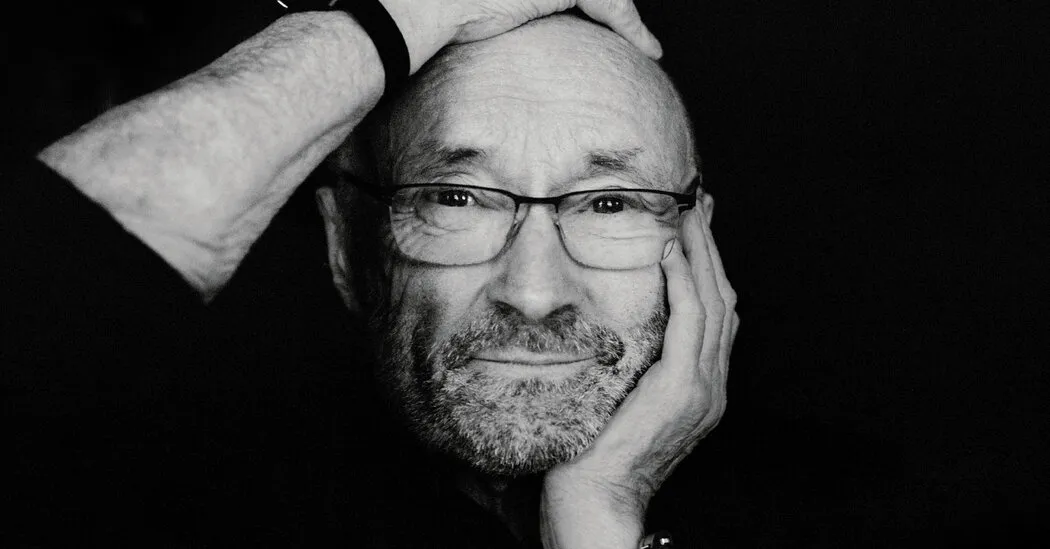
Phil Collins to be Inducted into Rock & Roll Hall of Fame for Solo Work
Phil Collins, the renowned English drummer, songwriter, and former frontman of Genesis, has described himself as feeling “lucky.” Over a multifaceted career, he has transformed from a child actor to a progressive rock pioneer, a skilled producer, and a revered pop icon. However, his journey has not been without personal trials, including three divorces, struggles with alcoholism, and public criticism.
On November 14, at the age of 75, Collins will be honored with his second induction into the Rock & Roll Hall of Fame—his first was as part of Genesis in 2010. This recognition centers on his remarkable solo achievements, affirming his lasting impact on the music industry. Although his performing days may be behind him, Collins is seizing this moment to reflect on his extensive legacy.
A Surprising Recognition
In a recent interview at his Manhattan residence, surrounded by family photographs and mementos of his past successes, Collins expressed surprise at the news of his nomination. “I didn’t go looking to see who was nominated this year, so I was quite surprised when I heard I was up for induction,” he remarked. “It’s just a pat on the back, you know. If it wasn’t there, I wouldn’t be craving it.” He added, “But it is there, and I’m very, very pleased.”
A Career of Triumphs and Struggles
By the late 1980s, Collins had become a ubiquitous figure in music, with his songs frequently played across radio stations. Despite some dismissing his work as mere “easy listening,” the emotional and rhythmic complexity of his music has continually resonated with audiences. Over his career, Collins has sold more than 100 million albums as a solo artist and an additional 100 million with Genesis. In 2022, he and the band reportedly sold their catalog for an impressive $300 million. Collins’s accolades include eight Grammy Awards and an Academy Award for the song “You’ll Be in My Heart” from Disney’s “Tarzan.”
Life Influencing Art
Collins’s most compelling songs often emerge from tumultuous periods in his life. “I’ve always been… I won’t say a sensitive soul, but I’ve always worn my heart on my sleeve,” he explained. Each album serves as a chapter encapsulating significant moments in his life. His first two solo projects, “Face Value” and “Hello, I Must Be Going!” reflected the emotional aftermath of his initial divorce, while his 1993 album “Both Sides” addressed the turmoil surrounding his second marriage, affected by an affair that reunited him with a former girlfriend.
Physical Challenges
Years of intense performances took a toll on Collins’s health. He has shared that the frequent use of corticosteroids and physical strain has left him with significant mobility issues. Currently, Collins navigates with the aid of a walker, noting, “Everything that could go wrong, did—all at the wrong time.” His sporadic public appearances in recent years are due, in large part, to a series of serious medical challenges, leading him to indicate that he may never perform again, saying, “I’m not match-fit.”
An Early Start in Music
Collins’s musical journey began in childhood. At just five years old, he received a makeshift drum kit crafted from household items. With limited formal music training, he developed a unique style of playing that can be attributed to his self-taught background. Reflecting on his unconventional approach, he stated, “Sometimes if you don’t know the rules, you don’t know if you’re breaking them.”
From Drummer to Frontman
Collins began his professional career as a child actor, notably portraying the Artful Dodger in the West End production of “Oliver!” He joined Genesis in 1970, where his drumming and compositional skills contributed significantly to the band’s innovative sound. When Peter Gabriel departed from the band in 1975, Collins stepped into the lead vocalist role, a position that initially intimidated him but ultimately led to monumental success.
Expanding Horizons
As the creative force behind Genesis, Collins helped transition the band from progressive rock depths to mainstream appeal, performing in stadiums worldwide. However, he maintained an active schedule, participating in various side projects and collaborations alongside legends like Eric Clapton and Brian Eno, often at the cost of his personal relationships.
Reflections on Balance
Collins’s demanding career strained his first marriage, leading to its eventual breakdown. In 1981, he channeled his emotional turmoil into his debut solo album, “Face Value,” describing it as an improvised exploration rather than a traditional album. He noted, “It wasn’t even an album… it was just me trying to get the equipment to work.”
Despite its raw quality, “Face Value” featured the iconic hit “In the Air Tonight,” which became a hallmark of 1980s rock music. Its innovative production elements, particularly the signature drum sound, have had a lasting influence, being sampled in various contexts, including popular films and music.
Legacy and Future
Collins’s output continued throughout the late 1990s and early 2000s with albums reflecting themes of personal struggles and relationships. Although he announced his retirement in 2004, he later returned to perform with Genesis in 2007 and 2021. Unfortunately, ongoing health issues and alcohol struggles impacted his ability to perform.
Now, with renewed recognition stemming from the Hall of Fame induction, Collins faces questions about the potential for new music. He mentioned having a fully equipped studio at home, emphasizing that he is not yet ready to completely turn away from his passion for music. “I will get down there,” he confirmed gratefully.









Discussion about this post