
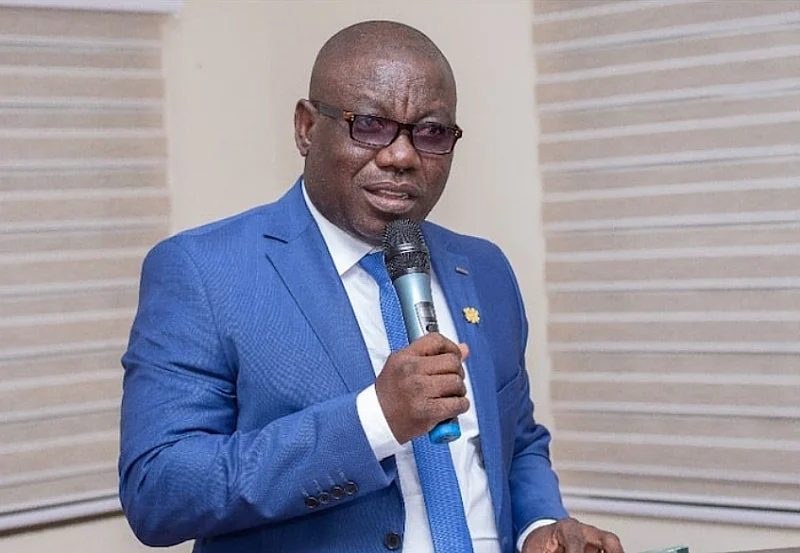
Ghana risks weakening one of its key petroleum revenue watchdogs if steps are not taken to secure its funding by law, the Chairman of Parliament’s Select Committee on Finance, Isaac Adongo, has warned.
He said the Public Interest and Accountability Committee (PIAC) had played a critical role in ensuring that the country’s oil revenues were properly accounted for and used for their intended purposes.
Mr Adongo made the remarks in Accra at the launch of PIAC’s 15th anniversary celebrations.
He said PIAC’s funding challenge had become a concern following reforms to the management of petroleum revenues, including the abolition of the Annual Budget Funding Amount (ABFA).
Mr Adongo explained that PIAC previously depended on a percentage of the ABFA to finance its operations. With the ABFA now directed towards the Big Push programme, he said, the committee had lost an important source of funding.
He, therefore, called for a new funding arrangement backed by legislation to guarantee the resources required for PIAC to operate effectively.
“There must be a legislative anchor,” he underlined, stressing that PIAC should not depend solely on the goodwill of a particular Finance Minister.
Mr Adongo also cautioned against weakening Ghana’s oil savings for future generations, saying the country had spent too much of its petroleum revenue on immediate needs instead of building its sovereign wealth.
He cited Norway as an example of a country that had deliberately saved a significant portion of its oil wealth for future generations.
He urged parliament and the government to exercise caution in reviewing the Ghana Heritage Fund, warning that politicians could be tempted to spend the money on immediate needs.
Mr Adongo said any review should protect the purpose of the fund and ensure that future generations benefited from the country’s oil resources.
He congratulated PIAC on its work over the past 15 years, saying the committee had helped parliament and other institutions to demand greater accountability in the management of petroleum revenues.
The Chairman of PIAC, Mr Richard Ellimah, indicated that the anniversary marked the committee’s journey since its establishment in 2011.
He explained that PIAC was established under the Petroleum Revenue Management Act, 2011 (Act 815), to monitor compliance with the law, provide a platform for public debate and independently assess the management and use of petroleum revenues.
Mr Ellimah said PIAC had, over the years, produced statutory reports, inspected projects, engaged communities and organised public forums across the country.
He again mentioned that those activities had contributed to strengthening transparency and accountability in the management of Ghana’s petroleum revenues.
The anniversary was held under the theme: ‘Advancing Resource Governance through Transparency and Accountability for a Sustainable Economy.’
Mr Ellimah urged citizens and the media to continue demanding information and asking questions about the use of petroleum revenues.
He said the management of the country’s natural resources was a shared responsibility involving the government, parliament, civil society, the media, traditional authorities, development partners and citizens.
BY AGNES OPOKU SARPONG
Follow our WhatsApp Channel now! https://whatsapp.com/channel/0029VbAjG7g3gvWajUAEX12Q


Discussion about this post