
It is a trip more than 50 years in the making.
Two New Zealand frigates were sent to the Pacific to observe and protest French nuclear testing at Mururoa Atoll in 1973, exposing 500 sailors to radiation.
One of the frigates – the HMNZS Canterbury – was invited to Rarotonga on the way back, but the ship’s captain decided to head home.
Nineteen veterans who witnessed the tests are now finally heading to the Cook Islands for one last tour of duty together.
A nuclear explosion at Mururoa atoll in 1971, France stopped atmospheric testing in the Pacific in 1974. Photo credit:AFP
AFP
‘It was like a desert up there’
Prime Minister Norman Kirk farewelled HMNZS Otago before it headed to the Pacific to bear witness to the atmospheric testing.
HMNZS Canterbury was redirected from Honolulu for the same reason and in late July 1973 its crew saw a French test, from about 30 kilometres away.
Ant Kennedy – who turned 20 during the trip – remembers the sound.
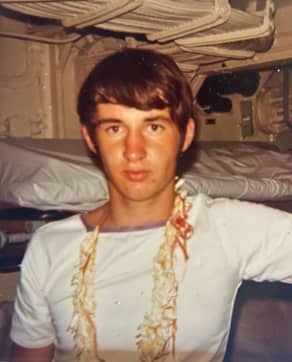
Ant Kennedy got married before the Canterbury headed to the Pacific.
Supplied
“I got up there just as the cloud was melting away, as it were, but apparently it wasn’t quite as well formed as the Otago explosion,” he told RNZ from his home in Whataroa on the West Coast.
“And I thought perhaps something might have gone wrong with the test.””
Like many, he did not appreciate the risks of what they were exposed to.
“At the time, the thing that stood out for me was it was a bit like a desert up there.
“There was no birds. Usually you’ll see some sort of fish life, but there was none, so it was a really bleak place.
“I often thought afterwards, ‘There’s a reason for that. There’s some reason for there being no bird life or sea life around it’.”
Christchurch man Paddy Long – now known for his steel guitar playing – was also among the crew who viewed the test from the Canterbury’s helicopter deck.
“We didn’t actually have much in the way of protection at all for the whole trip, other than a little, what they called, a dosimeter,
“This was, in essence, a little blue plastic disk with a little litmus paper in it pinned to my shorts and, supposedly, if that was to change colour we should all get below deck fairly quickly.”
Radiation alarm turned off
Radio mechanic Steve Aldridge was aware of the risks of radiation and said the Canterbury itself offered its crew protection, if warnings were acted on.
He remembers one occasion where they were not.
“We were having a BBQ on the flight deck – 44-gallon drums cut in half that they could BBQ on and a few beers, and a few rums.
“I got called to the bridge because an alarm was going off. It was a radiation alarm.”
But there was no concern from his superiors, Aldridge said.
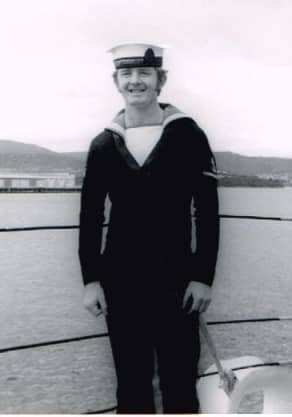
Paddy Long during the 1973 deployment.
Supplied
“I said to the officer watch, ‘I think you should clear the upper deck’. And he said, ‘I’ll make decisions like that. Just stop that noise. I can’t hear myself think.’
“I said, ‘Well, sir, to stop it, I’m going to have to disconnect the battery and disconnect the power supply to it. You’d better give me a direct order because I don’t think I should do that’.”
Aldridge – who lives in Auckland – thinks that given the timing, the Canterbury was sailing through fallout from the test the Otago witnessed.
The trip has had consequences for many down the years, including Long, who have battled cancers.
“I have had quite a long history with skin cancers. But, a lot of people have had a lot worse than that. So I can probably say I’m one of the lucky ones,” Long said.
“I’ve just had another round of having a few bits and pieces surgically removed, but it’s a constant maintenance thing with me. Other than that, I’ve been pretty good.”
Aldridge said a high proportion of his children, with different partners, had autism or related conditions, leading him to think he was the common thread, and the reason was the radiation.
Veterans’ health is covered by the government, but that was not the case for their children and grandchildren.
Kennedy is co-president of the Mururoa Nuclear Veterans Group, which is battling for change there.
Still going strong
For him, the trip away in 1973 has extra special memories from the Canterbury’s time in Honolulu.
“Well, I got married. Yeah, against some advice, but we’re still married today, so it was a good decision.”
It was a whirlwind romance for Kennedy and his wife Stasia. Now, she will accompany him on the six-night visit to Rarotonga leaving on Tuesday.
Kennedy said that had come about because some former sailors have decided to take up the 1973 invitation to visit from then-Cook Islands Prime Minister Sir Albert Henry.
Although, Aldridge remembers the Canterbury maybe was not that welcome, saying while the trip was intended, the Cook Islands decided the vessel was radioactive.
“Otago came back and had a ticker-tape parade. We came back to some stale sandwiches the politicians were all eating in the overseas terminal.”
This year’s visit includes a presentation to the Cook Islands RSA as a thanks for the country’s support in 1973.
It is a trip Long says he can not miss.
“Surprisingly, it’ll be my first trip to Rarotonga. I’ve been to just about every other Pacific Island imaginable, so that’ll be nice.
“It’ll be all a new experience for me in the travelling department. We’ve got a bit of fishing organised and plus that night at the RSA will be quite memorable, I’m sure.
“Other than that, it’ll be about enjoying some warm weather and having a few cold beers with my mates. It’ll be great.”
Long may also get a chance to reminisce on the time he appeared on Radio New Zealand back home, instead of government minister Fraser Colman.
Colman would spent a large part of his day giving interviews from around the world and it was Long’s job to organise the connections.
One night Colman was not feeling great, so disappeared early, leaving Long to put on his best impression to unsuspecting listeners back home.
“I was pretty good at doing accents. Incidentally, when I got out of the navy, I ended up working for Radio New Zealand in Christchurch for about 16 years, but as a network engineer, rather than an announcing job.”
France conducted almost 200 nuclear tests in the area between 1966 and 1996. About a quarter of these were atmospheric.
They have left effects still felt today at Mururoa and Fangataufa atolls, and among the crew members of the Canterbury and Otago.
Discussion about this post