
From the moment that former Chancellor Angela Merkel said her three most famous words, immigration has been stuck firmly at the centre of German politics. This week we’re talking about how the country, and its politics, have since shifted.
Inside Germany is our weekly look at some of the news, talking points and gossip in Germany that you might’ve missed. It’s published each Saturday and members can receive it directly to their inbox by going to their newsletter preferences or adding their email to the sign-up box in this article.
Sunday marks the ten year anniversary of a now legendary statement made by former Chancellor Angela Merkel at the height of what has come to be known as the refugee crisis.
“Wir schaffen das” (‘We can do it’) Merkel said on August 31st, 2015, offering three simple words of encouragement for Germany after it had just become known that some 800,000 refugees were expected to arrive, having been displaced by conflict primarily in Syria and surrounding countries.
Reflecting on the decision to welcome a historic number of asylum seekers – which effectively positioned Germany as the leading destination country for people displaced by conflict at that time – Merkel maintains it was the right thing to do, and that the country’s efforts were largely successful.
“This is a process. But so far we have achieved a lot. And what still needs to be done must continue to be done,” Merkel said in an ARD documentary on the topic.
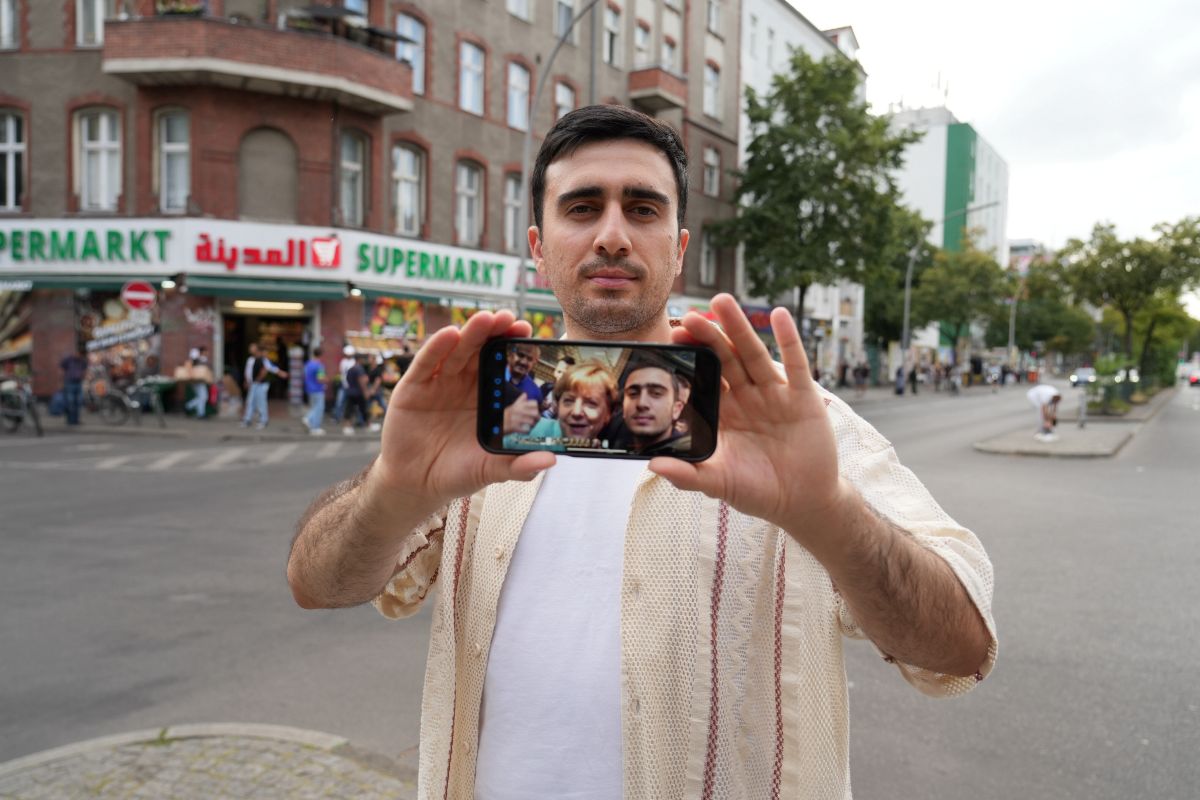
Anas Modamani came to Germany as a refugee in 2015 and took a now famous selfie with Merkel at the time. He now works as a journalist. Photo: picture alliance/dpa | Manuel Genolet
“It was clear to me that this would be something really challenging,” she added, explaining that the now iconic phrase was born out of an effort to convey the scale of the task which she knew the country would face.
Advertisement
Political shift to the right
Surely Merkel had a sense too about the political blowback the decision would bring.
“This has certainly made the AfD stronger,” Merkel admitted in her interview with ARD, but she maintains that her decision was both right and reasonable.
Of course, for the far-right Alternative for Germany (AfD) party and their populist, anti-immigration narratives, the massive influx of foreign refugees was a political goldmine. Years later, the reality that a huge number of those refugees have taken on critical roles – for example in the nation’s hospitals – hasn’t stopped the party from bashing refugees to gain political support.
Arguably more concerning, however, is the change in tone we’ve seen from Merkel’s own conservative party, the Christian Democrats (CDU). After joining the opposition for a few years during the traffic light coalition, the CDU ultimately united behind now Chancellor Friedrich Merz who, along with other leaders of the CDU, and its sister party the CSU, have pushed the party further to the right.
“Migration turnaround” was a buzzword that often came up during the CDU’s campaign ahead of the national election in February, and since then the CDU-led government has made significant efforts to tighten Germany’s borders, block and deport asylum-seekers, and has even taken aim at some policies that specifically benefit highly-integrated immigrants.
Basically, in the past decade the CDU has changed from the party of “we can do it” to the party of “we’re shutting it down”.
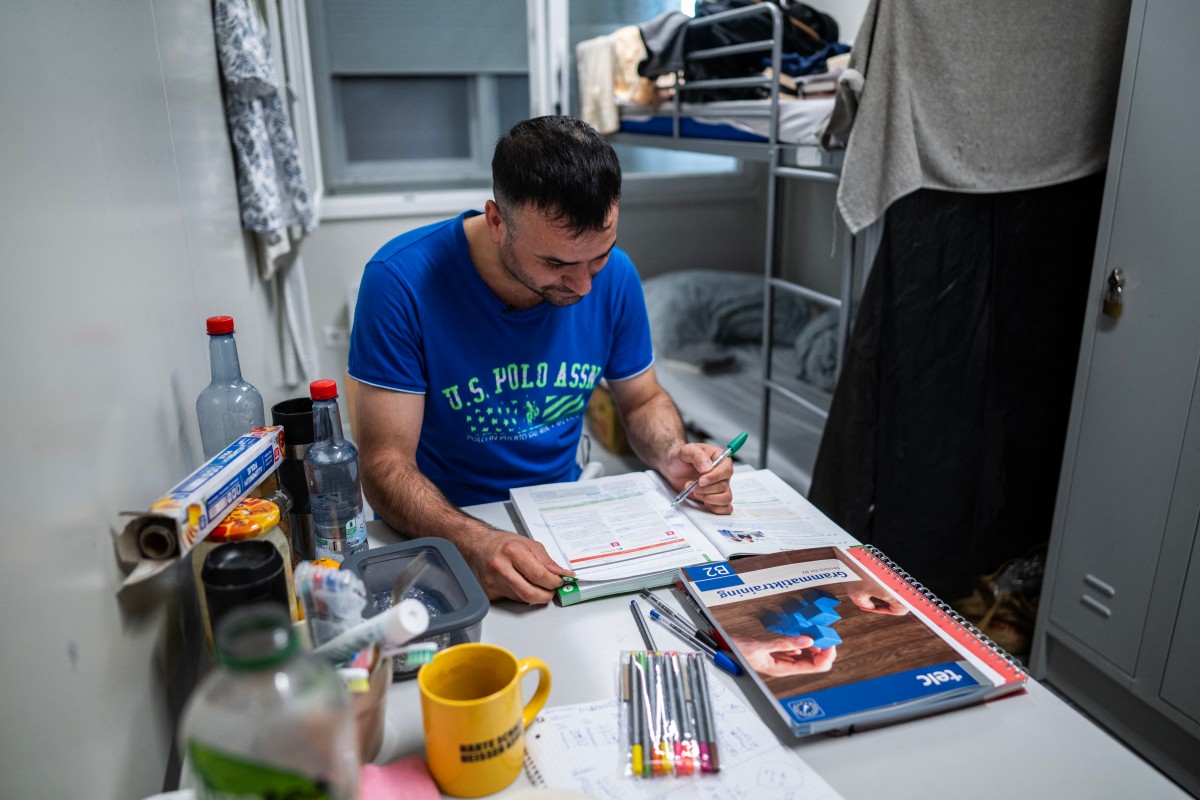
Kurdish resident Faruk Polat, 34, checks his German language workbook in his container in a facility for refugees in Berlin. (Photo by John MACDOUGALL / AFP)
And just to add insult to injury, CDU/CSU leaders appear to be parroting far-right speaking points more and more often. For example this week, in support of continuing efforts to curb migration to Germany, CDU General Secretary Carsten Linnemann suggested that “less than half [of refugees] are now in work”.
To be clear, statements like this tend not to stand up to very basic fact-checking. According to the Institute for Employment Research of the Federal Employment Agency (IAB), 64 percent of the working age refugees who arrived in 2015 were employed last year.
READ ALSO: Did Germany manage to integrate the millions of migrants it took in 10 years ago?
But that doesn’t stop conservative and right-wing leaders from spewing anti-immigration rhetoric to pick up votes from a base that is constantly being told the economy is falling apart and the country can no longer afford to provide the same benefits that the last generation enjoyed.
If Merz and company think they can beat the AfD at their own game…well, numerous recent polls would seem to disagree.
Advertisement
An alternative to the Alternative
You’ve got to wonder why exactly the CDU has apparently decided to turn its back on Merkel-style politics so emphatically.
As a four-term chancellor who kept the CDU in power for 16 years, she is arguably Germany’s most successful politician of the 21st century. Given this, you would think that making an effort to imitate her tone and strategy would be a no-brainer for members of her own party.
To that end, it’s easy to imagine that just a little effort to highlight the ways many refugees contribute to the country could help turn the tide on the political shift to the right. They could at least try to spend a few minutes, every now and then, highlighting all the many ways in which refugees and other immigrants make valuable contributions to Germany – socially, economically, and culturally.
From Vietnamese restaurants to Syrian bakeries, to cultural contributions like Turkish-German hip-hop, movies and music to adding some 730,000 workers to the economy, surely most people in Germany can agree that actually ridding the country of immigrants would be a huge loss.
So why don’t we hear more leaders naming these successes? Even AfD voters enjoy Döner after all.