









Trump’s Influence on NATO: An Opportunity in Disguise
President Donald Trump’s approach to NATO has generated widespread concern, a sentiment likely to persist throughout his remaining tenure. However, scrutiny of Trump’s disruptive methods—rooted in a bipartisan desire to rebalance the defensive responsibilities between the U.S. and Europe—often overlooks the potential advantages for both individual member states and the alliance as a whole.
NATO 3.0: A New Era for Defense
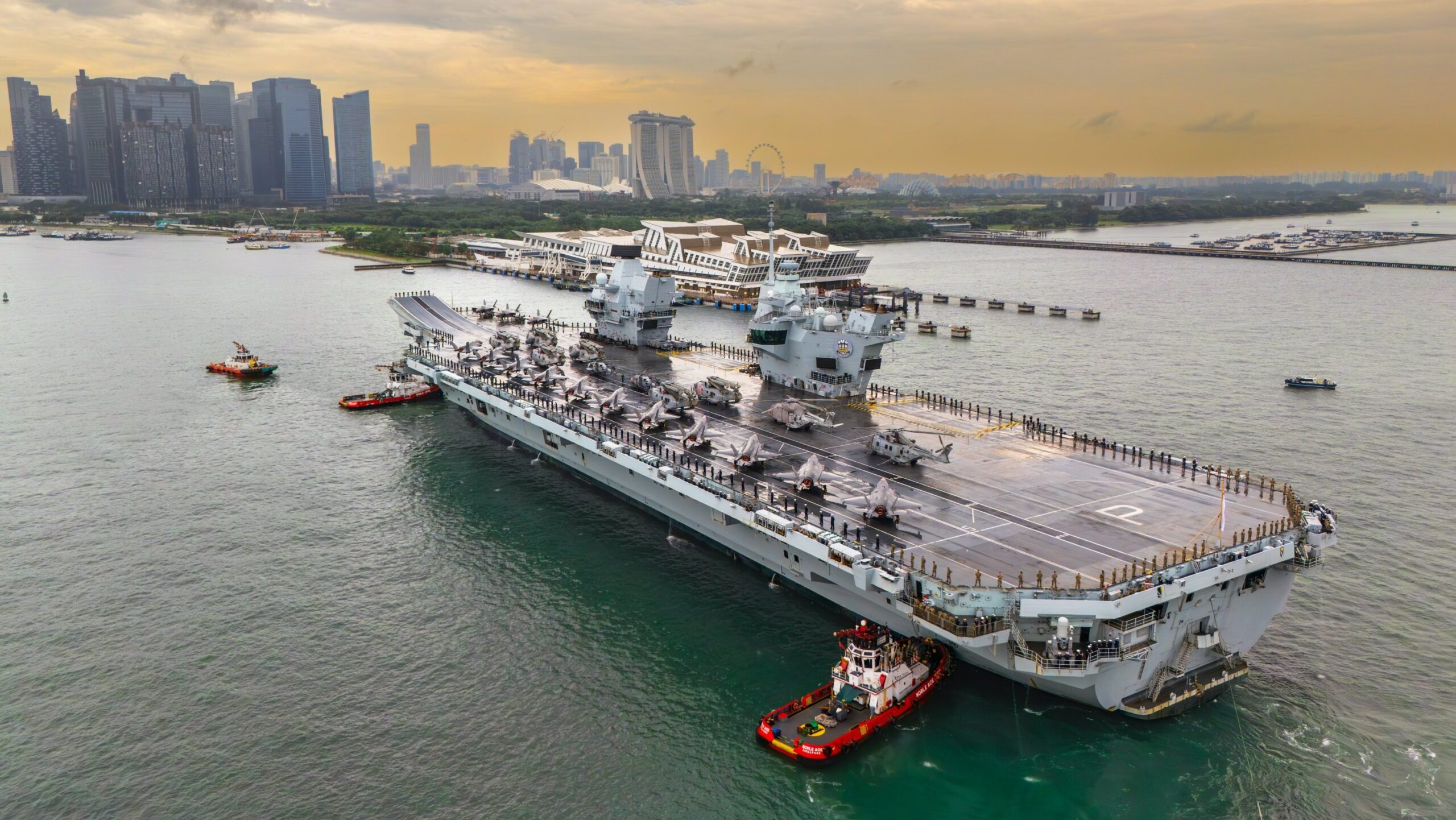
While the transition will be challenging, Trump’s advocacy for a new vision of NATO (termed NATO 3.0) provides an opportunity for countries like the United Kingdom to reassess their defense strategies, particularly regarding maritime operations. My paper, “Reclaiming the Waves,” published by the Prosperity Institute in London, proposes a “maritime-first” approach for the UK. This strategy draws upon the naval doctrines of Sir Julian Corbett from the late 19th and early 20th centuries but is adapted for contemporary needs, emphasizing the importance of naval power in safeguarding key maritime trade routes.
Although the era of empire has passed and the likelihood of a single hegemonic power in Europe seems distant, the strategic principles of the past remain relevant. My revised maritime strategy aligns with ongoing developments within NATO’s European contingent.
British Defense in the Context of NATO
The rationale for a maritime-centric defense strategy hinges on three critical factors: the United Kingdom’s national interests, existing military capabilities, and current resource constraints. While the UK has interests in the Indo-Pacific region, it lacks the necessary resources to maintain a presence in both the Indo-Pacific and Euro-Atlantic theaters. Therefore, a shift toward prioritizing the latter is essential.
In conjunction with NATO 3.0, the United States seeks to redistribute conventional defense responsibilities away from itself and onto European allies. Despite electoral shifts, this trend is likely to continue, as it predates Trump’s presidency.
Responses from European Allies
Over the last two years, European nations have reacted to Trump’s mixed signals regarding defense spending and NATO’s relevance. His contentious remarks directed at nations like Denmark and Norway, as well as his overtures toward Russia, have accelerated Europe’s desire for enhanced defense autonomy—a shift the U.S. has tentatively encouraged, albeit with reservations about European reliance on American military support.
Poland is set to double its military forces, while Germany’s “Responsibility for Europe” initiative aims to cultivate the continent’s strongest military power by 2039. Notably, at the 2025 NATO summit in The Hague, member states (except Spain) committed to increasing core defense spending to 3.5% of GDP and military-related expenditures to 1.5% by 2035.
Rethinking the United Kingdom’s Defense Strategy
The rising defense aspirations of European nations propose a re-examination of individual countries’ military strategies, particularly for the UK. I advocate for a concentrated focus on maritime capabilities, emphasizing the development of credible naval and air power to uphold national interests and provide deterrent options on the European continent.
Given its geographical status as an island nation, Britain must prioritize securing its surrounding waters, where over 40% of its energy resources are imported, and more than 99% of its digital data traverses from across 60 subsea cables. Additionally, 95% of imports and exports are sea-bound, illustrating the critical nature of naval protection. Recent Russian actions targeting underwater infrastructure accentuate this necessity.
Expanding Naval Capabilities
To align with an updated Corbettian notion of “command of the sea,” the UK will need to invest in expanding and modernizing its naval assets. This includes a mix of crewed vessels complemented by uncrewed systems, interconnected through advanced sensor networks. The Common Combat Vessels (CCVs), planned to succeed the Type 45 destroyers, along with the Type 26 anti-submarine warfare frigates, illustrate necessary investment directions. The forthcoming SSN-AUKUS submarines will also play a crucial role.
The UK’s leadership in the $50 billion European deep precision strike initiative will significantly enhance both British and NATO capabilities in long-range targeting. Such advancements allow the UK to project deterrent effects far beyond its shores, which will benefit national security while bolstering economic innovation.
Land Forces and Future Commitments
A maritime-first strategy does not imply an exclusive focus on naval operations. The British Army should leverage NATO 3.0 by developing a credible, sustainable heavy division to meet obligations to NATO before considering additional deployable divisions.
In light of German and Polish military ambitions, which threaten to overwhelm British capabilities with their land forces, it becomes essential for the UK to concentrate its resources on refining a robust maritime strategy. Concerns from partners in the Joint Expeditionary Force indicate the necessity for the UK to affirm its commitments and enhance its readiness.
Seizing the Moment for Strategic Advancement
This maritime-first approach advocates for the development of integrated air and missile defense systems, along with intelligence and reconnaissance capabilities, ensuring both national security and acting as a supportive backbone within NATO. With this shift in burdens among member states, the UK has the opportunity to redefine its defense priorities and investments, establishing a new strategic framework for military readiness.
As NATO evolves, this transformation presents a crucial window for the UK and its allies to fortify not only their collective defense but also their individual national interests.
Joshua C. Huminski is the Senior Vice President for National Security & Intelligence at the Center for the Study of the Presidency & Congress and an International Fellow with the Council on Geostrategy in London. He is currently authoring a book focused on the future of European defense. Follow him on Twitter @joshuachuminski.









Discussion about this post