
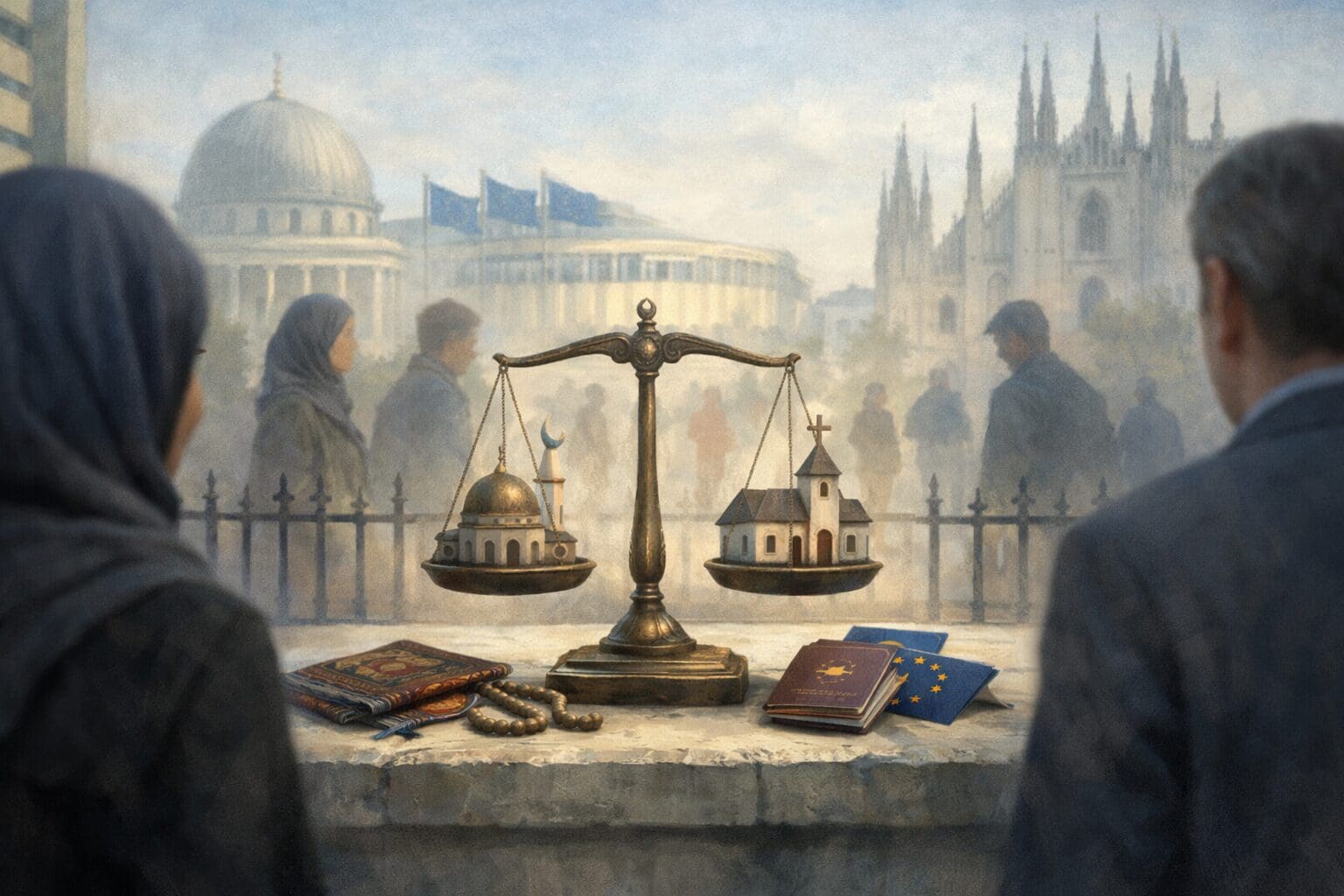
Racism and racial discrimination, xenophobia and related intolerance occur on a daily basis, hindering progress for millions of people around the world. Since the adoption of the Universal Declaration of Human Rights (1948), the International Convention for the Elimination of all forms of Racial Discrimination (1965) and the EU Racial Equality Directive
(2000), the United Nations and EU have made the struggle against racism a matter of priority. Much has been accomplished but much is left to do, especially when the narrative of racism has moved from ethnicity and colour to culture and religion.
Bashy Quraishy
Secretary General – European Muslim Initiative for Social Cohesion – Strasbourg
Thierry Valle
Coordination des Associations et des Particuliers pour la Liberté de Conscience
The International Day for the Elimination of Racial Discrimination, observed annually on 21 March, commemorates the Sharpeville Massacre in 1960, when police in Sharpeville opened fire on a peaceful protest against apartheid pass laws, killing 69 people. Established by the United Nations General Assembly to raise awareness and encourage global action against racism, the observance reflects broader international efforts that have led to important progress, including the dismantling of apartheid in South Africa and the strengthening of global commitments to equality and non-discrimination, principles also affirmed in the Universal Declaration of Human Rights.
In 1979, the General Assembly further strengthened international efforts by launching a programme of activities during the Decade for Action to Combat Racism and Racial Discrimination, encouraging Member States to organize a week of solidarity with peoples fighting racism beginning on 21 March each year.
Despite many achievements, racism continues to affect communities, politics, media, sport, and the digital environment across the world, with rising racist rhetoric, discrimination against migrants and minority groups, and persistent inequalities rooted in historical power imbalances.
The challenges posed by these problems are not new, neither are their solutions. What is needed is action – by governments, institutions, NGO groups, civil society and individuals – all of us.
Volker Türk, United Nations High Commissioner for human rights explained it very neatly; “Galvanising the power of collective action and a global consensus to address racism and racial discrimination is urgent for all of us. The unequivocal demands for change need to be heard and heeded in the halls of every Ministry, of every court, of every police station, in every country.”
The racist shift has moved beyond skin colour to cultural targeting and religious hatred
While racism in its most explicit, biologically grounded form has been widely condemned across Europe, a subtler and arguably more insidious variant has taken root. Today, racism often hides behind the language of culture, religion, and “values,” making it harder to name, confront, and dismantle.
Modern racism in the West increasingly avoids overt references to race. Instead, it manifests through the targeting of individuals and communities based on their cultural practices, religious beliefs, or visible expressions of identity—such as clothing. Whether it is suspicion toward Muslim women wearing the hijab, stereotypes about Roma communities, or hostility toward migrants maintaining linguistic and cultural traditions, the underlying logic remains unchanged: certain groups are framed as incompatible with “European values.”
This shift allows discriminatory attitudes to be reframed as concerns about integration, security, or social cohesion. Yet, when cultural or religious traits are used as proxies for exclusion, we are not witnessing a departure from racism, we are witnessing its evolution. It is, in essence, racism in a socially acceptable disguise.
Secularism vs. Identity: Europe’s delicate balance
At the heart of this issue lies a fundamental tension: the relationship between secularism and identity. European states, many of which pride themselves on strong secular traditions, face the challenge of ensuring neutrality in public institutions while respecting the diverse identities of their populations.
However, the line between safeguarding secularism and enforcing assimilation is often blurred. Policies that restrict religious symbols or practices in public spaces are frequently justified as neutral. In practice, they can disproportionately affect minority communities, particularly those whose identities are more visibly expressed.
The latest example of national politicians, media and academics colluding to target a particular religious group is the parliamentary election campaign after Danish PM Mrs. Frederiksen announced a snap national election to be held on March 24, 2026. Based on our research surrounding the election, Danish politicians across the political spectrum—including the ruling Social Democrats and the right-wing opposition parties started highlighting Islam and Muslim minorities as central campaign issues to address concerns regarding national security, the integration of foreign nationals, secular values and the preservation of the Danish welfare state.
Beyond just words – the gap between rhetoric and reality
Across Europe, political leaders are quick to condemn racism in principle. Yet for many individuals experiencing discrimination, these statements ring hollow. Legal frameworks often lag behind the lived realities of victims, failing to adequately address new and evolving forms of prejudice. Stronger protections are urgently needed, ones that recognize cultural and religious discrimination as integral components of modern racism. Drawing on international human rights standards, including those developed within the United Nations, European governments have both the tools and the obligation to act.
This means not only improving anti-discrimination laws, but also ensuring their enforcement. It requires investment in independent monitoring bodies, better data collection, and accessible mechanisms for victims to seek justice. Most importantly, it demands political will—moving beyond symbolic gestures toward tangible change.
The key question for Europe is not whether secularism should be protected, but how it can be applied without marginalizing those it is meant to include. True neutrality does not erase difference; it creates space for it. Governments must ask themselves: are policies genuinely universal, or do they place unequal burdens on specific groups?
From recognition to action – a shared responsibility
If Europe is to move beyond diagnosing the problem, it must also confront the question of responsibility. Addressing the “new” racism is not solely the task of governments or of those who experience discrimination, it is a shared societal effort that requires change on multiple levels. Through our decades of experience with anti-racism and human rights, we believe that both majority and minority societies must work together. For that there must be clear outlined steps that should be taken.
What majority societies can do?
To start with, recognize “coded” racism for what it is. A key step is acknowledging that phrases like “they don’t integrate” or “our values are under threat” can function as socially acceptable stand-ins for exclusion. Naming this clearly helps shift the conversation from denial to accountability.
After acknowledgment, a move from tolerance to inclusion is vital. Tolerance implies putting up with difference as a goodwill gesture. Inclusion on the other hand is actively accommodating the diversity. This could mean:
- Allowing space for religious expression in public life where possible
- Designing policies with input from affected communities
- Avoiding one-size-fits-all rules that disproportionately impact minorities
Then there is a need to rethink secularism as neutrality, not invisibility. For that the
governments should ensure that secularism does not become a tool for erasing identity of minorities. Neutrality should also mean that the state does not favour one belief over another or that some individuals are asked to hide theirs.
Stereotypes thrive in ignorance and since the majority controls institutions like education and media, investments in inter-cultural education and media literacy are vital. Education systems and media platforms should teach critical thinking about bias, include diverse historical narratives which challenge simplified “us vs. them” framing.
Many European countries already have anti-discrimination laws aligned with standards promoted by bodies like the United Nations. Thus, enforcement of laws must be strengthened, not just rhetorically but practically because, the issue is often of implementation. For that, we can suggest, better reporting mechanisms, legal aid for victims and accountability for institutions that discriminate.
Having said that, we also wish to address the ethnic and religious minorities in Europe to play their part constructively and constantly.
So, what minority communities can do to improve the situation?
They can claim space without apology. It means that maintaining cultural or religious identity should not be seen as a failure to integrate. Visibility, when safe, can challenge the idea that only one way of being “European” exists.
That requires, building alliances across communities. Discrimination rarely targets just one group. Solidarity between different minority groups and with allies in the majority can amplify voices and create broader coalitions for change. While systems can be imperfect, engaging with them remains crucial but engaging institutions should be done strategically by reporting discrimination, participating in civic and political processes, and working with watchdog organizations. Since representation matters, most important is how to shape the narrative. Through media, academia, and public discourse, minorities can challenge stereotypes and present more complex, authentic stories of identity and belonging.
Shared responsibility where both the majority and minorities meet half way
The “new” racism of today thrives in ambiguity and it rarely declares itself openly yet shapes everyday experiences of exclusion. Confronting it requires more than condemning hate; it demands that both majorities and minorities engage in the harder work of redefining coexistence. Not as assimilation, and not as separation—but as a shared project of equal dignity.
In an inter-faith, inter-ethnic and inter-cultural society, we must create spaces for honest dialogue and cooperation. Since difficult conversations about identity, religion, and values are often avoided, one should know that without them, misunderstanding grows. Dialogue must go beyond surface-level “diversity talk” and address real tensions. This requires, focus on equality of outcome, not just intent.A policy may be neutral in theory but discriminatory in effect. Both policymakers and communities should evaluate outcomes, not just stated goals. Europe’s challenge and opportunity is to move from a narrow cultural definition of belonging to a civic one, where multiple identities can coexist without hierarchy. In short, redefine what “belonging” means.
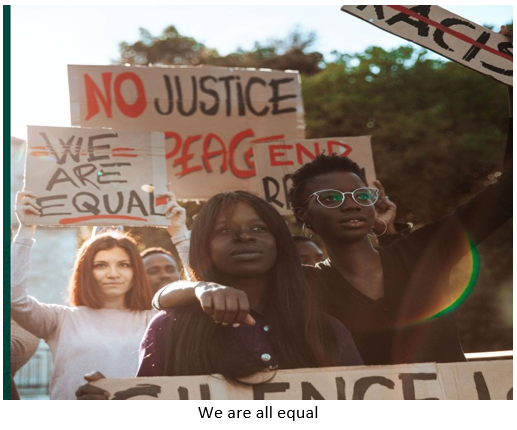
Rethinking inclusion in a diverse Europe
If Europe is to truly confront the “new” face of racism, it must move beyond outdated definitions and confront uncomfortable truths. Discrimination today is often subtle, systemic, and justified under the guise of neutrality or cultural concern. Naming it as racism is the first step; addressing it requires courage and clarity.
The future of Europe depends on its ability to reconcile unity with diversity—not by asking minorities to shed their identities, but by building societies where those identities are recognized as part of the collective whole. On this International Day, the challenge is clear: not only to denounce racism in all its forms, but to recognize the new forms it has taken—and to act accordingly.


Discussion about this post