


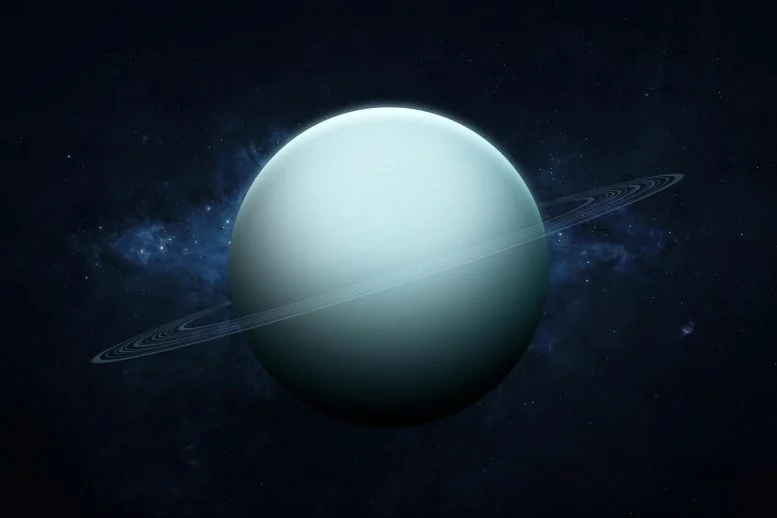
New Insights into the Origins of Uranus and Neptune
Research has emerged indicating that the planetary bodies Uranus and Neptune, often regarded as twins due to their similarities, may not share as much in common as previously thought. A recent study proposes that Neptune’s formation materials likely originated from a region significantly closer to the early Sun, suggesting distinct evolutionary paths for the two planets.
Challenging Existing Theories
The prevailing idea in planetary science has been that Uranus and Neptune formed from the same reservoir of cosmic materials. However, the latest findings disrupt this conventional wisdom, implying a more complex history for these gas giants. This revelation prompts scientists to reassess the processes by which these outer planets formed and evolved in the chaotic environment of the solar system’s infancy.
Implications for Solar System Evolution
This new understanding not only impacts our knowledge of Uranus and Neptune but also has broader implications for planetary formation theories. It opens up questions about how different regions of the protoplanetary disk contributed to the makeup of the planets we observe today. Furthermore, it could shed light on the formation mechanisms of other celestial bodies throughout the galaxy.
Future Research Directions
As scientists delve deeper into the nuances of planetary formation, further studies are expected to clarify the evolutionary trajectories of Uranus and Neptune. By investigating the differences in their composition and formation, researchers aim to enhance our understanding of these distant worlds and their place within our solar system.






Discussion about this post