
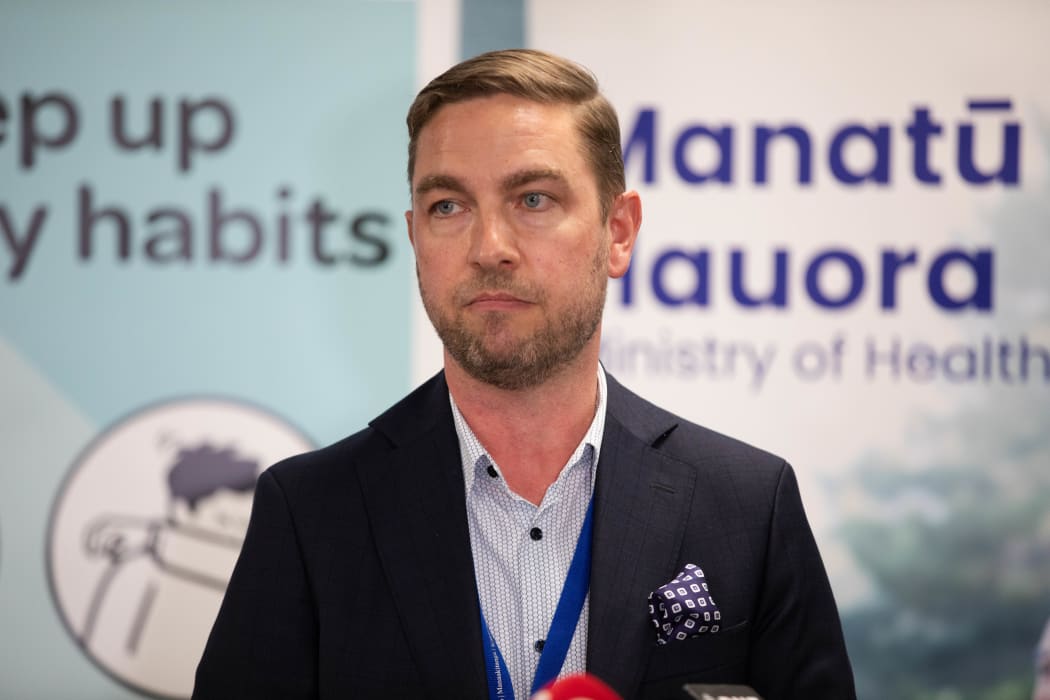
Case numbers, “as expected”, have continued to decline but it is not the time to get complacent, Ministry of Health Deputy Director-General Dr Andrew Old says.
Watch here:
Old was joined by Dr Anthony Jordan, clinical director for the Northern Region Vaccination Programme, Te Whatu Ora – Health New Zealand.
He said the Ministry of Health would begin publishing a ‘trends and insights’ report from 27 September, which would come out weekly on Mondays. These reports will include modelling and case rates.
Case numbers had continued to decline, he said, with a sustained decline in case rates observed across all regions for five straight weeks.
“As expected, Covid-19 cases have continued to decline, with a seven-day rolling average of 1337 cases per day.”
He said 36 people were reported to have died with Covid-19 in the week to Sunday 18 September, with eight of those deaths deemed to have had Covid-19 as a contributory or underlying cause.
“These trends are supported by trends in wastewater testing and case rates among health workers.”
Hospitalisations had continued to decline across the same period and death rates had been declining for the past seven weeks, he said.
Despite that, there were signs the downward trend in cases was “starting to slow” and was expected to plateau, he said.
Earlier this month, the government scrapped the Covid-19 Protection Framework – also known as the ‘traffic light’ system – along with many of the public health restrictions that had been in place due to the ongoing pandemic.
The dropping of many of the public restrictions last week did not appear to have affected case numbers, he said.
“Covid is not going away and if we want to maintain our strong position we need to continue to all play our part.
“As always, we will continue to closely monitor that situation and given that we are only about 10 days past that, we would expect that any impact of that might be coming in the next week or two.”
He said New Zealand was in a “strong position” as it went into the next period, with the lowest case numbers and hospitalisations since February 2022, a well-vaccinated population and expanded access to antivirals.
“It’s important to note that we can’t be complacent,” he said.
“Please, if you are eligible, please get vaccinated or get boosted.”
He said it was particularly important to expand the number of people who had their first and subsequent booster shots.
“While New Zealanders have high rates of vaccination overall, there remains a lot of work to do, especially among Māori and Pacific peoples who have lower vaccination rates than other New Zealanders.”
He said 56 percent of eligible Māori aged over 18 and 61 percent of eligible Pacific peoples over 18 had had a first booster, compared with 73 percent of all eligible people over the age of 18.
He said health districts and Māori and Pacific providers were offering tailored outreach services, including after-hours and weekend vaccination sites at pharmacies, pop-up clinics and at community locations such as marae and places of worship.
“It’s also important that people continue to test and stay home if unwell.”
Old said today’s briefing would be the last planned media briefing on the Covid-19 response.

Discussion about this post