









In the animal kingdom, organisms can be named after anything — an odd behavior, a strange sound and even a funny appearance. The naming system requires all creatures to have two terms; a name that indicates the genus and species.
Although limited by certain rules, taxonomists have found a way to show off their sense of humor. From the irregular to painfully pun-full, here are some of the best named animal species.
Aha ha
Meet the wasp whose stinger isn’t the only thing that will leave you in stitches — the Aha ha wasp.
In the 1970s, wasp lover and entomologist Howard Ensign Evans spent years collecting wasp specimens to send to his friends for examination and study. After his travels in Australia, Evans sent two specimens to Arnold Menke, a fellow entomologist at the systematic entomology laboratory for the Agricultural Research Center.
Upon opening the parcel, Menke looked at the wasps and exclaimed “Aha! A new species!” to which his colleague, Eric Grissell, responded in disbelief, “ha!”. In fact, Menke was right, it was a new genus of wasp belonging to the family, Sphecidae, which are thread-waisted wasps that have skinny waists and paralyze their prey.
Gorilla gorilla
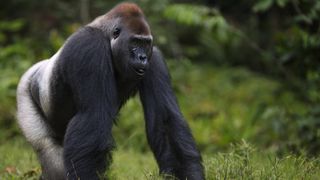
A name so nice, you say it twice. The name of the western gorilla is a tautonym, a scientific name where the genus and species are both the same word.
The western gorilla (gorilla gorilla) is one of two species of gorilla in the world. There are two subspecies. One is the western lowland gorilla (Gorilla gorilla gorilla) while the other is the cross river gorilla (Gorilla gorilla diehli).
The name was inspired by antiquity. Around 2,500 years ago, a Carthaginian admiral called Hanno set sail along the west coast of Africa. He visited a small island where he reported meeting “savage hairy people,” which his interpreters called “gorillai,” according to reports.
We cannot be sure what language his interpreters spoke or if the account is actually true. Despite this, American naturalist Thomas S. Savage used the term in the first scientific description of the species – Troglodytes gorilla, now known as the western gorilla.
Boops boop
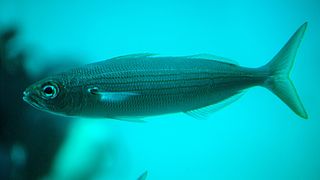
Much like the western gorilla, the name of this big-eyed species of seabream is a tautonym — Boops boops. In Greek, the name translates to “ox-eyed,” and is inspired by the fact that it has large, round eyes relative to its small size.
Agra vation
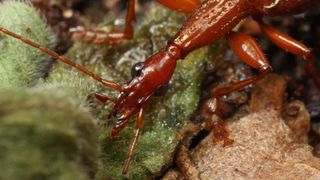
Not many names capture attention like the caribid beetle, Agra vation. Its scientific name hints at both frustration and intrigue.
Conservation biologist Terry L. Erwin created this clever pun based on the difficulties of collecting beetles from the genus Agra.
These beetles are nocturnal, have slender heads and are found high in the rainforest canopy. Erwin devised a technique called “canopy fogging” to collect these species — using thermal foggers and biodegradable insecticide to collect mass quantities of specimens that were difficult to reach.
Before he died in 2020, Erwin was responsible for describing 438 species of Carabidae beetles, with names such as Agra cadabra and Agra katewinslettae (after the famous English actress who starred in the movie “Titanic”).
Parastratiosphecomyia stratiosphecomyioides
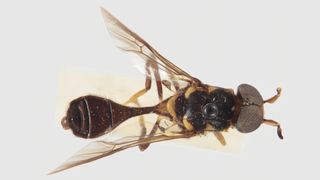
The southeast asian soldier fly has the longest scientific name of any animal — Parastratiosphecomyia stratiosphecomyioides.
In ancient Greek, its genus translates to “near soldier wasp-fly” and the species translates to “wasp-fly like.” The name comes from its resemblance to a thread-waisted wasp — the club-shaped abdomen, long antennae and darkened wings all make it look like a wasp even though it has no stinger. In evolutionary biology, this is known as mimicry.
Hotwheels sysyphus
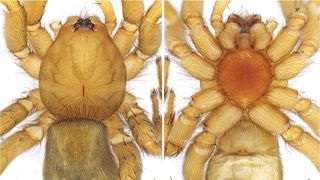
Meet Hotwheels sysyphus, the spider with a name as unique as its anatomy. Believe it or not, its name is in honor of its distinct genitalia.
A male specimen of this species was discovered in the southwest of China. Scientists that examined the spider found that the male sported a long and coiled embolus (a tubular organ that inseminates the female) and that it resembled a Hot Wheels track.
The species name, sysyphus, is derived from a figure in Greek mythology. In the tale, the king of Corinth, Sisyphus, is punished by Zeus to endlessly push a rock uphill, only to have it roll back down again. The spider’s circular genitalia is reminiscent of Sisyphus’ cyclic punishment, ergo its species name.
Boselaphus tragocamelus
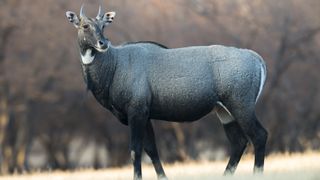
Boselaphus tragocamelus is a species with perhaps the best mashup of names from other animals: ‘Bos’ is Latin for ox, ‘elaphos’, is Greek for deer, ‘tragos’, is Greek for a male goat, and ‘kamelos’, is Greek for camel.
B. tragocamelus is actually a large bovid found in India and Nepal. It is one of the largest living antelopes in the world — males can reach a towering height of 6.8 feet (2.1 meters).
This species was first described in 1766 by German zoologist Peter Simon Pallas, who said its appearance was similar to a bunch of other animals, according to an article in the American society of mammalogists. The oddball sports a humped back like a camel, a horned and slender head like a goat or deer and a body shape similar to a cow.
Gelae baen
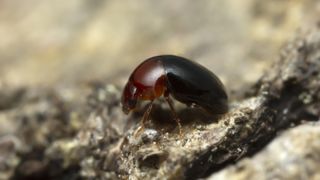
Gelae baen, gelae donut and gelae rol are small, round fungus beetles pronounced like the english word “jelly” and whimsically named after sweet treats. The genus, Gelae, is derived from the Latin word “gelatus,” which means “jellied” or “congealed.” It’s an homage to the beetles’ diet of fungal slime molds.
Han solo
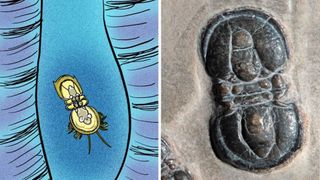
Other species have been named after characters from films, including the extinct trilobite Han solo, named after the famous “Star Wars” pilot.
In 2005, biologist Samuel Turvey described a trilobite found in China’s Hunan province. According to the study, the genus name Han was given to honor the Han people of China. The fossil was suspected to be the last surviving member of the family, Diplagnostidae, which gave rise to the species name solo.
Later on, Turvey revealed that his friends dared him to pick that name as they believed most of the characters’ names in the franchise sound like scientific names.
Scrotum humanum

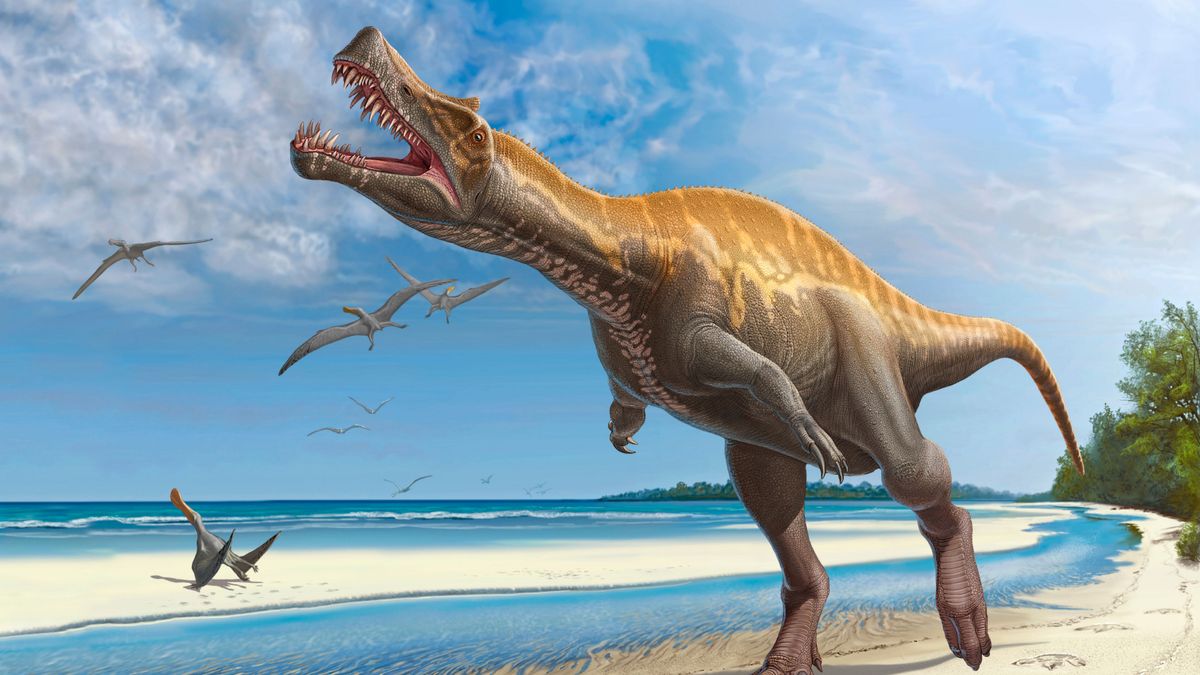
One of the first dinosaurs ever described was almost named after human testicles.
In 1763, the lower end of a femur was found and described as Scrotum humanum because of its resemblance to human testicles, according to a 2014 article in the journal Science Vision.
It was first discovered nearly a century earlier in the Taynton Limestone Formation in Oxfordshire, England. Eventually, the curator of the Ashmolean Museum, Robert Plot, published an illustration of the fossil in the “Natural History of Oxfordshire.” The fossil fragment’s large size led him to believe it belonged to a Roman war elephant or a giant human.
In 1763, physician Richard Brookes dubbed it “Scrotum humanum“ and republished the new name in his book, “The Natural History of Waters, Earths, Stones, Fossils and Minerals etc.”
It was until 1824 that geologist William Buckland discovered that the fossil was part of an extinct reptile. He determined it may have once been part of a Megalosaurus, based on similarities to other giant fossil bones he had found.
Although the name S. humanum is not used today, in 1970 paleontologist Beverley Halstead argued that because it was published first and it followed the naming convention, it should still be accepted.
Irritator challengeri
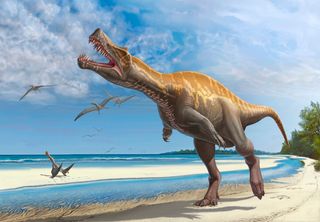
The not-so-subtle name of this dinosaur is a reflection of paleontologists’ frustration when they discovered someone had tampered with their fossil.
Paleontologists identified Irritator challengeri based on a partly crushed skull found in the Santana Formation in Brazil. The skull was excavated and sold illegally in 1996 by commercial diggers. The scientists who described the species relied on CT scans to piece together the original skull shape.
The scans revealed the fossil was heavily damaged during collection and that it had an artificially constructed snout and a crack in the center of the skull that had been filled with car body filler.
Sphenacodon ferox and Sphenacodon ferocior
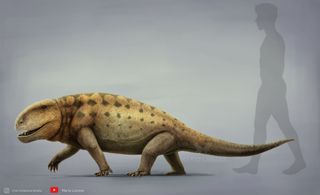
The genus Sphenacodon contains two species of early reptilian predators in the ultimate showdown for the best name: Sphenacodon ferox versus Sphenacodon ferocior, otherwise known as “fierce” and “more fierce,” respectively.
In 1878, Yale paleontologist Othniel Charles Marsh described the first species in the genus Sphenacodon from a section of a lower jaw found in northern New Mexico. In Greek, “sphenacodon” translates to “wedge-point tooth,” based on the large, sharp teeth that were in the jaw. Because of these fearsome teeth, Marsh assigned it the species name “ferox,” which means “fierce” in Latin.
In 1937, Alfred Sherwood Romer, a specialist in vertebrate evolution, described another species from a skull and a number of vertebrae found near Jemez Canyon in New Mexico. He described this species as morphologically similar to S. ferox but with a body size up to 40% larger and longer spines.
Preseucoila imallshookupis
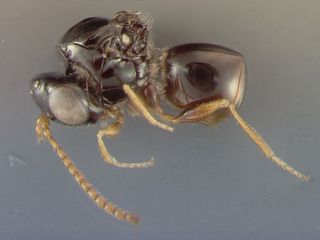
Entomologist Matthew Buffington named the genus of this wasp species, Preseucoela, by combining Elvis Presley’s last name with the suffix “-eucoela” — a word French naturalist Jean-Jacques Kieffer used to describe parasitic neotropical wasps, according to the 2004 study where the species was described. The species name is an homage to The King’s famous 1956 song “All Shook Up.”
Ampulex dementor
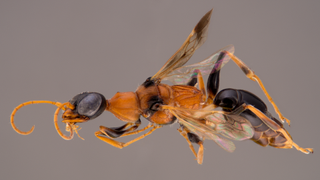
Ampulex dementor is a species of wasp in the family Ampulicidae. These cockroach wasps turn their prey into submissive zombies, according to a 2010 study in the journal Communicative and Integrative Biology.
The species name “dementor” comes from the fictional “dementors” from the “Harry Potter” series. Dementors are soul-sucking, dark creatures that feed on human happiness, leaving their victims in a vegetative state.
Like its namesake, A. dementor injects cockroach brains with a toxin that keeps the cockroach alive but in a zombie-like state. The wasp then deposits its eggs into the cockroach’s body. Once hatched, the young wasp larvae burst out and feed on the remains of the cockroach.
Sollasina cthulhu
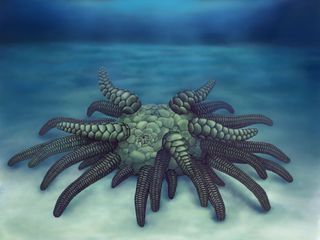
Sollasina cthulhu is a 430 million-year-old relative of living sea cucumbers. This tentacled critter lived on the bottom of the seafloor, crawling around on its 42 tubed feet to scavenge for food.
Because of its appearance, the species was named after a fictional deep-sea character from the fantasy short story “The Call of Cthulhu,” by H. P. Lovecraft. The Cthulhu was a tentacle-headed monster that slumbered in a city at the bottom of the Pacific Ocean.
Scientists first named the species in a 2019 study in the journal Proceedings of the Royal Society B. Researchers described a perfectly preserved fossil specimen found in the Herefordshire Lagerstätte formation in the United Kingdom. A 3D reconstruction of the fossil helped pin down the creature as a distinct species.
Ajnabia odysseus
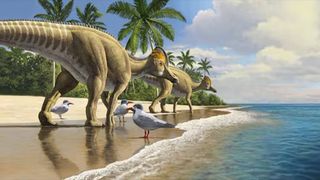
Ajnabia odysseus is the first duck-billed dinosaur to be found in Africa. It is a hadrosaur that lived during the Late Cretaceous period, around 66 million years ago.
At that time, the world was split into two main supercontinents: Laurasia (North America, Asia and Europe) in the Northern Hemisphere and Gondwana (South America, Africa, Antarctica and Australia) in the Southern Hemisphere.
Until the discovery of A. odysseus, scientists thought hadrosaurids lived only on the isolated supercontinent of Laurasia, because it was surrounded by deep waters, according to a 2010 article in the Zoological Journal of the Linnean Society.
The African fossil challenged the understanding of the dinosaur family’s dispersal, as it showed that a hadrosaur had crossed miles of ocean to reach Gondwana, according to the 2021 study describing the species.
This long journey led the researchers to name the species after the ancient Greek hero Odysseus, who famously embarked on a 10-year voyage home from Troy.
Geophilus persephone
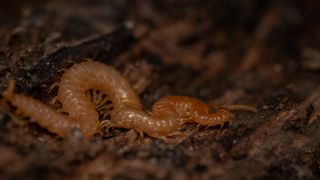
Geophilus persephone is a cave-dwelling centipede that spends its entire life in complete darkness.
G. persephone was discovered in underground caves in France in the 1990s. It is named after the queen of the underworld in Greek mythology, in which Persephone was abducted by her uncle, Hades, god of the underworld, who abducted her as his bride..
This species has a slender body, no eyes, and only 29 legs. It was the first soil centipede to be described as a troglobite, a species strictly bound to underground habitats.
Geophilus hadesi
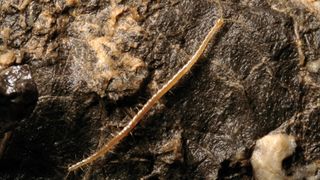
In 2015, scientists described another underground species of soil centipede: Geophilus hadesi. It has adapted to cave life, thriving in complete darkness and high humidity.
G. hadesi is the deepest-dwelling centipede in the world, found at a record 3,609 feet (1,100 m).
Hydra viridissima
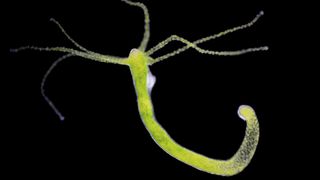
Hydra is a genus of small freshwater animals with tubelike bodies and tentacles. They grow up to 0.4 inch (10 millimeters) long and eat worms, fish larvae and small crustaceans.
They can regrow lost limbs and even grow a whole new organism from small tissue fragments. Their bodies are made mainly of stem cells, allowing these creatures to constantly replace old cells and seemingly live forever.
The genus takes its name from the monster in Greek mythology. The serpent-like beast had many heads and was bred to kill Hercules; when one head was cut off, two heads would grow back in its place.
This species is named viridissima, which in Latin means “the greenest.” It’s bright green appearance comes from its symbiotic relationship with an algae called Chlorella, that lives within its body.
Hoopoe
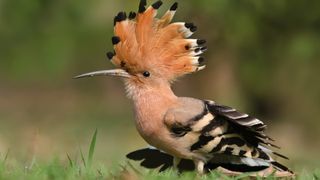
The Eurasian hoopoe is a bird with a bold appearance and a unique call.
Its Latin name is an onomatopoeia created from the “oop-oop-oop” sound of its call, according to the Helm Dictionary of Scientific Bird Names.








Discussion about this post