






You may have never heard of it, but Section 230 of the Communications Decency Act is the legal backbone of the internet. The law was created almost 30 years ago to protect internet platforms from liability for many of the things third parties say or do on them.
Decades later, it’s never been more controversial. People from both political parties and all three branches of government have threatened to reform or even repeal it. The debate centers around whether we should reconsider a law from the internet’s infancy that was meant to help struggling websites and internet-based companies grow. After all, these internet-based businesses are now some of the biggest and most powerful in the world, and users’ ability to speak freely on them bears much bigger consequences.
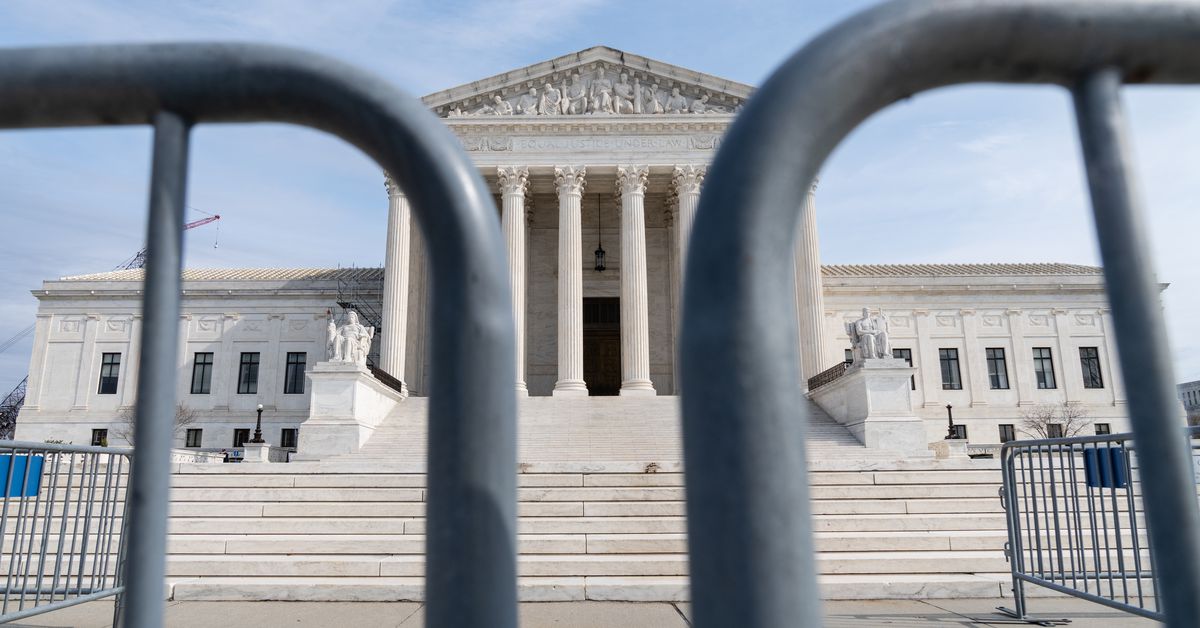
While President Biden pushes Congress to pass laws to reform Section 230, its fate may lie in the hands of the judicial branch, as the Supreme Court is considering two cases — one involving YouTube and Google, another targeting Twitter — that could significantly change the law and, therefore, the internet it helped create.
Section 230 says that internet platforms hosting third-party content are not liable for what those third parties post (with a few exceptions). That third-party content could include things like a news outlet’s reader comments, tweets on Twitter, posts on Facebook, photos on Instagram, or reviews on Yelp. If a Yelp reviewer were to post something defamatory about a business, for example, the business could sue the reviewer for libel, but thanks to Section 230, it couldn’t sue Yelp.
Without Section 230’s protections, the internet as we know it today would not exist. If the law were taken away, many websites driven by user-generated content would likely go dark. A repeal of Section 230 wouldn’t just affect the big platforms that seem to get all the negative attention, either. It could affect websites of all sizes and online discourse.
Section 230’s salacious origins
In the early ’90s, the internet was still in its relatively unregulated infancy. There was a lot of porn floating around, and anyone, including impressionable children, could easily find and see it. This alarmed some lawmakers. In an attempt to regulate this situation, in 1995 lawmakers introduced a bipartisan bill called the Communications Decency Act, which would extend laws governing obscene and indecent use of telephone services to the internet. This would also make websites and platforms responsible for any indecent or obscene things their users posted.
In the midst of this was a lawsuit between two companies you might recognize: Stratton Oakmont and Prodigy. The former is featured in The Wolf of Wall Street, and the latter was a pioneer of the early internet. But in 1994, Stratton Oakmont sued Prodigy for defamation after an anonymous user claimed on a Prodigy bulletin board that the financial company’s president engaged in fraudulent acts. The court ruled in Stratton Oakmont’s favor, saying that because Prodigy moderated posts on its forums, it exercised editorial control that made it just as liable for the speech on its platform as the people who actually made that speech. Meanwhile, Prodigy’s rival online service, Compuserve, was found liable for a user’s speech in an earlier case because Compuserve didn’t moderate content.
Fearing that the Communications Decency Act would stop the burgeoning internet in its tracks, and mindful of the Prodigy decision, then-Rep. (now Sen.) Ron Wyden and Rep. Chris Cox authored an amendment to CDA that said “interactive computer services” were not responsible for what their users posted, even if those services engaged in some moderation of that third-party content.
“What I was struck by then is that if somebody owned a website or a blog, they could be held personally liable for something posted on their site,” Wyden told Vox’s Emily Stewart in 2019. “And I said then — and it’s the heart of my concern now — if that’s the case, it will kill the little guy, the startup, the inventor, the person who is essential for a competitive marketplace. It will kill them in the crib.”
As the beginning of Section 230 says: “No provider or user of an interactive computer service shall be treated as the publisher or speaker of any information provided by another information content provider.” These are considered by some to be the 26 words that created the internet, but the law says more than that.
Section 230 also allows those services to “restrict access” to any content they deem objectionable. In other words, the platforms themselves get to choose what is and what is not acceptable content, and they can decide to host it or moderate it accordingly. That means the free speech argument frequently employed by people who are suspended or banned from these platforms — that their Constitutional right to free speech has been violated — doesn’t apply. Wyden likens the dual nature of Section 230 to a sword and a shield for platforms: They’re shielded from liability for user content, and they have a sword to moderate it as they see fit.
The Communications Decency Act was signed into law in 1996. The indecency and obscenity provisions about transmitting porn to minors were immediately challenged by civil liberty groups and struck down by the Supreme Court, which said they were too restrictive of free speech. Section 230 stayed, and so a law that was initially meant to restrict free speech on the internet instead became the law that protected it.
This protection has allowed the internet to thrive. Think about it: Websites like Facebook, Reddit, and YouTube have millions and even billions of users. If these platforms had to monitor and approve every single thing every user posted, they simply wouldn’t be able to exist. No website or platform can moderate at such an incredible scale, and no one wants to open themselves up to the legal liability of doing so. On the other hand, a website that didn’t moderate anything at all would quickly become a spam-filled cesspool that few people would want to swim in.
That doesn’t mean Section 230 is perfect. Some argue that it gives platforms too little accountability, allowing some of the worst parts of the internet to flourish. Others say it allows platforms that have become hugely influential and important to suppress and censor speech based on their own whims or supposed political biases. Depending on who you talk to, internet platforms are either using the sword too much or not enough. Either way, they’re hiding behind the shield to protect themselves from lawsuits while they do it. Though it has been a law for nearly three decades, Section 230’s existence may have never been as precarious as it is now.
The Supreme Court might determine Section 230’s fate
Justice Clarence Thomas has made no secret of his desire for the court to consider Section 230, saying in multiple opinions that he believes lower courts have interpreted it to give too-broad protections to what have become very powerful companies. He got his wish in February 2023, when the court heard two similar cases that include it. In both, plaintiffs argued that their family members were killed by terrorists who posted content on those platforms. In the first, Gonzalez v. Google, the family of a woman killed in a 2015 terrorist attack in France said YouTube promoted ISIS videos and sold advertising on them, thereby materially supporting ISIS. In Twitter v. Taamneh, the family of a man killed in a 2017 ISIS attack in Turkey said the platform didn’t go far enough to identify and remove ISIS content, which is in violation of the Justice Against Sponsors of Terrorism Act — and could then mean that Section 230 doesn’t apply to such content.
These cases give the Supreme Court the chance to reshape, redefine, or even repeal the foundational law of the internet, which could fundamentally change it. And while the Supreme Court chose to take these cases on, it’s not certain that they’ll rule in favor of the plaintiffs. In oral arguments in late February, several justices didn’t seem too convinced during the Gonzalez v. Google arguments that they could or should, especially considering the monumental possible consequences and impact of such a decision. In Twitter v. Taamneh, the justices focused more on if and how the Sponsors of Terrorism law applied to tweets than they did on Section 230. The rulings are expected in June.
In the meantime, don’t expect the original authors of Section 230 to go away quietly. Wyden and Cox submitted an amicus brief to the Supreme Court for the Gonzalez case, where they said: “The real-time transmission of user-generated content that Section 230 fosters has become a backbone of online activity, relied upon by innumerable Internet users and platforms alike. Given the enormous volume of content created by Internet users today, Section 230’s protection is even more important now than when the statute was enacted.”
Congress and presidents are getting sick of Section 230, too
In 2018, two bills — the Allow States and Victims to Fight Online Sex Trafficking Act (FOSTA) and the Stop Enabling Sex Traffickers Act (SESTA) — were signed into law, which changed parts of Section 230. The updates mean that platforms can now be deemed responsible for prostitution ads posted by third parties. These changes were ostensibly meant to make it easier for authorities to go after websites that were used for sex trafficking, but it did so by carving out an exception to Section 230. That could open the door to even more exceptions in the future.
Amid all of this was a growing public sentiment that social media platforms like Twitter and Facebook were becoming too powerful. In the minds of many, Facebook even influenced the outcome of the 2016 presidential election by offering up its user data to shady outfits like Cambridge Analytica. There were also allegations of anti-conservative bias. Right-wing figures who once rode the internet’s relative lack of moderation to fame and fortune were being held accountable for various infringements of hateful content rules and kicked off the very platforms that helped create them. Alex Jones and his expulsion from Facebook and other social media platforms — even Twitter under Elon Musk won’t let him back — is perhaps the best example of this.
In a 2018 op-ed, Sen. Ted Cruz (R-TX) claimed that Section 230 required the internet platforms it was designed to protect to be “neutral public forums.” The law doesn’t actually say that, but many Republican lawmakers have introduced legislation that would fulfill that promise. On the other side, Democrats have introduced bills that would hold social media platforms accountable if they didn’t do more to prevent harmful content or if their algorithms promoted it.
There are some bipartisan efforts to change Section 230, too. The EARN IT Act from Sens. Lindsey Graham (R-SC) and Richard Blumenthal (D-CT), for example, would remove Section 230 immunity from platforms that didn’t follow a set of best practices to detect and remove child sexual abuse material. The partisan bills haven’t really gotten anywhere in Congress. But EARN IT, which was introduced in the last two sessions, was passed out of committee in the Senate and ready for a Senate floor vote. That vote never came, but Blumenthal and Graham have already signaled that they plan to reintroduce EARN IT this session for a third try.
In the executive branch, former President Trump became a very vocal critic of Section 230 in 2020 after Twitter and Facebook started deleting and tagging his posts that contained inaccuracies about Covid-19 and mail-in voting. He issued an executive order that said Section 230 protections should only apply to platforms that have “good faith” moderation, and then called on the FCC to make rules about what constituted good faith. This didn’t happen, and President Biden revoked the executive order months after taking office.
But Biden isn’t a fan of Section 230, either. During his presidential campaign, he said he wanted it repealed. As president, Biden has said he wants it to be reformed by Congress. Until Congress can agree on what’s wrong with Section 230, however, it doesn’t look likely that they’ll pass a law that significantly changes it.
However, some Republican states have been making their own anti-Section 230 moves. In 2021, Florida passed the Stop Social Media Censorship Act, which prohibits certain social media platforms from banning politicians or media outlets. That same year, Texas passed HB 20, which forbids large platforms from removing or moderating content based on a user’s viewpoint.
Neither law is currently in effect. A federal judge blocked the Florida law in 2022 due to the possibility of it violating free speech laws as well as Section 230. The state has appealed to the Supreme Court. The Texas law has made a little more progress. A district court blocked the law last year, and then the Fifth Circuit controversially reversed that decision before deciding to stay the law in order to give the Supreme Court the chance to take the case. We’re still waiting to see if it does.
If Section 230 were to be repealed — or even significantly reformed — it really could change the internet as we know it. It remains to be seen if that’s for better or for worse.
Update, February 23, 2023, 3 pm ET: This story, originally published on May 28, 2020, has been updated several times, most recently with the latest news from the Supreme Court cases related to Section 230.








Discussion about this post