




Supreme Court Hears Case on Religious Exclusion in Preschool Funding
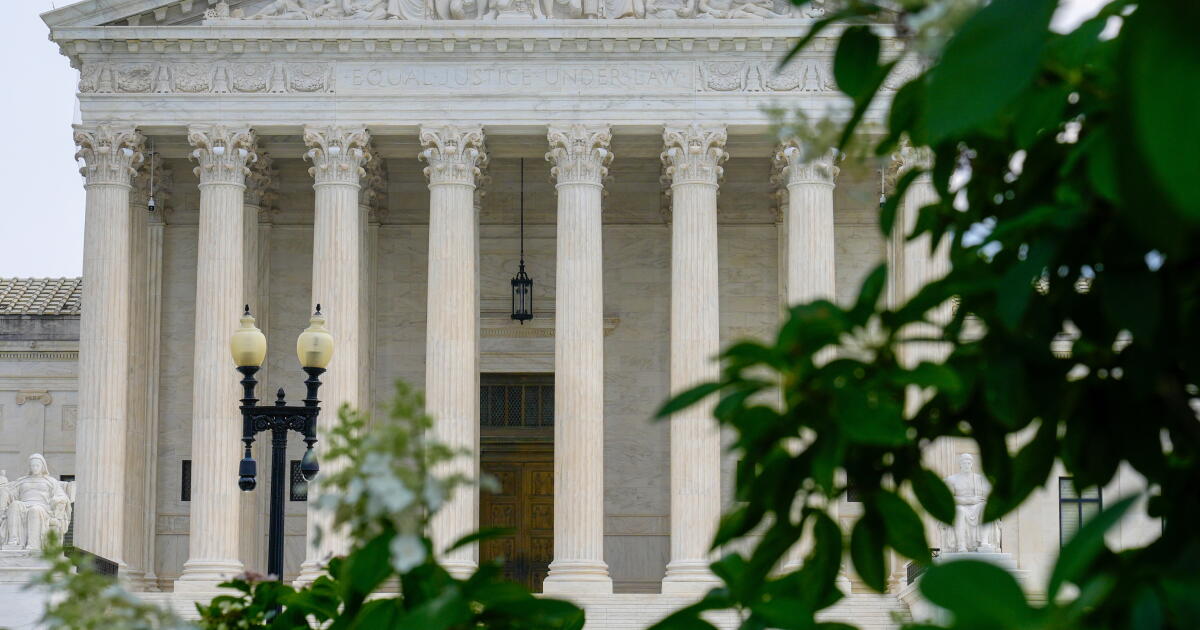
WASHINGTON — The U.S. Supreme Court engaged in a critical discussion Tuesday regarding Colorado’s preschool funding policy, which currently allows the financing of private preschools for four-year-olds but excludes Catholic schools that do not comply with policies accommodating same-sex parents and their children.
Justices Express Divergent Views
The court’s conservative justices, all raised in Catholic traditions, appeared to favor the argument that Colorado’s policy constitutes discrimination on the basis of religion. Meanwhile, the three liberal justices contended that the Catholic institutions were not asking for equitable treatment but rather for a specific allowance to discriminate.
Conditions of Funding Under Scrutiny
Colorado’s funding initiative requires preschools to adhere to an “equal opportunity” clause that prohibits discrimination based on sexual orientation or gender identity. Justice Amy Coney Barrett remarked that state officials imposed a condition they knew Catholic schools would be unable to fulfill.
Justice Ketanji Brown Jackson countered the conservative stance by asserting, “You are asking for a special rule for religious schools.” Justice Sonia Sotomayor added that the funding opportunity is open to all educational institutions, including religious ones. “The Catholic schools are not being excluded; they’re choosing not to participate because they won’t receive an exemption,” she stated.
Recent Precedents Favoring Religious Rights
In recent years, the Supreme Court has reinforced the First Amendment protections surrounding the “free exercise of religion.” Justices pointed out that while states are not obligated to provide public funds to private organizations, if they choose to do so, they cannot selectively exclude religious groups from receiving that funding.
For context, the court has overturned laws in Minnesota and Maine that barred public scholarships for students attending religious schools, as well as ruled against a Philadelphia city policy that prohibited Catholic social services from participating in foster care programs due to their refusal to work with same-sex couples.
Colorado’s Equal Opportunity Law
Despite these judicial precedents, Colorado enacted a robust “equal opportunity” law in 2022 that aligns with its new preschool funding program. Voters had previously approved a 2020 measure to allocate public funds for one year of preschool prior to kindergarten, encouraging both public and private participation.
The state offers 15 hours of funding per week, translating to roughly $6,000 in tuition support for parents. Under this program, schools must ensure equal opportunities for enrollment, regardless of race, ethnicity, religious affiliation, sexual orientation, gender identity, and other factors.
Legal Challenges from Catholic Schools
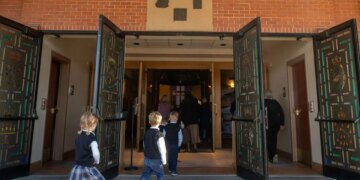
The Archdiocese of Denver, managing 34 Catholic preschools, informed parents that they must uphold church teachings, particularly regarding gender and marriage. In response to the new funding constraints, the church requested accommodations to allow religious providers to partake in the program without compromising their religious beliefs. Colorado declined, stating that no provider can discriminate against families in violation of state law.
In response, St. Mary Catholic Parish in Littleton and two parents filed a lawsuit claiming a violation of the First Amendment. Their legal representatives from the Becket Fund for Religious Liberty argued that no LGBTQ+ family has reported harm or discrimination from the preschool funding law, while claiming that thousands of Catholic families lack access to Catholic preschool options.
Lower Court Rulings and Future Outlook
The case was dismissed by a federal judge and subsequently the 10th Circuit Court, with judges stating that Colorado did not discriminate against Catholic schools based on their religious beliefs. The Supreme Court consented to hear the case, titled St. Mary Catholic Parish vs. Roy.
Justice Kavanaugh Questions the Basis of the Case
During Tuesday’s discussions, Justice Brett M. Kavanaugh expressed confusion about the emergence of this case, remarking, “This seems like a would-be solution in search of a problem. Why are we here?” He and Justice Barrett pointed out that same-sex couples likely had not sought enrollment for their children in Catholic preschools, while other parents were denied state funds due to the Catholic parishes’ marriage and family policies.
A ruling from the court is anticipated in the coming months.








Discussion about this post