









Improved Battery Life in Foldable Phones: A New Era
Foldable phones have historically faced criticism regarding their battery performance; however, recent advancements are shifting this narrative.
Due to their structural design, foldable devices have often lagged behind traditional smartphones in battery life. Their expansive screens, intricate hinge mechanisms, and limited heat dissipation space have posed significant challenges. Fortunately, innovations in battery technology, such as the introduction of high-energy-density silicon-carbon batteries and more energy-efficient processors, are enhancing the endurance of these devices. Contemporary models, like the Galaxy Z Fold 8, are now capable of lasting an entire day, demonstrating that users no longer have to compromise functionality for cutting-edge design.
Despite their growing capabilities, foldable phones remain a niche market, even with industry giants like Apple debuting products such as the iPhone Duo. These unique devices present a compelling alternative for consumers who seek something different from the mainstream slab phone design. With battery longevity being a critical factor in purchasing decisions, it’s essential to identify which models can sustain extensive use without frequent recharging.
2026’s Top Performers in Foldable Battery Life Testing
To provide insights into current foldable technology, CNET analyzed extensive data from its smartphone laboratory to determine which foldable devices excel in battery life for the year 2026. The analysis distinguishes between book-style and flip-foldable phones, ensuring an accurate evaluation specific to each category.
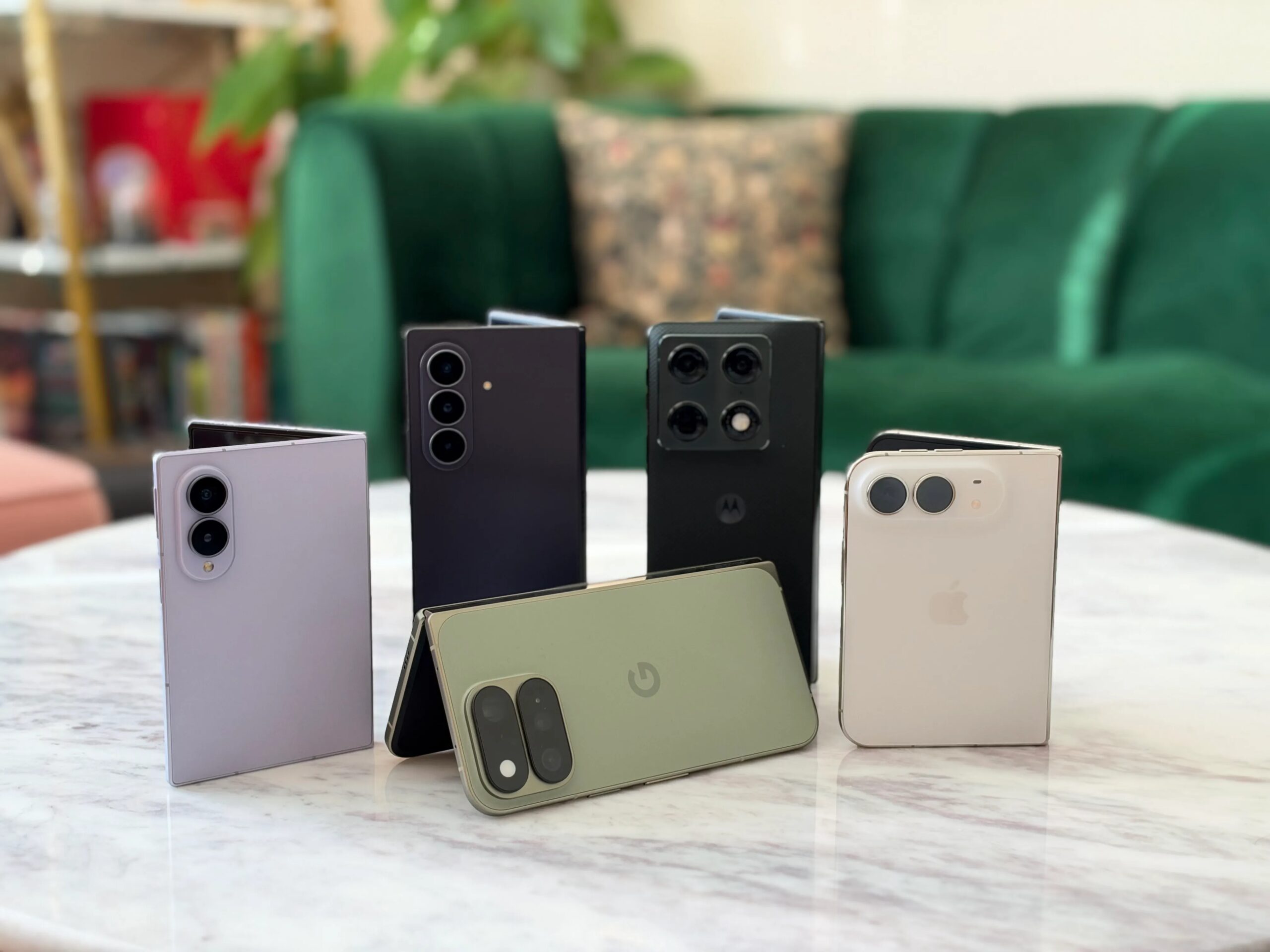
Among the various book-style foldables scrutinized this year were the Samsung Galaxy Z Fold 8, Z Fold 8 Ultra, Motorola Razr Fold, Google Pixel 11 Pro Fold, and Apple iPhone Duo. These innovative devices, combining phone and tablet features, come in various designs, from taller and narrower forms to more compact, passport-style formats. Notably, Samsung’s Galaxy Z TriFold was excluded due to its distinctive design.
The Book-Style Foldable Battery Champion
Apple’s iPhone Duo, priced at $1,999, may have entered the foldable market later than competitors, but its debut has generated significant attention. With its impressive battery performance, the iPhone Duo has emerged as the frontrunner in CNET’s evaluations of book-style foldables. This achievement is attributable to its dual-cell battery design—a common feature in foldables—and the energy-efficient A20 Pro chip powering the device.
The battery performance of the iPhone Duo was measured through two tests: a 3-hour video streaming test and a 45-minute endurance test incorporating various activities. In the endurance test, the iPhone Duo maintained a remarkable 99% battery life, while in the streaming test, it finished with 84%, ranking just below the Razr Fold, Galaxy Z Fold 8, and Z Fold 8 Ultra.
Motorola’s Razr Fold, another noteworthy contender, features a 6,000-mAh silicon-carbon battery, contributing to its high placement in battery testing. Following closely, the Galaxy Z Fold 8, Samsung’s compact foldable offering, and the Z Fold 8 Ultra, both exhibit impressive performance given their slim designs. The Z Fold 8 hosts a 4,800-mAh battery, while the Z Fold 8 Ultra comes with a 5,000-mAh battery. Meanwhile, Google’s Pixel 11 Pro Fold, equipped with a 4,806-mAh battery, also demonstrated robust battery life across the tests.
In conclusion, every evaluated book-style foldable exhibited commendable battery performance, suggesting that users can confidently engage with these devices throughout the day without excessive concern over battery depletion.
Clamshell Foldables: Where Do They Stand?
The classic flip phone design continues to attract a dedicated audience, with Motorola’s Razr brand strategically revitalized for modern consumers. Samsung’s Galaxy Z Flip 8 also offers a compact, stylish option.
Though clamshell devices inherently possess limited space for battery capacity, Motorola and Samsung have incorporated impressive specifications across their offerings. The standard Motorola Razr features a 4,800-mAh battery, while the Razr Plus and Razr Ultra have 4,500-mAh and 5,000-mAh batteries, respectively. Samsung’s Z Flip 8 arrives with a 4,300-mAh battery, all utilizing silicon-carbon technology for enhanced energy efficiency.
Remarkably, the Motorola Razr demonstrated the highest average score in CNET’s clamshell battery testing, excelling particularly in the 3-hour streaming assessment. The Razr Ultra, Galaxy Z Flip 8, and Razr Plus closely followed in battery endurance rankings.
The findings hint at the impressive capabilities of flip phones, particularly the advantage of their smaller displays, which consume less power and help maintain competitive battery life. The ongoing advancements in battery technology significantly bolster the performance of both foldable styles, reassuring users of reliable power capacity throughout their daily activities.
Conclusion: Evaluating the Battery Life of Foldable Phones
From the latest models, including the iPhone Duo and Pixel 11 Pro Fold, to Motorola’s and Samsung’s clamshell offerings, contemporary foldable phones fulfill the user demand for robust battery life alongside their versatile designs. These devices confidently support a full day of interrupted use, blending style and functionality.
In comparative assessment amongst all smartphones evaluated by CNET this year, the iPhone Duo ranks within the top five, showcasing performance on par with the leading models like the iPhone 18 Pro Max. The dual-screen capability of foldable phones—which allows users to switch seamlessly between smaller screen tasks and larger display activities—requires a battery that can adaptively support a range of usage scenarios from streaming to multitasking.
Overall, while the iPhone Duo and Motorola Razr emerged as the leaders in foldable battery performance, the rest of the devices assessed also exhibited impressive capabilities, illustrating the competitive nature of battery technology across various brands. Ultimately, personal preferences related to camera quality, design, and pricing will guide consumers in their decision-making process as foldable phones become increasingly practical and integrated into everyday use.










Discussion about this post