









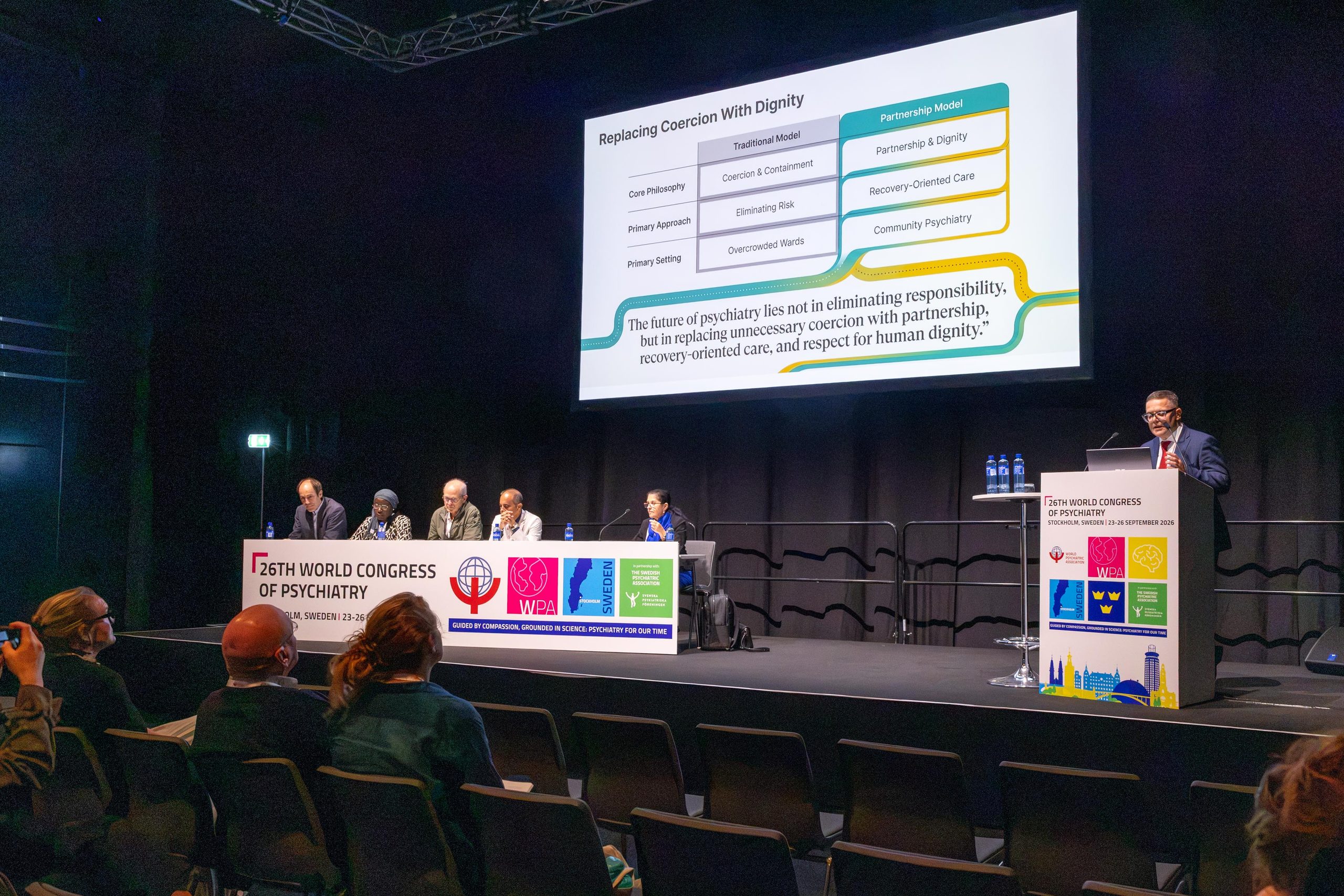
As European officials deliberate on endorsing the draft Additional Protocol to the Oviedo Convention—a legal framework governing involuntary psychiatric interventions—psychiatrists examined the ethical implications and challenges surrounding coercion in mental healthcare. The discussion highlighted the potential risks of involuntary measures, which may adversely affect both patients and the psychiatric profession.
Psychiatric Leadership Advocates for Rights
The World Psychiatric Association (WPA), which encompasses 147 psychiatric societies across 123 nations and represents over 250,000 mental health professionals, has articulated a clear stance: it endorses the implementation of the UN Convention on the Rights of Persons with Disabilities (CRPD) through a rights-based approach in all its operations. This position was articulated by Helen Herrman, Silvia Galderisi, John Allan, and Maria Rodrigues, prominent figures within the WPA.
The WPA’s 2020 Position Statement and Call to Action, ratified by its General Assembly, reveals a shared consensus among psychiatrists, practitioners, and individuals with lived experiences that coercive practices are excessively employed.
The question of whether coercion can ever be justified remains a contentious issue within the field, as discussed openly during the recent World Congress of Psychiatry in Stockholm, indicating a notable shift in perspective.
Insights from the Presidential Panel on Coercion
On September 24, a Presidential Panel convened psychiatrists from diverse countries, including the UK, Germany, the Netherlands, Chile, Senegal, and Poland. Chairing the panel, Professor Meryam Schouler-Ocak from Charité Berlin provided a solemn overview:
“Coercion in psychiatry, including involuntary admission, compulsory treatment, seclusion, and restraint, poses one of the most intricate ethical, legal, and human rights challenges in mental healthcare. Reliable data on global coercion practices are notably lacking, with significant variations across countries.”
The panel aimed to develop practical strategies to prevent and minimize coercion while ensuring safe and high-quality psychiatric care. Co-chair Professor Jerzy Samochowiec highlighted that the future of psychiatry should prioritize partnerships, recovery-oriented care, and respect for human dignity over unnecessary coercive measures. He emphasized that evidence exists indicating that coercion can be reduced without endangering safety, emphasizing the importance of communication, staff training, and continuous care.
Samochowiec outlined a three-tiered approach: at the macro level, focusing on community psychiatry and ongoing monitoring; at the meso level, emphasizing shared decision-making and trauma-informed care; and at the micro level, advocating for early de-escalation and ongoing staff communication training.
Dr. René Keet, a psychiatrist from the Netherlands, argued for a rights-based and evidence-informed approach, asserting that only one study supports the effectiveness of early compulsory medication, which showed no demonstrable advantages. He described coercion as an ethical dilemma, utilized only when no preferable outcomes are available.
The German Context and Lessons Learned
Germany, a key advocate for the proposed Additional Protocol, illustrates a complex landscape regarding involuntary treatment. Professor Schouler-Ocak noted that involuntary psychiatric treatment operates under federal guardianship laws requiring court approval and through the mental health acts of 16 states, which vary significantly. While advance directives are binding, they cannot prevent involuntary placements or mechanical restraints. A pilot study revealed that coercive measures were employed in 8 percent of cases, often justified under the Penal Code’s “justifiable necessity” provision—the legality of which frequently exceeds statutory pathways.
The legal frameworks alone do not provide a complete picture. A comparative study in The Lancet Psychiatry indicated a wide range of involuntary admission rates across 22 countries, suggesting no correlation between these rates and national legal frameworks. In fact, despite comprehensive legislation, many nations continue to experience elevated and increasing rates of coercion.
What truly dictates coercion is the application of laws and the quality of mental health services, underscoring that more regulation does not necessarily equate to lower rates of coercion.
Effective Practices and Family Perspectives
Despite the authorization of involuntary measures, the promotion of safeguards and best practices remains essential. Professor Schouler-Ocak introduced the Weddinger Model from Charité Berlin, characterized by transparency, participation, and multi-professional collaboration, which has led to a reduction in the use of coercive measures without an increase in forced medication or higher dosages. Additionally, initiatives like Safewards, Open Door policies, and WHO QualityRights have been emphasized as beneficial.
Families and service user organizations have emerged as vocal critics of current practices. Keet shared insights from groups like EUFAMI and GAMIAN, asserting that coercion signifies a systematic failure and reflects a lack of appropriate non-coercive alternatives. Families frequently express feelings of exclusion, desiring collaboration over mere involvement, advocating for a fundamental shift in recognizing coercion as a failure of treatment.
Legal Perspectives Under International Human Rights Law
The UN Committee on the Rights of Persons with Disabilities interprets the CRPD as fundamentally incompatible with involuntary measures in mental health care, deeming such practices as violations of human rights that necessitate unrestricted consent. The Committee urges a complete cessation of coercion rather than mere regulation.
In contrast, the draft Additional Protocol to the Council of Europe’s Oviedo Convention seeks to define the legality, necessity, and proportionality of involuntary measures, eliciting criticism from various human rights organizations, including the UN.
Implications for the Additional Protocol
Several conclusions emerge regarding the ongoing discussions surrounding the Additional Protocol:
Firstly, discussions from the World Congress of Psychiatry challenge the necessity for codifying coercive powers within a European treaty, reflecting a collective endorsement of the CRPD and a rights-based framework. The dialogues indicate coercion as a dilemma and treatment failure that requires reduction, supported by evidence lacking efficacy.
Secondly, safeguards alone do not suffice in mitigating coercion. Countries with intricate legal structures frequently report elevated rates. Regulatory measures that merely serve to manage coercion risk legitimizing existing practices in direct conflict with the UN CRPD Committee’s stance.
Lastly, the realistic aim should be the gradual abolition of involuntary measures. Suggestions from the panel focus on investing in community services, assertive outreach, crisis intervention planning, enhanced training, inclusion of peer workers, and collaboration with families.
Should a European instrument be established, its success should be evaluated based on its ability to facilitate this transition rather than preserving outdated practices.
At the World Congress, the psychiatric community was not seeking autonomy over coercive powers; rather, it was advocating for resources and the legal support necessary to minimize their reliance.










Discussion about this post