








Mohsen Rezaei’s Strategic Reemergence in Iran’s Security Landscape
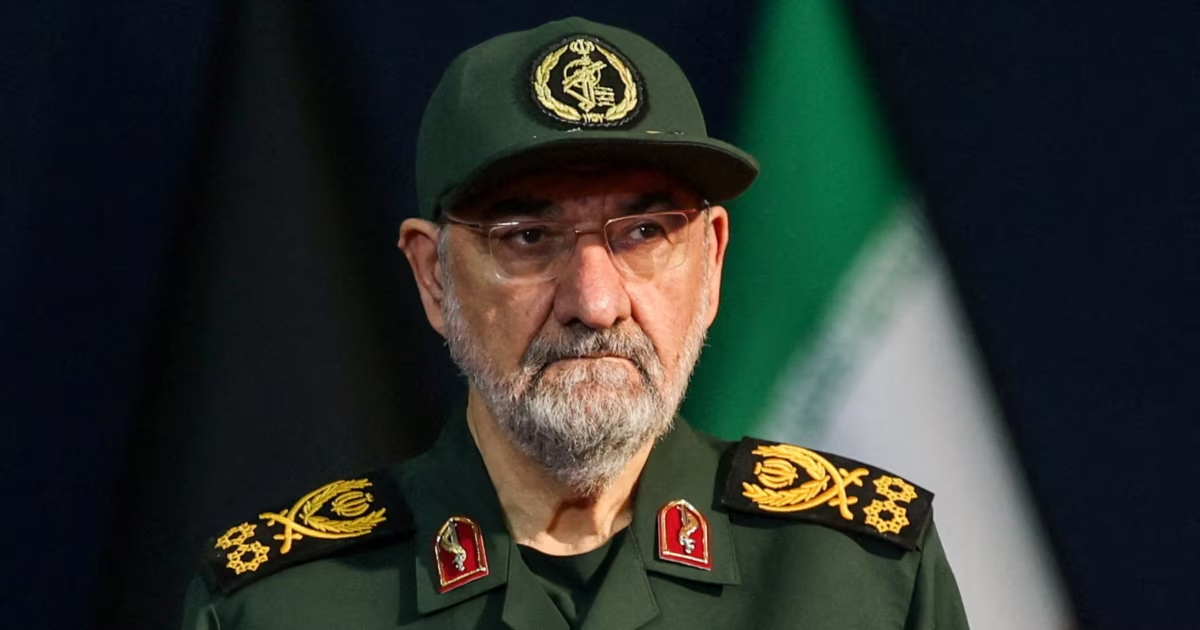
Mohsen Rezaei, the former chief commander of Iran’s Islamic Revolutionary Guards Corps (IRGC), has reestablished his influence within the country’s security apparatus at a pivotal juncture in its history. After a 16-year tenure leading the IRGC during and after the Iran-Iraq War, Rezaei has now taken on the role of secretary for the Supreme National Security Council (SNSC), placing him at the forefront of critical decisions regarding the ongoing conflict, nuclear negotiations, and diplomatic relations with foreign nations.
In light of the recent death of Supreme Leader Ayatollah Ali Khamenei and the subsequent selection of his son Mojtaba as the new leader, Rezaei’s appointment marks a resurgence for a figure whose career encapsulates nearly the entirety of the Islamic Republic’s history.
From Dissident to Revolutionary Commander
Born in 1954 in Masjed Soleyman to a Bakhtiari family, Rezaei’s political journey began in his teenage years as an opponent of Shah Mohammad Reza Pahlavi. His activism led to an arrest by the shah’s secret police, SAVAK, in the early 1970s, resulting in imprisonment in Ahvaz.
As a member of Mansouroun, an underground Islamist group, Rezaei played a role in establishing the foundations of the revolutionary security framework following the 1979 Islamic Revolution. In September 1981, at just 27 years old, he was appointed commander-in-chief of the IRGC by Ayatollah Ruhollah Khomeini, the founder of the Islamic Republic.
The Command Years: Key Decisions and Controversies
Rezaei’s command of the IRGC spanned from 1981 to 1997, during which he oversaw military operations throughout the Iran-Iraq War. Under his leadership, the IRGC transformed from a revolutionary military entity into a formidable security institution, expanding its reach and capabilities.
As a key decision-maker, he collaborated closely with senior military officials and political figures, including then-President Ali Akbar Hashemi Rafsanjani. Nonetheless, his military record is not without controversy, notably during the botched Operation Karbala-4 in December 1986, which resulted in substantial Iranian losses. Rezaei later recharacterized this operation as a deceptive tactic meant to mislead Iraqi forces.
A Shift to Political Leadership
Rezaei stepped down as IRGC commander in 1997, subsequently being appointed by Khamenei as secretary of the Expediency Discernment Council, a body that mediates disputes between the parliament and the Guardian Council. His tenure in this position lasted nearly 24 years.
Although he sought to carve out a political identity by running for president four times—from 2005 to 2021—he never secured a victory. In the 2021 election, he garnered approximately 3.4 million votes, significantly trailing behind the winner, Ebrahim Raisi.
Following Raisi’s election, Rezaei was appointed vice president for economic affairs, a role he maintained until 2023. His short stint in this position did little to elevate his profile as an economic strategist, despite his ambitious and contentious proposals.
International Controversies and Allegations
Domestically, Rezaei has been a recognizable figure, yet internationally, his reputation is besmirched by allegations of his involvement in the 1994 bombing of the Argentine Israelite Mutual Association (AMIA) in Buenos Aires, which resulted in 85 fatalities.
Argentine prosecutors have cited Rezaei, among other senior Iranian officials, in relation to the attack. In 2007, Interpol issued a Red Notice against him, a request to locate and provisionally arrest pending legal proceedings, which Iranian authorities have consistently denied.
A Resurgence in Security Oversight
Rezaei’s influence surged following Khamenei’s assassination in U.S.-Israeli strikes in February 2026, when Mojtaba Khamenei was appointed as the new supreme leader. In March, he was named a military adviser, and in August, he became secretary of the SNSC, a pivotal role in coordinating Iran’s national defense policies.
The SNSC integrates senior military and government officials, and its decisions require the supreme leader’s approval to be enacted. Although the president formally heads the council, the secretary significantly influences its agenda and operations, particularly with a direct link to the supreme leader.
Rezaei’s new responsibilities extend beyond domestic security, with U.S. Vice President JD Vance reaching out to him concerning the potential for renewed negotiations with Iran, emphasizing the necessity of addressing Tehran’s nuclear program.
His role has also led to engagement in discussions with Moscow regarding regional security and collaboration, exemplified by his recent diplomatic mission to Moscow.
Rezaei’s Authority Relative to Qalibaf
Rezaei’s acceleration to power raises questions about the standing of Mohammad Bagher Qalibaf, the current parliament speaker and a significant figure in negotiations over the ongoing war. Although Qalibaf retains influence, Rezaei’s dual role as secretary of the SNSC and connection to Mojtaba Khamenei offers him a distinct channel of authority.
Experts suggest that Rezaei’s appointment reflects a desire for a unified approach to security policy amidst the ongoing conflict, contrasting with Qalibaf’s handling of negotiations. It indicates a growing prioritization of the security establishment within Iran’s political framework during wartime.
While it remains to be seen if Rezaei will become the central strategic decision-maker, his longstanding experience in military and political circles has positioned him once more at the core of the Islamic Republic’s power structure.










Discussion about this post