









UN Talks on AI Weapons Regulation Conclude Without Consensus
Discussions led by the United Nations regarding the regulation of artificial intelligence in warfare concluded on Saturday, resulting in an agreement to continue deliberations without establishing firm rules to control lethal autonomous weapons.
UN Secretary General António Guterres and other advocates have emphasized the urgent need for a legally binding treaty aimed at regulating AI-driven weapons, including drones capable of making autonomous kill decisions.
The week-long talks took place during a Convention on Certain Conventional Weapons meeting in Geneva, attended by representatives from over 100 nations, including Canada.
While there was general support for pursuing a treaty, major military powers such as the United States and Russia were resistant to adopting binding commitments that could restrict their technological advancements in weaponry. This led to a diluted agreement aimed at potentially formulating an accord on lethal autonomous weapons systems by 2028.
Izumi Nakamitsu, the UN’s high representative for disarmament affairs, heralded the progress as a “significant achievement,” albeit with a recognition of the mixed sentiments surrounding the outcomes, especially given Guterres’s aspirations for a legally binding agreement this year.
However, advocacy groups expressed disappointment over the lack of stronger commitments, emphasizing the escalating role of AI in military operations. Max Tegmark, a machine learning expert at MIT and founder of the Future of Life Institute, remarked, “States have agreed it is sufficient to just talk about the issue, for the 14th year, while these weapons enable atrocities.”
Major Powers Reluctant to Embrace Binding Agreements
Experts viewed the lack of a robust agreement as disheartening yet predictable. Branka Marijan, a senior fellow at the Centre for International Governance Innovation, noted that the reluctance of military superpowers to engage with legally binding regulations poses a significant barrier.
“There is a real issue here of political will,” Marijan stated, emphasizing that major military nations lack the motivation to adopt strict legal frameworks governing the use of autonomous weapons.
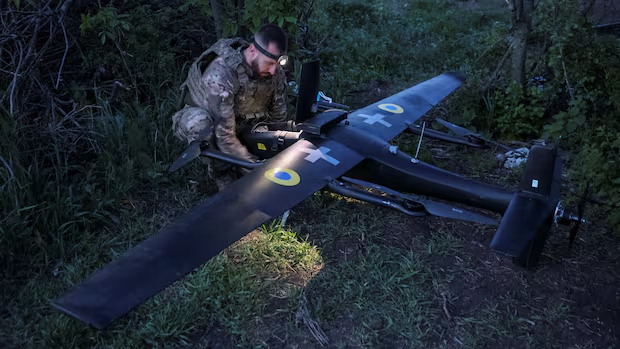
The utilization of AI in warfare is becoming increasingly common, with both Russia and Ukraine employing these technologies to enhance military strategies in their ongoing conflict. Reports indicate that autonomous drones operated by Russia have resulted in civilian casualties, while Ukraine has also tested similar weaponry.
Moreover, the United States is intensifying its efforts to integrate AI into combat operations, including the testing of self-flying advanced fighter drones.
As the global arms race intensifies, the need for robust regulations is becoming more critical. Marijan warned of the potential dangers posed by the unregulated deployment of autonomous weapons systems, stating that immediate risks are present as nations could initiate their use without significant constraints.
The Canadian Armed Forces have expressed support for developing autonomous technologies, contingent on adherence to a responsible command structure and commitment to lawful usage. Earlier this month, the Department of National Defence reiterated its stance to CBC News.
Canada had previously joined a declaration at a military AI summit in Spain in February, advocating for responsible governance of AI in warfare. Additionally, in 2025, Canada endorsed a UN resolution calling for groundwork to negotiate a treaty governing the use of lethal autonomous weapon systems.
Nakamitsu urged nations to commence discussions towards a regulatory framework as early as Monday, emphasizing the importance of developing a robust instrument to prohibit and regulate lethal autonomous weapon systems.









Discussion about this post