









Trump Proposes Tax on U.S. Companies Building AI Data Centers Abroad
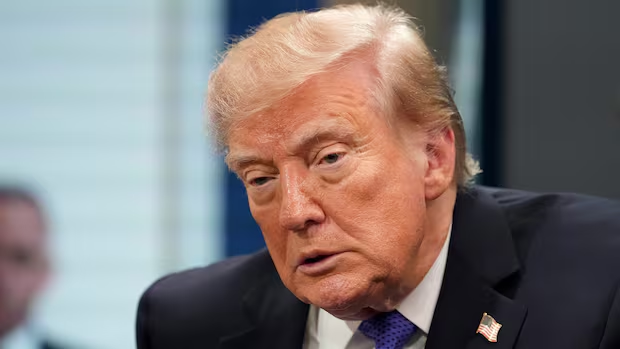
U.S. President Donald Trump announced on Friday that American tech firms constructing artificial intelligence data centers in foreign countries will incur significant financial penalties. During a White House briefing, Trump emphasized the necessity of keeping data centers within U.S. borders to prevent China from acquiring them. “We’re not allowing data centers to go into other countries because China will take all of them, and we’re not allowing that to happen,” he asserted.
While the President’s remarks outlined a clear stance, he did not provide specific details regarding the enforcement mechanisms of this proposed policy, noting that he had yet to communicate his plans to his administration. Trump encouraged U.S. citizens to embrace the establishment of data centers in their neighborhoods and to negotiate benefits from the developers. “You ought to take advantage of the data centers. Make them pay you, make them pay your community, but don’t shut them off,” he urged, reiterating his desire for these facilities to be built domestically.
Legislation to Accelerate Energy Infrastructure Development
On Thursday, the U.S. Senate passed a bipartisan bill aimed at expediting the permitting process for energy infrastructure projects, including power plants and transmission lines. This legislative effort seeks to enhance the country’s energy supply in response to increasing demand and to lower electricity costs.
The bill proposes significant changes that would streamline the timeline for initiating large-scale energy projects and ensure that data centers compensate for their energy consumption and contribute to necessary upgrades for the broader transmission network. Trump expressed his approval of the Senate’s actions, stating, “It’s going to cause tremendous amounts of new building.” The legislation now awaits consideration in the House of Representatives.
Political Climate Surrounding AI Regulation
The political landscape regarding AI and data centers is shifting, with increasing scrutiny from lawmakers. The concerns over data centers and the rising costs of electricity contributed to a wave of Democratic candidates gaining traction in the recent midterm elections, many of whom promised to regulate these energy-intensive facilities.
Democrats are currently deliberating their approach to regulating artificial intelligence when they assume majority control in January. Key proposals may include establishing regulatory frameworks for data centers, implementing safety standards, and enhancing monitoring and research efforts. Colorado Senator John Hickenlooper noted a lack of progress on AI legislation since the formation of a Democratic working group on the issue three years ago, expressing frustration that Congress has not made more substantial strides.
Despite Republican leadership emphasizing AI innovation during their tenure, there has been minimal focus on implementing safety measures or increasing oversight of the technology. “There’s a perception that we haven’t done anything,” Hickenlooper remarked.
Democratic Efforts to Address AI Challenges
House Democrats are also strategizing on how to navigate the complexities of AI regulation, having recently launched the House AI Safety and Innovation caucus aimed at addressing potential security risks. With growing opposition from local communities against large data centers, tech giants like Google and Meta are promising to reduce reliance on taxpayer funding, enhance transparency, and invest more in communities willing to host their facilities.
These companies are also committing to minimizing their environmental footprint while assuring that data centers will contribute positively to local property values, all while emphasizing the economic benefits of AI for the nation. Additionally, the Trump administration recently introduced new regulations to limit remote access to advanced U.S. computing chips and servers, representing a further effort to restrict China’s capacity to utilize American technology for training its AI models.









Discussion about this post