









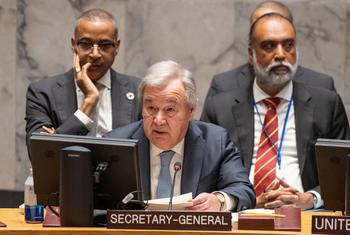
UN Secretary-General Guterres to Convene AI Safety Summit in Barbados
By R Anil Kumar
On November 23, 2026, UN Secretary-General António Guterres will co-host a pivotal summit on artificial intelligence (AI) safety in Bridgetown, Barbados. This gathering aims to bridge the widening gap between the rapid advancements in AI technology and the ability of nations to manage associated risks effectively.
During this year’s high-level week of the UN General Assembly, concerns regarding AI were voiced by 135 leaders, a significant increase from just three leaders in 2017, according to Amandeep Singh Gill, the UN Special Envoy for Digital and Emerging Technologies.
Mr. Gill noted that the upcoming summit is a direct response to this growing concern, highlighting a joint initiative by Norway and Finland advocating for the regulation of frontier AI models. This initiative has garnered support from 32 nations and the European Commission, alongside a similar call from French President Emmanuel Macron, which received backing from 17 countries and 10 AI developers.
In collaboration with Barbadian Prime Minister Mia Mottley, the summit will launch discussions on the Secretary-General’s proposal for a multilateral framework to manage AI risks, supported by independent oversight. Mr. Gill clarified that this initiative is not intended to be a formal treaty or regulation but rather a framework that countries can adapt to enhance their national AI safety protocols.
In his opening remarks, Secretary-General Guterres is expected to emphasize the vast potential benefits of AI, which include advancements in health systems, scientific research, education, and improved disaster forecasting. However, he will also highlight the equally rapid growth of risks associated with AI technologies.
Addressing Global AI Risks
Mr. Gill pointed out that the necessity for robust AI infrastructure is often underestimated. Many nations lack the computational resources and expertise required to develop AI technologies and face challenges in evaluating models created in other regions. This shortfall poses significant risks, particularly in the event of cybersecurity incidents.
According to the World Development Report 2026, wealthy nations maintain approximately 500 incident response teams, while low-income countries have merely six. “AI risks do not recognize borders,” Mr. Gill stated, stressing that while AI models may originate from specific locations, the associated risks can affect countries globally, which may not have the capability to manage such threats.
Anticipated Participation and Focus Areas
Approximately 150 attendees are expected at the hybrid summit, including ministers from Norway and Finland, leaders from the AI industry, heads of AI safety organizations, and members of the UN Independent International Scientific Panel on AI. A senior U.S. diplomat and experts from China will also participate.
It is important to note that military applications of AI will not be part of the discussions. Instead, a second roundtable will focus on issues of accessibility, inclusion, and linguistic diversity, addressing concerns from developing nations about equitable access to AI benefits.
No formal agreements are anticipated from the summit; however, participants are expected to issue calls to action and commitments aimed at advancing the dialogue on AI safety. “While we are positioned well, it is crucial that actions align with our analyses,” Mr. Gill concluded.







Discussion about this post