








This article was originally featured on Knowable Magazine.
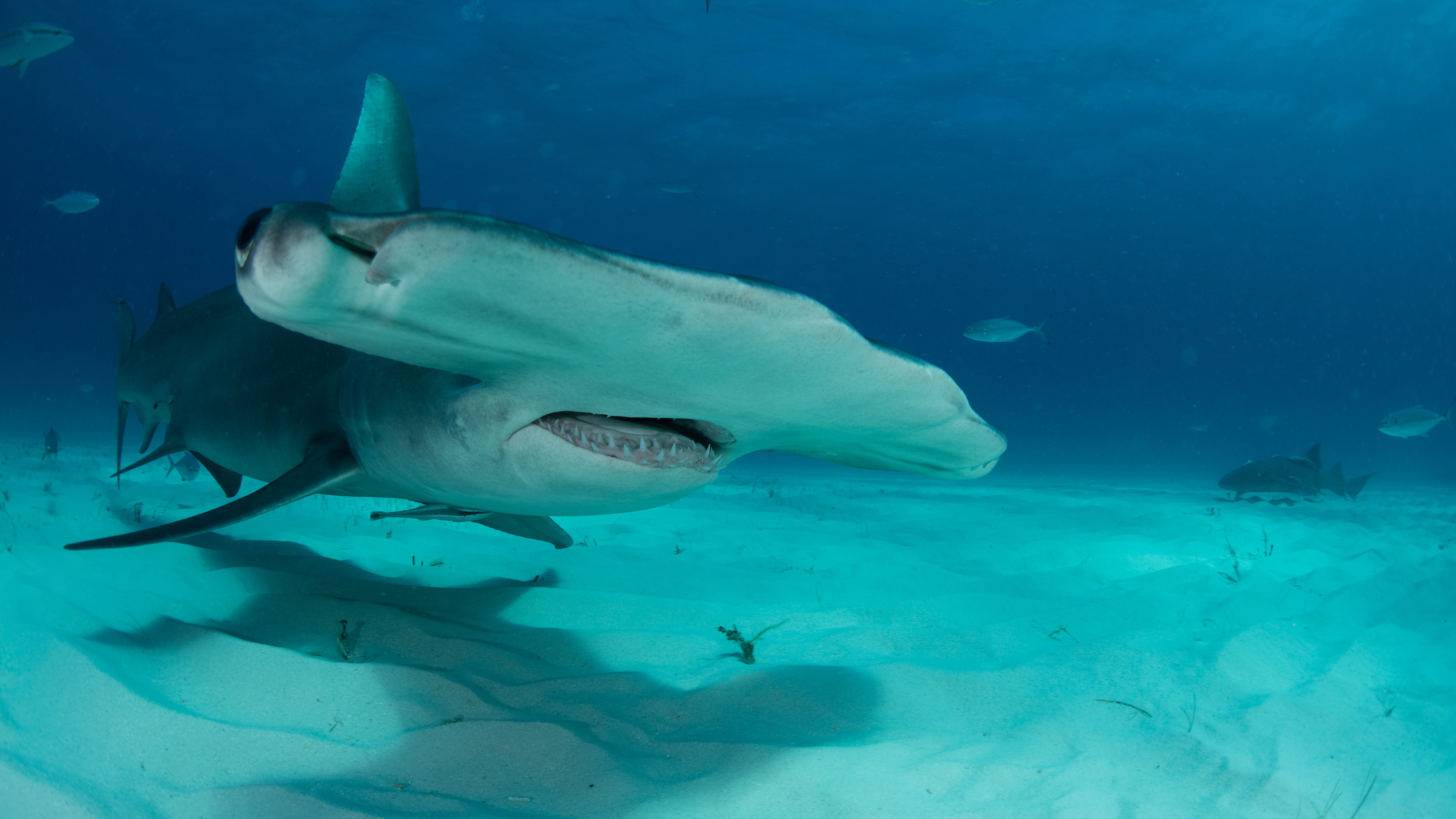
A hammerhead shark less than one meter long swims frantically in a plastic container aboard a boat in the Sanquianga National Natural Park, off Colombia’s Pacific coast. It is a delicate female Sphyrna corona, the world’s smallest hammerhead species, and goes by the local name cornuda amarilla — yellow hammerhead — because of the color of its fins and the edges of its splendid curved head, which is full of sensors to perceive the movement of its prey.
Marine biologist Diego Cardeñosa of Florida International University, along with local fishermen, has just captured the shark and implanted it with an acoustic marker before quickly returning it to the murky waters. A series of receivers will help to track its movements for a year, to map the coordinates of its habitat — valuable information for its protection.
That hammerhead is far from the only shark species that keeps the Colombian biologist busy. Cardeñosa’s mission is to build scientific knowledge to support shark conservation, either by locating the areas where the creatures live or by identifying, with genetic tests, the species that are traded in the world’s main shark markets.
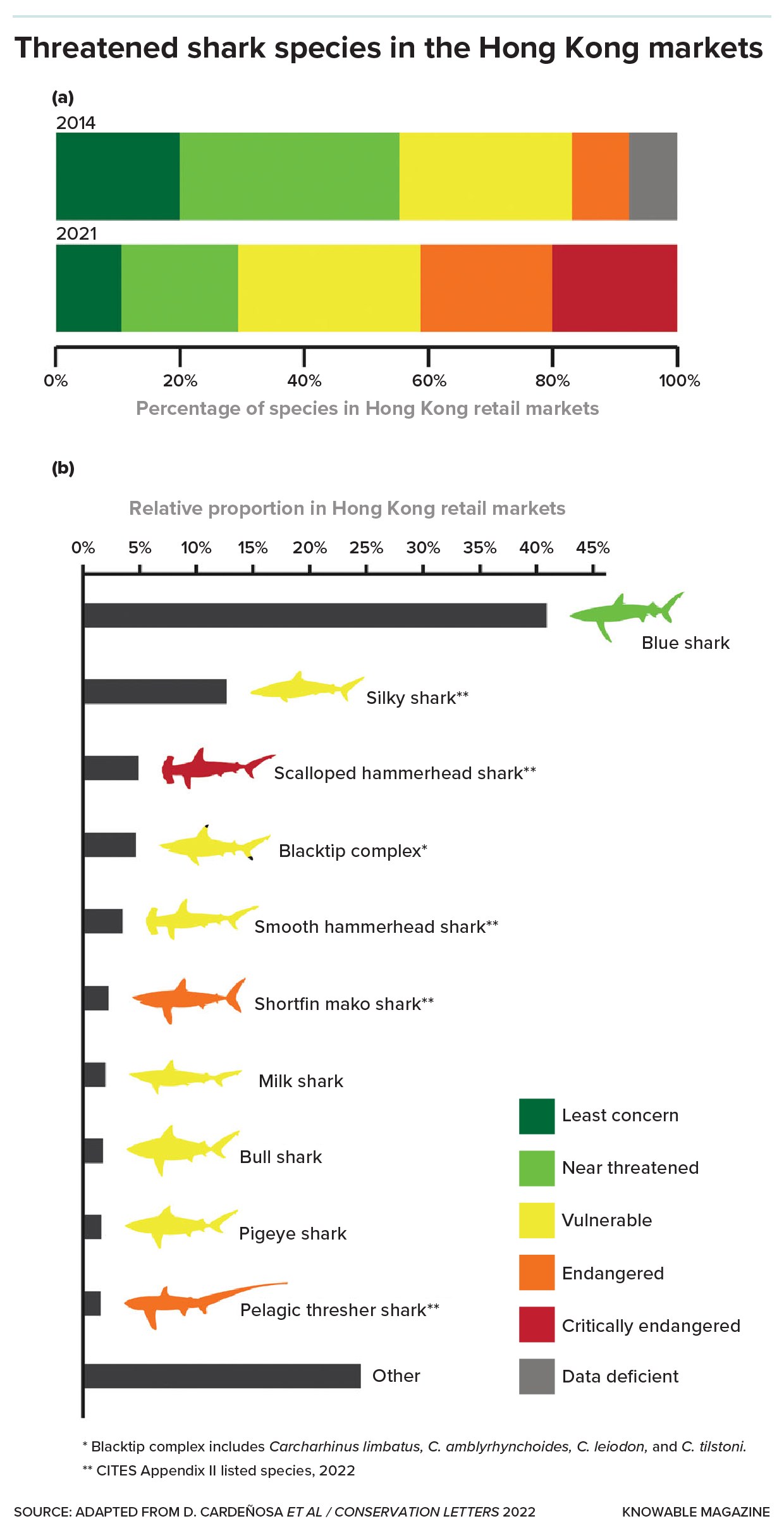
Sharks are under threat for several reasons. The demand for their fins to supply the mainly Asian market (see box) is a very lucrative business: Between 2012 and 2019, it generated $1.5 billion. This, plus their inclusion in bycatch — fish caught unintentionally in the fishing industry — as well as the growing market for shark meat, leads to the death of millions every year. In 2019 alone the estimated total killed was at least 80 million sharks, 25 million of which were endangered species. In fact, in the Hong Kong market alone, a major trading spot for shark fins, two-thirds of the shark species sold there are at risk of extinction, according to a 2022 study led by Cardeñosa and molecular ecologist Demian Chapman, director of the shark and ray conservation program at Mote Marine Laboratory in Sarasota, Florida.
Sharks continue to face a complicated future despite decades of legislation designed to protect them. In 2000, the US Congress passed the Shark Finning Prohibition Act, and in 2011 the Shark Conservation Act. These laws require that sharks brought ashore by fishermen have all their fins naturally attached and aim to end the practice of stripping the creatures of their fins and returning them, mutilated, to the water to die on the seafloor. Ninety-four other countries have implemented similar regulations.
Perhaps the main political and diplomatic tool for shark conservation is in the hands of the Convention on International Trade in Endangered Species of Wild Fauna and Flora (CITES), composed of 183 member countries plus the European Union. The treaty offers three degrees of protection, or appendices, to more than 40,000 species of animals and plants, imposing prohibitions and restrictions on their trade according to their threat status.
Sharks were included in CITES Appendix II — which includes species that are not endangered but could become so if trade is not controlled — in February 2003, with the addition of two species: the basking shark (Cetorhinus maximus) and the whale shark (Rhincodon typus). Following that, the list of protected species grew to 12 and then increased significantly in November 2023 with the inclusion of 60 more species of sharks in CITES Appendix II.
But do these tools actually protect sharks? To seek out answers, over the past decade researchers have worked to develop tests that can easily identify which species of sharks are being traded — and determine whether protected species continue to be exploited. They have also focused on studying shark populations around the world in order to provide information for the establishment of protected areas that can help safeguard these animals.
Which shark does that fin belong to?
The port of Hong Kong, along with the Chinese city of Guangzhou, is one of the world’s major centers for the trade in shark fins, considered by many Chinese communities to be a delicacy, often served in soup. Hong Kong serves as a legal importer, re-exporter and consumer of these cartilages, both fresh and packaged in bags of trimmings. A decade ago, Cardeñosa, Chapman and other members of their team began an investigation there, with the goal of answering a question: Are protected shark species being exploited?
Many fins look the same, making it difficult to know whether they belong to CITES Appendix II-listed sharks. But the scientists were confident that, with the use of genetic analysis tools, their question could be answered.
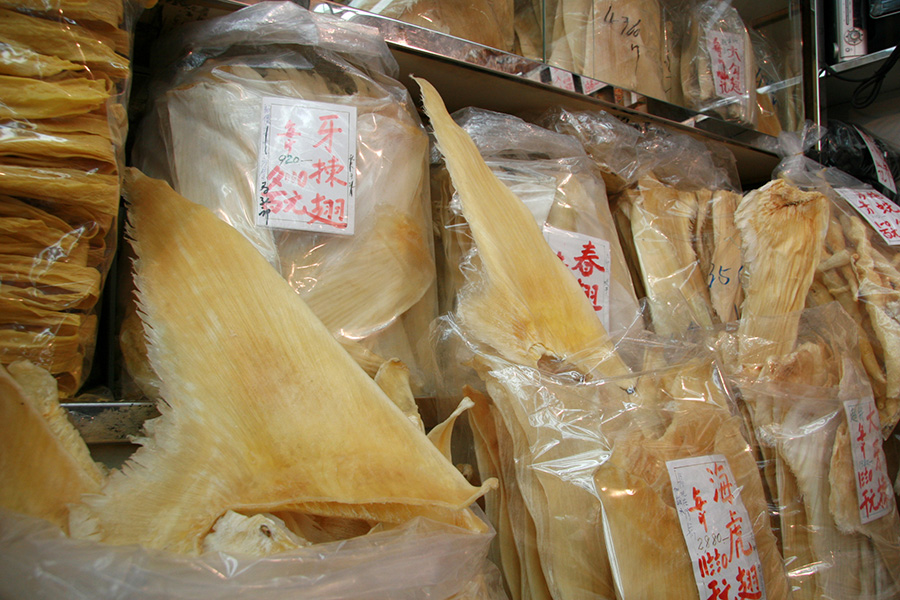
After scouring a market that stretches for several blocks of storefronts cluttered with bags and jars of yellowed shark fin clippings, Cardeñosa returned to his lab in Florida with several randomly chosen bundles. The challenge, then, was to develop the analysis for molecular identification in the dead material. “The problem is that processed fins have degraded DNA, preventing their identification with established protocols,” Cardeñosa explains. “Genetic approaches to identify shark products exist, but they typically rely on sequencing large regions of DNA, which can fail when working with highly processed products.”
So Cardeñosa, Chapman and other colleagues developed a new test, using a technique known as DNA barcoding, that reads short pieces of DNA sequences to detect what species of shark is in a sample. It works not only on fin pieces but also on cooked shark fin soup and cosmetic products made of shark liver oil.
DNA barcoding technology uses small segments of the cytochrome c oxidase I gene, COI, as molecular tags. Each animal species has its own label or barcode of those DNA segments, and forensic geneticists compare the DNA sequences of the sample with a database of genomic sequences from living animals.
The method designed by Cardeñosa and colleagues is more effective than the original barcoding technology because, instead of having to use all 650 DNA base pairs of the COI gene to serve as a species barcode, the test can identify a species with just 150 base pairs — in effect, a mini-barcode. The test also simultaneously analyzes several mini-barcodes or the COI gene for each species, instead of just one. This makes it easier to identify the species in highly processed products, even in a bowl of soup.
During four years of using that protocol on 9,200 fin clippings purchased in Hong Kong, Cardeñosa and colleagues showed that the species most traded for their fins included sharks listed on CITES Appendix II — specifically, several species of the family Sphyrnidae, which includes hammerhead sharks, as well as the blue shark (Prionace glauca).
To make it simpler to identify shark species being traded, Cardeñosa and Chapman decided to bring the lab to port. In 2018, they published in Nature the design of a portable lab for rapid, on-site DNA analysis: In a single reaction that takes less than four hours, it can detect nine of the 12 shark species that were listed on CITES Appendix II at that time. “It’s a PCR or polymerase chain reaction test, just like a Covid test,” Chapman explains, but instead of detecting fragments of viral genetic material, it detects fragments of the COI gene, which are different in DNA sequence for each of the nine shark species. It is easy to use, and therefore suitable for port officials, and costs 94 cents per sample, making it affordable even for low-income countries.
Now that there are more than 70 species of sharks under CITES protection, more powerful tools will be needed to identify protected species among the materials being traded. Chapman is working with the company Ecologenix, which has developed a modification to the PCR test that allows it to identify many species at once.
Ecologenix’s development is based on a technology called FastFish-ID, which was created to identify bony fish. A small-scale study in Indonesia showed that the technology can be adapted for use in cartilaginous fish like sharks. The identification technique also makes use of the COI gene but incorporates fluorescent dyes and machine learning into the PCR procedure to help recognize species. Although it is more expensive — at $10 per test — it is more powerful because it can identify many more species at once.
Protecting sharks’ homes
Genetic analysis not only allows scientists to know what type of shark the fin or meat being traded belongs to, it can also tell them where the animal comes from geographically. Hammerheads are especially suited to these studies, not only because the DNA database that exists on them is so extensive, but also because they tend to return to breed in the place where they were born.

Finning is a brutal practice that consists of cutting the fins off sharks, then tossing the animals back into the water, where they inevitably die. The commercial value of these cartilaginous appendages is so great that fishers won’t waste space in the bilges of vessels by keeping the entire fish. The gastronomic importance of the fins, whose consumption is both a Chinese cultural tradition and a tourist curiosity, depends on where they are found on the body. The most prized are the first dorsal fin — the largest one, located on the back of the animal — the pectoral fins on the sides of the trunk, and the one at the lower end of the tail.
Shark fin soup is one of the most expensive seafood items in the world — a bowl can cost more than $100 — but consumers also buy the fins raw, prepared, frozen, brined or dried, ready to eat or cook, for less than $30. “It’s a very bizarre dish,” says chef Gordon Ramsay in a YouTube video. “It doesn’t taste like anything. It’s almost like cellophane noodles. The broth itself is delicious. But you could put anything in there: chicken, duck … the only thing that ruins it is the shark fin itself.”
– Angela Posada-Swafford
CREDIT: HARMON / FLICKR
In 2009, Mahmood Shivji, director of the Save Our Seas Foundation at Nova Southeastern University in Fort Lauderdale, Florida, co-led with Chapman a study that demonstrated that the use of a forensic method called genetic stock identification, or GSI, could be used to determine the provenance of fins traded in the Hong Kong market.
The researchers used GSI to examine the DNA in fins from 62 hammerhead sharks (Sphyrna lewini) obtained from the market. GSI looks at DNA contained in the mitochondria, an organelle of the cell that is transmitted by the mother and is therefore traceable to the creature’s regional birthplace. The study found that the sharks came from the Indo-Pacific, Eastern Atlantic and Western Atlantic basins, and that fully 21 percent of them came from the Western Atlantic where they are listed as a species at risk of extinction. In other words, the international trade in shark fins continues to threaten endangered populations in this region.
A subsequent study in 2020 by Chapman and colleagues revealed that 75 percent of hammerhead shark fin clippings found in Hong Kong markets came from two populations originating in the Pacific Ocean, but mostly from the Eastern Pacific — 61.4 percent of all clippings — where this species is listed as endangered under the US Endangered Species Act.
Identifying which shark species are being traded and tracking their geographic origin is only part of the conservation effort. Knowing the movements and population structure of different shark species is also important in determining which marine areas should be under protection.
“Sharks are quite large, by marine fish standards, and have the ability to make long-range movements. The perception that they tend to be highly mobile has led many nations to wait for international management policies,” Chapman and coauthors wrote in an article in the Annual Review of Marine Science. But in fact, some populations of sharks would benefit from protective legislation at smaller scales, the authors say.
After analyzing the results of over 80 studies on shark tracking and population genetics, the scientists identified at least 31 shark species that show coastal behaviors, either by exhibiting residency (remaining in a defined geographic area for an extended period), fidelity (returning after long absences) or philopatry (returning to their birthplaces to reproduce). These shark populations would probably respond well to effectively designed protected areas and protective legislation at the national level, the authors conclude.
Monitoring such coastal sharks, including those living among coral reefs, is therefore key, Cardeñosa says — hence the importance of the Global FinPrint project, of which Chapman is scientific director. It is the largest global survey of sharks that inhabit the coral reefs, achieved by attaching cameras to underwater structures and deploying bait to attract sharks. The first phase of the project, which ended in 2018, was conducted in 58 countries and more than 400 reefs, comparing protected and unprotected marine areas.

During that first phase of Global FinPrint, Cardeñosa was in charge of monitoring the UNESCO Seaflower Biosphere Reserve, a huge oceanic archipelago in the Colombian Caribbean. The results were unexpected. Even though the corals in large parts of Seaflower are not doing well, the project found a high abundance of sharks of all sizes and at least seven species. Cardeñosa suggests that this could be because the sharks are feeding in an area of the reef that still has abundant food because it is difficult for fishing boats to access it. Another reason, he says, is that local communities are complying with protection regulations.
The second phase of Global FinPrint began in December 2023, with plans to return to 26 countries to assess the status of sharks within marine protected areas: regions within the ocean where government agencies have imposed limits on human activity. The data should assist nations in determining which areas nurture healthy populations of reef sharks, and in designing new protected areas that do so.
Chapman and Cardeñosa both say they are moderately optimistic about the future of sharks on a global scale, as long as science, public opinion and legislation — and that legislation’s enforcement — work together.
“There are definitely serious problems,” Chapman says. “But the good news is that we’re starting to get things right. In the United States, we’ve seen a recovery in sharks” — he points, for example, to increased shark sightings in Florida after new legislation. “We simply stopped killing too many and allowed them to reproduce,” he says. “My career goal is to help as many countries as I can to do similar things to improve the situation. That’s a long way of saying I’m hopeful.”
Cardeñosa hopes that his research will help ensure that laws and agreements on shark protection are actually enforced. “The idea is that with our research, CITES can start to tighten the screws on countries and say, ‘Are you saying this is sustainable? Show us where you got it from,’” he says.
Conserving sharks is not just a nice-to-have, Cardeñosa adds. These fish are primordial beings that have been navigating through underwater landscapes for 400 million years, guided by senses we are only beginning to understand. Sharks help maintain the carbon cycle in the water by feeding on dead organisms, and may indirectly contribute to the ongoing balance of photosynthesis in plant life by controlling species that feed on seagrasses. Keeping them in our oceans, Cardeñosa says, is critical.
Article translated by Debbie Ponchner
This story is part of the Knowable en español series on science that affects or is conducted by Latinos in the United States, supported by HHMI’s Science and Educational Media Group.
This article originally appeared in Knowable Magazine, an independent journalistic endeavor from Annual Reviews. Sign up for the newsletter.










Discussion about this post