Categories
Egypt

Indorama to invest $525m in Egypt fertiliser plant targeting 80% exports

Indorama Egypt Fertilisers has signed a contract to establish a new phosphate fertiliser plant in the Suez Canal Economic Zone (SCZONE) with a first-phase investment of $525m, targeting 80% of its production for export.

The agreement, witnessed by Prime Minister Mostafa Madbouly at the government headquarters in the New Administrative Capital on Wednesday, involves the construction of an integrated industrial complex in the Sokhna Industrial Area. The project is expected to create 3,000 jobs, including 2,500 direct positions during the operation phase and 500 during construction.

The facility will be built on an area of 522,000 square metres and aims for an annual production capacity of 600,000 tonnes in its first phase. The production line will include phosphatic fertilisers and related products such as rock phosphate, ammonia, sulphur, potash (potassium chloride), and urea. It will also produce specialised chemicals, including zinc sulphate, boric acid/sodium borate, and sodium molybdate, to support agricultural and industrial supply chains.

The contract was signed by Mostafa Sheikoun, SCZONE Vice Chairperson for Investment and Promotion, and Mukul Agrawal, Chief Executive of Indorama. The ceremony was attended by Petroleum and Mineral Resources Minister Karim Badawi and SCZONE Chairperson Walid Gamal El-Din.

Gamal El-Din said the project reflects the SCZONE’s success in attracting “specialised industrial investments with high capital and technological intensity.” He added that the integrated production activities, ranging from intermediate materials to final products, would deepen local manufacturing and enhance value chains for chemical industries dependent on mining raw materials.


Categories
Egypt

Israeli Strikes Hit Beirut in Most Intense Attacks, Hours After US-Iran Ceasefire


Israeli warplanes launched powerful airstrikes on central and coastal areas of Beirut on Wednesday afternoon, striking densely populated commercial and residential neighborhoods without prior warning, in what Lebanese officials and media described as the most violent assault on the capital since the latest phase of the conflict began.

The strikes targeted at least five neighborhoods, including the Corniche al Mazraa area. Explosions rocked the streets, ambulances raced through traffic, and charred vehicles littered areas hit by the barrage.

Lebanese media, citing the Lebanese Red Cross, report that the death toll could reach 300, with many more injured.

The office of the Lebanese President condemned the attacks, calling them a “new massacre” by Israel, describing the strikes as “barbaric.”

The attacks came just hours after the United States and Iran announced a two-week ceasefire in their direct conflict, which had involved intense exchanges over the past weeks.

Israeli officials, including Prime Minister Benjamin Netanyahu, quickly clarified that the truce did not extend to Israel’s ongoing operations against Hezbollah in Lebanon.

Israel maintained that its campaign in Lebanon would continue, rejecting assertions by ceasefire mediator Pakistan that the deal should encompass the broader regional hostilities.

Iran responded to the strikes by condemning them as a clear violation of the spirit of the US-Iran ceasefire and a dangerous escalation. 

Iranian state media reported that Tehran is actively weighing “deterrent operations” against Israel, accusing it of breaching the fragile truce by continuing attacks on Hezbollah targets in Lebanon.

Since the Israel-Hezbollah war resumed on March 2, Lebanese authorities report that Israeli strikes and operations have killed at least 1,530 people in Lebanon, including more than 100 women and 130 children, as well as dozens of health workers.

Shop Egyptian Streets Store

Categories
Egypt

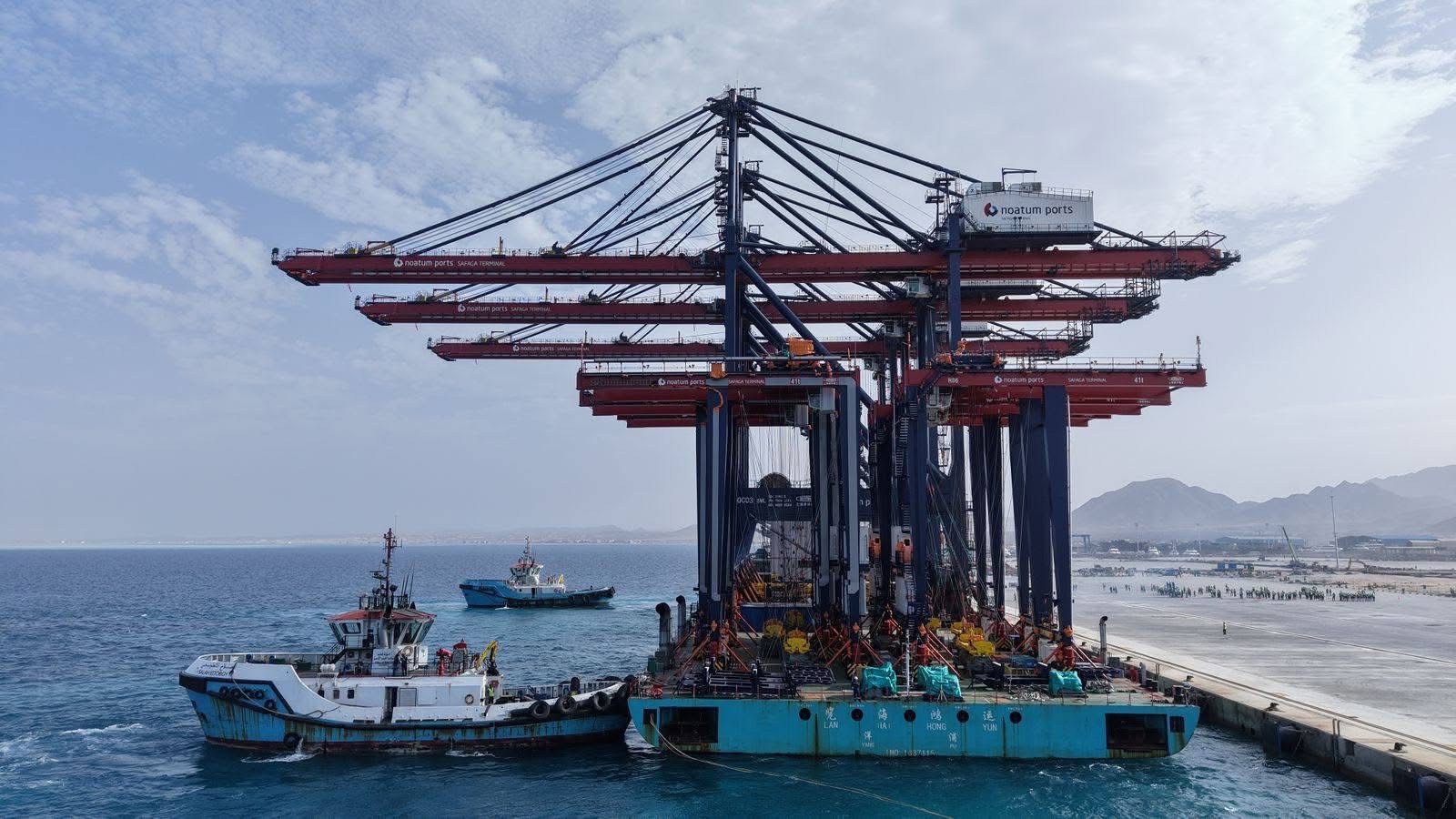
Egypt’s Safaga 2 terminal receives giant cranes as logistics hub project nears completion

Egypt has received three giant quay cranes and six yard cranes at the Safaga 2 multipurpose terminal, Transport Minister Kamel al-Wazir announced on Tuesday.

The delivery of the “super post-panamax” cranes, manufactured by China’s Shanghai Zhenhua Heavy Industries (ZPMC), marks a key stage in completing the superstructure for the terminal. The three ship-to-shore (STS) cranes are designed to handle large-capacity vessels to accelerate container turnover, while the six automated rubber-tyred gantry (RTG) cranes will use intelligent systems to organise container positioning and reduce human error, according to al-Wazir.

The Safaga 2 terminal, which covers approximately 776,000 square metres with a 1,100-metre quay and a depth of 17 metres, has seen its infrastructure 100% completed by Egyptian companies. The facility is expected to handle approximately 2m containers and 7m tonnes of general cargo annually. The terminal is being developed and operated under a contract with Abu Dhabi Ports (AD Ports Group) as part of a wider strategy to attract international shipping lines.

Al-Wazir, who presented the updates during a meeting with Prime Minister Mostafa Madbouly, stated that the terminal serves as a primary gateway for the development of Upper Egypt. He noted that the project will support mining activities within the Golden Triangle, facilitate imports and exports, and increase the use of rail for transporting goods from the south to the Red Sea.

Egypt’s Safaga 2 terminal receives giant cranes as logistics hub project nears completion

The terminal is a central component of the Safaga-Qena-Abu Tartour integrated logistics corridor, one of seven international corridors Egypt is developing to establish the country as a regional hub for transport and transit trade.

During the meeting, the Transport Minister also reviewed the implementation of an Intelligent Transport System (ITS) across seven national highways. These include the Shubra-Benha Free Road, the Cairo-Alexandria Desert Road, the Cairo-Ismailia-Port Said Desert Road, the Cairo-Suez Road, the Cairo-Ain Sokhna Road, the Regional Ring Road, and the Greater Cairo Ring Road.

The ITS project aims to reduce accident rates, improve emergency response times, and enhance traffic flow through vehicle monitoring technology. Al-Wazir said the system is designed to improve road management efficiency and connect logistics zones to commercial ports on the Mediterranean and Red Seas.

Madbouly said the transport sector is undergoing development to improve infrastructure and increase the efficiency of the transport system. He added that these efforts are intended to support economic development plans and facilitate the movement of individuals and goods between provinces.


Categories
Egypt

US, Iran agree to conditional two-week ceasefire

The United States and Iran have agreed to a two-week ceasefire, in a move aimed at de-escalating ongoing tensions and opening a window for negotiations.

US President Donald Trump said in a social media post on late Tuesday, 7 April, that planned military strikes on Iranian infrastructure would be suspended, provided Tehran commits to a temporary ceasefire and ensures the safe reopening of the Strait of Hormuz, a key global shipping route for oil.

Iran confirmed it would agree to the ceasefire on the condition that attacks against its territory are halted, with Foreign Minister Abbas Araghchi stating that safe passage through the strait would be permitted during the two-week period through coordination with its armed forces.

Iran’s Supreme National Security Council (SNSC) said in a statement that negotiations with the United States are set to take place in Islamabad within a maximum of 15 days to finalise the terms of the agreement. The council said the talks aim to translate what it described as “Iran’s victory in the field” into political outcomes.

According to the statement, Iran has outlined a broader set of conditions for a longer-term deal, including guarantees against further US military action, continued Iranian control over the Strait of Hormuz, and acceptance of uranium enrichment. 

It also called for the lifting of all primary and secondary sanctions, the termination of UN Security Council and International Atomic Energy Agency resolutions, and compensation payments to Iran.

Additional demands include the withdrawal of US combat forces from the region and a halt to military operations across multiple fronts, including in Lebanon.

Trump said the pause would allow both sides to finalise a broader agreement, describing ongoing discussions as based on a “workable” framework.

The agreement follows diplomatic efforts involving Pakistan, with officials calling for additional time to allow negotiations to proceed.

Despite the announcement, missile alerts were reported in parts of the region early Wednesday, highlighting continued instability as talks move forward.

It remains unclear whether the ceasefire includes Israel and Lebanon.

The Strait of Hormuz remains a critical chokepoint for global energy supplies, with around a fifth of the world’s oil passing through it, making any disruption a key concern for international markets.

Shop Egyptian Streets Store

Categories
Egypt

Egypt launches fourth phase of smart green projects initiative

The Egyptian government on Monday launched the fourth phase of the National Initiative for Smart Green Projects (NISGP), as part of ongoing efforts to support the transition to a green economy and strengthen climate action at the local level.

The ministries of local development, higher education and planning, alongside the National Council for Women, said the initiative aims to foster innovation and empower youth and the private sector to deliver sustainable solutions to environmental challenges.

Local Development Minister Manal Awad said the new phase builds on the success of previous rounds, with a focus on improving resource efficiency and creating sustainable jobs in line with Egypt Vision 2030.

The initiative seeks to better link planning with implementation, enhance digital governance through a dedicated project evaluation platform, and expand investments in clean energy and waste management.

Planning Minister Ahmed Rostom said around 4,859 projects qualified in earlier phases, with 54 selected as winners, adding that approximately 11,500 participants had received training through more than 130 programmes.

Higher Education Minister Abdelaziz Konsowa highlighted the role of universities and research centres in supporting innovation and translating ideas into practical applications.

Amal Ammar, head of the National Council for Women, underscored the importance of women’s participation, noting that the initiative includes a dedicated category for female-led projects.

The government is set to open applications for the new phase on April 15, with a focus on project quality, scalability, and economic and social impact.

Categories
Egypt

Items That Will Transport You Back in Time

There’s something melancholic about remembering our childhood staples that don’t exist anymore. Maybe it’s an abandoned carnival you loved going to at an old mall, a coffee shop you and your friends like studying at, or even something as simple those handmade street signs we passed by in the backseat of our parents’ car.

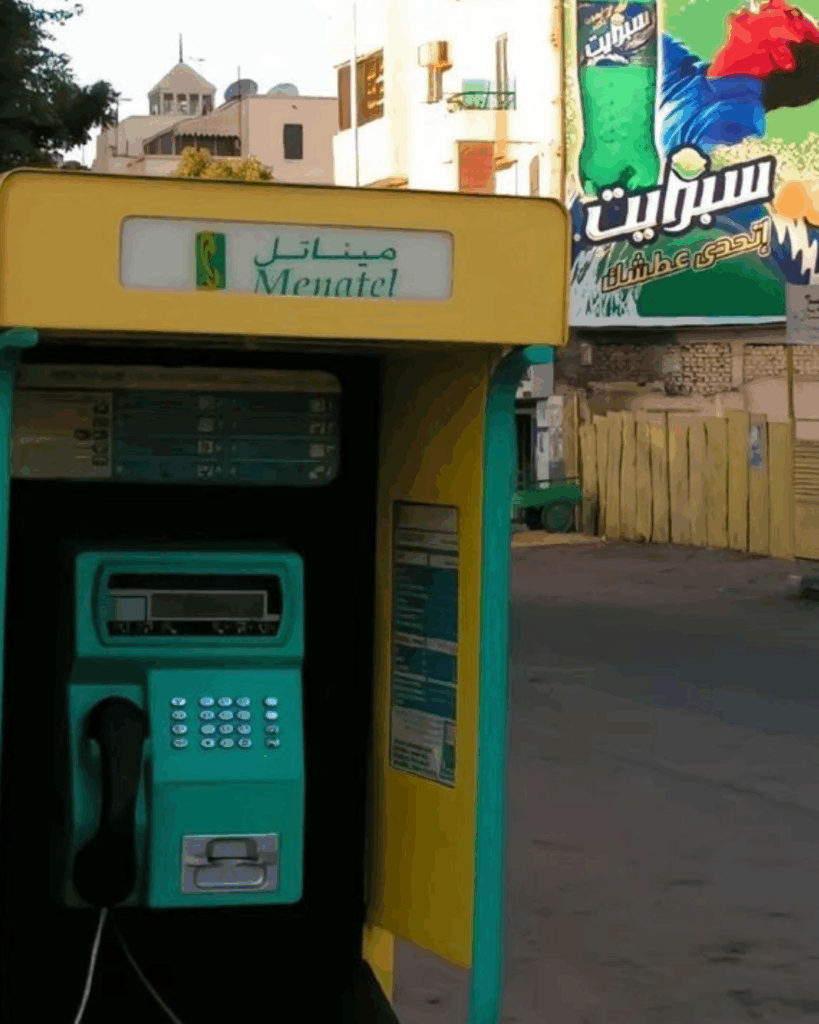
There’s something alluring about the nostalgia those memories evoke. A lot of simple things made us excited before the internet ruled the world, like scratching the prepaid cards before recharging our phones, or acting like we’re on a very important business call in a random Menatel phone booth.

The accessories were something else, too. Remember when we were all convinced that wearing the Power Balance bracelets made us feel more energized? And let’s not get started with the weird shapes and sizes we enjoyed making and stretching endlessly with the Silly Bandz!

These things, no matter how simple or minor, brought great joy and excitement in so many ways, boosting our creativity and making our childhoods unforgettable.

Ice Watch

Kiosk Credit Cards

Silly Bandz

Menatel Phone Booths

The BlackBerry Era

Skullcandy Headsets

Power Balance Bracelets

Which of these items do you miss most?

Categories
Egypt

How AI is Changing the Way People Speak and Write

Language in Egypt has regularly evolved with technology, and now, artificial intelligence (AI) and Large Language Models (LLMs), such as ChatGPT, are shaping written and spoken language in Egypt and worldwide. The sweeping linguistic shift appears in academic and professional writing, and in digital spaces too.

Egyptians, to this day, say “LOL,” laughing out loud, casually in everyday speech, and write it in the Arabic language on social media —a returning ghost from a past when instant messaging dominated online communication in the late 1990s and early 2000s and changed how people text and talk. 

People were using MSN Messenger worldwide, with shorthand words like LOL (laugh out loud), LMAO (laughing my a** off), and BRB (be right back) working their way from chat windows into everyday speech, including the digital culture in Egypt, too. 

Similarly, Instagram and Twitter, currently named X, brought their own vocabulary shift and introduced the new word “hashtag,” whereas people say “hashtag” mid-phrase casually in spoken English.

Now, AI is repeating that pattern, but the scale and speed of the shift are unprecedented.

A 2025 report from the Max Planck Institute for Human Development found that frequent use of large language model AIs like ChatGPT is measurably changing how people speak out loud. A cluster of words that these models tend to favor has made it into speech, such as “delve,” “meticulous,” “realm,” “intricate,” “tapestry,” and “underscore.” 

Words such as “pivotal,” “plethora,” or “vibrant” show up unusually often in blog posts, work reports, and LinkedIn posts. These AI-tinged phrases are quietly becoming shorthand for what “professional” communication is supposed to sound like, worldwide and in Egypt.

Researchers at Max Plan Institute advised in 2025 to pay attention to that phenomenon, as the more people use these tools, the more they absorb and reuse AI’s linguistic patterns.

What This Looks Like in Egypt

In Egypt and across the Middle East, ChatGPT is used daily, particularly among students, young professionals, and entrepreneurs. With more than 60 percent of the region’s population under 30, adoption has been rapid and wide-ranging. According to a 2024 study by Amr Assad, a digital media professor, Egyptian students use the tool for tutoring, translation, and essay writing. 

It is also advocated by people. A social media user, Ahmed Sysy, shared on Facebook for his friends and followers how AI can help students cover their full curriculum, boost productivity, and save time and effort by summarizing content, creating flashcards, generating quizzes, and building study schedules.

Startups also lean on it for market research and proposals. Professionals in the technology sector use it for coding assistance and client communications. 

The tool is also reshaping academic culture as well. Researchers now use AI in conducting studies and theses, and while university professors tolerate it for translation, they have grown skilled at detecting AI language in writing

The Bigger Risk

The deeper concern, however, is that AI-generated language becomes the dominant voice online. Linguistic diversity could quietly narrow until all writings, academic, scientific, creative, or narrative, start to sound the same. 

Since these models are designed to produce text that feels smooth, neutral, and professional, they tend to sand away the quirks, regional textures, and idiosyncrasies that make human expression interesting.

Human writing varies in sentence lengths, creating rhythm and emphasis, while AI writing averages similar lengths and sounds monotonous, using predictable prose with a neutral and clear tone.

When writing a resume profile summary, ChatGPT would take this sentence, “I am a writer who is interested in sharing stories, spreading awareness on important social issues, and widening horizons,” and give various alternatives that did not sound engaging.

ChatGPT provided three options. The first was “Writer focused on telling impactful stories, raising awareness of social issues, and broadening perspectives.” The second was “Writer dedicated to telling compelling stories, highlighting social issues, and expanding perspectives.” The final option was an alleged professional rewrite “Writer with a focus on impactful storytelling, social awareness, and broadening perspectives.”

All three rewrites are interchangeable, but devoid of the writer’s personal voice and less distinctive. The changes point to a shift where personal expression is giving way to a standardized and uniform style. 

While AI was originally trained on human-generated text, absorbing our language and cultural patterns, now, it appears, the process is beginning to run in reverse, and humans may be learning from it. The Max Planck researchers describe the process as “a closed cultural feedback loop.”

While machines were once shaped by human culture, they are currently reshaping it. Where that feedback loop leads is a question linguists, educators, and everyday writers are only beginning to grapple with.

Shop Egyptian Streets Store

Categories
Egypt

Egypt receives 510,000 tonnes of food imports in one week, Russia leads suppliers

Egypt’s National Food Safety Authority (NFSA) has reported a steady inflow of food imports during the final week of March and early April, alongside intensified monitoring measures to ensure product safety and protect consumer health.

According to the NFSA’s General Directorate of Exports and Imports, between March 28 and April 3, 2026, Egypt received 2,440 food consignments totalling around 510,000 tonnes. The shipments were handled by 995 importing companies and included key strategic commodities such as wheat, edible oils and soybeans, underscoring continued reliance on essential imports to meet domestic demand.

Russia topped the list of exporting countries, followed by France, Ukraine, Bulgaria and Argentina, among a total of 90 countries supplying the Egyptian market during the week.

In terms of entry points, Alexandria Port remained the busiest, receiving 860 consignments, followed by Cairo International Airport with 545 shipments, and Suez Port with 311 shipments, reflecting the diversity of logistical channels serving the country’s food supply chain.

The report also highlighted customs clearance activity, noting that 1,286 consignments were released under temporary custody, while 672 shipments were processed through the expedited clearance system, helping accelerate circulation without compromising regulatory oversight. In addition, 100 cases were handled under decisions by the NFSA’s complaints committee.

During the same period, the authority issued import licences to 119 companies to ensure compliance with approved standards. As part of its inspection regime, 256 consignments were held for further checks, while 27 shipments were rejected following laboratory analysis. Five rejected shipments were subsequently re-exported to prevent congestion at ports and maintain smooth logistics, while upholding strict food safety standards.

On the export side, Egyptian food shipments also recorded strong performance. The NFSA reported that 5,065 consignments, totalling approximately 230,000 tonnes, were exported by around 1,400 companies, covering nearly 730 product categories, including fresh produce, processed foods, flour and grain-based products.

Fruit exports reached 70,000 tonnes across 36 varieties, led by citrus at 45,000 tonnes, followed by strawberries at 20,000 tonnes and other fruits at 5,000 tonnes. Vegetable exports totalled 55,000 tonnes across 45 varieties, with potatoes accounting for 25,000 tonnes, followed by sweet potatoes and beans at 5,000 tonnes each.

Egyptian exports reached 186 countries during the week, with Saudi Arabia, Russia, Syria, Netherlands and Jordan among the leading destinations, highlighting the expanding global footprint of Egypt’s agri-food sector.

Export operations were supported by multiple ports, with Damietta Port handling 830 shipments, Safaga Port 767 shipments, and Alexandria Port 642 shipments.

To support exporters, the NFSA issued 1,375 health certificates in line with international standards, reinforcing product compliance and market confidence. It also granted 3,218 export permits for agricultural products through oversight of packing houses and processing facilities, benefiting 1,582 exporting companies and facilitating smoother trade flows while enhancing the competitiveness of Egyptian products in global markets.

Categories
Egypt

Egypt Raises Electricity Tariffs for High-Use Households and Commercial Users Starting in April


Egypt will raise electricity prices for commercial customers and for higher-use residential consumption brackets starting in April, the Ministry of Electricity and Renewable Energy said on Saturday 4 April in a statement, citing a “severe and unprecedented” global energy crisis linked to the ongoing conflict in the Gulf region. 

The ministry emphasized that the decision is intended to preserve electricity supply while ensuring the increases would not apply to lower household consumption tiers, which account for the majority of subscribers.

Commercial customers typically include businesses, offices, shops, and industrial facilities, while higher-use residential customers are households that consume electricity above the standard due to larger homes, multiple air-conditioning units, or high-powered appliances.

The Ministry of Electricity and Renewable Energy estimated that around 40 percent of customers fall within the lower consumption bands, adding that 86 percent of those users would be fully exempt from the new price hikes. 

Electricity tariffs for households consuming up to 2,000 kilowatt-hours per month will remain unchanged, while consumption above that threshold and higher residential brackets will face an average increase of about 16 percent.

For commercial users, the ministry said prices would rise across all consumption brackets by an average of around 20 percent. It described the approach as a “fair distribution of burdens,” arguing that higher-consuming and more financially capable users should bear a larger share of the adjustment. 

The April tariff revision forms part of a wider set of steps taken by the government to curb energy use and reduce fiscal pressure. The ministry linked the decision to rising energy import costs, which have strained public finances. 

Prime Minister Mostafa Madbouly said in March 2026 that Egypt’s energy import bill had more than doubled since the war involving the United States, Israel, and Iran began, prompting additional policy measures such as higher fuel prices, increases in public transport fares, and the slowing of some state projects to ease pressure on government spending.

Egypt began implementing demand-rationalization measures in March, including earlier closing hours for commercial venues, as global oil prices rose. 

The government is also operating under significant debt burdens, with interest payments consuming about half of government spending in the current fiscal year, while inflation remains in double digits after peaking at 38 percent in September 2023.

Shop Egyptian Streets Store

Categories
Egypt

Iran rehabilitates missile sites within hours of strikes, US intelligence says

US intelligence reports indicate that Iran is rehabilitating missile bunkers and silos within hours of being targeted by American and Israeli strikes, according to the New York Times, casting doubt on military assessments regarding the destruction of Tehran’s missile capabilities.

While the Pentagon announced this week that “significant progress” had been made against Iran, US intelligence agencies have questioned how close the United States is to achieving one of its primary war aims: the elimination of Iran’s missile capacity. During a briefing this week, the Pentagon stated it had struck 11,000 targets in Iran over five weeks of conflict.

US officials familiar with the intelligence told the New York Times that although agencies have not precisely estimated the number of remaining launchers, Iran maintains a significant number of mobile platforms and ballistic missiles capable of attacking Israel and other regional states.

US Secretary of State and National Security Advisor Marco Rubio has identified the degradation of Iran’s missile capability as a primary objective of the war. Secretary of War Pete Hegseth has also frequently cited the damage inflicted by US and Israeli strikes and a noted decline in Iranian missile attacks.

“Yes, they will fire some missiles, but we will shoot them down,” Hegseth said last Monday. “It is noteworthy that the last 24 hours saw the lowest number of missiles and drones launched by Iran. They will be hidden underground, but we will find them.”

White House officials noted that the rate of Iranian missile and drone launches has fallen sharply since the start of the war. White House spokesperson Anna Kelly said in a statement that Iranian ballistic missile and drone attacks have decreased by 90 per cent. Kelly added that the Iranian navy has been destroyed, two-thirds of production facilities are damaged or destroyed, and the US and Israel maintain “overwhelming air superiority.”

However, US intelligence agencies believe Iran is concealing a large number of launchers within bunkers and caves to protect them from bombardment. Officials suggest Tehran intends to preserve as much of its missile capability as possible to maintain leverage if the conflict continues or to serve as a threat after the war ends.

Despite a more “cautious” use of its arsenal, Iran has continued to strike Israel. Current and former US officials told the New York Times that Iran has been launching approximately 20 missiles a day, often one or two at a time. A Western official said on Friday that daily launches include 15 to 30 ballistic missiles and between 50 and 100 one-way attack drones.

Former officials stated that internal disagreements within the Iranian government have hampered command and control, making it difficult for Tehran to coordinate large-scale simultaneous launches.

Accurate assessments of Iran’s current capabilities remain difficult due to the widespread use of decoys. US authorities are uncertain how many destroyed targets were actual launchers versus “dummy” sites. Although the US held estimates of Iran’s arsenal before the war, officials acknowledged those figures were not precise, particularly regarding launchers hidden in caves or bunkers.

While underground silos and caves may appear damaged initially, Iran has been able to quickly extract launchers and return them to service. An earlier report by CNN, which officials said aligns with intelligence ranges, suggested Iran retains half of its missile launchers. Additionally, the Israeli newspaper Haaretz reported that Iran has used bulldozers to dig out and recover missile platforms that had been buried or fortified within underground bunkers.