Categories
Travel-Africa

100 Best Things to do in Africa (Ultimate Bucket List)

Africa is not a single destination — it’s a continent of contrasts, where vast deserts meet lush rainforests, ancient civilisations sit beside modern cities, and wildlife still roams freely across iconic savannahs. From world-famous safari experiences to hidden cultural gems, this is your ultimate guide to the best things to do in Africa.

This bucket list covers wildlife, adventure, culture, beaches, landscapes, and history across the continent. I have done several of them but the rest remain on my bucket list for now.

100 Best Things to Do in Africa

Iconic Safari & Wildlife Experiences

Chobe National Park

Elephants in Chobe National Park

  1. Witness the Great Migration — Masai Mara National Reserve, Kenya
  2. Safari in the Serengeti — Serengeti National Park, Tanzania
  3. See gorillas in Bwindi Impenetrable Forest — Uganda
  4. Spot the Big Five in Kruger National Park — South Africa
  5. See chimpanzees in Kibale Forest — Uganda
  6. Track cheetahs in the Kalahari — Botswana / Namibia
  7. Watch lions hunting in the Okavango Delta — Botswana
  8. See flamingos at Lake Nakuru — Kenya
  9. Visit Lake Bogoria flamingos — Kenya
  10. See hippos in Liwonde National Park — Malawi
  11. Watch wild dogs in Ruaha National Park — Tanzania
  12. Watch elephants in Chobe National Park — Botswana
  13. Visit David Sheldrick Wildlife Trust — Nairobi, Kenya
  14. See lemurs in Berenty Reserve — Madagascar
  15. Spot Ethiopian wolves in the Bale Mountains — Ethiopia

Deserts, Landscapes & Natural Wonders
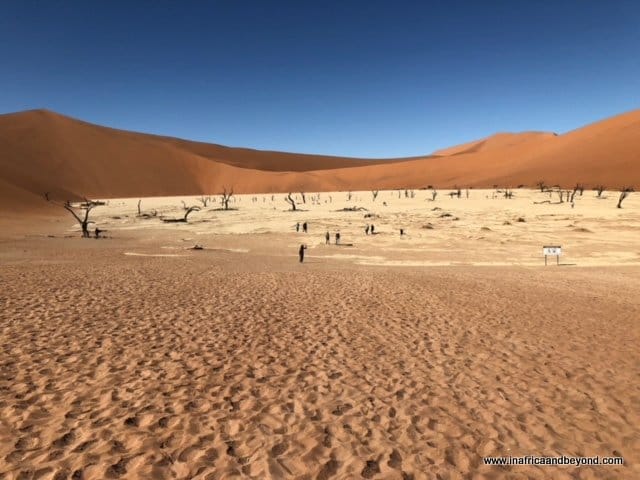
Desert, sand dunes and dead trees at Sossusvlei and Deadvlei

Sossusvlei and Deadvlei

  1. Feel the mist at Victoria Falls — Zambia / Zimbabwe
  2. See the Blyde River Canyon, the greenest canyon in the world — South Africa
  3. Explore the Sahara Desert by camel — Morocco
  4. Watch sunrise over Sossusvlei dunes — Namibia
  5. Stargaze in the Namib Desert — Namibia
  6. Visit Fish River Canyon — Namibia
  7. Explore the Blue Nile Gorge — Ethiopia
  8. Visit the Ngorongoro Crater — Tanzania
  9. Hike the Drakensberg Mountains — South Africa / Lesotho
  10. Enjoy the views at the Cape of Good Hope, the edge of Africa — South Africa
  11. Go to the top of Table Mountain in Cape Town, South Africa

Beaches, Islands & Coastal Escapes
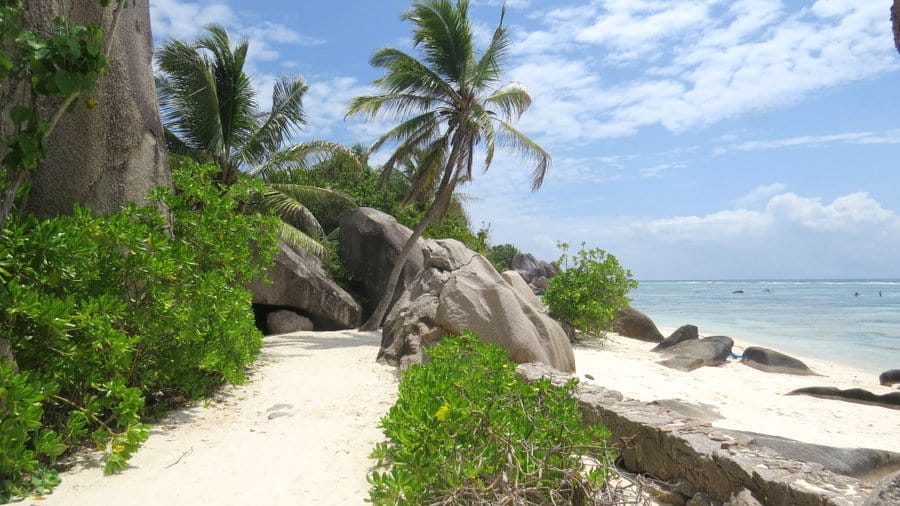
reasons to visit Seychelles

Anse Source D’Argent

  1. Sunbathe on Diani Beach — Kenya
  2. Explore Zanzibar’s beaches — Tanzania
  3. Relax at Anse Source d’Argent — La Digue, Seychelles
  4. Visit the Bazaruto Archipelago — Mozambique
  5. Discover Mnemba Island — Tanzania
  6. Explore the Quirimbas Archipelago — Mozambique
  7. Swim in Lake Malawi — Malawi
  8. Visit Watamu beaches — Kenya
  9. Enjoy 5-star luxury on Mauritius Island — Mauritius
  10. Explore the Cape Verde Islands — Cape Verde

History, Culture & Ancient Civilisations
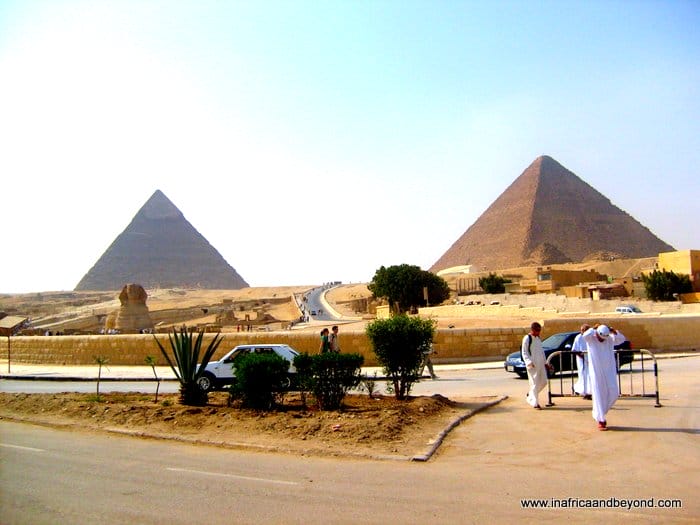
The Pyramids of Giza

The Pyramids of Giza

  1. Explore the pyramids of Giza — Egypt
  2. Discover the Valley of the Kings — Luxor, Egypt
  3. Walk through the rock-hewn churches of Lalibela — Ethiopia
  4. Visit the ancient obelisks of Aksum — Ethiopia
  5. Explore Great Zimbabwe ruins — Zimbabwe
  6. Visit the ruins of Carthage — Tunisia
  7. Discover Leptis Magna — Libya
  8. Explore Timbuktu — Mali
  9. Visit Gorée Island — Senegal
  10. Tour the Kigali Genocide Memorial — Rwanda

Cities, Markets & Cultural Experiences
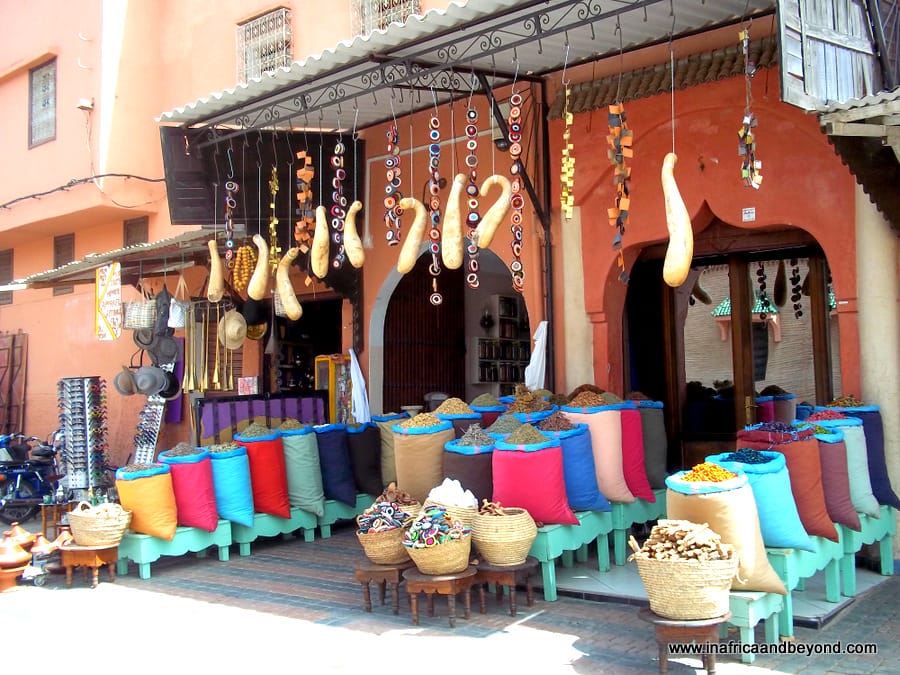
7-day Morocco itinerary

Market in Marrakech

  1. Walk the Marrakech medina — Morocco
  2. Explore the tanneries of Fez — Morocco
  3. Visit Chefchaouen, the Blue City — Morocco
  4. Discover Stone Town — Zanzibar, Tanzania
  5. Explore the museums of Addis Ababa — Ethiopia
  6. Visit the markets of Nairobi — Kenya
  7. Explore Kampala’s city markets — Uganda
  8. Discover the medina of Tunis — Tunisia
  9. Visit Dakar’s arts scene — Senegal

Adventure Activities
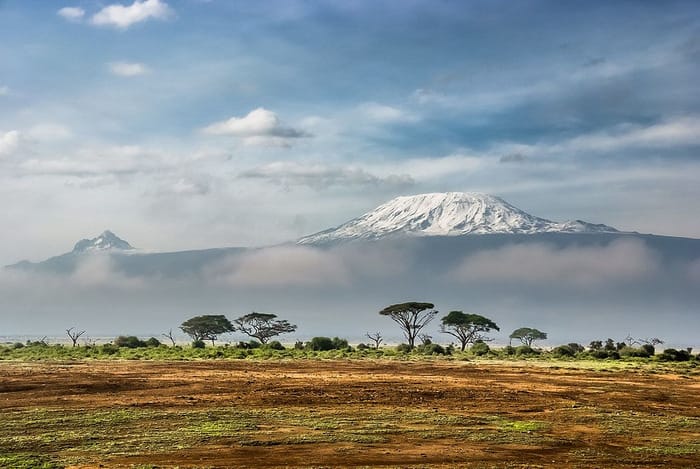
Climbing Mount Kilimanjaro

Mount Kilimanjaro (cc: Sergey Pesterev)

  1. Climb Mount Kilimanjaro — Tanzania
  2. Bungee jump off Bloukrans Bridge — South Africa
  3. White-water raft the Zambezi River — Zambia / Zimbabwe
  4. Paraglide over the Atlas Mountains — Morocco
  5. Hot air balloon safari over the Masai Mara — Kenya
  6. Kite-surf at Dakhla Lagoon — Morocco
  7. Surf at Jeffreys Bay — South Africa
  8. Kayak the Okavango Delta — Botswana
  9. Trek Mount Toubkal — Morocco

Hidden Gems & Unique Experiences
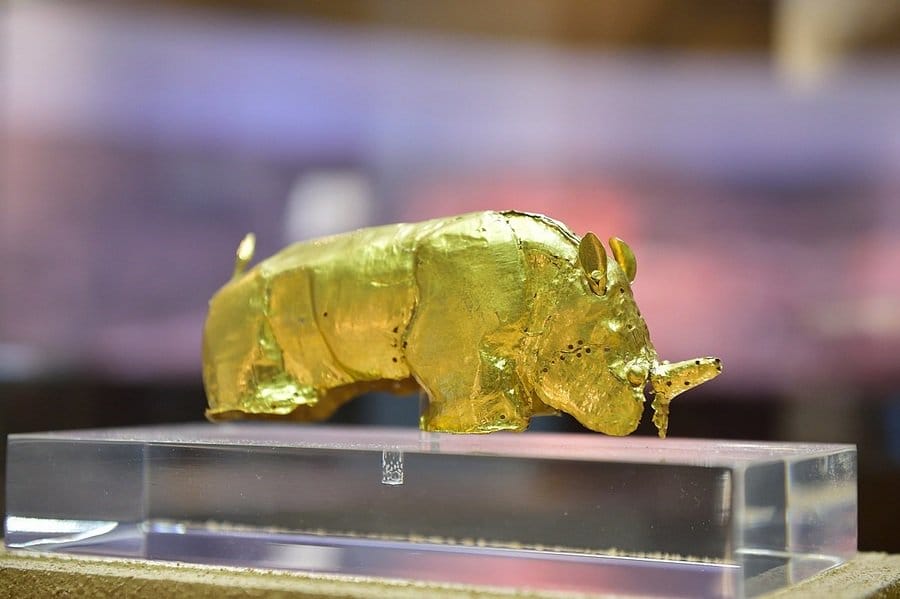
UNESCO World Heritage Sites in South Africa

The Golden Rhino – Mapungubwe Cultural Landscape (cc: Wikimedia Commons)

  1. Explore Lake Bunyonyi — Uganda
  2. Visit Lake Turkana — Kenya
  3. Discover the stilt villages of Lake Nokoué — Benin
  4. Explore Ilha de Moçambique — Mozambique
  5. Visit Swakopmund — Namibia
  6. Explore Virunga National Park — DR Congo
  7. Visit Volcanoes National Park — Rwanda
  8. Discover Olduvai Gorge — Tanzania
  9. Explore Mapungubwe heritage site — South Africa
  10. Visit Sidi Bou Said — Tunisia

Scenic Drives, Rail & Epic Journeys
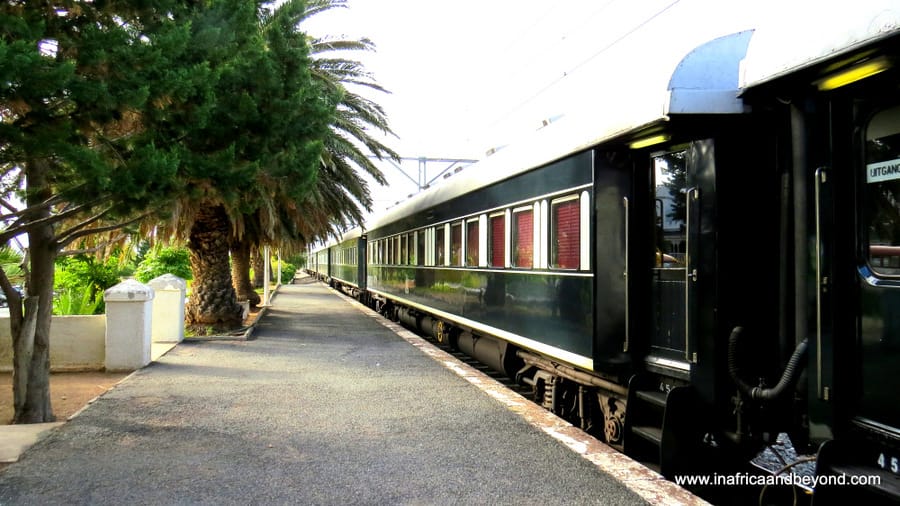
Rovos Rail in Matjiesfonein

Rovos Rail in Matjiesfonein

  1. Drive the Garden Route — South Africa
  2. Travel the Panorama Route — South Africa
  3. Ride a luxury train from Cape Town to Pretoria — South Africa
  4. Explore Lake Victoria by boat — East Africa
  5. Take a dhow cruise along the coast — Mozambique
  6. Take a felucca on the Nile — Egypt

Once-in-a-Lifetime Experiences
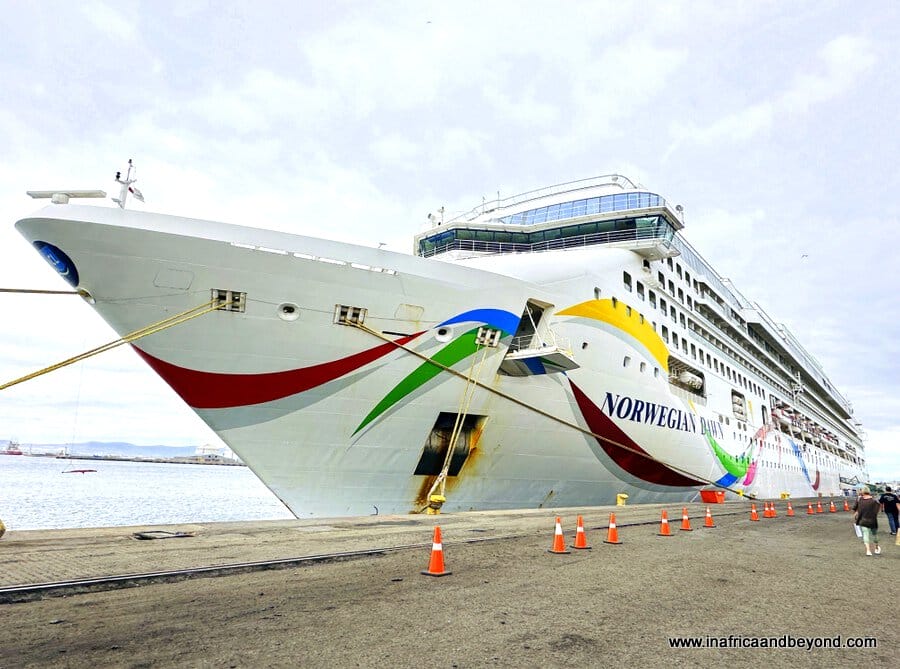
An African Cruise on the Norwegian Dawn

Norwegian Dawn docked in Cape Town

  1. Sleep under the stars in the Kalahari — Botswana
  2. Camp in the Sahara Desert — Morocco
  3. Watch humpback whales in Hermanus — South Africa
  4. See turtle hatchings in Watamu — Kenya
  5. Experience a Maasai cultural encounter — Kenya / Tanzania
  6. Stay in a treehouse safari lodge in Tsavo — Kenya
  7. Watch the Milky Way from the Namib Desert — Namibia
  8. Cruise from Mauritius to Cape Town

More Must-Do Experiences Across Africa
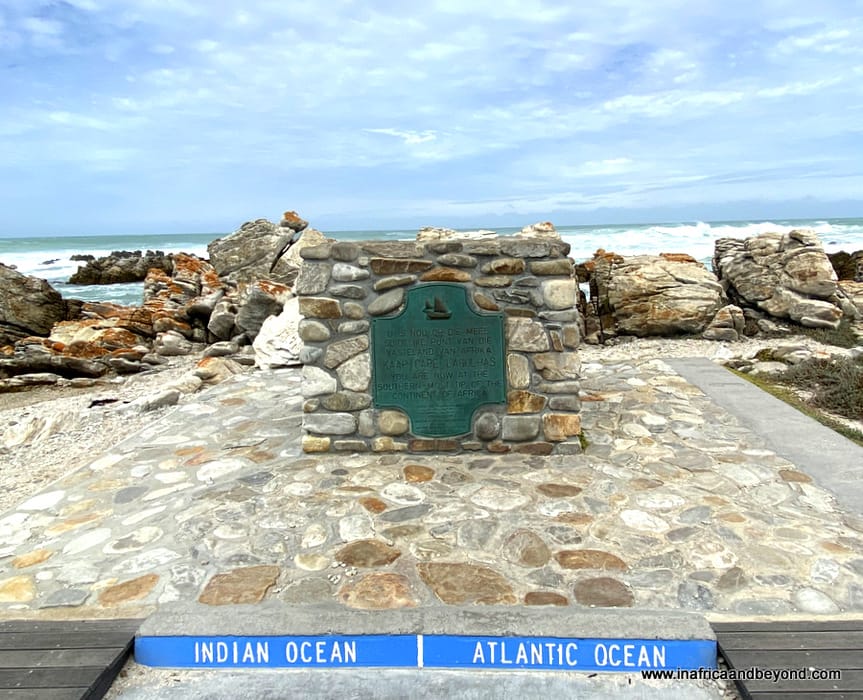
Meeting point of two oceans at Cape Agulhas

Cape Agulhas

  1. Explore Siwa Oasis — Egypt
  2. Visit Zanzibar spice farms — Tanzania
  3. Explore the Tassili n’Ajjer rock art — Algeria
  4. Visit Lake Retba, the Pink Lake — Senegal
  5. Explore the shores of Lake Tanganyika — Tanzania / DR Congo
  6. Visit Lamu Old Town — Kenya
  7. Discover the Simien Mountains escarpments — Ethiopia
  8. Hike the Fish River Canyon trails — Namibia
  9. Visit the southernmost tip of Africa at Cape Agulhas, where the Atlantic and Indian Oceans meet — South Africa
  10. Discover the prehistoric rock art of the Sahara — Algeria / Libya
  11. Visit the Coptic monasteries of Wadi Natrun — Egypt
  12. Take a pirogue along the Niger River — Mali

“Africa is mystic; it is wild; it is a sweltering inferno; it is a photographer’s paradise, a hunter’s Valhalla, an escapist’s Utopia.” – Beryl Markham

See my favourite books about Africa.
100 Best Things to do in Africa

Categories
Travel-Africa

The Rand Club – A Johannesburg Institution

The Rand Club in Johannesburg

In the heart of Johannesburg stands a grand establishment that is almost as old as the city itself. However, most Joburgers are probably unaware of its existence. We visited the club for a tour.

The Rand Club was founded in 1887, just a year after the city was born on the goldfields of the Witwatersrand. The world’s richest gold reef had been discovered, a city was rising rapidly from the veld, and the men who were making fortunes needed somewhere to put on a jacket, make deals, and discuss their fortunes. The Rand Club was that place.

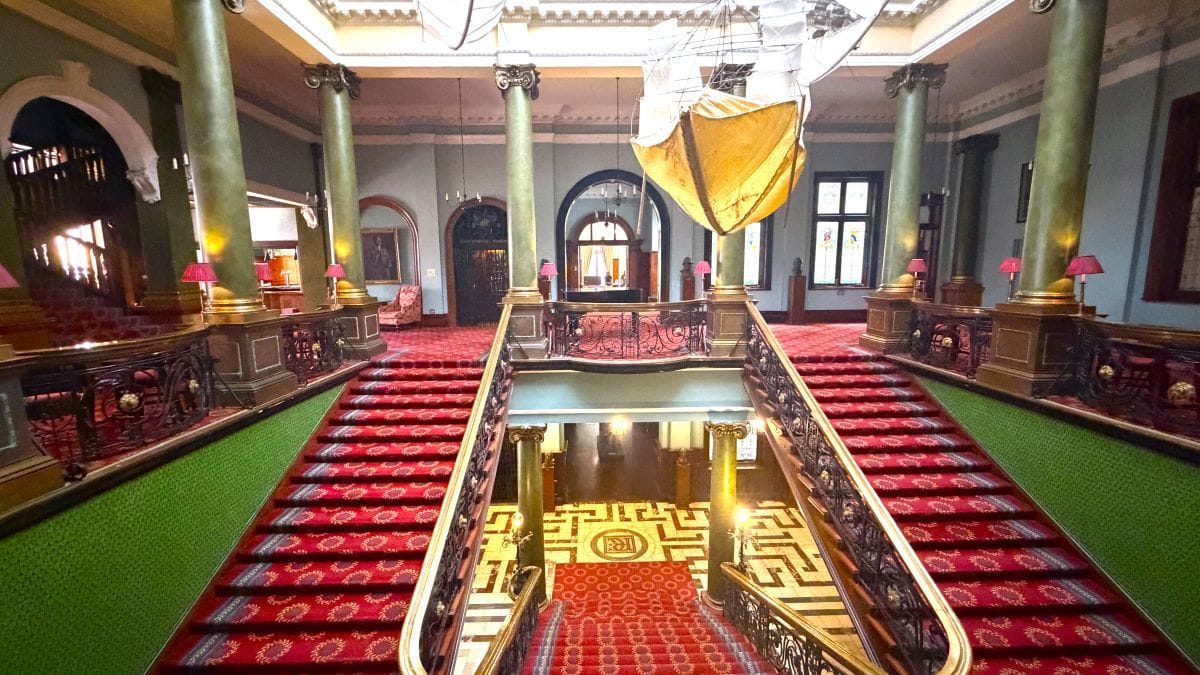
Rand Club staircase

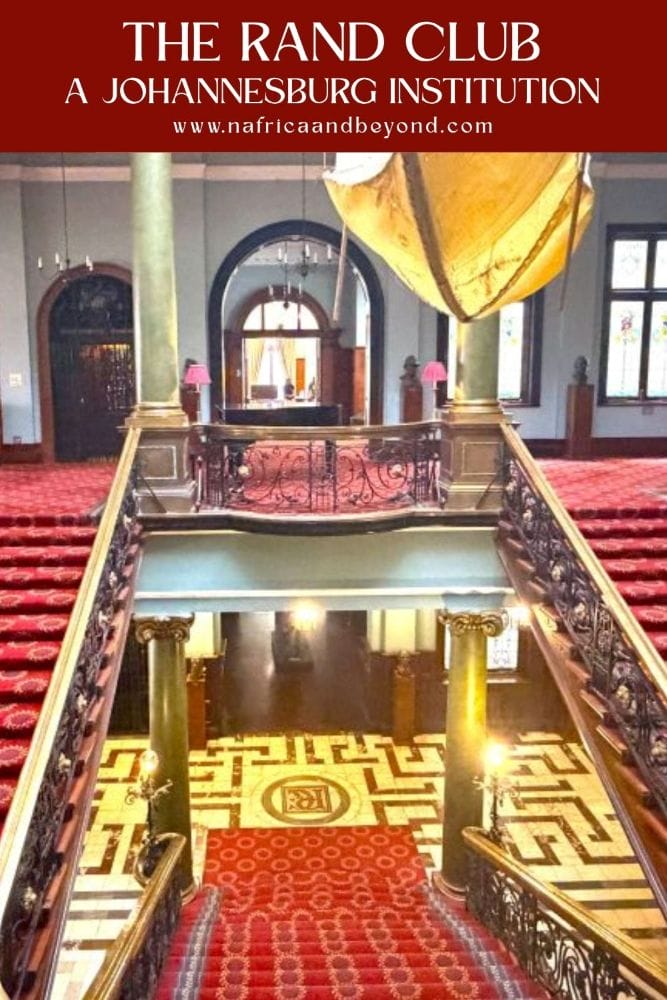
Rand Club staircase

Cecil John Rhodes is said to have personally chosen the site, declaring, “This corner will do for the club.” Situated at the corner of Commissioner and Loveday Streets, the first Rand Club was a modest brick-and-thatch pavilion. It was rebuilt three times. The current building dates back to 1904, although parts of it were restored and refurbished after a devastating fire in 2005. Once you step inside, you are transported to another era by the grand sweeping staircase, dark wood-panelled walls, antique furnishings, and marble floors.

Our tour guide was David, the manager of the club, who previously served as one of Nelson Mandela’s security guards. He had many fascinating anecdotes to share as we explored the building.

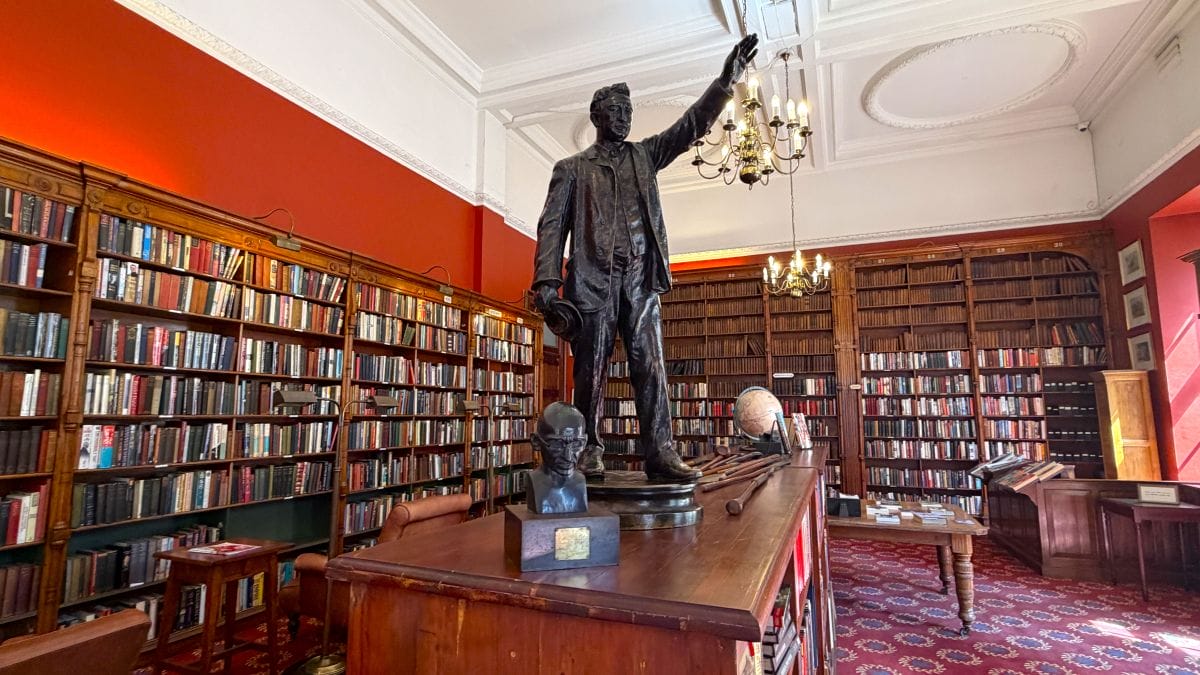
Buckland Library - The Rand Club in Johannesburg

Buckland Library

Here are some interesting facts about the Rand Club:

  • The magnificent Buckland Library holds more than 10,000 volumes, including rare and contemporary books.
  • The club has a large collection of valuable artworks although many were lost during the fire.
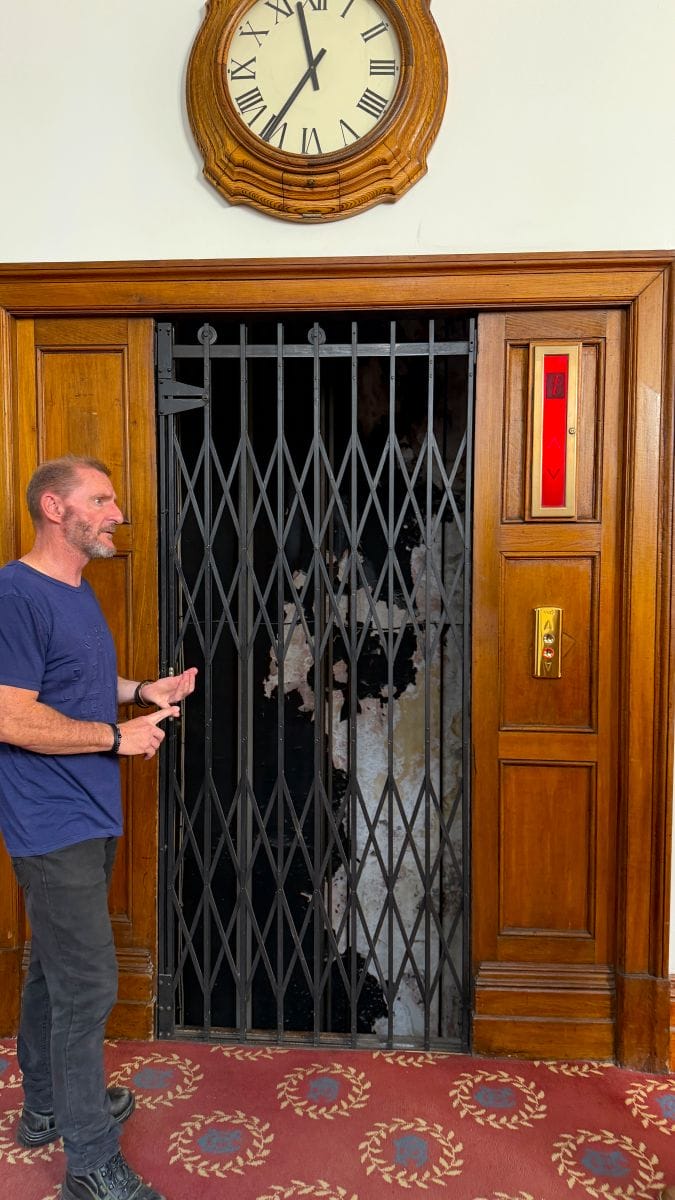
  • Johannesburg’s oldest working lift still runs in the building and we used it to visit the various levels.
Rand Club Lift

David with the oldest working lift in South Africa

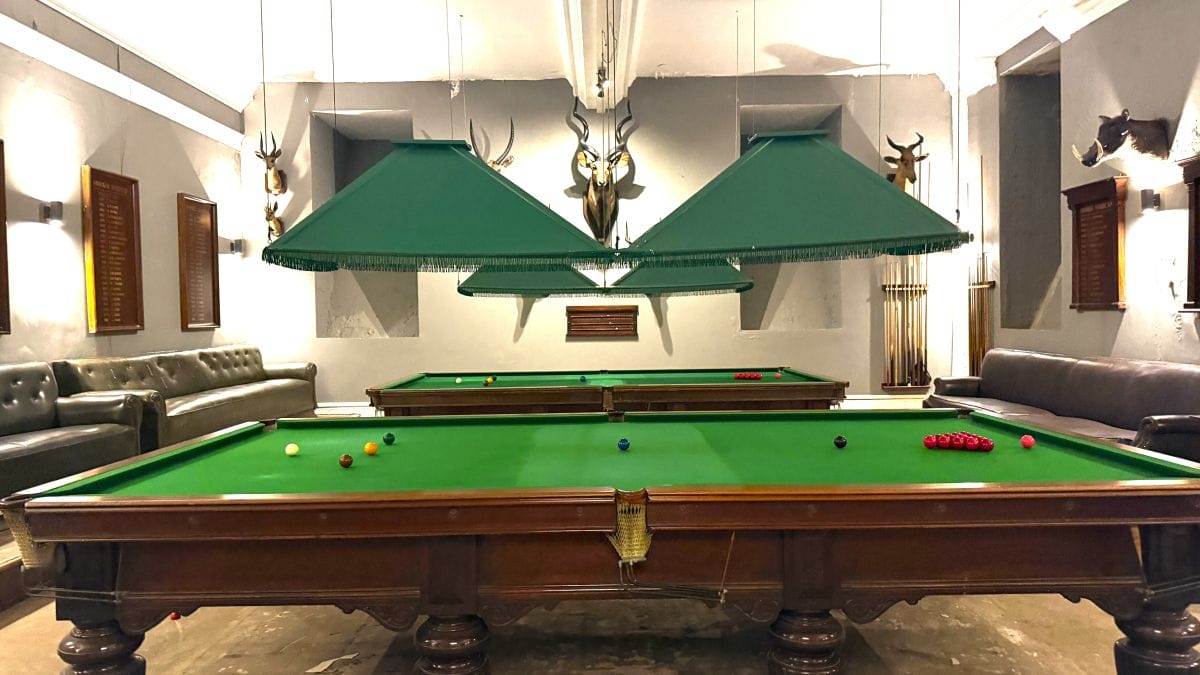
  • The Snooker Room on the lower level of the clubhouse is adorned with hunting trophies and holds three full-sized slate snooker tables, where Rhodes is believed to have played with real diamonds.
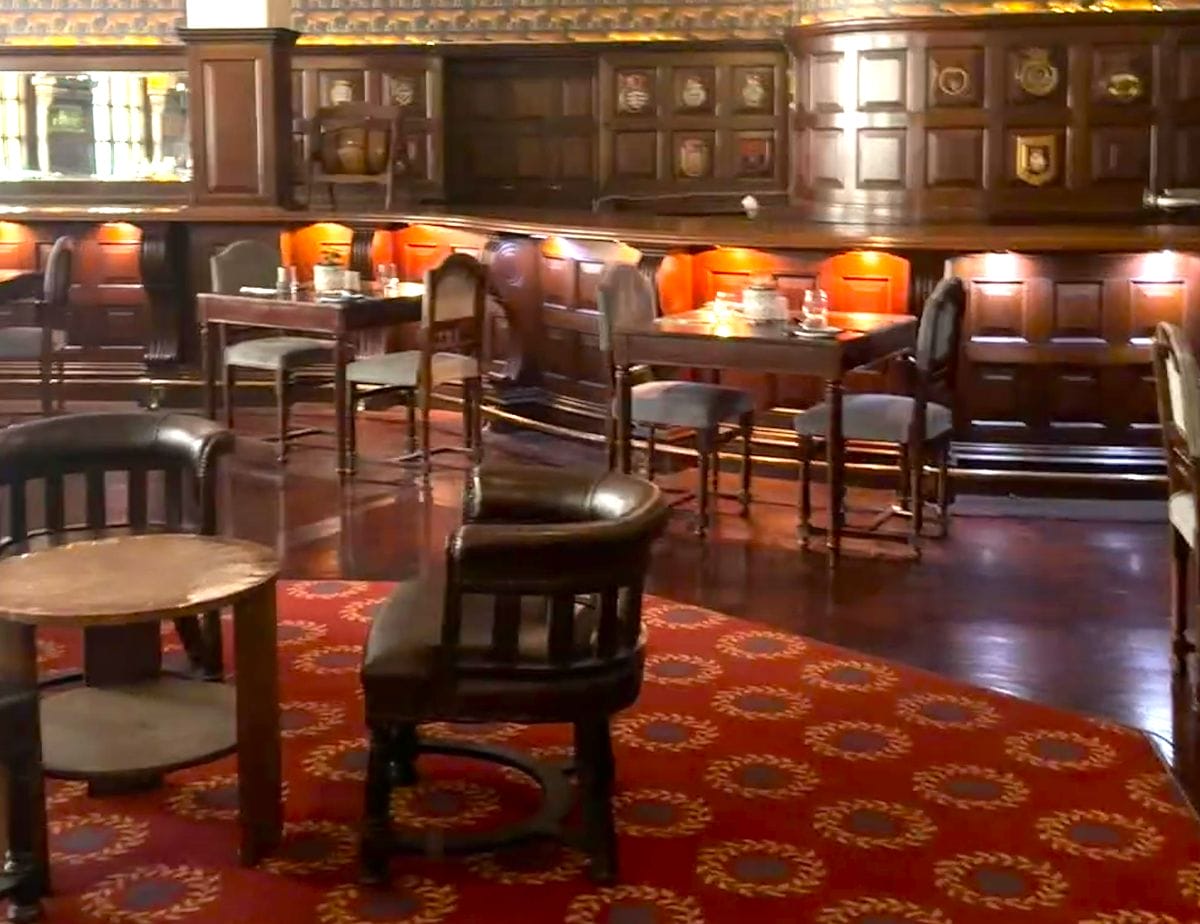
  • The club is home to the longest bar in Africa at 31 metres.
  • Like many colonial-era institutions, only white men were initially allowed at the club. It opened to women and people of colour in 1993, with membership only becoming fully-inclusive in 2016.
  • Princess Elizabeth, the future Queen Elizabeth II, was the exception. She was the only woman permitted to walk up the grand staircase before 1993, during her visit in 1947. However, she was not allowed to stay at the club like the men and is said to have slept on the train nearby.
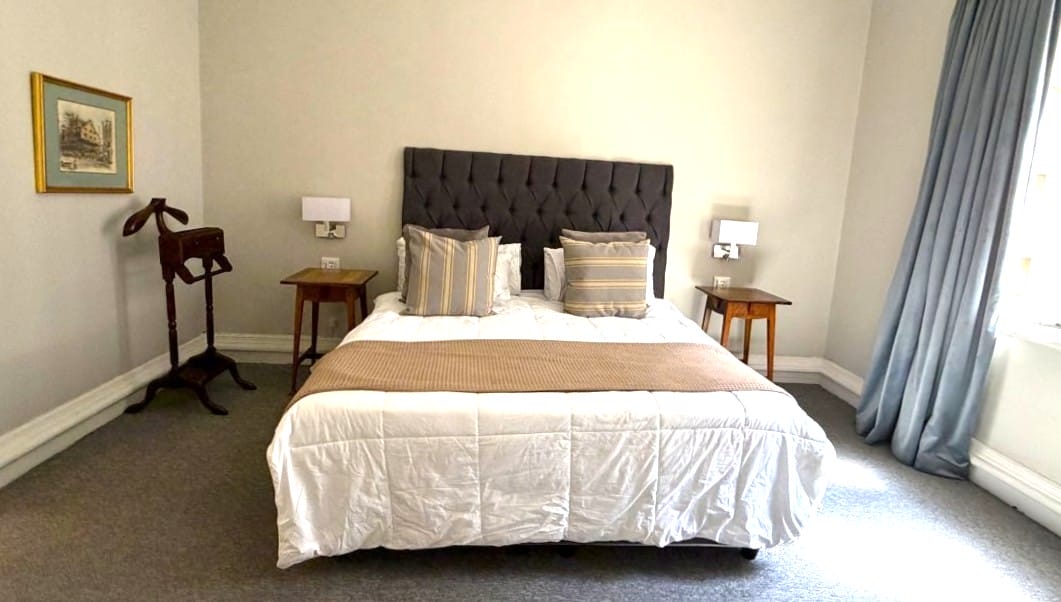
  • The club has luxury accommodation available for both members and guests. Members receive a complimentary night’s stay on their birthday.
Rand Club Rooms

Rand Club Rooms

  • Membership dwindled from around 4000 in its heyday to around 400 currently, largely due to movement of people out of the city.
  • The club was temporarily closed in October 2015 due to financial strain and declining membership. It reopened in late 2016 with a renewed vision — transforming from an exclusively members-only institution into a more accessible heritage venue that could adapt to a changing Johannesburg. Functions and conferences are also held here regularly these days.
The Snooker Room - Rand Club

The Snooker Room

Why you should go there

Johannesburg is not a city that cherishes its past. Many prominent buildings have disappeared overnight. Against all of this, the Rand Club persists. It is remarkable that a building conceived in the fever of a nineteenth-century gold rush, plotted by empire-builders and mining magnates, is still standing, still functioning, still relevant — and now welcoming people who would have been barred at the door for most of its history. That resilience is what makes it worth visiting.

“The Rand Club was not simply a venue for private dining and conversation, but a symbol of Johannesburg’s civic ambition, designed to embody the permanence of a city many assumed would be temporary.”
— Professor Clive Chipkin, architectural historian

The longest bar in Africa Rand Club

The longest bar in Africa

Rand Club Tours

Tours are held on Wednesday and Friday mornings and cost R100 per person. We booked ours via the club’s website, which directed us to Quicket. I would suggest emailing the club directly after purchasing tickets, as the staff did not seem to know about our booking until I followed up. We arrived just before the tour start time, but they were not ready for us, and we waited about 15–20 minutes before it began. We were the only people on the tour. Secure parking is available outside the building.

See my video of the tour here:

For more information, visit the Rand Club.

See more things to do in Johannesburg.

The Rand Club in Johannesburg

Categories
Travel-Africa

A Guide to Shark Diving and Marine Wildlife

A Guide to Shark Diving and Marine Wildlife

Cape Town is one of the few places in the world where you can experience a wide range of marine wildlife within a short distance of the city. The coastline offers access to whales, dolphins, seals, and sharks, all supported by a unique ocean ecosystem shaped by two major currents.

For travellers looking to go beyond standard sightseeing, ocean-based experiences provide a direct connection to the natural world. Among these, shark diving stands out as one of the most structured and widely recognised activities available in South Africa.

This guide explains how shark diving works, where to go, and how to choose the right experience based on your travel plans.

Why Cape Town Is a Leading Marine Destination

Cape Town’s location creates ideal conditions for marine life. The interaction between the Atlantic and Indian Ocean oceans supports a diverse ecosystem that attracts a wide range of species.

False Bay, located near Cape Town, has been studied for decades and remains one of the most accessible marine environments globally. The proximity to the city means visitors can reach key launch points quickly, without the need for long travel days.

This accessibility makes Cape Town one of the most practical destinations for ocean-based experiences.

A Guide to Shark Diving and Marine Wildlife

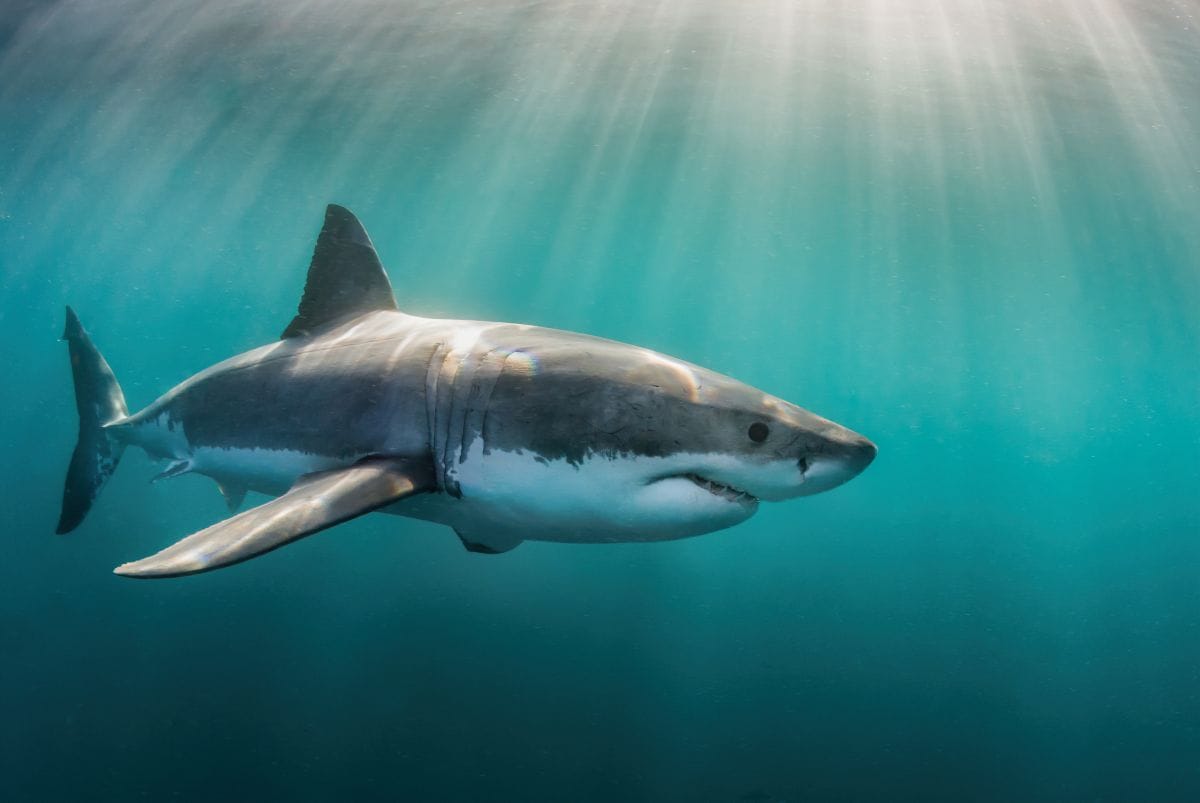
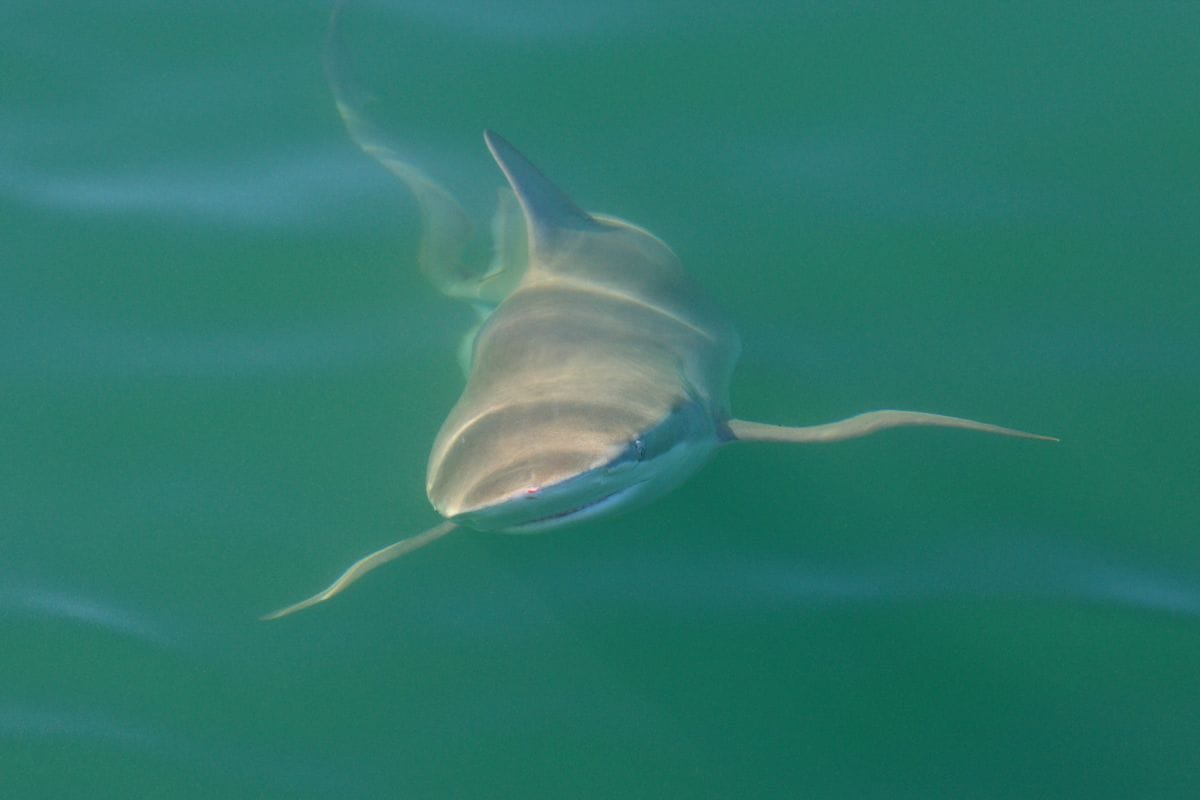
Great White – False Bay, Cape Town

What Makes Shark Diving Unique

Shark diving is not a typical tour. It is a controlled wildlife experience designed to allow observation without interfering with natural behaviour.

The activity involves a cage attached to the side of a boat. Participants enter in small groups and hold onto the bars while sharks move through the water nearby. When a shark approaches, guests can lower their heads below the surface to view it clearly.

There is no need for scuba certification, which makes the experience accessible to most visitors.

For those planning a trip, shark cage diving Cape Town offers one of the most structured ways to observe sharks directly in Cape Town.

Where Shark Diving Takes Place

Shark diving in Cape Town takes place in False Bay, with trips departing from Simon’s Town in Cape Town. This allows visitors to access the experience easily.

The location provides direct access to active marine areas while maintaining a coordinated and efficient trip format.

In contrast to more remote destinations, this setup improves both convenience and consistency.

What Sharks Can You Expect to See

Shark sightings in Cape Town have evolved over time. While great white sharks were historically the most commonly observed species, changes in the marine ecosystem have influenced their presence.

Today, visitors are more likely to encounter:

  • Bronze whaler sharks
  • Sevengill sharks

These species are active and often provide strong viewing opportunities.

It is important to understand that sharks are wild animals. Sightings can vary depending on environmental conditions such as water temperature, visibility, and seasonal patterns.

The Role of Research in Shark Diving

Shark diving in Cape Town is closely linked to marine research. Operators spend a significant amount of time observing sharks, which allows them to collect valuable data.

This includes:

  • Tracking shark sightings
  • Monitoring behaviour
  • Understanding environmental changes

Over time, this information contributes to broader conservation efforts and helps improve how the activity is managed.

For visitors, this adds an educational layer to the experience. It is not just about seeing sharks, but also understanding their role in the ecosystem.

Safety and Regulation

Safety is a central part of shark diving operations in South Africa. Licensed operators must follow strict guidelines that cover equipment, crew training, and environmental practices.

Before entering the water, guests receive a safety briefing that explains:

  • How the cage works
  • How to position yourself
  • What to expect during the dive

The cage remains attached to the boat and is monitored by crew at all times. his ensures the experience remains controlled and well managed

For most visitors, this planned approach is what makes shark diving both accessible and safe.

Bronze Whaler Shark

Bronze Whaler Shark

Cape Town vs Gansbaai: Understanding the Difference

Cape Town offers shark diving directly from within the city, with trips operating in False Bay and departing from Simon’s Town. This allows visitors to access the experience without leaving Cape Town.

In comparison, Gansbaai is located in the Overberg region of the Western Cape, around two and a half hours from the city. Trips to this area typically require a full-day commitment due to travel time.

If you are comparing options, shark cage diving Gansbaai provides a different experience due to its location and trip structure.

Key Differences

Cape Town (False Bay):

  • Based in Cape Town
  • Half-day trips
  • No long-distance travel required

Gansbaai (Overberg):

  • Located outside Cape Town
  • Full-day experience
  • Requires travel from the city

For most travellers, Cape Town is the more convenient option. Gansbaai may appeal to those who prefer a road trip.

Planning Your Shark Diving Experience

To make the most of your shark diving experience, it is important to plan ahead.

Choose an Experienced Operator

The quality of your experience depends heavily on the operator. Look for companies with a strong track record, clear safety procedures, and consistent operations.

Understand the Schedule

Most Cape Town trips are half-day experiences. This allows you to combine shark diving with other activities during your stay.

Be Flexible With Conditions

Ocean conditions can change. Weather and visibility may affect trip schedules, so it is useful to allow some flexibility in your plans.

Know What Is Included

Standard packages usually include:

  • Boat transfer
  • Safety equipment
  • Wetsuits
  • Guidance from crew

Checking these details in advance helps avoid confusion on the day.

Other Marine Experiences in Cape Town

While shark diving is one of the most recognised activities, there are several other ways to experience the ocean.

Snorkelling

One of the most unique experiences is diving in the Great African Seaforest.

Whale Watching

During the right season, whale watching is one of the main attractions. Southern right whales can often be seen along the coast.

Kayaking

Kayaking trips provide a quieter way to explore the coastline. It is common to encounter seals and seabirds during these outings.

Boat Cruises

Boat-based tours offer a broader overview of marine life and are suitable for visitors who prefer a less immersive experience.

These activities can be combined with shark diving to create a well-rounded marine itinerary.

Why Shark Diving Continues to Grow in Popularity

Shark diving has remained popular because it offers a direct and structured way to engage with wildlife. Unlike passive viewing experiences, it places you close to the action while maintaining safety.

It also appeals to a wide range of travellers, from first-time visitors to those with a strong interest in marine environments.

The combination of accessibility, structure, and educational value makes it one of the most consistent experiences available in Cape Town.

Final Thoughts

Cape Town offers one of the most accessible marine environments in the world. With direct access to False Bay and a strong foundation in research and conservation, it provides a reliable setting for ocean-based experiences.

For travellers looking for an organised and engaging activity, shark cage diving Cape Town offers a direct, city-based experience in False Bay.

If you are willing to travel beyond the city, shark cage diving Gansbaai provides an alternative experience in the Overberg region.

Both options provide the opportunity to observe sharks in their natural environment and gain a better understanding of marine ecosystems.

With the right planning and a focus on quality operators, shark diving can become one of the most memorable parts of your time in South Africa.


Categories
Travel-Africa

How to Spend a Perfect Day in Victoria Falls, Zimbabwe.

Livingstone Victoria Falls

Should you be considering a visit to Victoria Falls, do be in touch as I’d love to help with your planning. There’s so very much to do and experience in this wonderful frontier town.

How to Spend a Perfect Day in Victoria Falls.

I’ve ascertained two things – it’s always a good idea to visit Victoria Falls, and you should allow double the amount of time you think you need to do this natural wonderland justice. The best way to see and understand the magnitude, historical relevance and sheer beauty of Victoria Falls is on a Guided Tour. Join the best in the business to ensure you witness the wonder from all the best angles and learn the lesser-known secrets about the region. Discover how the Falls were formed and what local customs and traditions surround them on this extremely informative tour that lasts two hours and includes visits to all the best vantage points.

After your tour, arrive at a secret location for your Riverside Picnic with rugs, plump cushions, comfy throws and a basket that bursts with gourmet treats awaiting you. One of Pure Africa’s Exclusive Experiences, fashioned specifically to your needs, you’ll find yourself in a surreal, otherwise inaccessible setting. Here, enjoy an hour’s talk on the journey of Dr David Livingstone, with a specific interest in the influence he had on the area and the partnerships he forged as he travelled. Nap under the trees, dip your toes in the water and be mesmerised by the sheer magnitude of the river.

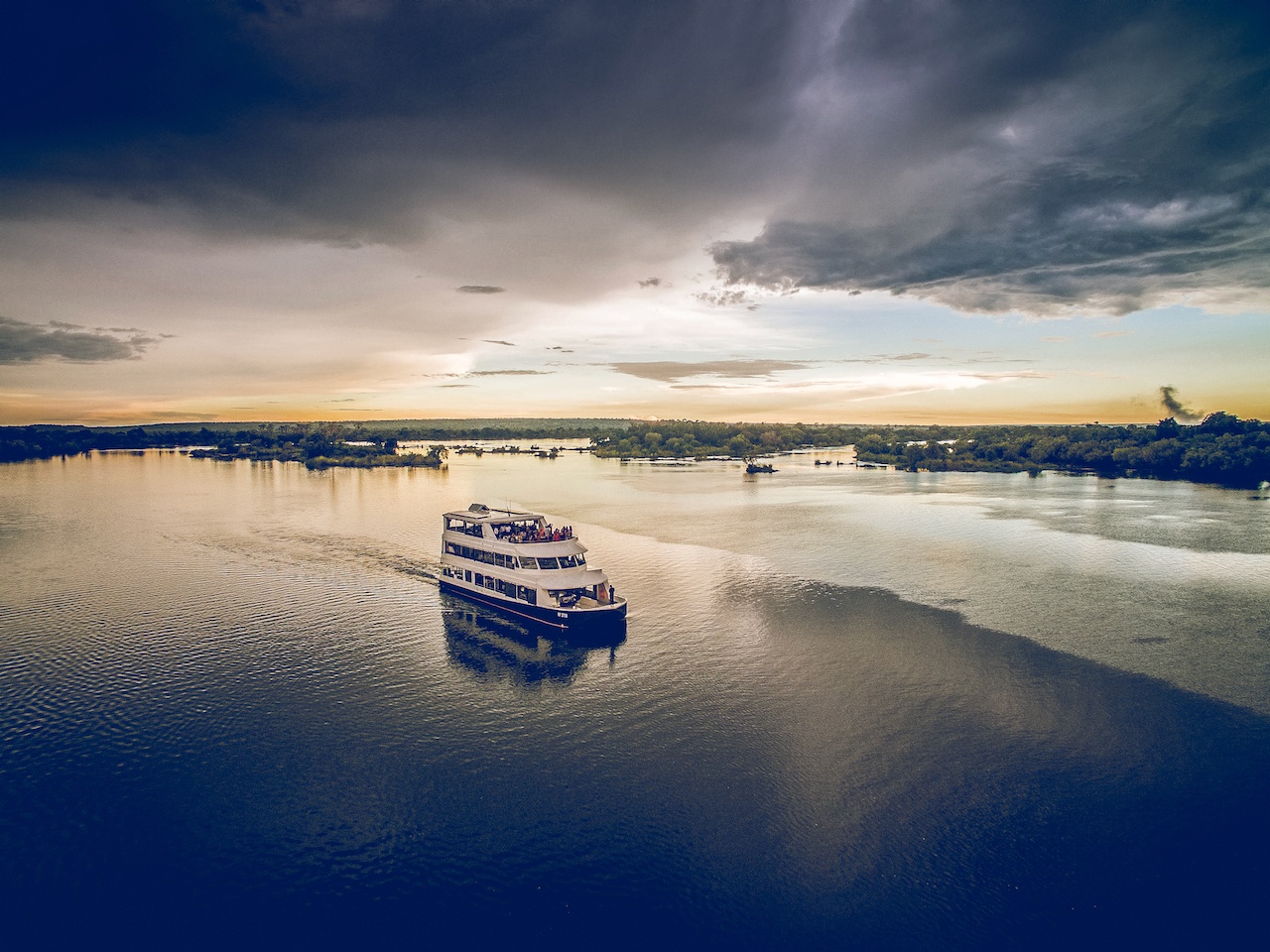
A visit to Victoria Falls isn’t complete without a Sunset Cruise. Arrive at the Pure Africa Waterfront and board the ‘Signature Deck’ of their flagship Zambezi Explorer. Uniquely designed, the upper ‘Signature Deck’ is sheer sophistication. Settle into the deep-set couches and enjoy the uninterrupted views from the 6m elevations, while nibbling on delicious canapés and sipping on cocktails prepared by a dedicated mixologist. As the sun sets, head back to the Pure Africa Waterfront.
Perched on the banks of the river, on return gather around the fire-pit before following the lanterns to your table for dinner. The Eatery Dinner Experience focuses on the quality of the ingredients; freshly baked bread, homemade pasta, Zimbabwe beef prepared to perfection. Alongside potjie dishes cooked patiently over an open fire under a star-studded African sky. As you dine, listen out for grunting hippos and the distant call of the fiery-necked nightjar.

Must-Do’s in Victoria Falls

Get soaked by the spray.

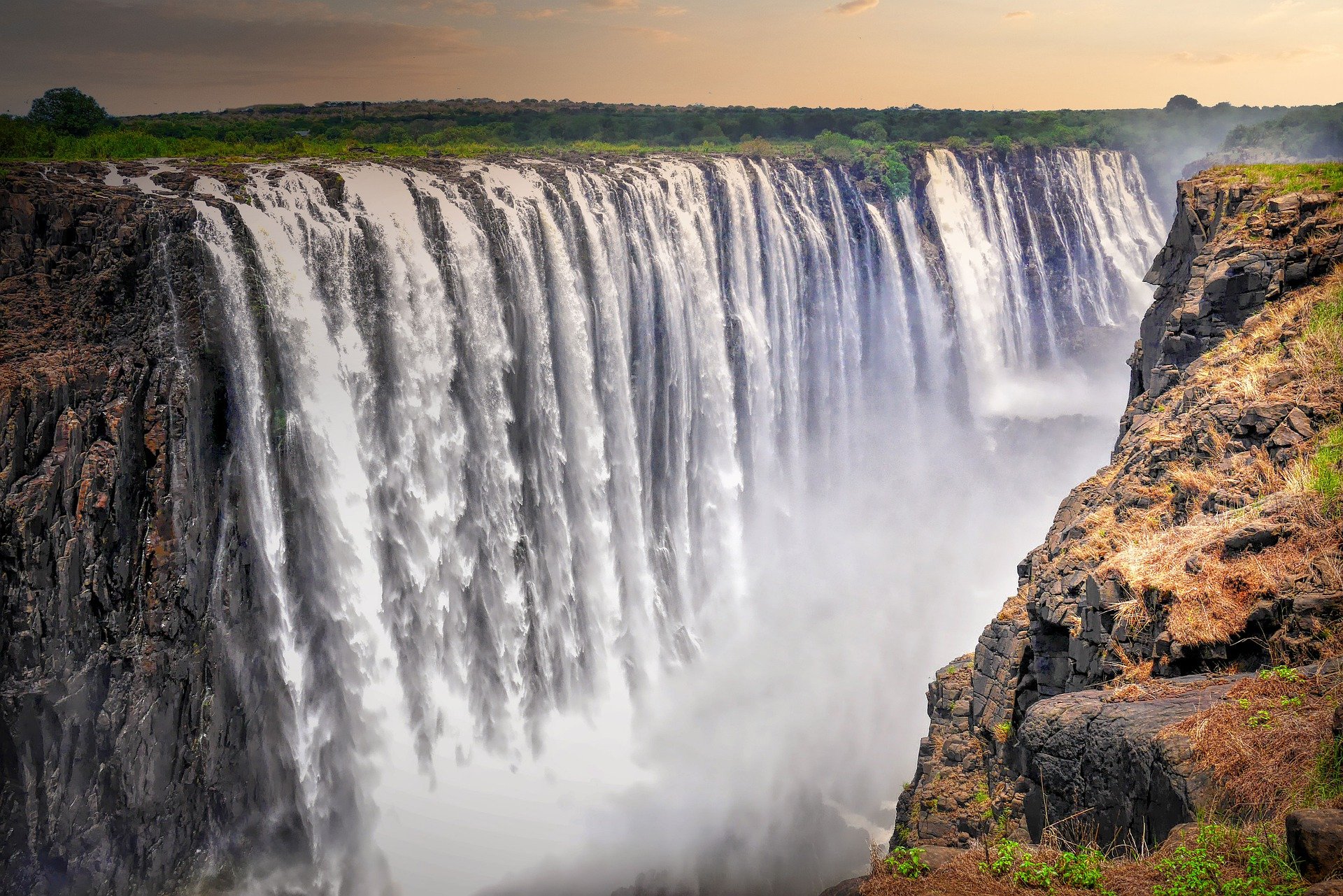
At the height of the rainy season, more than 500 million litres of water plummet over the edge of the Victoria Falls each minute, shooting up columns of spray that is visible from kilometres away.

Count rainbows.

Zimbabwe offers classic views of the broad expanse of water. Follow neat paths through the rain forest to the Devil’s Cataract, Main Falls, Horseshoe Falls and aptly-named Rainbow Falls, all viewing points from which to count the rainbows dancing in the light.

Wildlife spotting.

Look out for elephants drinking at the water’s edge. Identify the various bird species, pause to appreciate the size of the Zambezi crocs and large pods of hippos, and be enthralled by one of Africa’s most distinct sounds – the call of the Fish Eagle.

Take to the Skies.

The Flight of Angels is a spectacular helicopter flight over the majestic Victoria Falls and up the mighty Zambezi River towards Long Island, offering an unforgettable perspective of this natural wonder.

Victoria Falls

The Essential Details

Pure Africa offers the perfect balance of sophisticated style and service that guests so appreciate. Connect with them at www.pure.africa and reservations@pure.africa, or allow me to put a package together for you.

Read my Pure Africa bringing sophistication to Victoria Falls as it appeared in the Hamaji Magazine.

Categories
Travel-Africa

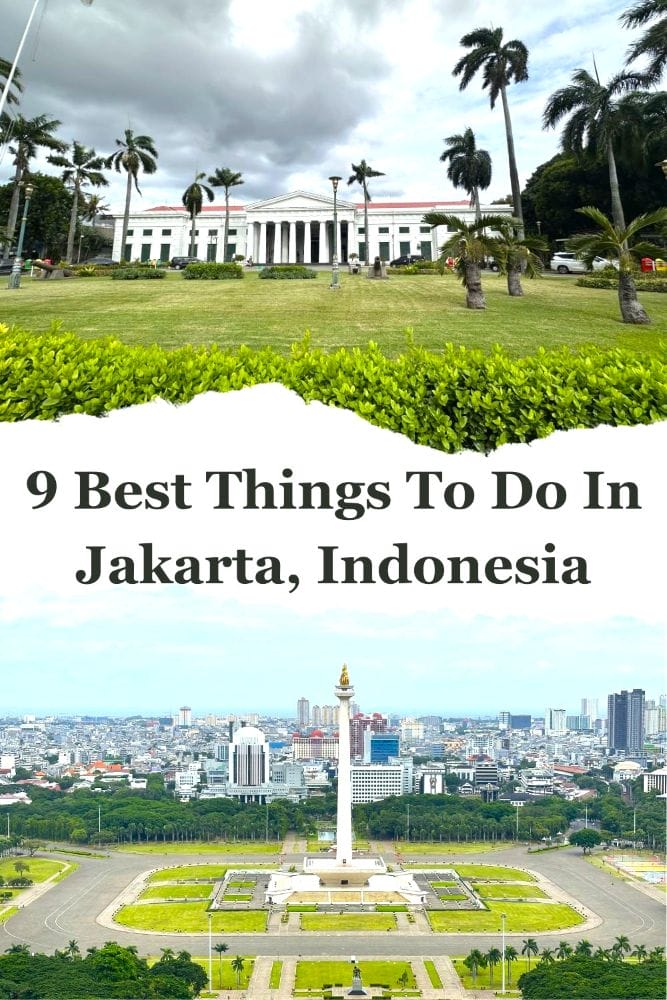
9 Best Things to Do in Jakarta : Indonesia’s Capital City

Looking for the best things to do in Jakarta? These are my recommendations.

Jakarta is often seen as a gateway city, a place travellers pass through en route to Bali or beyond. But Indonesia’s sprawling capital has an identity of its own—an energetic mix of history, culture, cuisine, and contemporary urban life. Often called the “Big Durian,” Jakarta shares much in common with the pungent fruit—bold, intense, and not always love at first sight, but deeply rewarding for those who take the time to understand it.

Did you know that Jakarta is now the world’s largest city by population — having recently overtaken Tokyo and Dhaka?

We spent two days in Jakarta, where we stayed at the Mercure Jakarta Sabang hotel. Centrally located, the hotel arranged a walking tour with Wisata Kreatif Jakarta, during which we explored nearby attractions. We also learnt about Jakarta’s colonial past and modern identity, gaining a deeper appreciation for the city beyond its traffic and skyscrapers.

9 Best Things to Do in Jakarta

1. The National Monument (Monas)

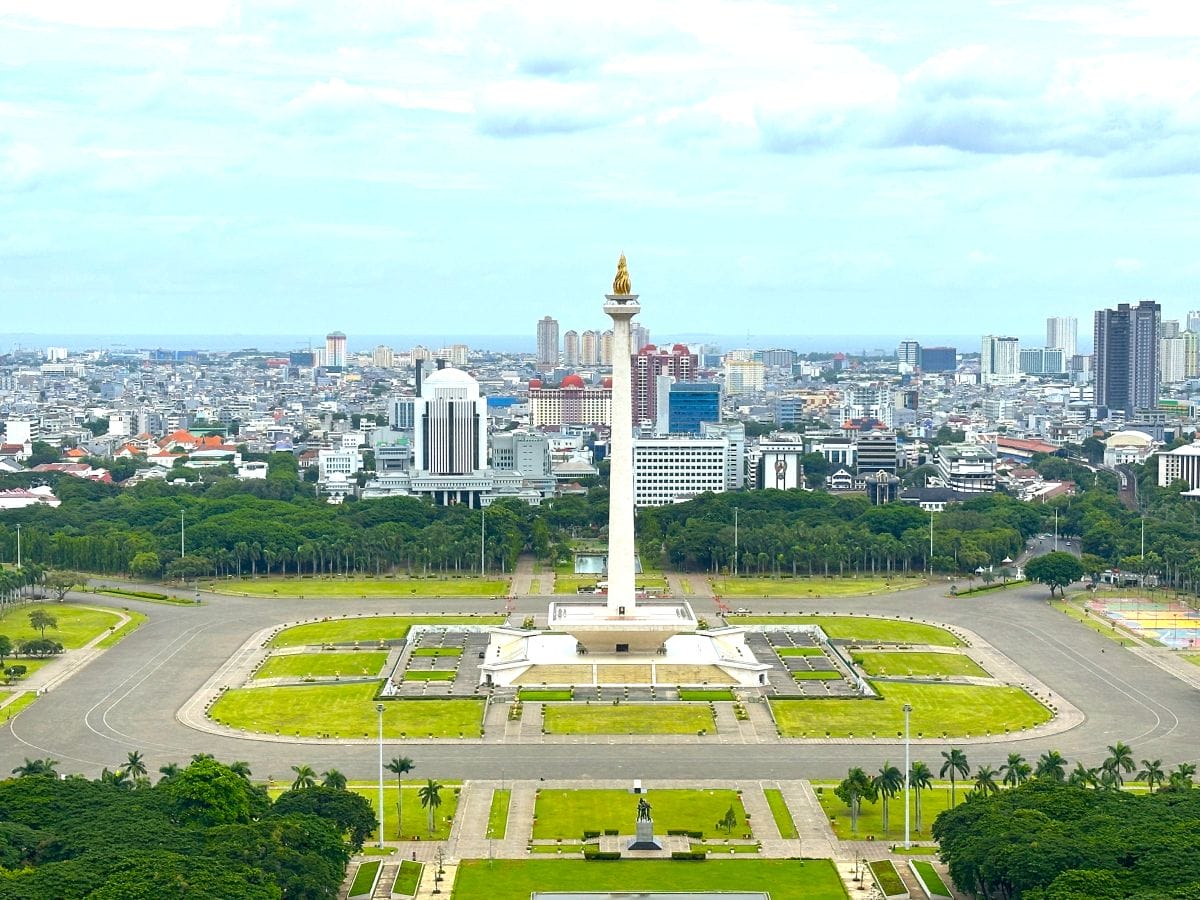
The National Monument (Monas)

The National Monument (Monas) (View from library)

Rising 132 metres above the city’s geographic centre, the National Monument — known as Monas — is Jakarta’s defining silhouette. Topped with a flame covered in 35 kilograms of gold leaf, it is a symbol of Indonesia’s independence. Inside the base is a museum of Indonesian history. Take the lift up to the observation deck on a clear day for panoramic views. Unfortunately, we were there on a Monday when the monument is closed so we couldn’t go up.

2. Istiqlal Mosque

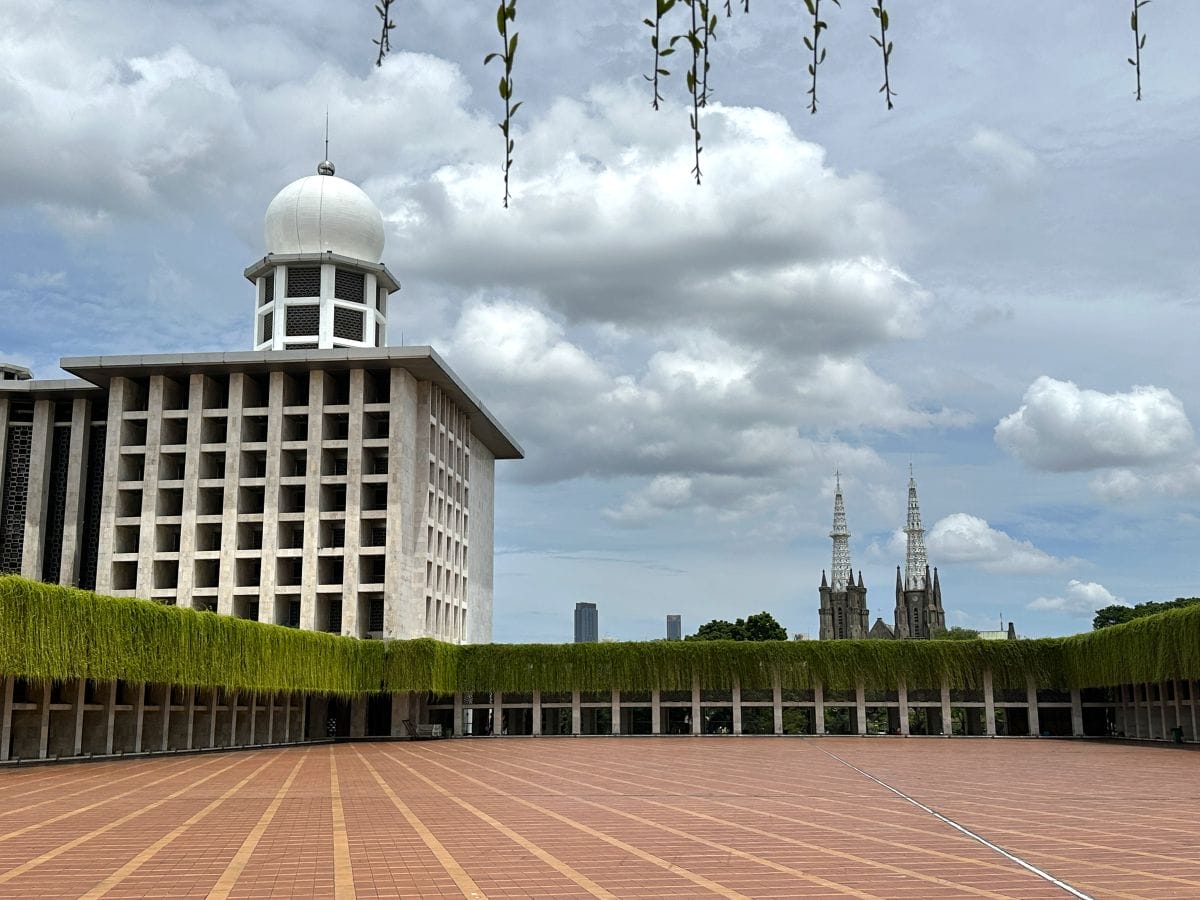
Istiklal Mosque and Jakarta Cathedral

Istiklal Mosque and Jakarta Cathedral

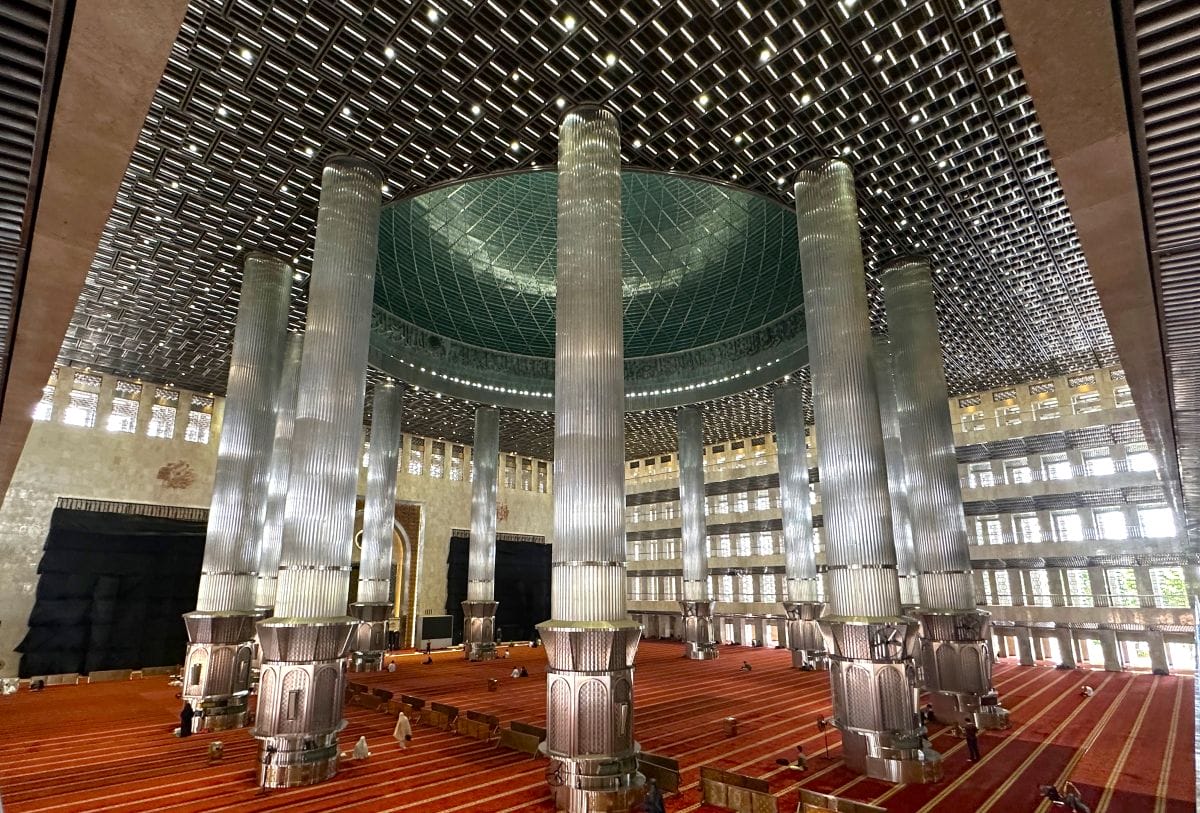
Istiqlal Mosque is the largest mosque in Southeast Asia and an architectural marvel. Opened in 1978, it can accommodate up to 200,000 worshippers. Its vast prayer hall, striking dome, and minimalist design make it a fascinating place to explore. Guided visits are available. Non-Muslim visitors are warmly welcomed outside prayer times; modest dress and a respectful demeanour are expected.

Istiklal Mosque, Jakarta

Inside Istiklal Mosque

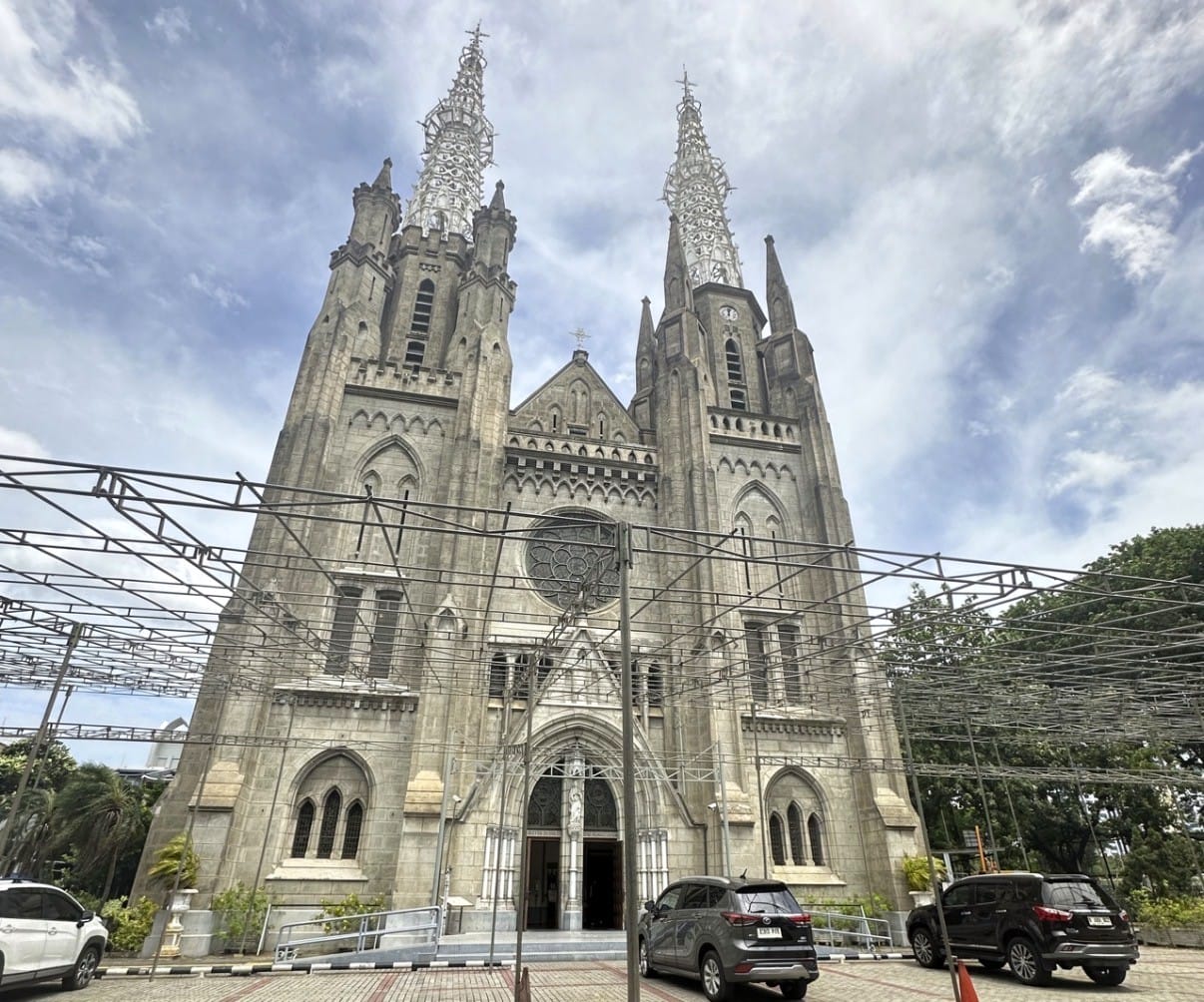
3. Jakarta Cathedral

Jakarta Cathedral

Jakarta Cathedral

Just across the road from the mosque stands Jakarta Cathedral, a striking neo-Gothic structure built in 1901 with twin spires reaching towards the same sky. Inside, you’ll find beautiful stained glass windows and a peaceful atmosphere that contrasts with the city’s bustle outside. The close proximity of these two landmarks symbolises Indonesia’s spirit of religious coexistence.

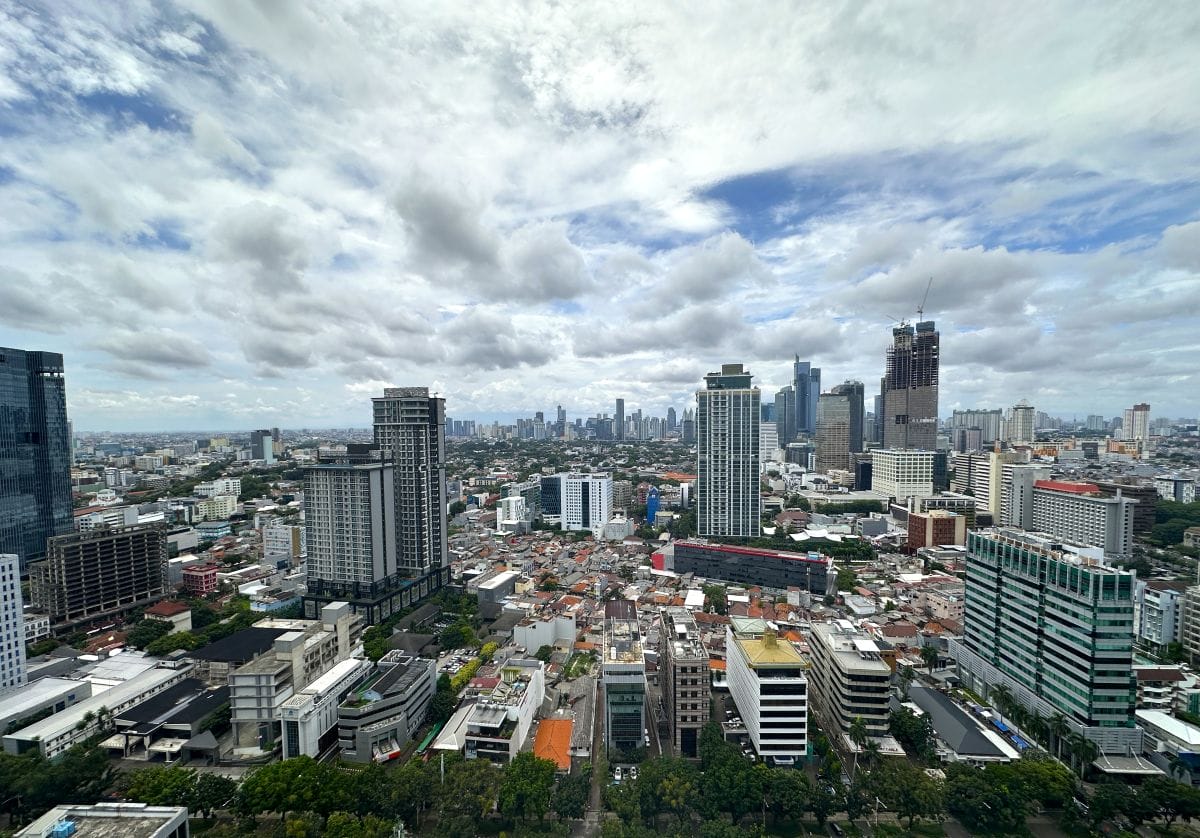
4. The National Library

View of Jakarta from The National Library

View of Jakarta from The National Library

For one of the best free viewpoints in the city, head to the National Library of Indonesia, the world’s tallest library building. The upper floors offer bird’s-eye views across Jakarta. It’s less crowded than other viewpoints and provides a unique perspective of the city. We had the balcony all to ourselves.

5. Kota Tua

Kota Tua

Kota Tua

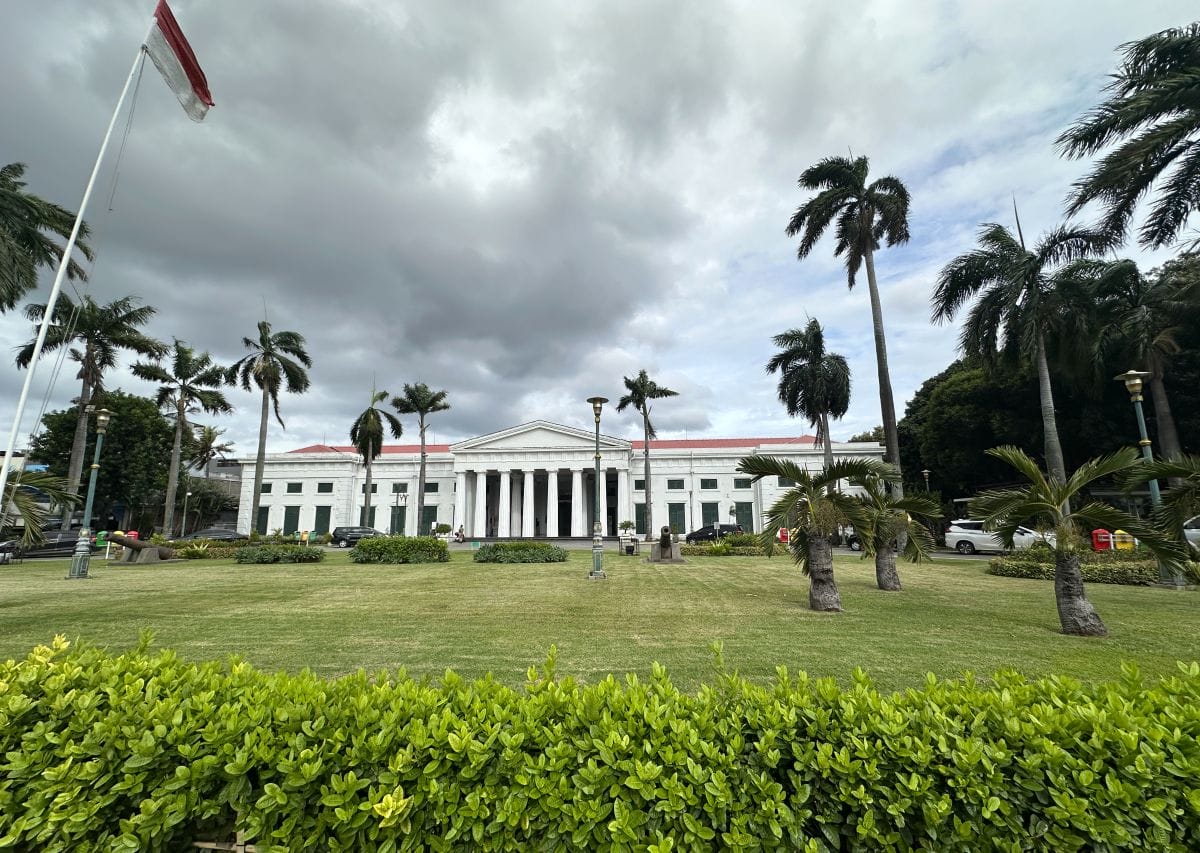
This old colonial quarter was the commercial heart of Batavia — the Dutch East Indies’ most powerful trading port. Today, its grand 17th- and 18th-century buildings stand in remarkable condition. The focal point is Fatahillah Square, where locals gather, street performers entertain, and colourful vintage bicycles are available to rent. It is surrounded by some of the most atmospheric buildings in Indonesia. The Jakarta History Museum is housed in the old Dutch town hall dating back to the 18th century and modelled after Amsterdam’s Dam Palace.

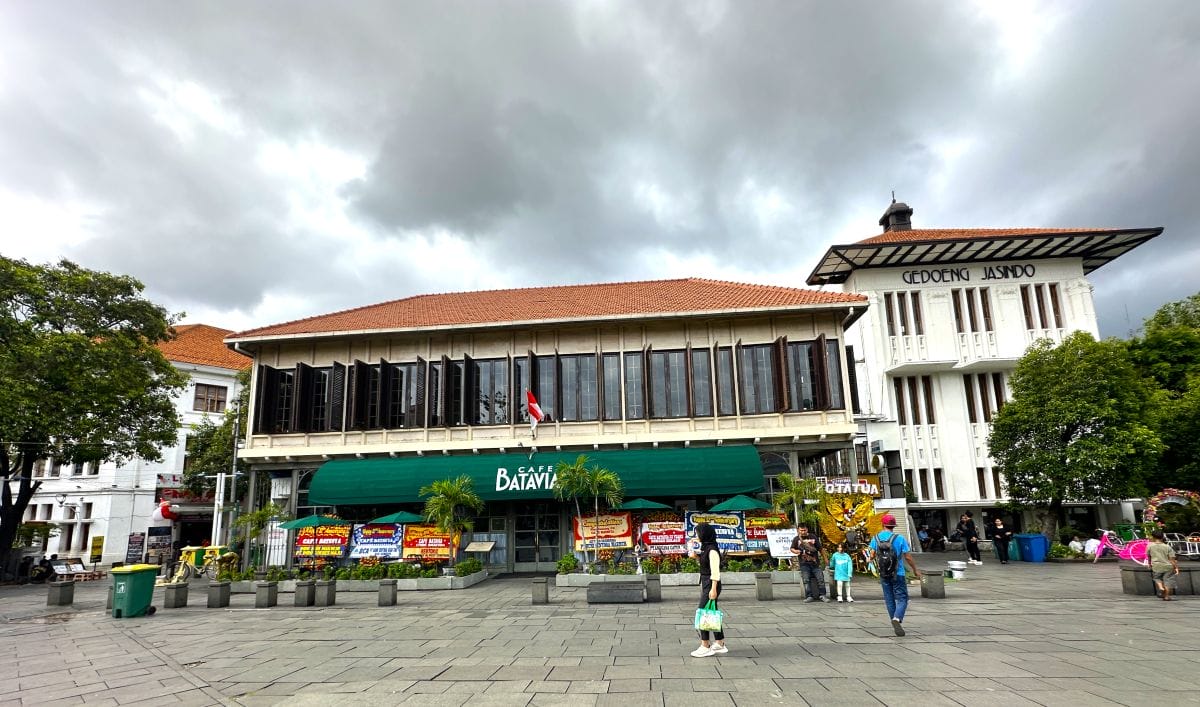
Cafe Batavia

Cafe Batavia

Next door, the Wayang Museum offers insight into Indonesia’s traditional shadow puppetry, a UNESCO-recognised art form. When you’re ready for a break, Café Batavia is a vibrant café located inside a 200-year-old colonial merchant’s house.

6. Local Cuisine

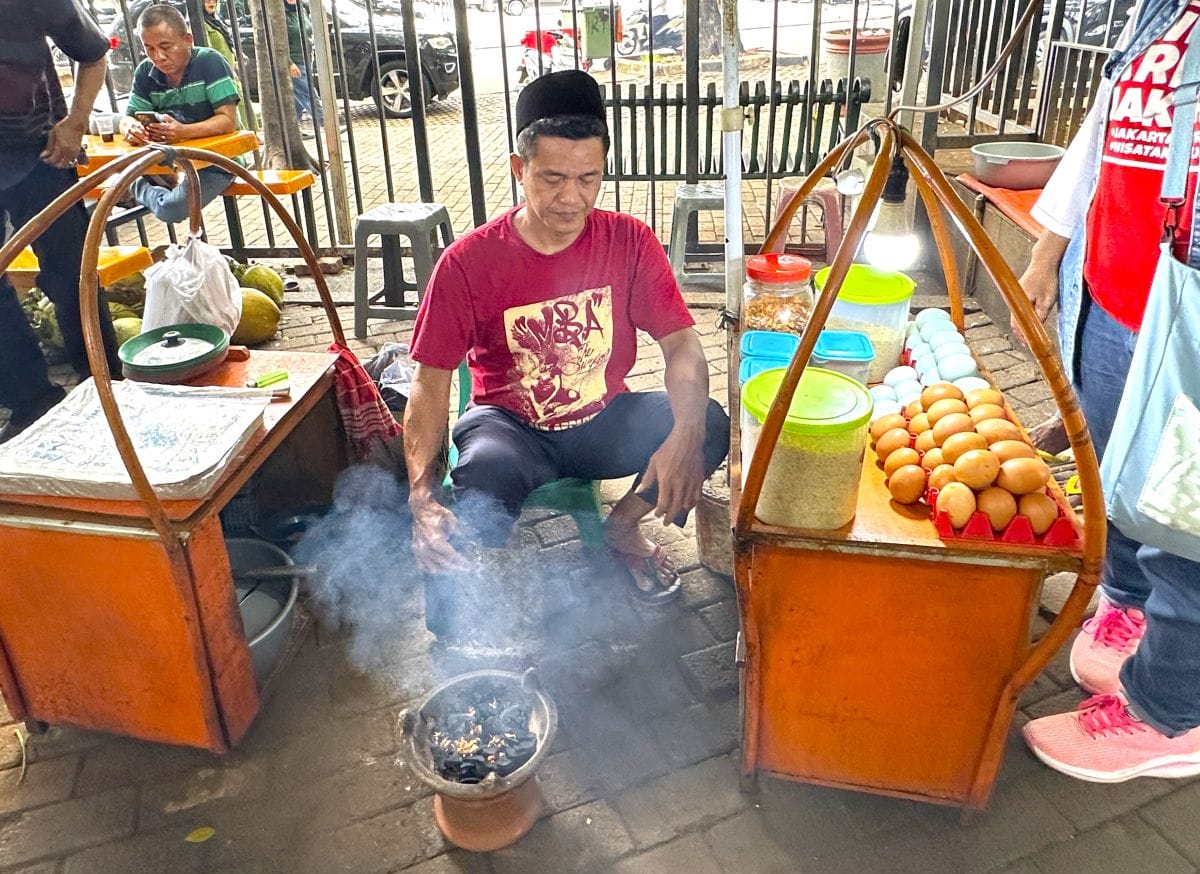
Street food in Jakarta

Street food in Jakarta

Jakarta is a paradise for food lovers. From humble street stalls to upscale dining, the city’s culinary scene is incredibly diverse. Try local favourites such as nasi goreng (fried rice), satay skewers, and gado-gado (vegetable salad with peanut sauce). We enjoyed some delicious local cuisine at our hotel.

For a more authentic experience, visit Jalan Sabang, known for its buzzing street food vendors. We indulged in some unique, flavourful street food there.

7. Ragusa Es Italia

Ragusa Es Italia

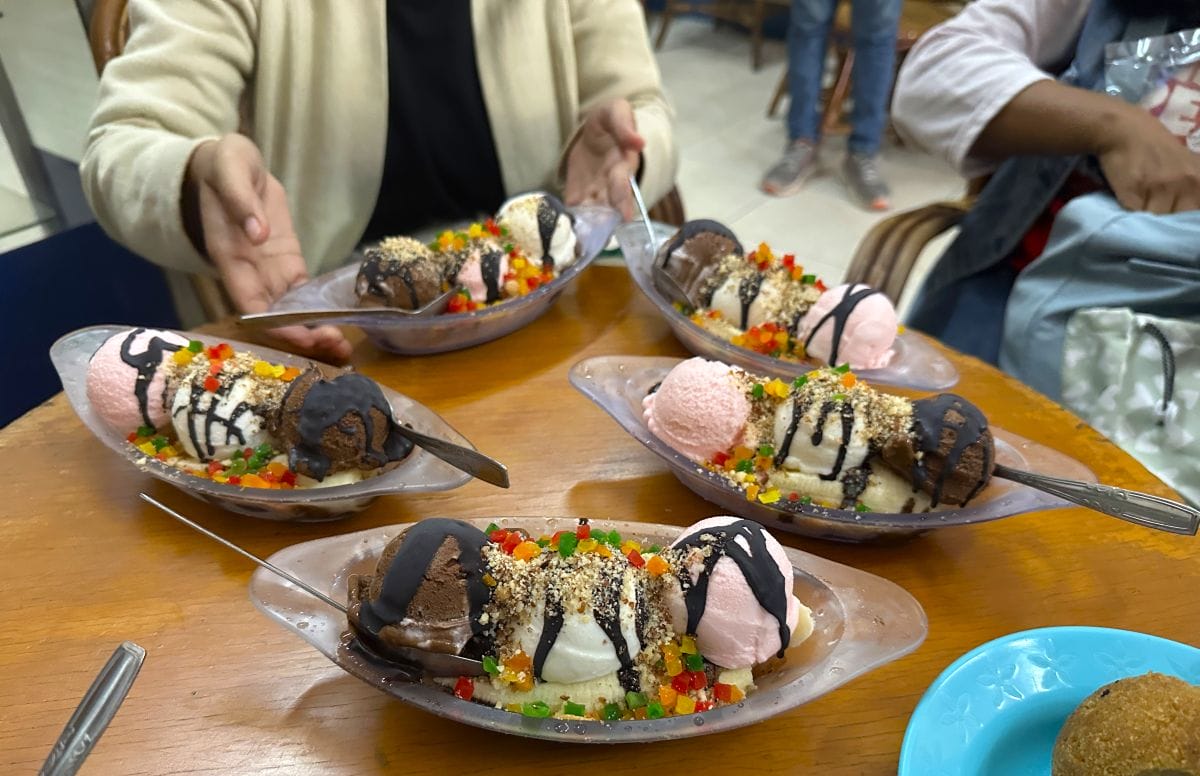
Ragusa Es Italia

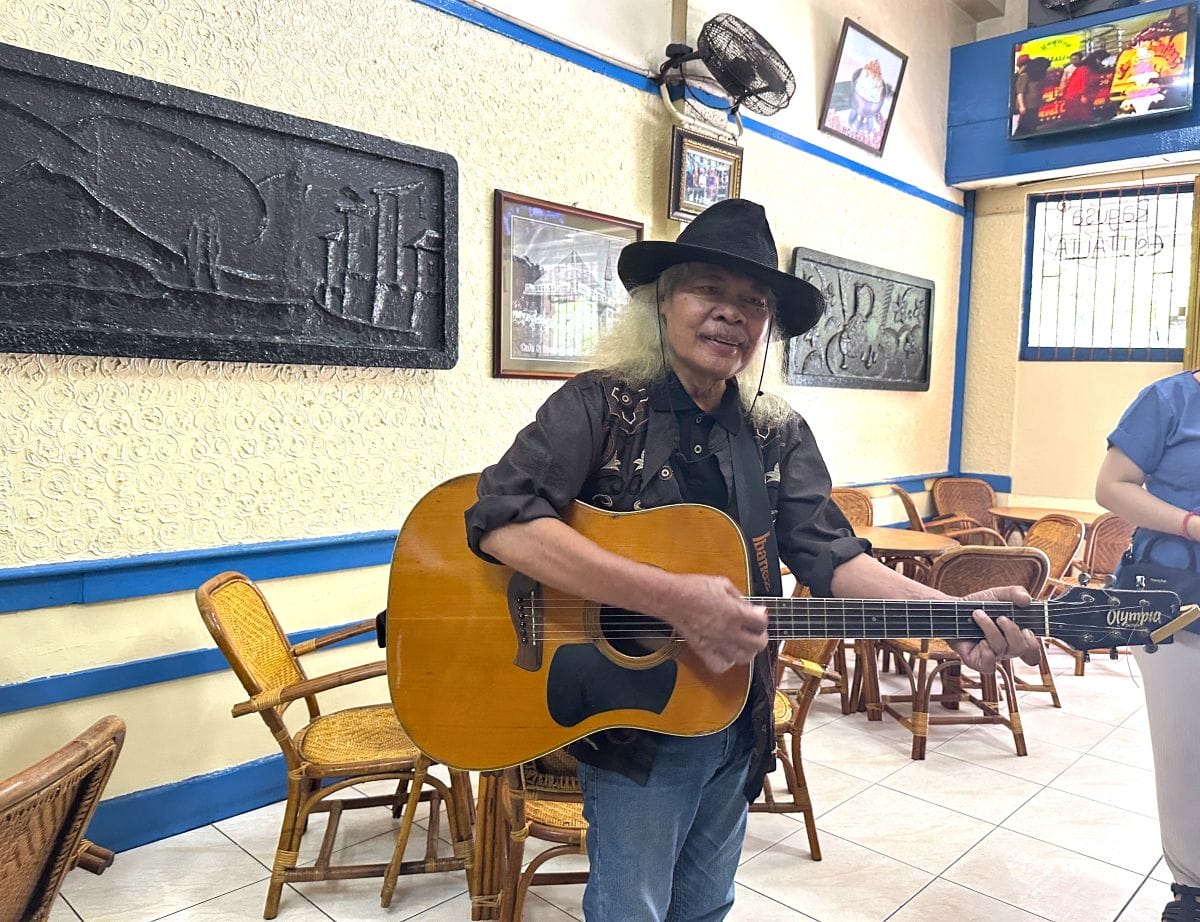
Ragusa Es Italia is Jakarta’s oldest ice cream parlour, operating largely unchanged since 1932 with its vintage décor adding to its charm. Founded by four Sicilian brothers who moved to Batavia as tailors, the café grew from a market stall into a permanent fixture. Still using traditional methods, including a decades-old mixer and fresh milk without preservatives, Ragusa remains a popular spot. We had some delicious sundaes and croquettes while being serenaded by a talented Indonesian gentleman singing English songs.

Singer at Ragusa Es Italia

Singer at Ragusa Es Italia

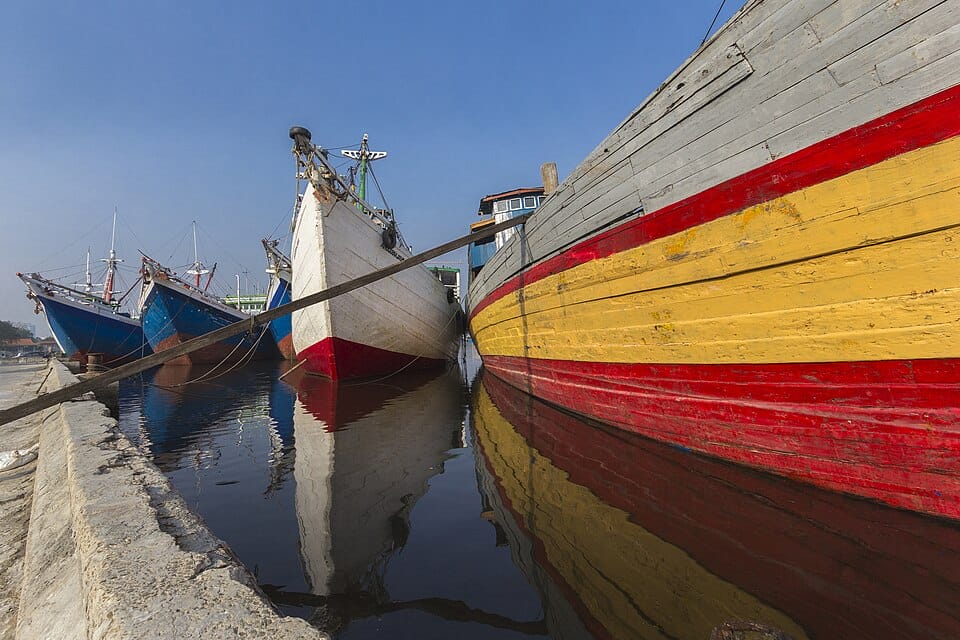
8. Sunda Kelapa Harbour

Sunda Kelapa Harbour

Sunda Kelapa Harbour (cc. Wikimedia Commons)

If you have time, visit Sunda Kelapa, Jakarta’s ancient port, which has been in use since the 12th century. It remains home to a fleet of colourful schooners that still carry cargo between Java and the outer islands, much as they have for generations. It’s one of the most atmospheric places in the city for photography and a window into Jakarta’s past.
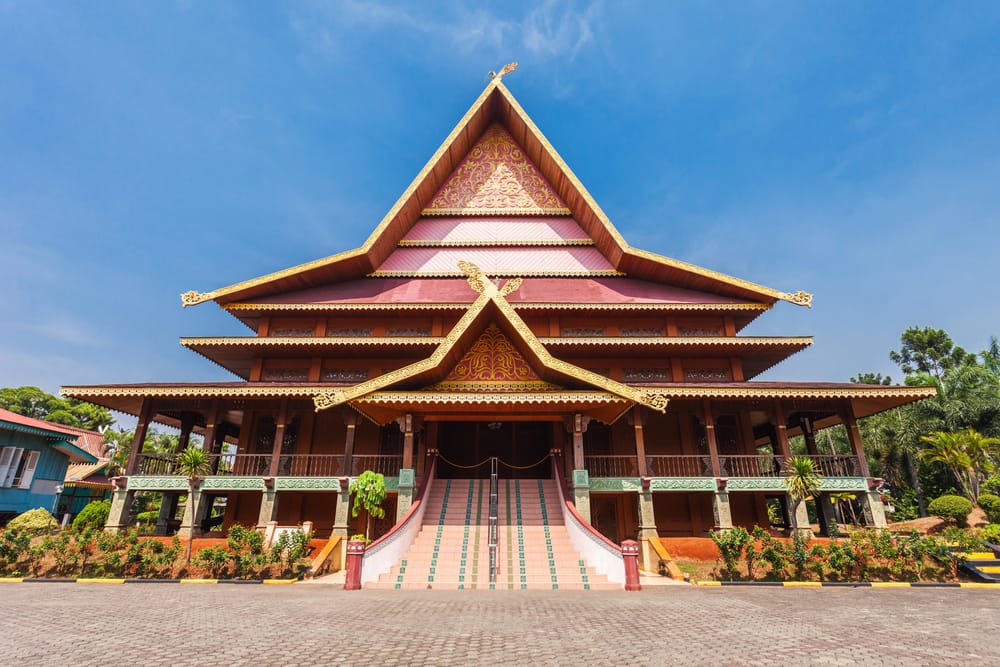
9. Taman Mini Indonesia Indah

Taman Mini Indonesia Indah

Taman Mini Indonesia Indah (cc:. DepositPhotos)

Taman Mini Indonesia Indah is a vast cultural park showcasing Indonesia’s diverse provinces in one place. Spread across 100 hectares in East Jakarta, Taman Mini is a living encyclopaedia of Indonesian diversity — a place where the staggering variety of this 18,000-island archipelago has been compressed into a single, walkable space.

Full-scale replicas of traditional houses from every Indonesian province sit alongside museums, open-air theatres, botanical gardens, an aviary, an IMAX cinema, a waterpark, and a cable car that lets you survey the whole extraordinary complex from above.

Good to know

Traffic in Jakarta can be notoriously heavy—crossing from one side of the city to the other can easily take 1.5 to 2 hours, so plan your day accordingly.

Where to Stay in Jakarta

Jakarta offers a wide range of accommodation options, from budget-friendly stays to luxury hotels, with most travellers choosing to base themselves in Central Jakarta for easy access to major attractions. Areas like Menteng and Thamrin are particularly convenient, placing you close to landmarks, shopping malls, and dining spots. For a comfortable and well-located option, the Mercure Jakarta Sabang is a great choice, offering modern family-friendly rooms, great food and easy access to key sights.

See more accommodation in Jakarta.

Best Things to Do in Jakarta

Categories
Travel-Africa

Marking Five Years of Perfection: Durbanville Wine Valley Unveils its 2026 Sauvignon Blanc.

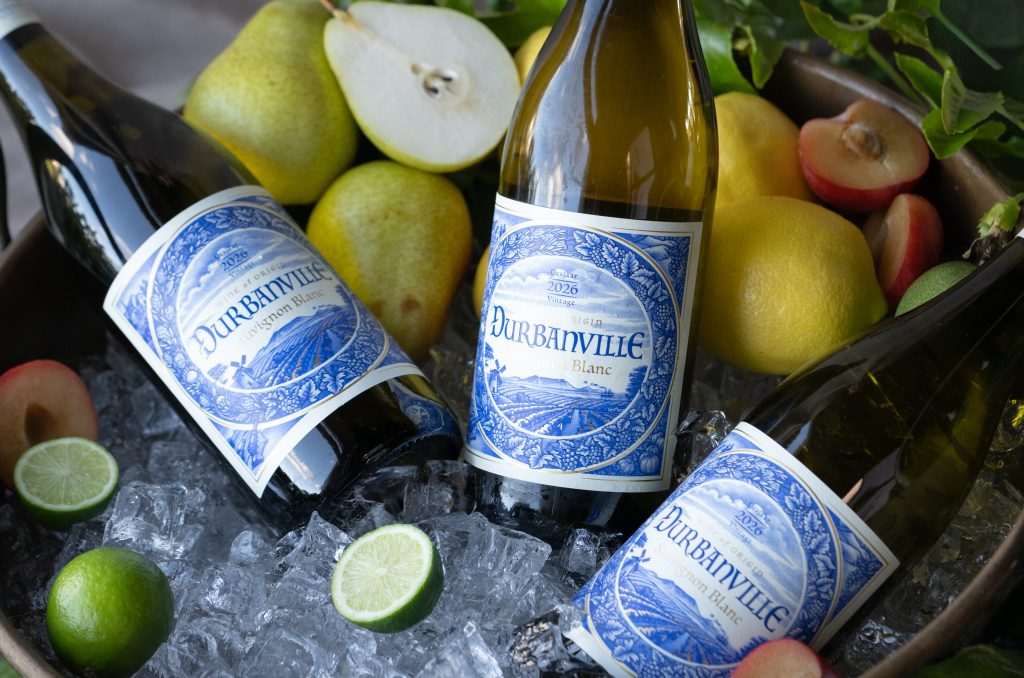
Durbanville Wine Valley

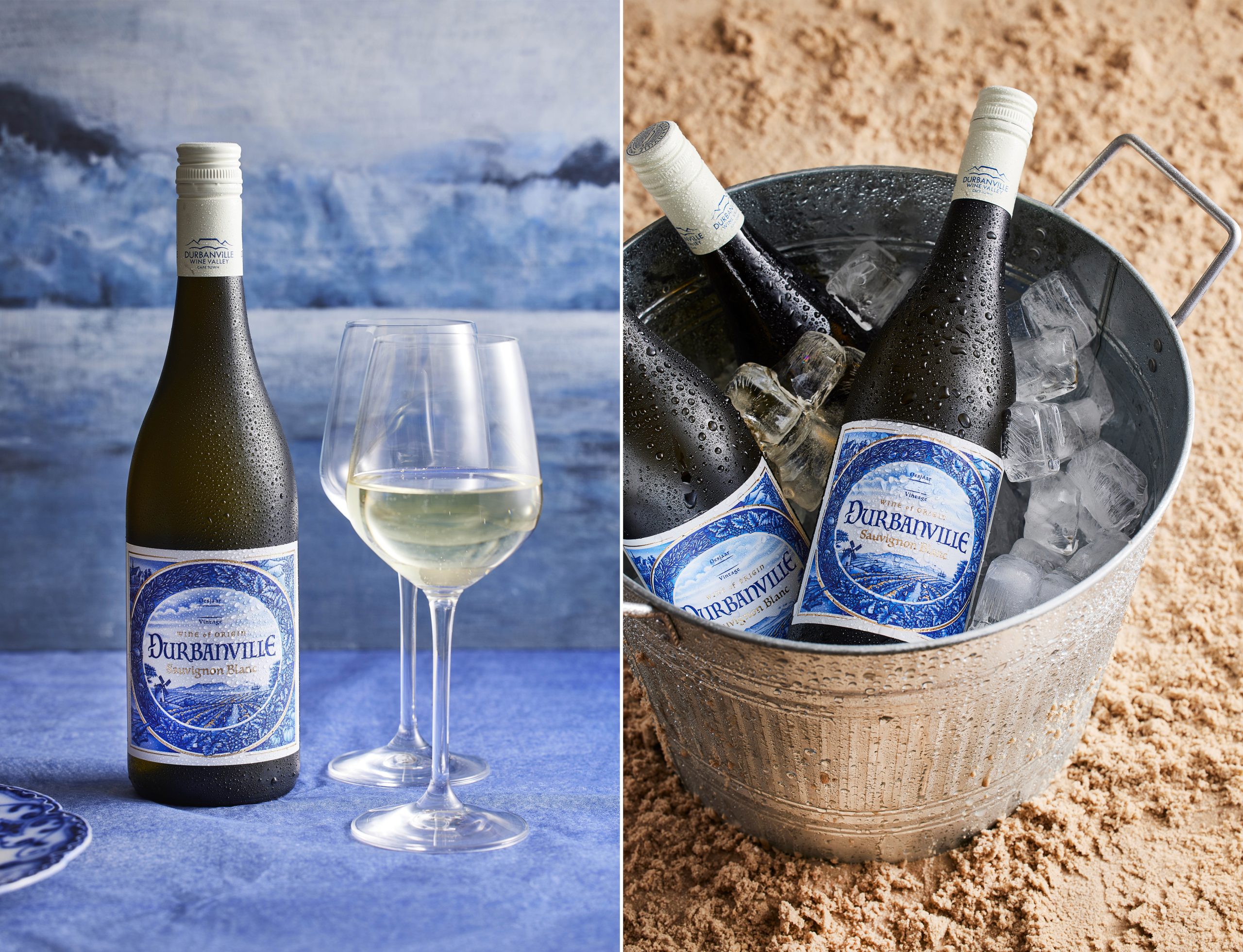
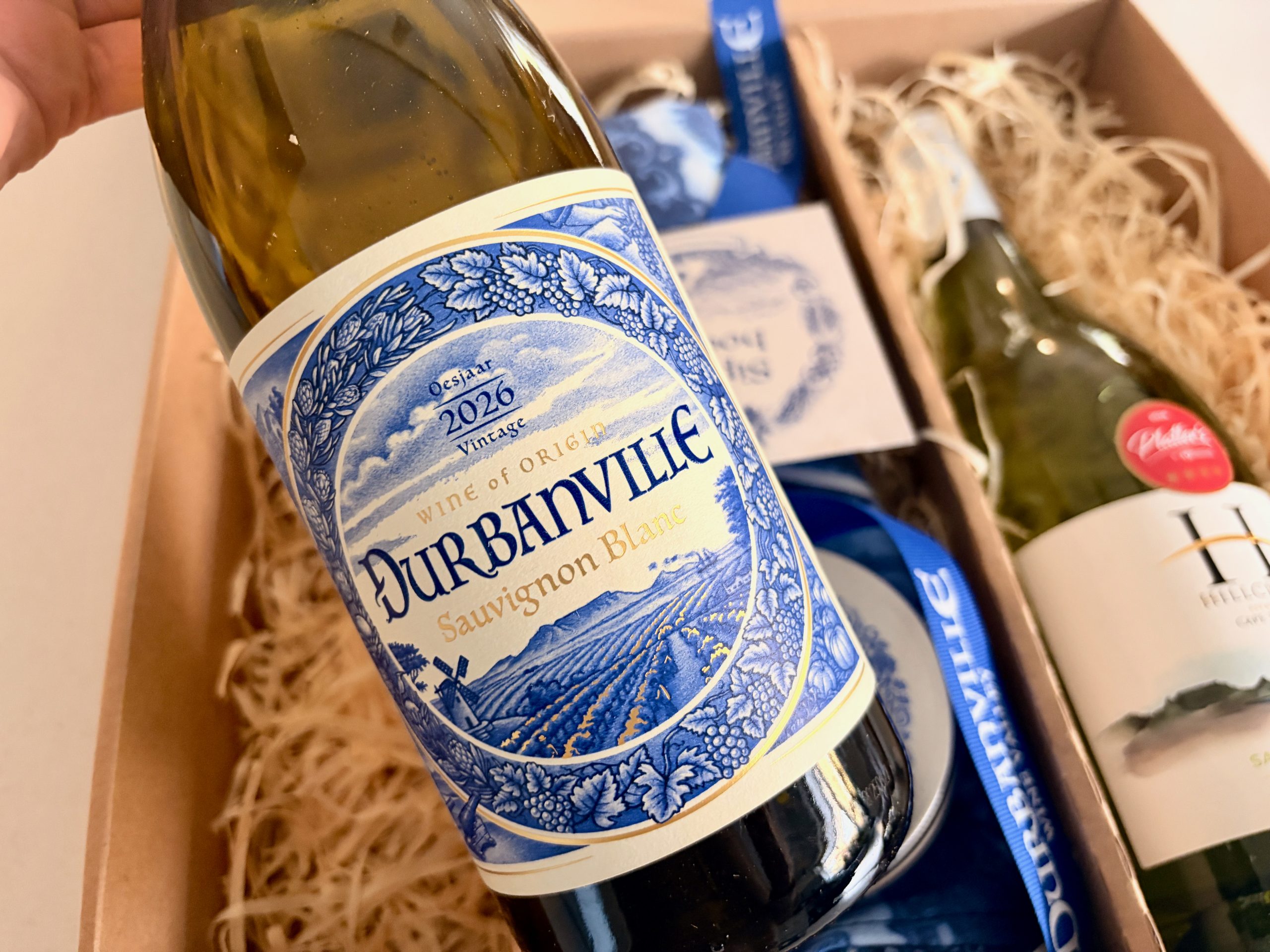
I was lucky enough to receive a most welcome media drop from the Durbanville Wine Valley, which included a bottle of their highly anticipated 2026 Durbanville Sauvignon Blanc, the signature collaborative vintage produced in Cape Town’s premier northern vineyards.

Officially signed off for release, the much-anticipated public unveiling took place at the region’s Sauvignon Soirée on Friday, May 8, marking a major milestone as the project celebrates its fifth consecutive year. This half-decade partnership has enabled the region to achieve remarkable consistency in quality, offering consumers a familiar, world-class style they have come to recognise and admire. Through the regions’ windmakers refining their collective craft over the past five years, the participating winemakers have further cemented Durbanville’s reputation as the home of South Africa’s Super Sauvignon Blanc.

The annual Sauvignon Soirée showcases the 12-winery collective and the region’s dominance in cool-climate viticulture. The collaboration in the creation of this blend began in 2022 with the goal of combining the finest fruit from across the valley with the region’s most formidable winemaking talents. The 2026 vintage continues this tradition, featuring premium grapes from a prestigious lineup comprising Diemersdal, De Grendel, D’Aria, Durbanville Hills, Groot Phesantekraal, Klein Roosboom, Maastricht and Nitida.

The responsibility for the final blend was entrusted to Diemersdal, an estate internationally acclaimed for its mastery of the variety. Winemaker Juandré Bruwer oversaw the blending process, while respected veteran winemaker Charles Hopkins of De Grendel led the panel of participating wineries during the preparatory tastings.

It’s a particularly exciting time for the region. Not only is the 2026 vintage backed by a history of high-level local and international awards, but, according to Juandré, the collaboration represents the region’s very heartbeat. He notes that the project is a testament to a progressive community dedicated to mutual support, resulting in a wine that embodies the soils, personalities, and values of Durbanville.
The release of the new vintage was timed to coincide with International Sauvignon Blanc Day on May 1, when enthusiasts worldwide celebrate the variety. After five years of meticulous production, the Durbanville collaboration stands as a premier example of what can be achieved through shared vision and a commitment to excellence. As for Sauvignon Blanc day – isn’t that every day?

Durbanville Wine Valley

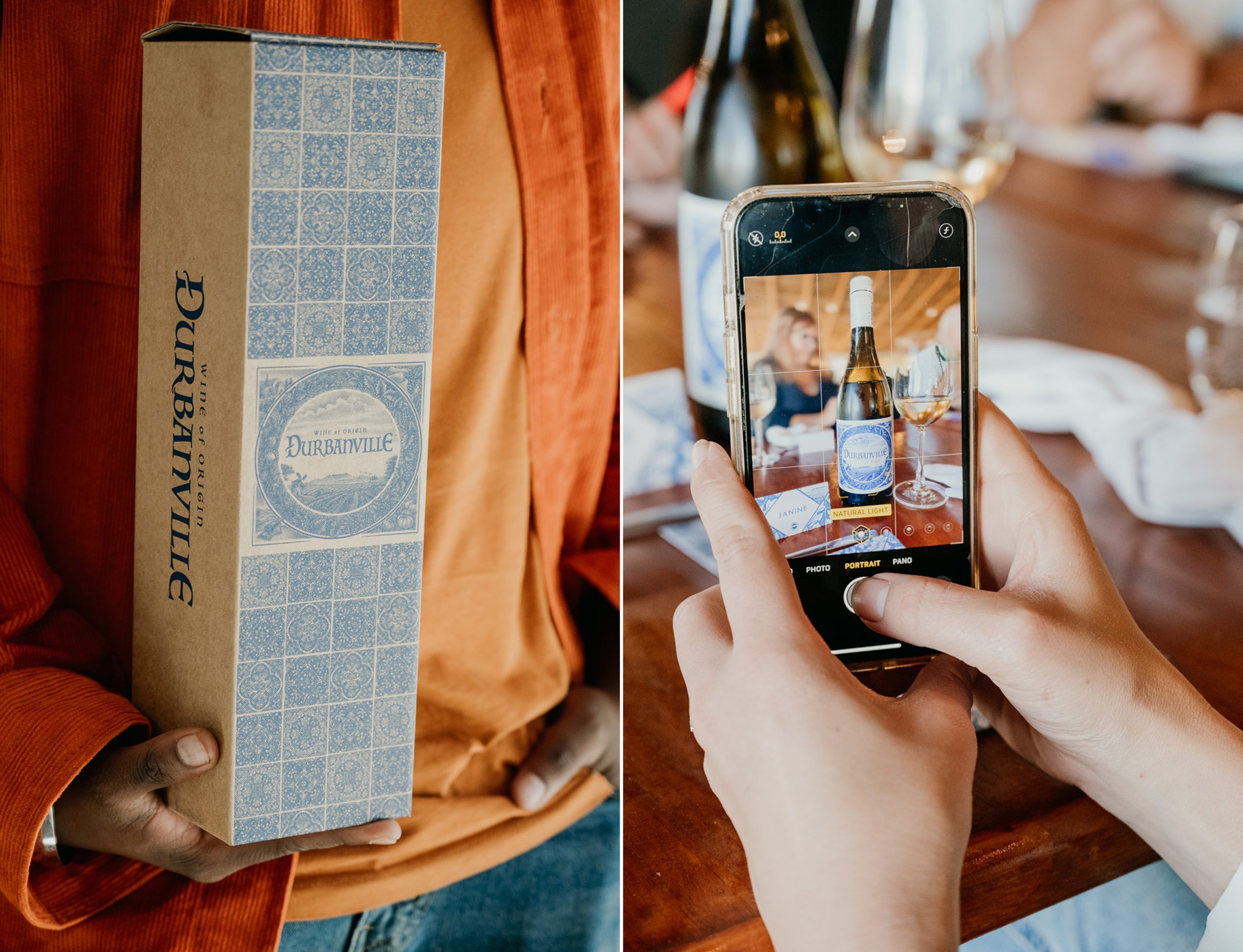
Curated to trace the region’s connection from ocean to vineyard to table, my gift box included:

Durbanville Sauvignon Blanc 2026 – the latest release from the valley’s collaborative project, now five vintages in. With consistency established, the focus has shifted to precision – a wine that reflects Durbanville’s cool-climate identity with clarity, structure and restraint.

A Sauvignon Blanc from Hillcrest Estate – included alongside the blend to offer a more individual expression of the same landscape.

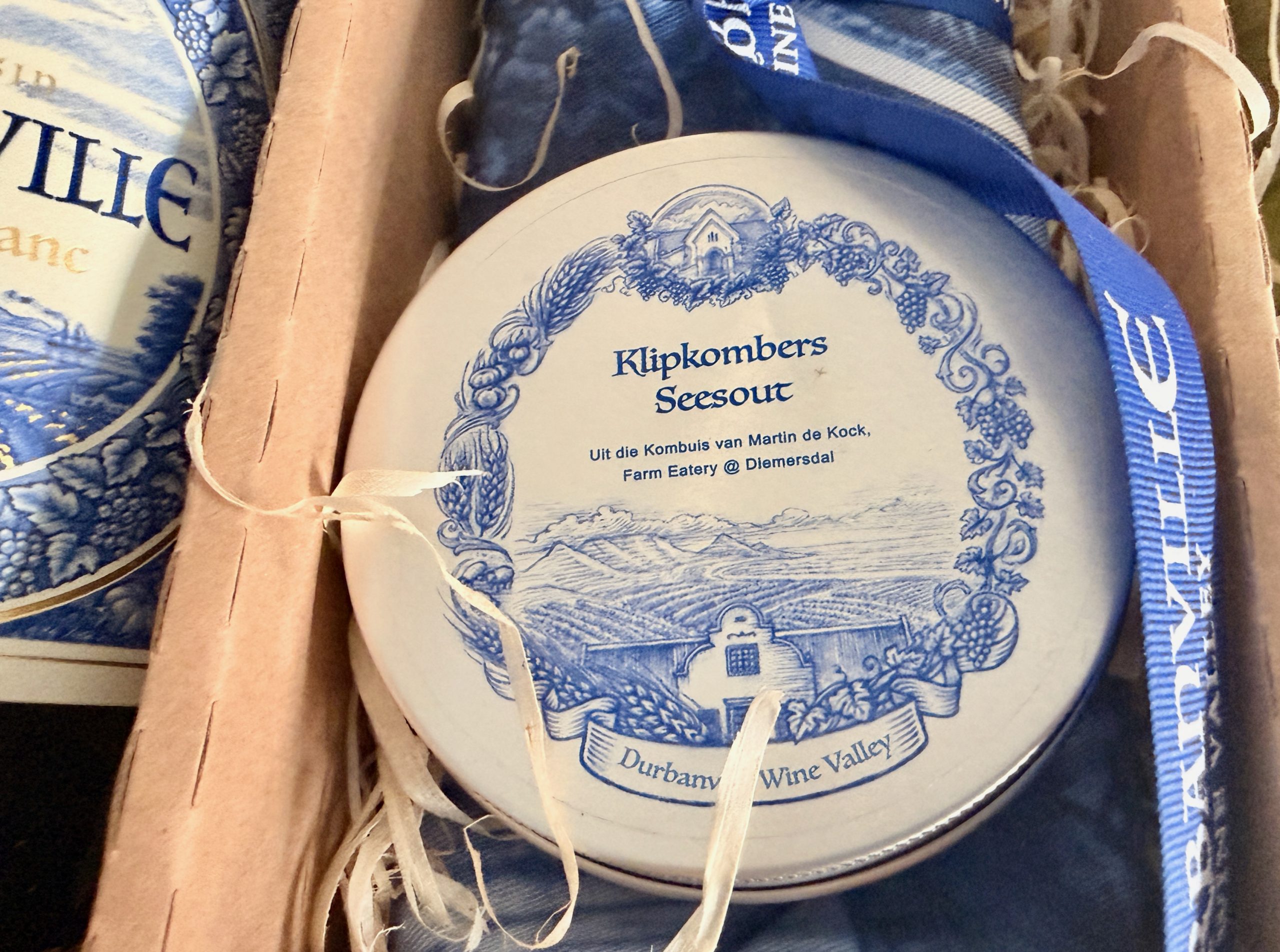
Klipkombers Seesout – developed in the Diemersdal kitchen by Chef Martin de Kock using klipkombers, an indigenous West Coast seaweed. Its saline, mineral character reflects the same oceanic influence carried through the vineyards.

Delft dish towel – a subtle nod to the label’s Delft-blue design, drawing a line between heritage, place and the everyday rituals that frame how wine is ultimately enjoyed.

An absolute treat, and I look forward to enjoying the wine, trying the Seesout and placing my Sauvignon Blanc-inspired creation on the most beautiful Delft blue dish towel. A treat indeed. Thank you, Durbanville Wine Valley, and I will continue to seek out your offerings in the Sip Sip Hooray spirit!

Durbanville Wine Valley

For more information about Durbanville Wine Valley, visit www.durbanvillewine.co.za or send an email to info@durbanvillewine.co.za.

Durbanville Wine Valley

#drinkDurbanville #DurbanvilleSauvBlanc #SauvignonSoiree #SauvBlancDay

Categories
Travel-Africa

The Camino Primitivo – your 2026 guide

The Camino Primitivo is one of the Camino de Santiago routes in Spain. This picturesque route offers a great combination of the spectacular mountain and forest scenery and interesting historical towns. The Camino is perfect for those who enjoy hiking and prefer quiet trails. In 2025 only 5% (27 868 people) of all pilgrims who arrived in Santiago walked the Camino Primitivo.

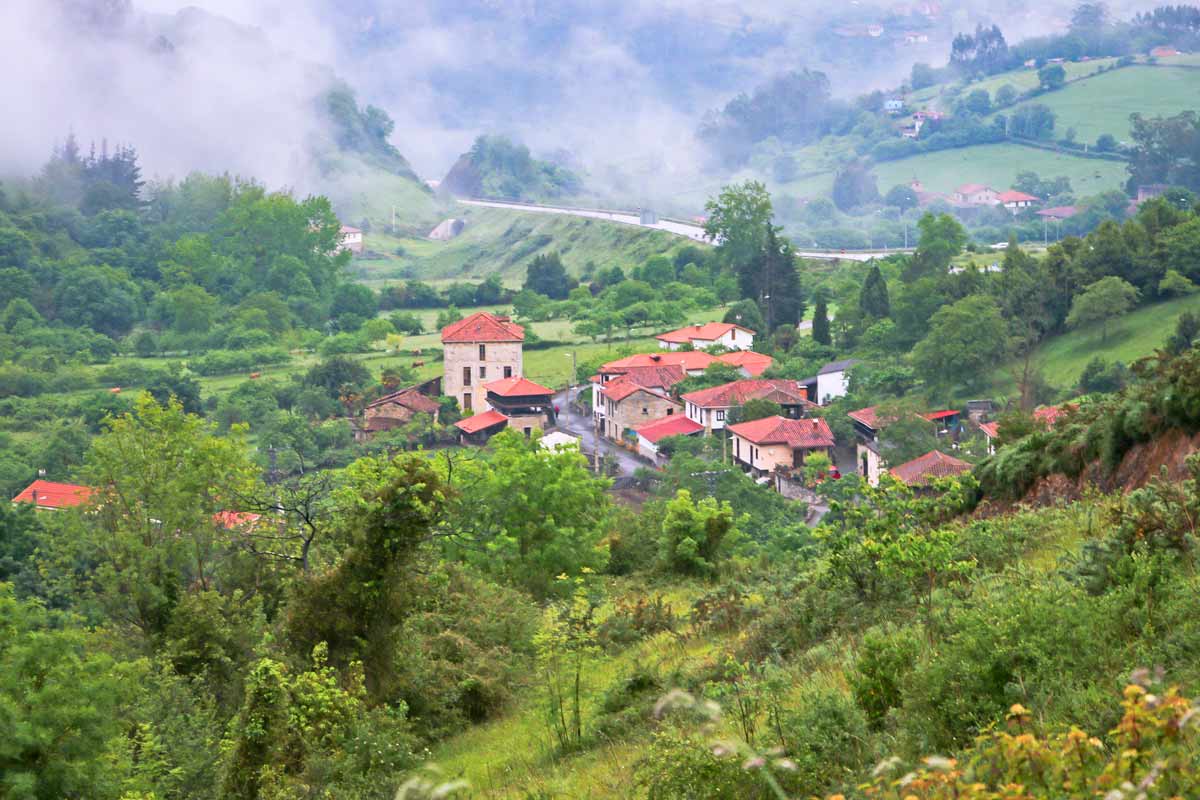
A ground of stone houses with red roofs surrounded by the lush green hills in Asturias, SpainA ground of stone houses with red roofs surrounded by the lush green hills in Asturias, Spain
A small village in the mountains of Asturias on the Camino Primitivo

We have a detailed post with walking stages of the Camino Primitivo where you can find a day-by-day itinerary breakdown.

Stingy Nomads participates in the Amazon Services LLC Associates Program and other affiliate programs. If you click on the link and purchase the item or make a booking, we will receive an affiliate commission at no extra cost. Thank You for supporting us and assisting us to produce quality, free content.

Camino Primitivo PDFs

Our free downloadable PDFs are here to make your Camino planning easier.

What is the Camino Primitivo?

The name “Primitivo” refers to its origin. According to the legend the route from Oviedo was the first Camino de Santiago ever walked. The history of it dates back to the 9th century when Spanish King Alfonso II walked from Oviedo to Santiago de Compostela. He completed the Camino to commemorate the discovery of the remains of the apostle St. James in Compostela several years earlier.

At that time most of the Spanish territory was under Moorish control, and only the Northern part of Spain remained independent.

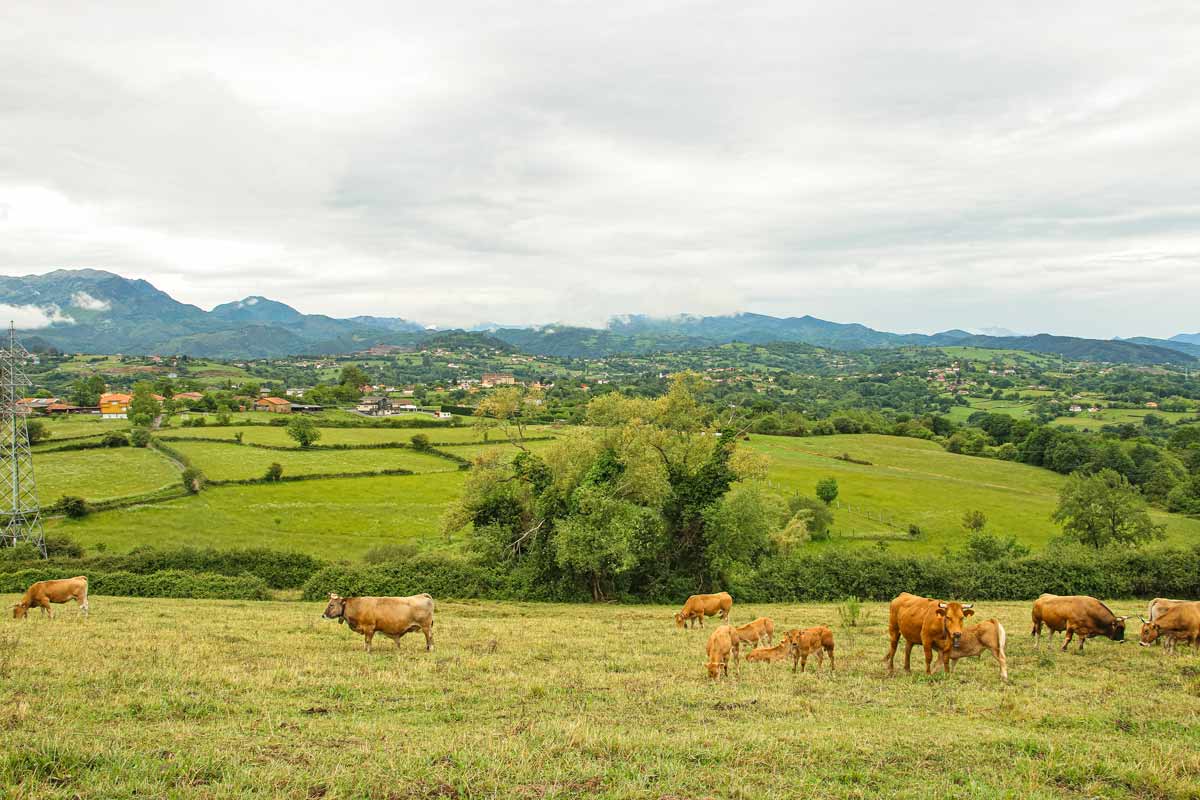
Brown cows and caves on the green field surrounded by the mountains in Asturias, SpainBrown cows and caves on the green field surrounded by the mountains in Asturias, Spain
Pasture fields, forest, and mountains are the dominant scenery on the Camino Primitivo

How long is the Camino Primitivo?

The total distance of the route from Oviedo to Santiago de Compostela is 321 km/200 mi. It takes on average 12 to 16 days to complete. It can be done over a shorter or longer period depending on how far you walk every day.

If you are limited in time you can walk 100 km on the Camino Primitivo – a required minimum for getting the Compostela certificate. You can walk the last 100 km on the route from Lugo to Santiago or any uninterrupted 80 km + the last stage from O Pedrouzo to Santiago.

How difficult is the walk?

The Camino Primitivo is considered one of the toughest Camino routes due to the mountainous terrain it goes through. The first part of the route from Oviedo to Lugo has many hills and mountains which means every day you have a significant elevation gain. If you don’t enjoy steep ups and downs this route is not the best one for you. 

This Camino feels a lot more like a hike in the mountains than any other Camino de Santiago route in Spain.

Where does it start?

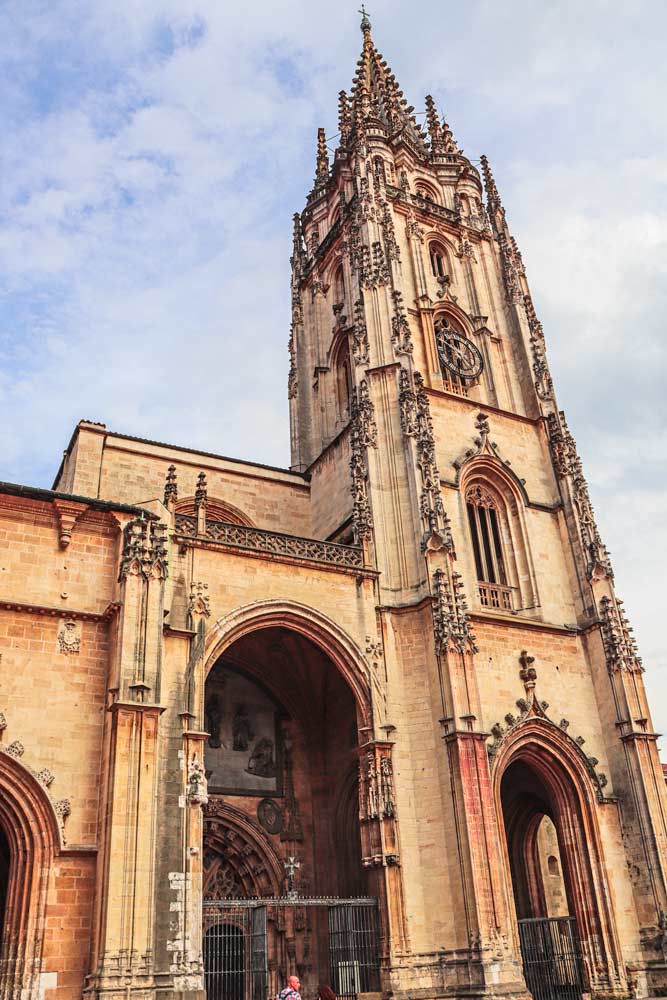
The Camino Primitivo starts at San Salvador Cathedral in Oviedo, a beautiful town in the mountainous region of Asturias, Northern Spain. 

The front facade and the tower of San Salvador Cathedral in Oviedo, SpainThe front facade and the tower of San Salvador Cathedral in Oviedo, Spain
San Salvador Cathedral in Oviedo, the starting point of the Camino Primitivo

How to get to Oviedo?

Step 1. Fly to Madrid. If you come from overseas the easiest way of getting to Oviedo via Madrid. Many airlines offer direct flights to Barajas Airport in Madrid from all over the world.

Step 2. Take a bus/train to Oviedo. From Madrid, you can take a direct bus or train to Oviedo.

There are several daily buses from Madrid including direct buses Barajas Airport to Oviedo. The prices vary between 20 and 40 Euros (sometimes you can find special deals on the website for 10-15 Euros). The travel time is 5 to 6 hours. You can find the up-to-date itinerary and prices on the ALSA website. There are direct buses to Oviedo from other Spanish cities.

You can get from Madrid to Oviedo by direct train. It takes between 3 hours and 4h30min. The price is between 25 and 40 Euros. Buy your tickets and check the timetable on the RENFE website.

The bus and the train station in Oviedo are in the same place, a 20-minutes walk from the Cathedral.

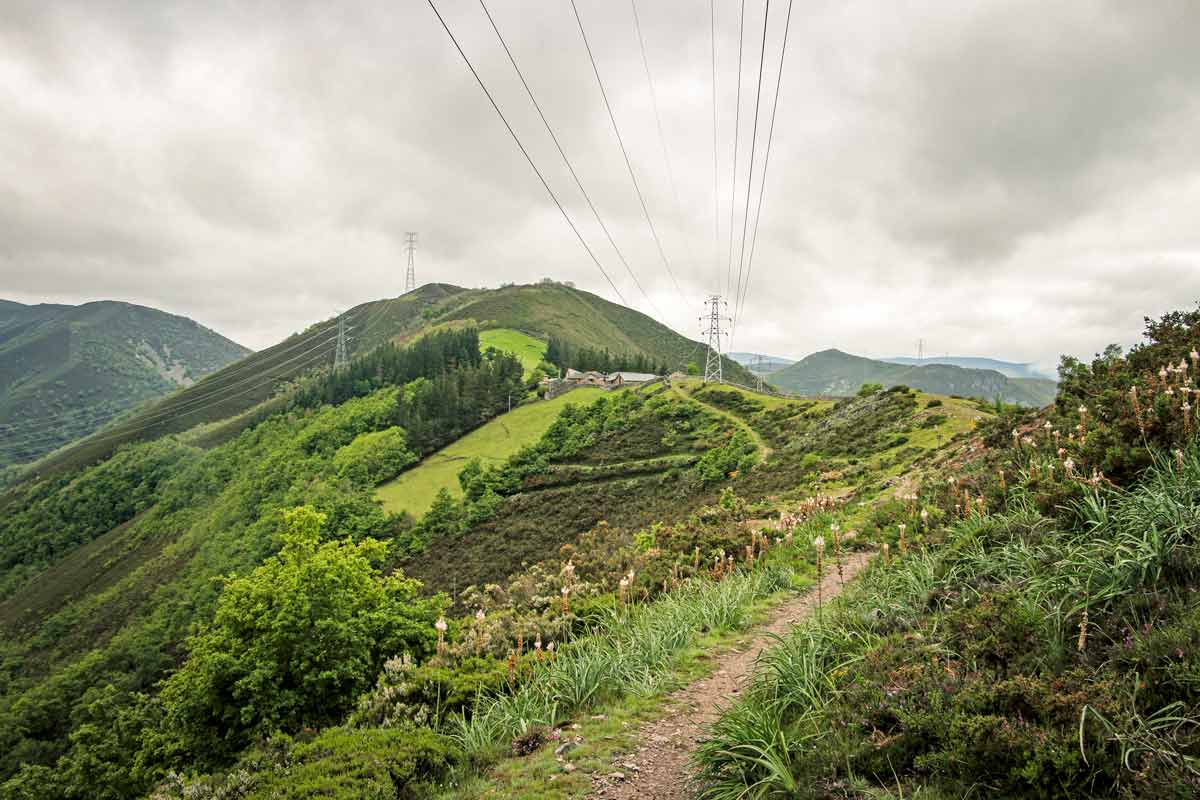
A footpath over the lush-green hills on the Camino PrimitivoA footpath over the lush-green hills on the Camino Primitivo
The Camino Primitivo often follows a footpath over the mountains with breathtaking views

Where to get a Credential (pilgrim’s passport)?

There are a couple of places in Oviedo where you can buy a Credential;

  • at the Tourism Information Office, Plaza de Institution, 4;
  • at the Municipal albergue El Salvador, Leopoldo Alas Street, 20;
  • at the Cathedral of Oviedo, Plaza Alfonso II El Castro.

 The price is 3 euros. You can get a stamp at the Cathedral of Oviedo.

The best time for walking

Summer is the best time to do the Camino. It’s warm with fewer rainfalls though in the mountains the weather is unpredictable and changes quickly. July and August are the busiest months for this Camino with the best weather conditions. We walked this route at the end of May – beginning of June and got quite a bit of rain. Locals told us it wasn’t normal for that time of the year.

Shoulder season May – June and September – beginning of October is a good time for walking. The weather is good and there aren’t many people. We wouldn’t recommend walking the Camino Primitivo off-season between November and March. Many albergues are closed during this period, it’s cold and you are likely to get snow in the mountains.

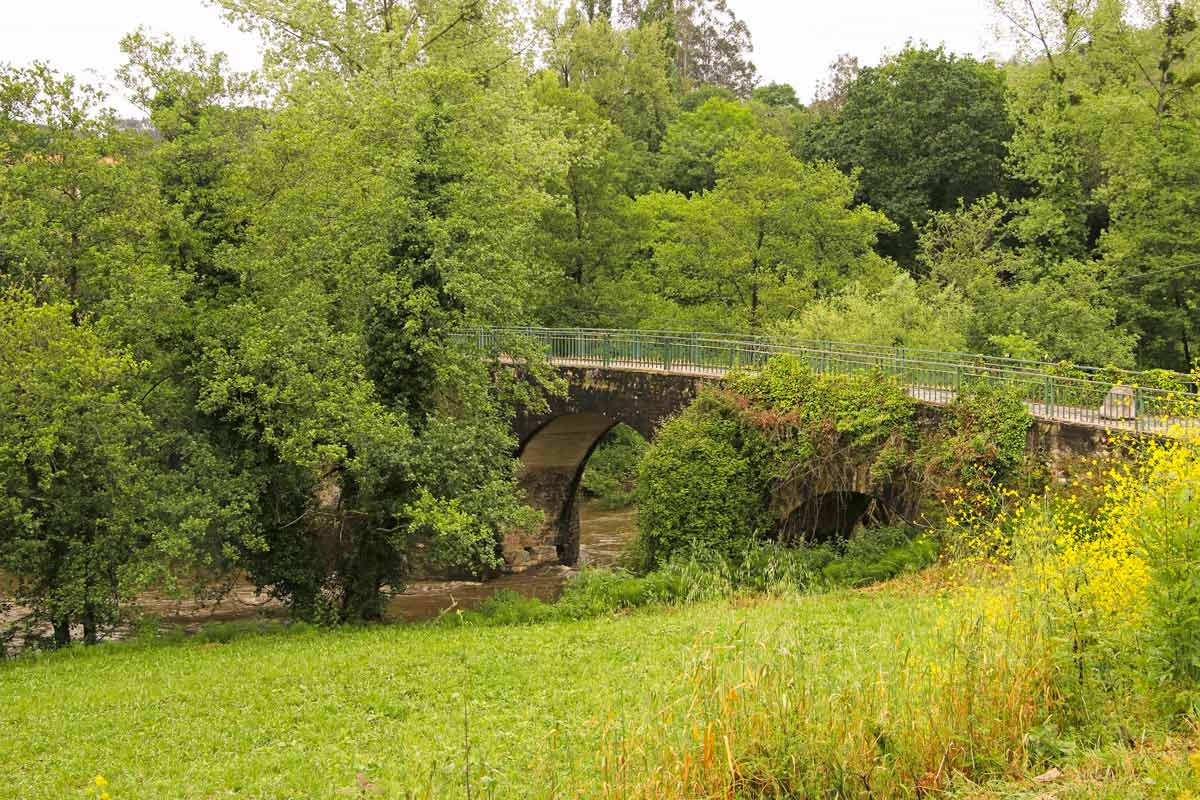
A stone bridge in the forest with lush-green vegetationA stone bridge in the forest with lush-green vegetation
An old bridge over the small river in the forest at the beginning of the Camino Primitivo

What is the accommodation like on the Camino Primitivo?

Like on any other Camino route here you can find public (municipal) and private albergues*, hotels, and guest houses. 

*Albergues are special hostels for pilgrims on the Camino.

Public (municipal albergues)

Public albergues are the cheapest accommodation option on the Camino.

Those albergues can’t be booked in advance. It is a first come first serve system. 

Most public albergues on the Camino Primitivo cost around 10 Euro pp.

Municipal albergues usually don’t have lockers. I advise having a small bag to carry your valuable stuff with.

In the high season, public albergues allow you to stay only one night, they can make an exception if you are sick or have any other serious issues.

Municipal albergues usually don’t accept backpack delivery. If you use the service you’ll have to stay in private albergues and/or hotels.

Private albergues

Private albergues usually have better facilities, are more comfortable and modern, and the price is around 17-20 Euros.

They can be booked in advance through online booking services or over the phone.

Most albergues have washing and drying machines.

You can find more information on accommodation on the Camino in our post Albergues on the Camino de Santiago.

Hotels/guest houses 

It’s the most expensive and most comfortable accommodation option on the Camino Primitivo. If your budget allows I recommend staying in private rooms at least 2-3 times a week to get a better rest. Private rooms can be found pretty much everywhere on the route.

The prices vary between 35-40 Euros for a single room and between 50-60 Euros for a double room.

Hotels usually accept luggage delivery. Some places offer breakfast.

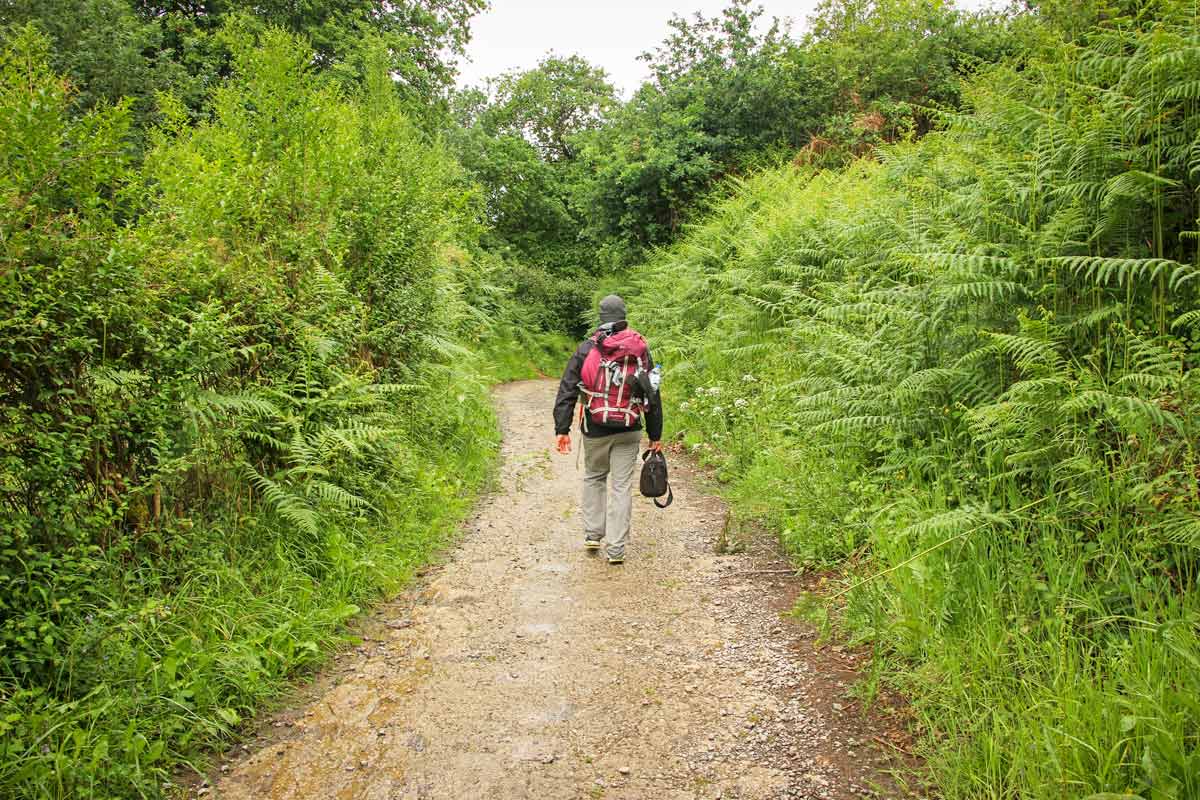
Campbell from behind on a gravel road surrounded by lush-green vegetation on the Camino PrimitivoCampbell from behind on a gravel road surrounded by lush-green vegetation on the Camino Primitivo
Campbell on the Camino Primitivo

Luggage transfer

You can use a backpack delivery service on the Camino Primitivo. They pick up your backpack at your albergue/hotel in the morning and drop it off at your next accommodation place by lunchtime. When you arrive your backpack is already there. 

The average price is 7-8 Euros per backpack per stage.

Several companies offer a luggage delivery service on the Camino Primitivo. Correos (up to 15 kg per luggage item) and Pilbeo (up to 20 kg per luggage item) are the most popular ones. The entire route (Oviedo to Santiago) works out at 100 Euros per backpack.

The cost of walking the Camino Primitivo

If you stay in public albergues and buy food in supermarkets you can budget 25 Euros per person per day. Staying in private albergues, having lunch in a restaurant, stopping for coffee every day, you will spend around 35-40 Euros pp. per day. If you stay in private rooms and eat out at least once a day, budget 55+ Euros per person per day.

  • Accommodation – municipal albergues – 9 Euro per bed, private albergues/hostels 17-20 Euro.
  • A meal in a restaurant (Menu del Dia) – 10-12 Euro pp.
  • Food shopping – 6-8 Euro per person per day.
  • A cup of coffee – 2-3 Euros.
  • A beer in a bar – 2-3 Euros.
  • Backpack delivery service – 7-8 Euros per backpack per stage.
  • Laundry – washing – 3 Euro per load; drying – 3-4 Euro per load.

We have a comprehensive post on the cost of walking the Camino de Santiago where you can find everything you need for planning your Camino budget.

The highlights of the Camino Primitivo

  • Oviedo, the starting point of the route.
  • Spectacular mountainous scenery in the part between Oviedo and Lugo.
  • Embalse de Salime, a large reservoir with turquoise color water surrounded by the mountains and forest.
  • Lugo, an old town with the impressive Roman walls.

What to pack for the walk?

The main thing to remember is don’t pack too much unless you’re planning to use a luggage delivery service. You have to carry your backpack every day for 2 weeks. Our backpacks were 6-7 kg each but we had a laptop and a mirror camera. You can lower the weight of your backpack down to 5 kg.

Two important items to pack are comfortable shoes for the Camino and a good Camino backpack.

You can find more tips on what to pack for the walk in our detailed Camino packing post.

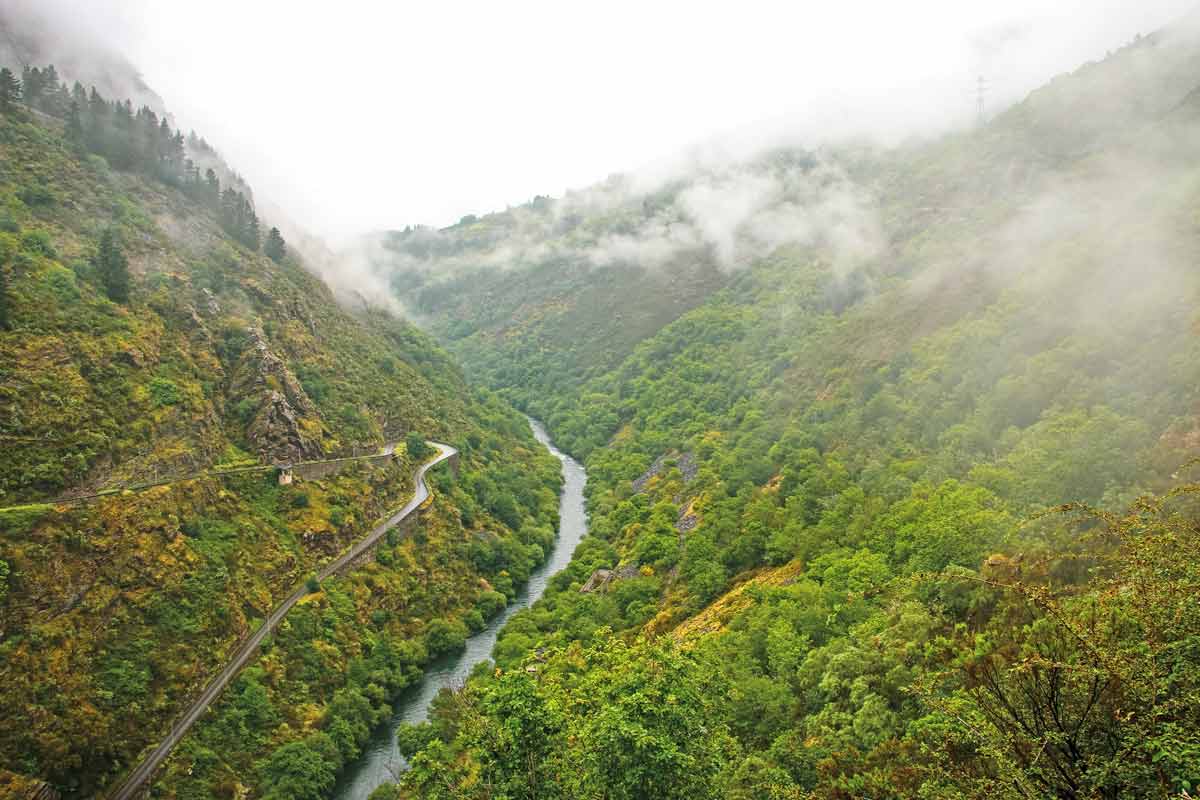
A river between the mountains and a winding road on the slope of the hill in Asturias, SpainA river between the mountains and a winding road on the slope of the hill in Asturias, Spain
The Camino Primitivo is the greenest Camino route in Spain. Every day it takes pilgrims through the areas with lush vegetation

Our final thoughts about the route

The Camino Primitivo was our second Camino de Santiago. We walked it after finishing the Camino Portuguese, and I must say these are two completely different experiences. We both love hiking in the mountains and the Camino Primitivo is as close as you can get to hiking on any Camino de Santiago. No cities and busy roads, only countryside, mountains, and forest.

Despite being unspoiled the Camino has enough infrastructure to make your walk comfortable; different accommodation and food options, easy to find a place to stop for coffee and lunch in the middle of the day, the route is well marked, etc.

This Camino is a great combination of a “wild” hiking experience and good infrastructure.

Another reason we really liked the Primitivo is that there are not many people, compared to the other Caminos routes. Only about 5% of all pilgrims walk this Camino.

The distance is not as long as the French or Northern Camino; you can complete it on your standard holiday.

Questions or Comments?

Got any questions or comments? We would love to help! All questions and comments will be answered by us personally in Buy Me a Coffee. Click below and ask away.

Feel free to support our site by buying us a coffee!

Categories
Travel-Africa

Luxury family safari – 3 Reasons to consider South Africa

When families begin planning a safari, the first question is often where to go.

Africa offers no shortage of extraordinary safari options, but South Africa has a particularly strong case when it comes to family travel. For those looking for a family safari, South Africa offers a rare combination of wildlife, comfort, flexibility and variety, all of which matter when you are travelling with different ages, interests and energy levels.

It is also a destination that lends itself especially well to bespoke luxury safaris. Tailor-made South African safaris allow you to shape the experience around the family rather than the other way around.

Here are three reasons South Africa is worth serious consideration.

1. It offers more than just safaris

One of South Africa’s greatest strengths is that it can give families more than a single type of trip.

Of course, the safari element is a major draw. Early mornings in the bush, expert guides, unforgettable wildlife encounters and that unmistakable sense of anticipation all form part of the appeal. Private game reserves, such as those that adjoin the Kruger National Park, allow families to spot “The Big Five” – a “must-see” for families wanting to experience their first safari.

But South Africa also allows families to build a broader journey around those moments.

A trip can include time in Cape Town, days along the coast, a stay in the Winelands, or experiences centred on food, scenery, culture, and wildlife, all within relatively easy reach. Some South African highlights include:

  • Ocean safaris to see dolphins, penguins, whales, and seals.
  • Gauteng’s Cradle of Humankind. The UNESCO World Heritage Site is one of the world’s most important fossil sites and the birthplace of many significant paleontological discoveries.
  • Hiking on Table Mountain, cycling in game reserves, skydiving, and bungee jumping.
  • Tours of the Panorama Route, where you can enjoy Blyde River Canyon, Bourke’s Luck Potholes, and God’s Window.

That variety can make all the difference when travelling as a family, especially if not everyone wants every day to revolve around game drives.

For parents, it means more flexibility. For children and teenagers, it creates a sense of movement and discovery. For multi-generational groups, it gives everyone a better chance of finding something that speaks to them.

In practical terms, that makes South Africa a very appealing option for a luxury family safari. It allows the trip to feel rich and varied, rather than one-dimensional.

2. It works beautifully for different family rhythms

No two families travel in quite the same way.

Some want a fast-moving itinerary with plenty packed in. Others want space, slower mornings and time to reset between activities. One of the reasons South Africa stands out is that it can accommodate both.

For families with younger children, Greater Kruger offers a classic safari experience. Here, game drives are dynamic, and wildlife density is high. Leopard sightings are common. Elephants gather at waterholes visible from the lodge. The atmosphere is warm rather than formal, with dedicated kids’ clubs designed for younger guests.

For families with older children, the Kalahari offers something deeper. Here, sightings are less about frequency and more about intimacy: meerkats at eye level, black-maned lions crossing red dunes and guided walks that reveal the subtleties of desert life.

This is where tailor-made South African safaris really come into their own. South Africa offers enough range in accommodation, setting and experience to make it easier to build around a family’s actual rhythm. That might mean private villas, family suites, lodges that are well set up for children, or a journey that balances safari with time by the sea or in the countryside.

3. It combines wilderness with a high level of comfort

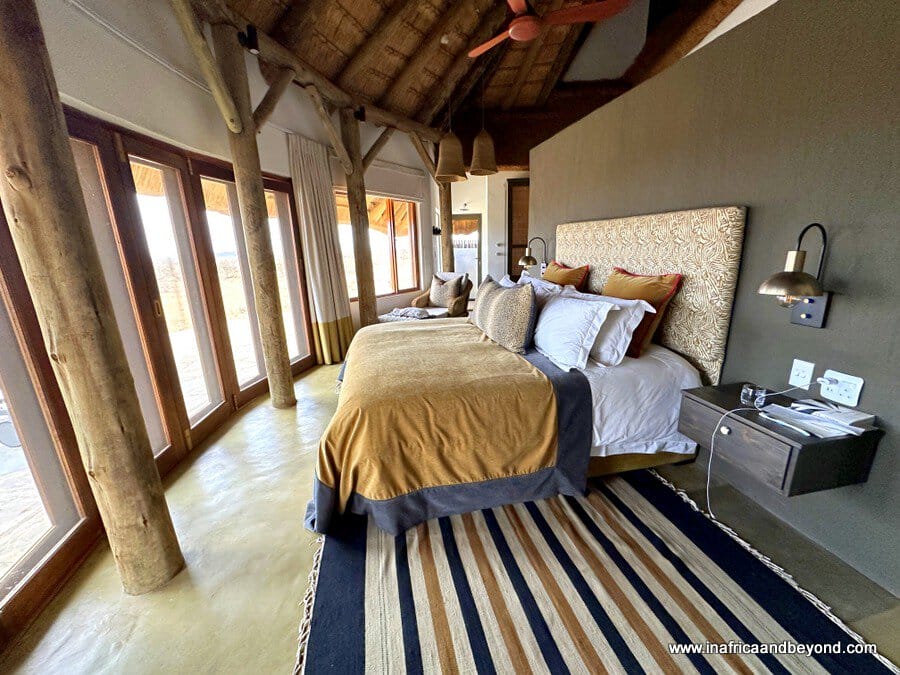
Last Word Madikwe Villa Bedroom - luxury family safari

Villa Bedroom

For many families, safari needs to feel exciting but also manageable.

South Africa is particularly good at striking that balance. There is real wildness here, dramatic landscapes, exceptional wildlife and all the magic that makes safari so memorable, but it is paired with a strong hospitality offering and a style of travel that often feels polished and accessible. Many lodges offer:

  • Interconnected rooms
  • Kids’ clubs and activities
  • Specialist childminding
  • Private vehicles
  • Flexible mealtimes

For first-time safari travellers especially, South Africa can feel like a very natural entry point. A lot of families worry about issues such as catching malaria or keeping children occupied during connecting flights.

In South Africa, there are plenty of areas that are malaria-free, such as the regions surrounding Madikwe. The medical facilities across the country are excellent, and English is widely spoken. The Eastern Cape is particularly popular for families with younger children, offering a chance to see the “Big Five” on safari in a malaria-free area.

South Africa also has well-developed flight connections, great roads, and there are plenty of short transfer options available.

All of this gives families the sense of adventure they are hoping for, while also providing the comfort and reassurance that make the trip feel relaxed rather than overwhelming.

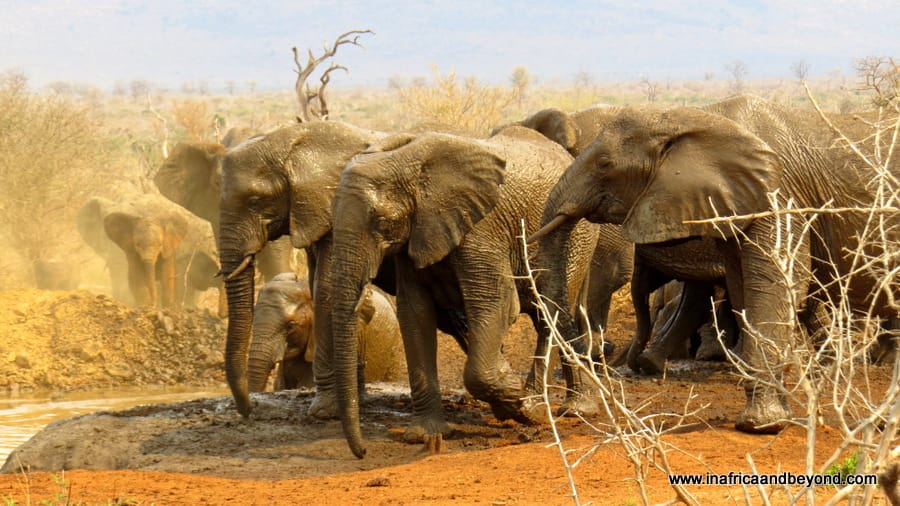
The Big Five - Elephants

Elephants in Madikwe Game Reserve

South Africa: variety, flexibility and ease

South Africa has a great deal to recommend it for families considering a safari.

It offers variety, flexibility and a strong sense of ease, while still delivering the beauty, wildlife and sense of occasion people hope for from an African adventure. For anyone planning a luxury family safari, it is a destination that manages to feel both exciting and accessible. And for those interested in bespoke luxury safaris, it provides the scope to create something far more personal than a standard itinerary.

For many families, that combination is exactly what makes South Africa such a rewarding choice.

Categories
Travel-Africa

Salema to Sagres walking route, Fishermen’s Trail

The Salema to Sagres coastal route is a part of the Fishermen’s Trail, a multi-day hike along the coast in southern Portugal. The trail can be walked as a day hike or as a part of the longer route. The scenery along the route is spectacular; rugged cliffs, unspoiled beaches, and breathtaking lookout points.

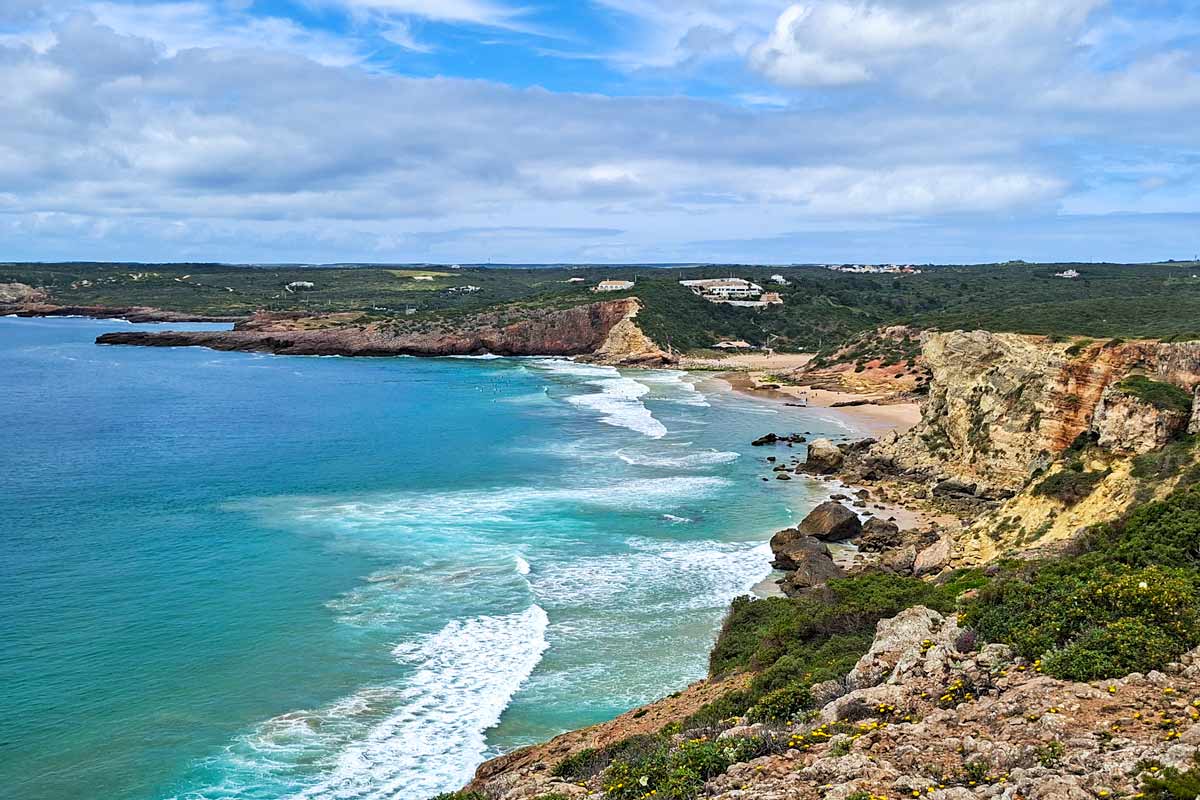
A view of the coast and Zavial Beach from the top of the cliffsA view of the coast and Zavial Beach from the top of the cliffs
A view of Zavial Beach from the top of the top of the cliffs on the route from Salema to Sagres

Stingy Nomads participates in the Amazon Services LLC Associates Program and other affiliate programs. If you click on the link and purchase the item or make a booking, we will receive an affiliate commission at no extra cost. Thank You for supporting us and assisting us to produce quality, free content.

Salema to Sagres route overview

  • Distance – 20 km/12.4 mi
  • Time – 5-6 hours (moving time)
  • Total ascent – 593 m
  • Total descent – 567 m
  • Difficulty – moderate
  • Route markings – marked with green and blue stripes painted on light poles, rocks, and walls.
  • Walking surface – 17.5 km/10.8 mi – footpath/gravel road; 1 km/0.6 mi – sand (beach); 1.5 km/0.9 mi – cobbled stones.
  • Walking by the sea – 14 km/8.6 mi 
  • Walking route – Salema – Zavial Beach – Ingrina Beach – Martinhal Beach (Sagres) – Tourism Information Office in Sagres.
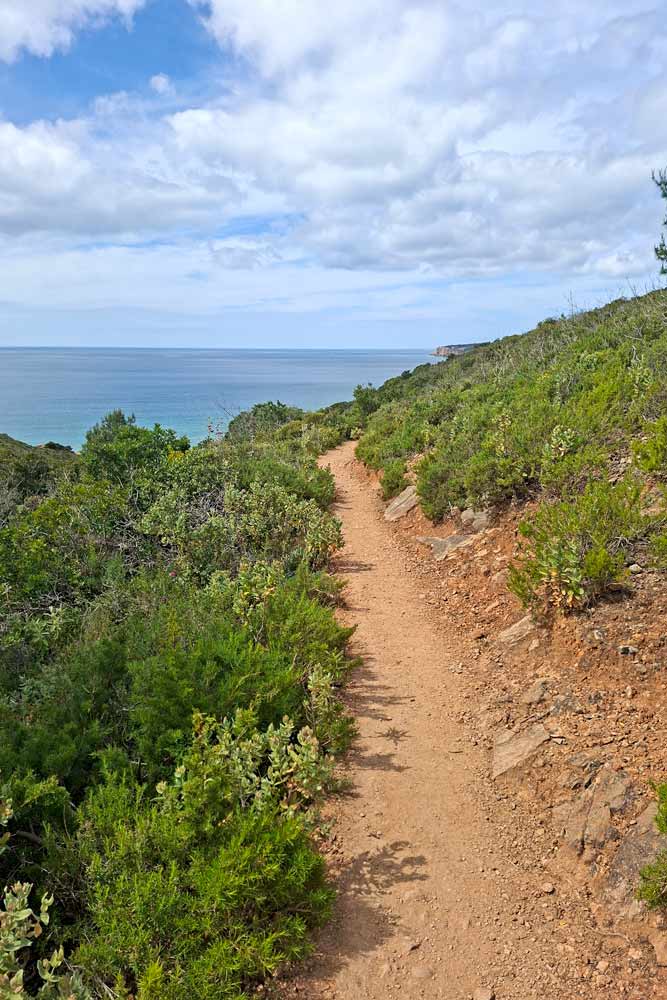
A hiking trail along the cliffs near Salema, AlgarveA hiking trail along the cliffs near Salema, Algarve
The trail from Salema to Sagres goes on the top of the cliffs offering amazing views

GPX file of the route

You can download our GPX file and use it for navigation on your device.

Where does the trail start?

The easiest is to start walking at the west point of the promenade at Salema Beach next to Atlantico Restaurant. There is a wooden board with the map of the trail. From there you can see route markers (blue and green stripes) on the light poles and walls. They will take you out of the town to a footpath along the cliffs.

Where does it finish?

At the information kiosk in Sagres at Jardim de Sagres Square (Mareta Beach). There is a wooden board with the map of the trail. A bus stop is right there. You can get a bus back to Lagos or Salema.

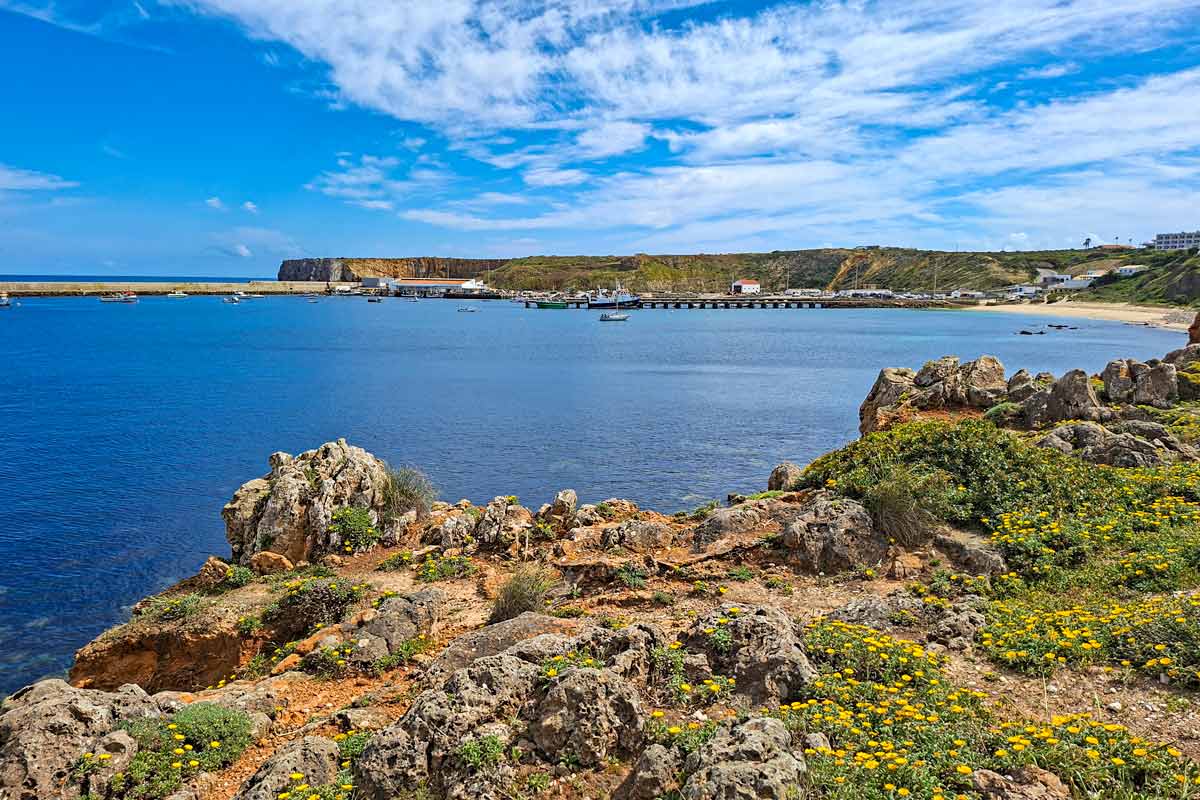
Sagres harbor and the beach from the trailSagres harbor and the beach from the trail
Sagres from the top of the cliffs near Martinhal Beach

How to get to Salema?

You can get to Salema by bus #47 from Lagos, Sagres, or Vila do Bispo. The bus journey takes around 30-40 minutes. Check the timetable here.

The highlights of the Salema to Sagres route

  • Spectacular coastal scenery from the top of the cliffs.
  • Several secluded small beaches surrounded by the limestone cliffs.
  • Wild flowers along the cliffs in spring time.
  • Zavial Beach, a popular surf beach surrounded by the cliffs.
  • Ingrina Beach, a small beach nice for swimming.
  • Martinhal Beach, a long beautiful beach east of Sagres with a couple of restaurants.

The challenges of the trail

  • The first 10 km/6.2 mi from Salema to Ingrina Beach has many steep ascents and descents.
  • No place to refill water for the first 10 km/6.2 mi. Make sure you carry enough water.
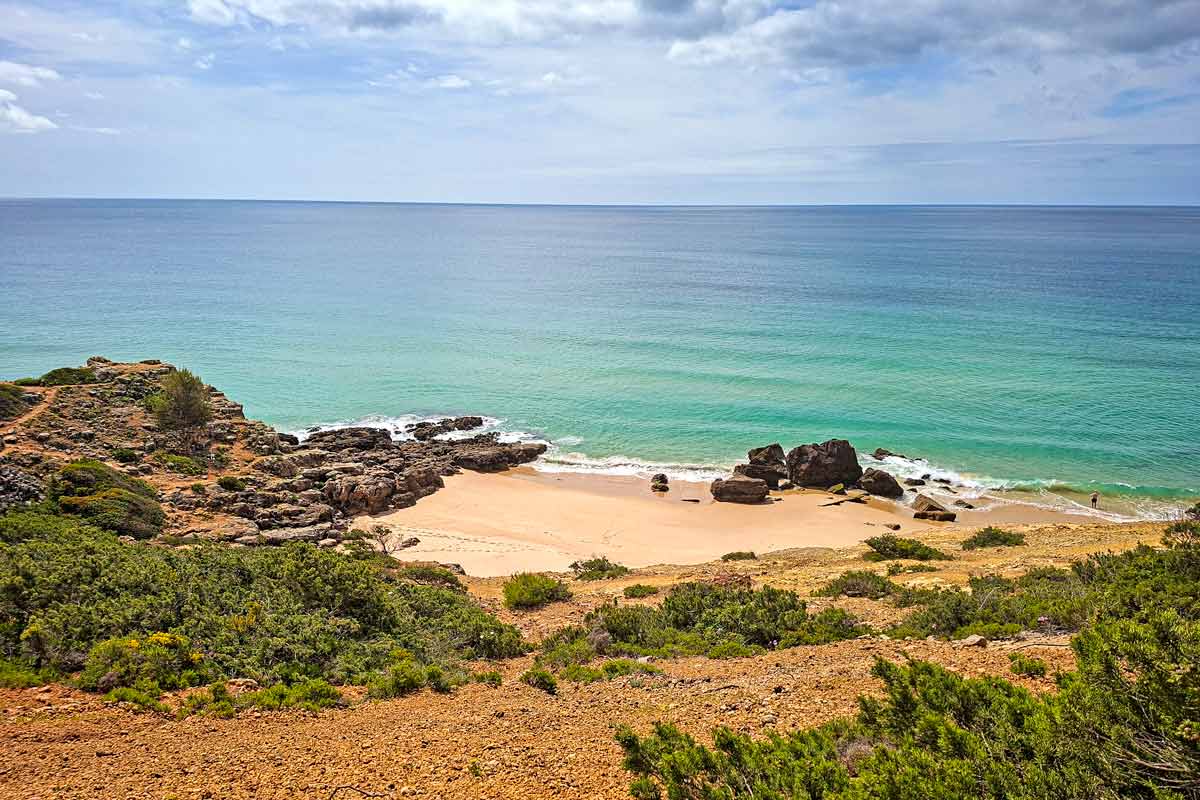
The turquoise color water and a sandy unspoiled beach, Algarve, PortugalThe turquoise color water and a sandy unspoiled beach, Algarve, Portugal
A small secluded beach surrounded by the cliffs on the route from Salema to Sagres

In which direction to walk?

I’ve walked this route both directions from Salema to Sagres and from Sagres to Salema. I prefer to walk it from Salema because the part of the route between Salema and Ingrina Beach has many steep ascents and descents. It’s better to walk it at the start of the day while you’re still fresh and before it gets too hot if you walk the trail in summer.

Elevation profile of the trail

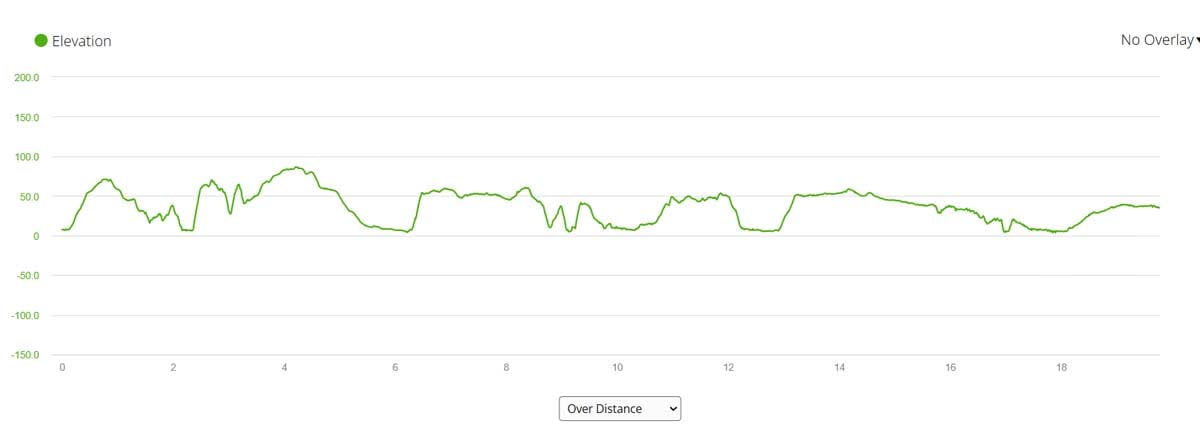
A graph showing ups and downs of the route from Salema to SagresA graph showing ups and downs of the route from Salema to Sagres
The elevation profile of the trail from Salema to Sagres

Stops along the route

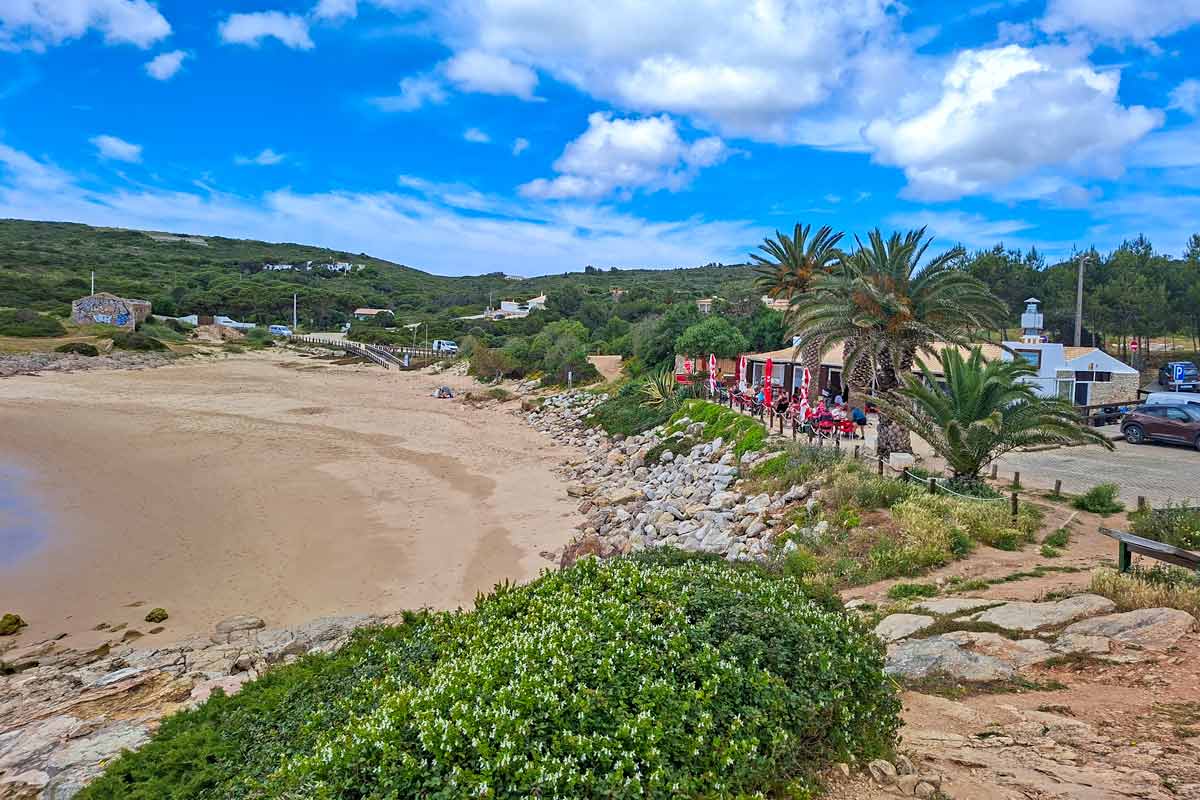
9.3 km/5.7 mi – Zavial Beach, a beach with a restaurant, a toilet (inside the restaurant) you can ask to use even if you don’t order anything, and an ATM (the restaurant accepts only cash). 

10 km/6.2 mi – Ingrina Beach, a smaller beach with a restaurant and a toilet. This restaurant is more of a local place (cheaper) than the one at Zavial. 

17.3 km/10.7 mi – Martinhal Beach, a couple of restaurants.

Inglina Beach, a small sandy beach with a local restaurant between Salema and SagresInglina Beach, a small sandy beach with a local restaurant between Salema and Sagres
Ingrina Beach, a small beach with a restaurant, a great place to stop for lunch

Salema to Sagres route description

Part 1. Salema to Ingrina Beach

0-0.6 km/0-0.3 mi – through the town.

0.6-3.5 km/0.3-2.1 mi – along the cliffs.

2.3 km/1.4 mi – Praia Santa beach.

2.3 km/1.4 mi – a steep ascent from the beach to the top of the cliffs.

3 km/1.8 mi – a steep descent with a subsequent ascent.

3.5-6 km/2.1-3.7 mi – the trail goes away from the coast. It goes around the cliffs through the fields on a gravel road.

6.1 km/3.7mi – beach

6.3 km/3.9 mi – a steep ascent from the beach to the top of the cliffs.

6.4-8.6 km/3.9-5.3 mi – an easy flat walk on the top of the cliffs with spectacular views.

8.6 km/5.3 mi – a descent

8.7 km/5.4 mi – a gradual ascent

9 km/5.5 mi – a steep descent to Zavial Beach

9.1 km/5.6 mi – Zavial Beach, restaurant, toilet, ATM

9.2 km/5.7 mi – a steep ascent to the top of the cliffs.

10 km/6.2 mi – Ingrina Beach, restaurant, toilet.

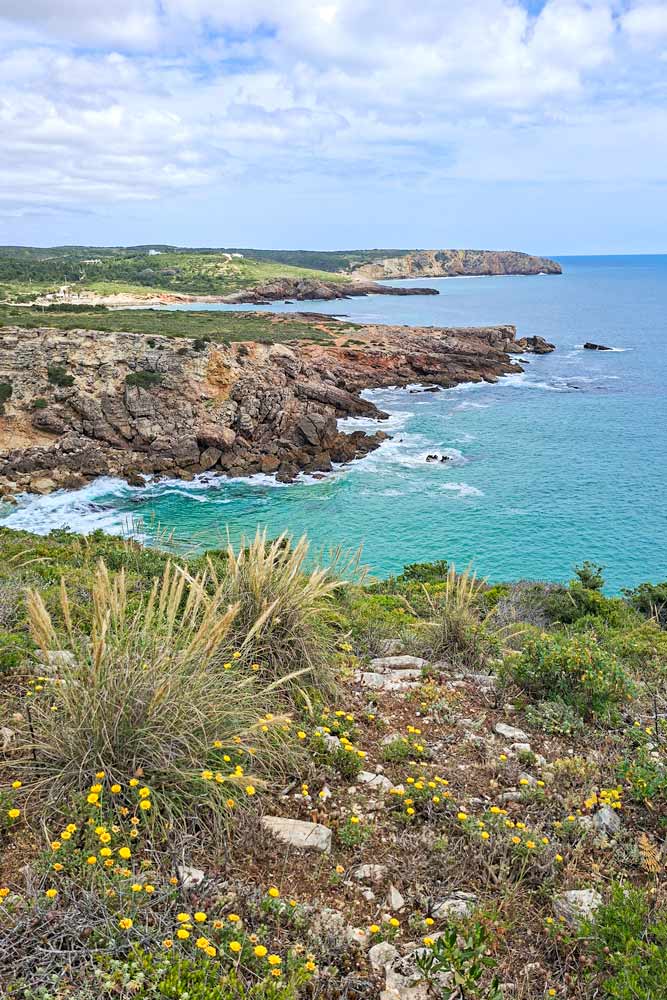
Limestone cliffs dropping into the sea in the Algarve, PortugalLimestone cliffs dropping into the sea in the Algarve, Portugal
Spectacular view of the rugged coast lone from the trail

Part 2. Ingrina Beach to Sagres

12.2 km/7.5 mi – Barranco Beach

13 km/8 mi – a long gradual ascent

13.2-15.7 km/8.2-9.7 mi – the trail goes inland (you can see it from time to time), through the fields, a flat and easy walk.

15.7 km/9.7 mi – the trail is back by the sea.

16.9 km/10.5 mi – a steep descent.

17.3-18.3 km/10.7-11.3 mi – Martinhal Beach, a wide sandy beach with a couple of restaurants. 

18.3-20 km/11.3-12.4 mi – through the town of Sagres.

20 km/12.4 mi – the information office in Sagres.

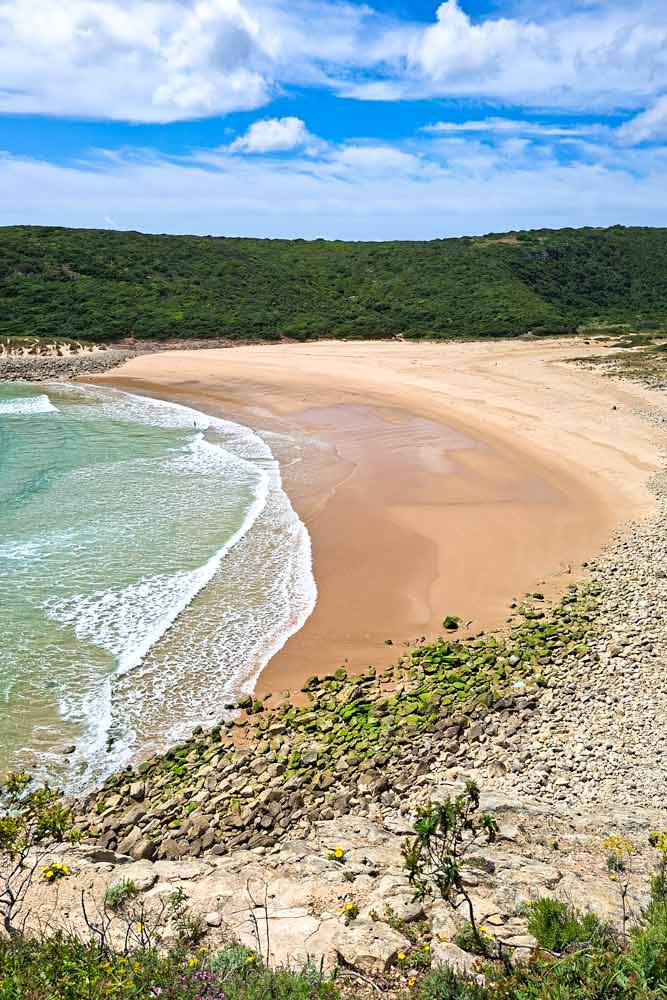
A wild scalloped-shaped beach on the trail near SagresA wild scalloped-shaped beach on the trail near Sagres
Barranco Beach, another unspoiled beach on the route from Salema to Sagres

Where to stay in Sagres?

Sagres is a popular tourist destination unlike in Salema here you can find accommodation on different budget from hostels to spa hotels.

Questions or Comments?

Got any questions or comments? We would love to help! All questions and comments will be answered by us personally in Buy Me a Coffee. Click below and ask away.

Feel free to support our site by buying us a coffee!

Categories
Travel-Africa

5 Best Luxury Hotels in Johannesburg in 2026… by a Local

Looking for the best luxury hotels in Johannesburg as recommended by a local? Read on…

Johannesburg is a city of contrasts where modern skyscrapers, leafy suburbs and vibrant cultural hotspots come together to create a dynamic urban destination. Alongside its thriving business scene, the city is home to an impressive collection of luxury hotels ranging from grand international brands to opulent boutique properties. As a South African travel blogger based in Johannesburg, I am often asked what the best hotels in the city are. Here are my recommendations based on hotels I’ve personally stayed at and enjoyed. The list will be updated as I discover more great hotels.

5 Best luxury hotels in Johannesburg

1. The Houghton Hotel

The Houghton Hotel - best luxury hotels in Johannesburg

The Houghton Hotel

The Houghton Hotel may be located in one of South Africa’s busiest cities, but once you’re inside, it’s wonderfully serene and you feel as though you’re miles away from the city. Combining modern luxury with a lively social atmosphere, it differentiates itself by being more of a lifestyle destination catering for discerning leisure and business travellers, as well as locals. Facilities at the hotel include an 18-hole Jack Nicklaus-designed golf course at the Houghton Golf Club, a world-class spa and wellness centre, a running track, four swimming pools as well as function and conference facilities.

See more about The Houghton Hotel or book here.

2. Four Seasons Hotel The Westcliff

Four Seasons Westcliff

Four Seasons Hotel The Westcliff

Perched atop the rocky Witwatersrand ridge, the Four Seasons Hotel The Westcliff Johannesburg has some of the best panoramic views in the city. Nine interconnected villas stand between courtyards, fountains and gardens, reached via a signature glass elevator. Its luxurious rooms and suites combine contemporary comfort with subtle African-inspired décor. Many open onto private balconies with stunning views over Johannesburg’s urban forest and the Johannesburg Zoo. Guests can enjoy award-winning dining, a tranquil spa and beautiful infinity pools overlooking the city. The terraced layout and lush gardens create a peaceful escape despite being close to the city centre.

See more about Four Seasons Hotel The Westcliff or book here.

3. Park Hyatt Johannesburg

Park Hyatt Johannesburg

Park Hyatt Johannesburg

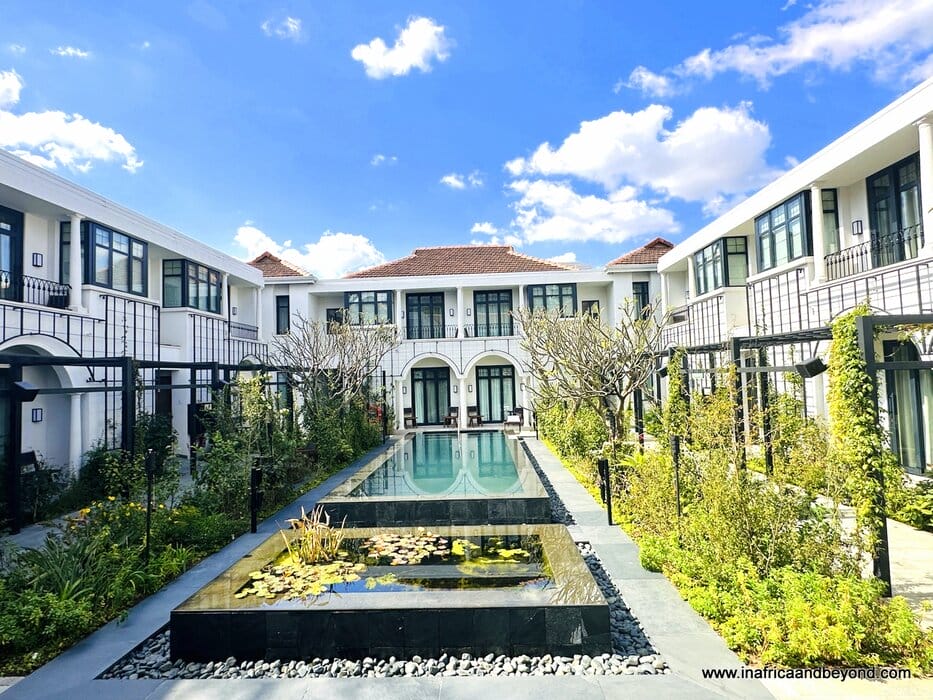
One of the newest hotels in the city, the Park Hyatt Johannesburg opened in July 2025. It subsequently made it onto Time‘s World’s Greatest Places list in 2026. The hotel is set inside a beautifully restored 1930s colonial mansion influenced by Sir Herbert Baker — one of South Africa’s most celebrated architects. There is a beautiful courtyard at the centre of the building with a garden and swimming pool.

With just 31 rooms, this is the smallest Park Hyatt in the world. The staff-to-guest ratio means that the service is bespoke. Rooms have floor-to-ceiling windows, marble bathrooms with deep soaking tubs, and traditional Ndebele-patterned throws. The restaurant, Room 32, is widely praised, gaining a Michelin One Key distinction in 2025. It also has a cigar lounge and Arabian lounge.

See more about Park Hyatt Johannesburg or book here.

4. Sandton Sun & Towers

Sandton Sun Review

San Deck at Sandton Sun

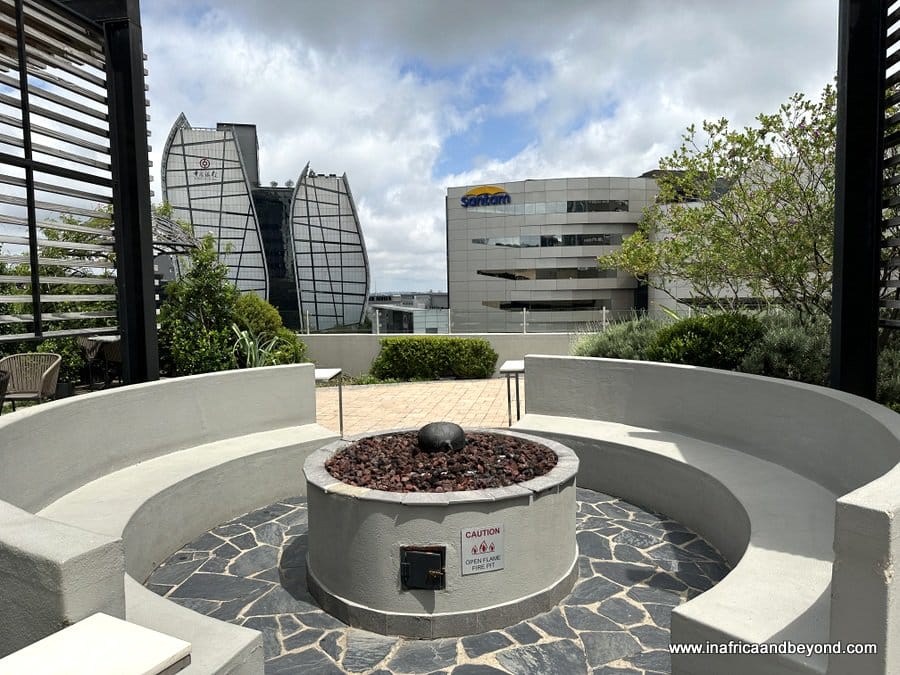
The first five-star hotel in Sandton, the Sandton Sun & Towers has been an iconic feature of the Johannesburg skyline for decades. Connected directly to the expansive Sandton City Shopping Centre and the Sandton Convention Centre, there’s no need to step outside if you don’t want to.

Rooms are modern, elegant and designed for both business and leisure travellers. Guests can enjoy excellent restaurants, a luxurious spa and the popular San Deck with its vibrant atmosphere and city views. Its prime location places visitors in the heart of Johannesburg’s business, shopping and entertainment district.

See more about Sandton Sun & Towers or book here.

5. Fairlawns Boutique Hotel

Maison De Ville Fairlawns Boutique Hotel

Maison De Ville Entrance at Fairlawns Boutique Hotel

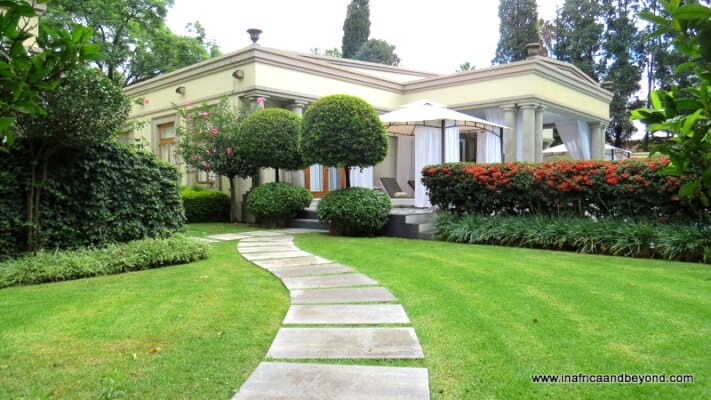
Fairlawns is a luxurious boutique hotel in Morningside, Sandton, known for its refined architecture, serene gardens and personalised five-star service. Each of the 42 suites has its own distinct style, ranging from classic European elegance to contemporary glamour, adding to the hotel’s charm and exclusivity.

The hotel’s award-winning spa is a major highlight, featuring relaxing treatments and beautiful wellness facilities. Guests can unwind beside the pool or enjoy the serene outdoor spaces that feel far removed from the bustle of the city.

Fairlawns is especially popular for romantic getaways, spa weekends and luxury staycations.
Despite its exclusivity and privacy, it remains conveniently close to Sandton’s business and shopping districts.

See more about Fairlawns Boutique Hotel or book here.

See the best things to do in Johannesburg.

Best Luxury Hotels in Johannesburg