





Kazakhstan’s Population Surges Past 20 Million
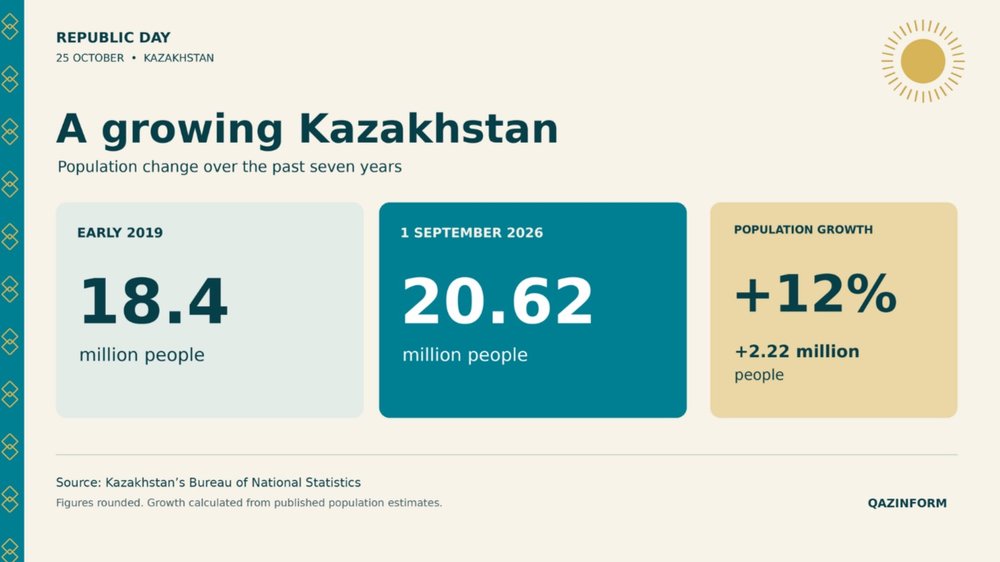
Kazakhstan has experienced a significant demographic increase, with its population rising from 18.4 million in early 2019 to 20.62 million as of September 2026. This translates to an addition of approximately 2.22 million individuals, marking a robust 12% growth.
Life Expectancy on the Rise
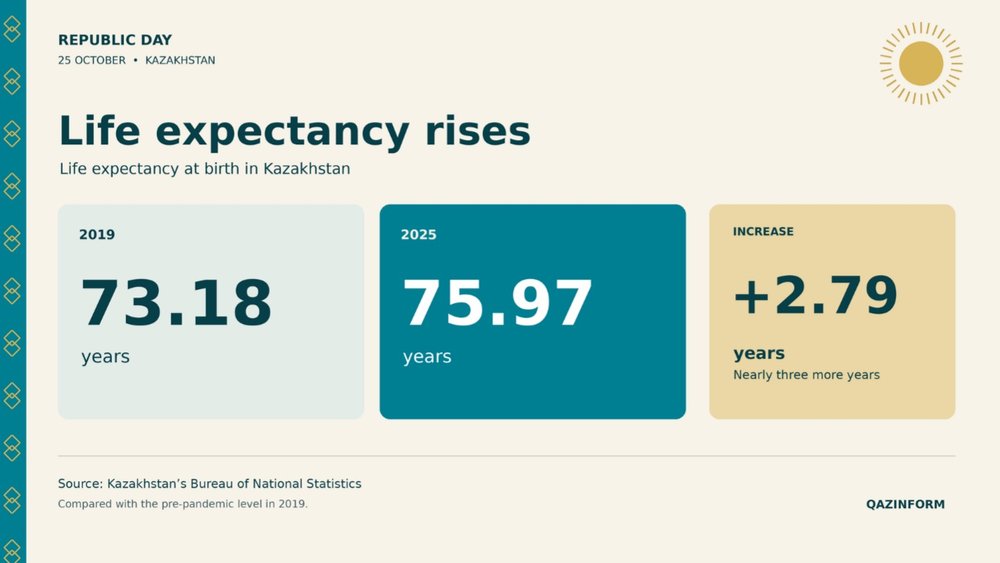
Life expectancy at birth in Kazakhstan has increased from 73.18 years in 2019 to 75.97 years in 2025, nearly three years above the pre-pandemic levels.
However, disparities persist between genders, with life expectancy registering at 79.8 years for women and 72.19 years for men in 2025.
Educational Expansion: New Schools and Housing
Since 2019, Kazakhstan has constructed 1,342 new schools, significantly boosting educational capacity to accommodate over one million additional students. President Kassym-Jomart Tokayev highlighted this progress during the inaugural session of the People’s Council.
In terms of higher education, 267 new dormitories have been established, increasing available accommodation by 66,104 beds and substantially reducing the reported shortage from 82,000 to 5,200 beds.
Additionally, the number of foreign university branches operating in Kazakhstan has risen, with 33 branches across 12 countries as of 2026.
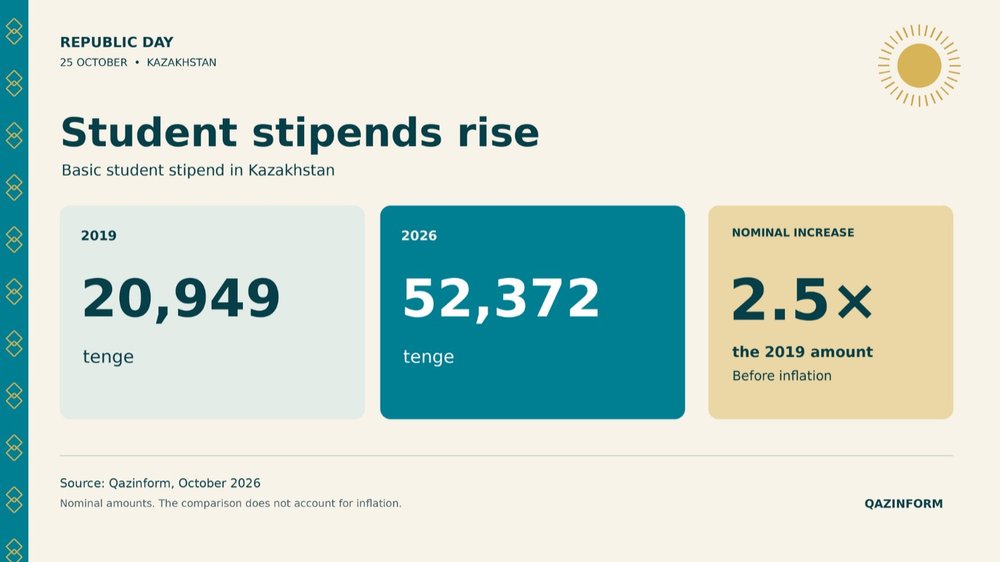
The government has also increased the basic student stipend from 20,949 tenge in 2019 to 52,372 tenge, about 2.5 times more than it was, not factoring in inflation.
Impressive Growth in Housing Construction
Housing development in Kazakhstan has accelerated impressively, growing from 13.1 million square meters in 2019 to 20.1 million square meters by 2025.
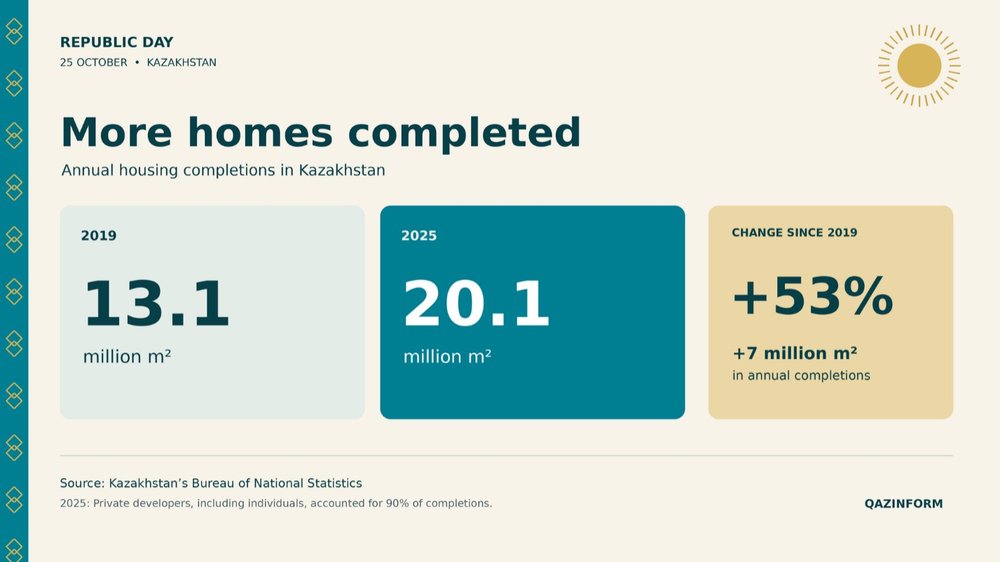
This increase of around 7 million square meters indicates a 53% growth in annual housing construction. Notably, private developers, along with individuals constructing their own homes, were responsible for 90% of these completions in 2025, which, while boosting supply, has not necessarily led to lower housing prices.
Small Businesses Play a Larger Economic Role
Small and medium-sized enterprises (SMEs) contributed 31.7% to Kazakhstan’s GDP in 2019, which rose to 40.9% by 2025. This increase of 9.2 percentage points signifies their growing influence in the national economy, with the sector employing around 4.5 million individuals as of early 2026.
Expanded Access to Water Services
Water service access has improved significantly, with coverage rising to 97.2% in urban areas and 86.4% in rural regions by 2026. The Ministry of Industry and Construction has ensured availability of water through various means, including wells and modular treatment units in every settlement.
Renewable Energy Gaining Momentum
The share of renewable energy sources in Kazakhstan’s electricity generation has surged from 2.3% in 2019 to 7% in 2025, approximately three times the previous percentage.
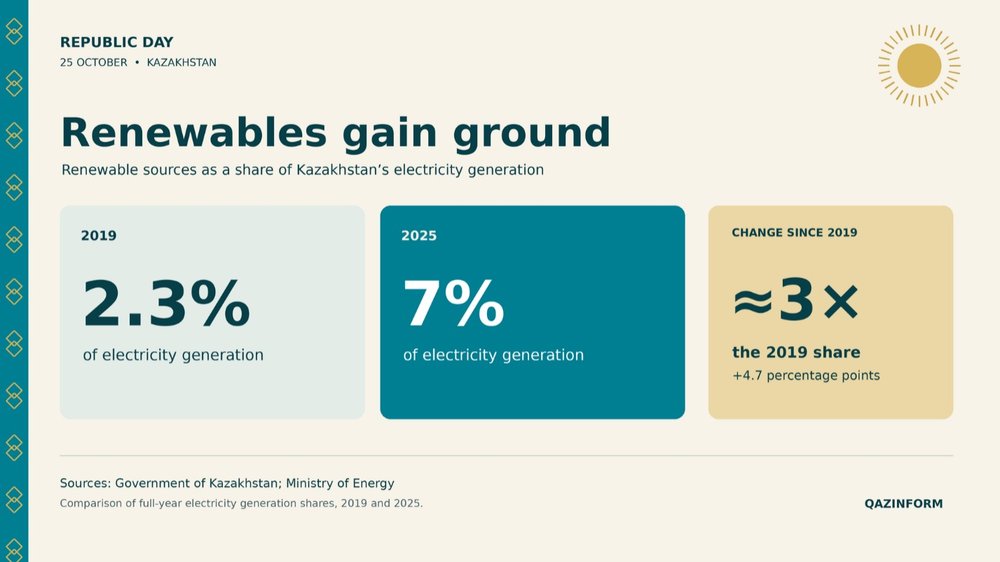
Annual output from renewable sources increased significantly from 2.4 billion to 8.62 billion kilowatt-hours during the same period, with wind energy leading the way, followed by solar and hydropower generation.
The Qazinform News Agency previously reported that President Kassym-Jomart Tokayev commemorated Republic Day, emphasizing the importance of the Declaration of State Sovereignty in laying the groundwork for Kazakhstan’s independence.









Discussion about this post