









Pledges for Climate Finance Experience Dramatic Decline
The commitment of public funding for climate change initiatives in developing countries has plummeted over 70% in 2026, as revealed by an analysis conducted by Carbon Brief.
According to UN climate agreements, developed nations are obligated to supply “climate finance” and have historically made multi-year pledges to fulfill their global obligations.
Many of these commitments lapsed in 2025, coinciding with the United States’ withdrawal from international climate initiatives and significant cuts to various European aid budgets.
A recent assessment by civil society highlights that only five countries have proposed new multi-year commitments, with the United Kingdom being the sole major donor among them.
Germany, France, and Japan, prominent contributors, have yet to announce any new financial plans, with the expectation of no support emerging from the United States.
This shift has resulted in total public climate finance pledges dropping to approximately $11.7 billion per year, a stark decrease from prior levels of about $40 billion.
Experts attribute these reduced commitments to a combination of global conflicts, fiscal limitations, and the rise of far-right political movements, all complicating the willingness of developed nations to make new financial pledges.
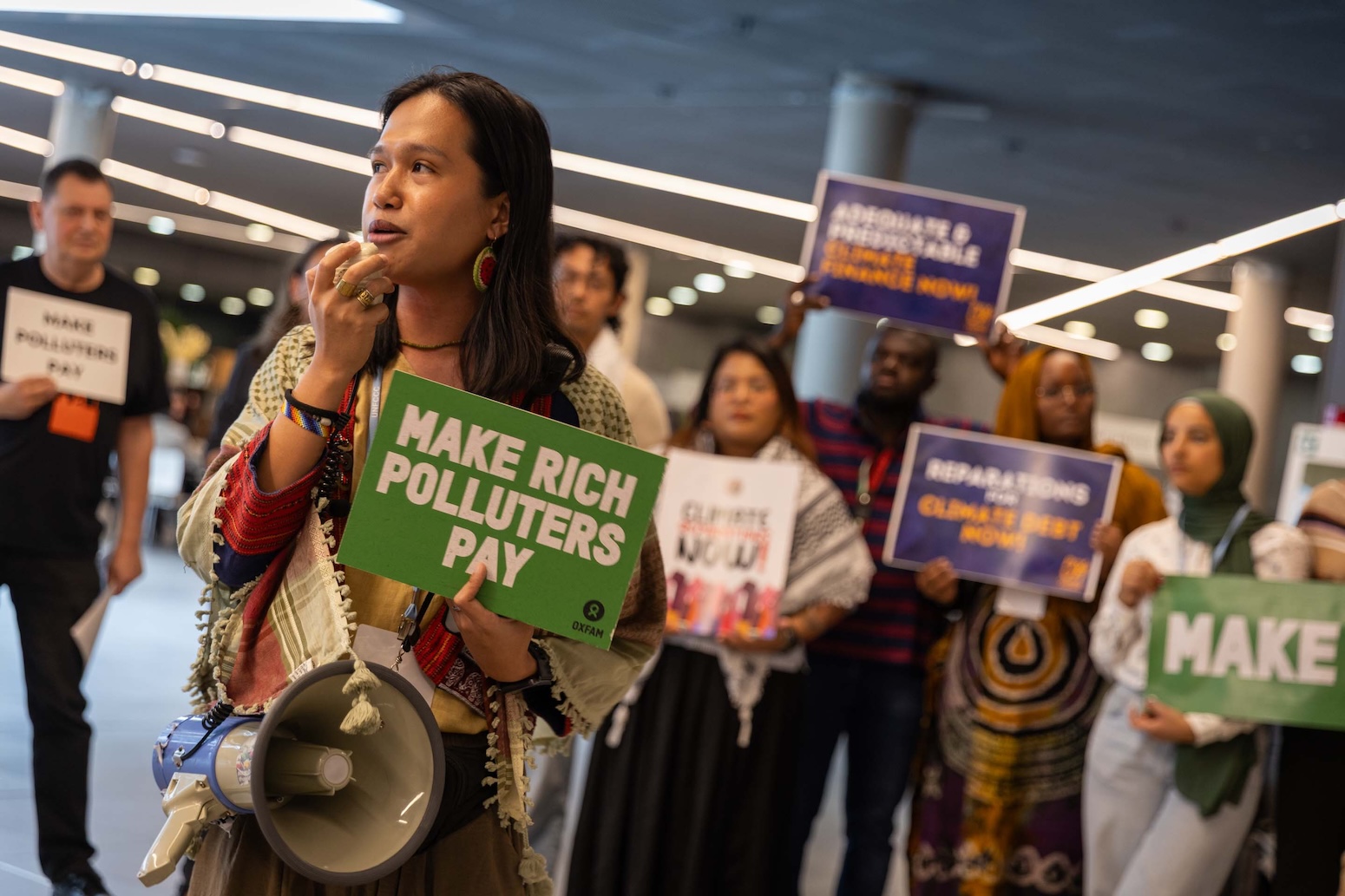
With the COP31 summit taking place in Turkey, developing countries are urgently voicing their need for increased financial support, especially after nations established a new global target just two years prior.
Challenges in Financial Commitments
Under the Paris Agreement, developed countries are expected to provide climate finance to assist developing nations in reducing emissions and preparing for climate-related disasters.
This funding can flow through multilateral development banks, UN climate funds, and investments sourced from the private sector, with a significant portion expected from the public budgets of developed nations—primarily their foreign aid allocations. Historically, this public expenditure has constituted about one-third of the climate finance received by developing countries.
In 2021, developed nations, including the EU and the US, collectively committed to increase annual climate finance from $100 billion in the early 2020s to $300 billion by 2035.
However, almost all previous pledges lapsed in 2025, and only a few major donors have announced replacements covering the window extending to 2030. This lack of new commitments is documented by climate NGOs NRDC and E3G.
Carbon Brief’s examination of this data indicates that developed countries had previously agreed to approximately £42 billion annually in public finance. Presently, this has dropped by about 71% to £11.8 billion on average for the remainder of the decade.
Not all contributors provided advance commitments for climate finance prior to 2026; some missed their targets, while others surpassed them. Although official data for 2025 remains pending, bilateral public finance reached £43.9 billion in 2024, closely aligning with the projected pledges by developed nations.
Key Donor Nations’ Commitments
Five nations—Japan, Germany, France, the United States, and the United Kingdom—have been substantial players in international climate finance, collectively providing around 90% of all bilateral public climate funding to developing nations recently.
Among these, only the United Kingdom has revealed a new commitment, totaling £6 billion (approximately $8 billion) from 2026-27 to 2028-29, along with £6.7 billion ($8.9 billion) from sources outside its aid budget. Remarkably, this accounts for half of all annual funding pledged from 2026 onward, with an average of $5.7 billion per year.
The European Commission is expected to contribute around $4.5 billion annually until 2027, largely stemming from its planned spending of €28 billion ($31.8 billion) for its 2021-2027 budget period. Furthermore, Canada has committed to CA$5.3 billion ($4.1 billion) by 2030, averaging about $860 million per year.
Despite the commitments from developed countries, the new pledges often reflect either minimal increases or, in some cases, declines in ambition compared to earlier targets.
The absence of substantial U.S. contributions is particularly noteworthy, as the country had previously aimed for an annual support level of $11.4 billion by 2024 under the Biden administration. However, following former President Trump’s administration’s withdrawal from the Paris Agreement, the U.S. has foreseen a reduction in its climate financing in the coming years.
Australia, the co-host of the COP31 summit, is also expected to announce significant financial pledges. Climate advocates express concern that a lack of pledges from Australia could reinforce negative responses to climate action.
European Funding Reductions
Europe has been a leading provider of international climate funding, but several European governments are currently exhibiting significant cuts to their aid budgets, citing economic and defense pressures.
Notably, both Germany and France, the largest contributors from Europe, pledged to reach €6 billion ($6.8 billion) annually by 2025, yet neither has announced plans for this year or beyond, resulting in decreased funding for climate initiatives.
Political dynamics have also shifted in Germany, where recent elections have impacted the prioritization of climate issues. Dr. Anja Carolin Gebel from Germanwatch notes that climate finance has become less of a focus under the newly formed coalition government.
In France, the upcoming presidential elections and the growing influence of far-right politics pose significant barriers to new international financial commitments. Political instability in Spain and Sweden further complicates the landscape for potential pledges.
Some nations have signaled a commitment to continuing climate finance flows without formally announcing new pledges, such as the Netherlands, which has indicated annual contributions of at least €300 million ($334 million) until 2031.
Developing countries are advocating for a “climate-finance work programme” at COP31 to explore avenues for increased public climate financing from developed nations.
In contrast, the EU emphasizes its status as the largest provider of public climate finance, asserting that member states supplied a record €32.3 billion ($40 billion) in 2025.
Against the current backdrop of financial uncertainty, EU climate chief Wopke Hoekstra emphasized that prospects for new funding discussions remain bleak.
Joe Thwaites from NRDC has voiced concerns regarding the implications of the lack of new funding announcements, asserting that it complicates finance negotiations unnecessarily and hampers transparency regarding future climate finance commitments.
Analysis Methodology
This report is based on the climate-finance commitments tracker operated by NRDC and E3G, supplemented by other research efforts.
The analysis includes only the 23 developed nations obligated to provide climate finance, alongside the EU, focusing on countries in Western Europe, the U.S., Australia, Canada, and New Zealand. Although Japan and Norway also contribute significantly, they lack specific public-finance pledges and are therefore excluded from this analysis.
Multi-year pledges were standardized into annual estimates, using 2025 as a baseline year. Some countries included targets to be met “by 2025” while others outlined total contributions over several years, which were averaged for annual representation. Only 2024 values were used for countries like Belgium, Switzerland, and the U.S., as their targets extend only until that year.
Current pledges from the UK, Canada, Belgium, Switzerland, and the Netherlands were incorporated to inform projections for annual contributions throughout the remainder of the 2020s. Although some commitments were made by the Netherlands, they may not represent the total expected contributions. Earlier pledges from the EU, Portugal, and Greece also extend into the latter portion of the decade, despite their relatively minor contributions.
Ongoing contributions from the UK reported by NRDC and E3G include $8.9 billion in “additional” public finance, which encompasses various financing mechanisms to mobilize private-sector funding.
Lastly, the analysis does not factor in commitments made by some nations like Germany and France to the Tropical Forest Forever Facility (TFFF), which would not significantly alter the overarching finding of a 71% reduction in climate finance pledges.








Discussion about this post